Our next stop was yurt making. We met our master yurt maker, Ruslan in his home in the village of Kyzl-Too. 80% of villagers here are involved in the yurt making industry and they take orders from all over the country. The village’s focus on yurt making is because during the Soviet Era there was a state-owned factory in the area that made yurts and when the USSR collapsed and all the factories closed down, the local workers started to make yurts themselves independently. Ruslan has been building yurts for 35 years.
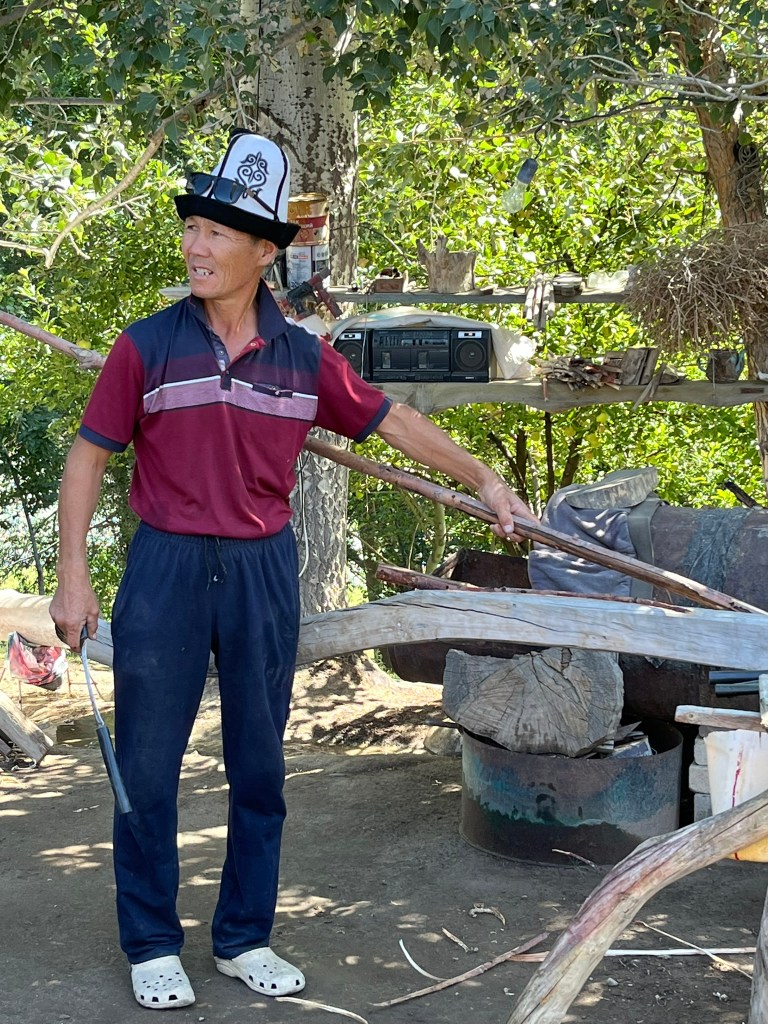
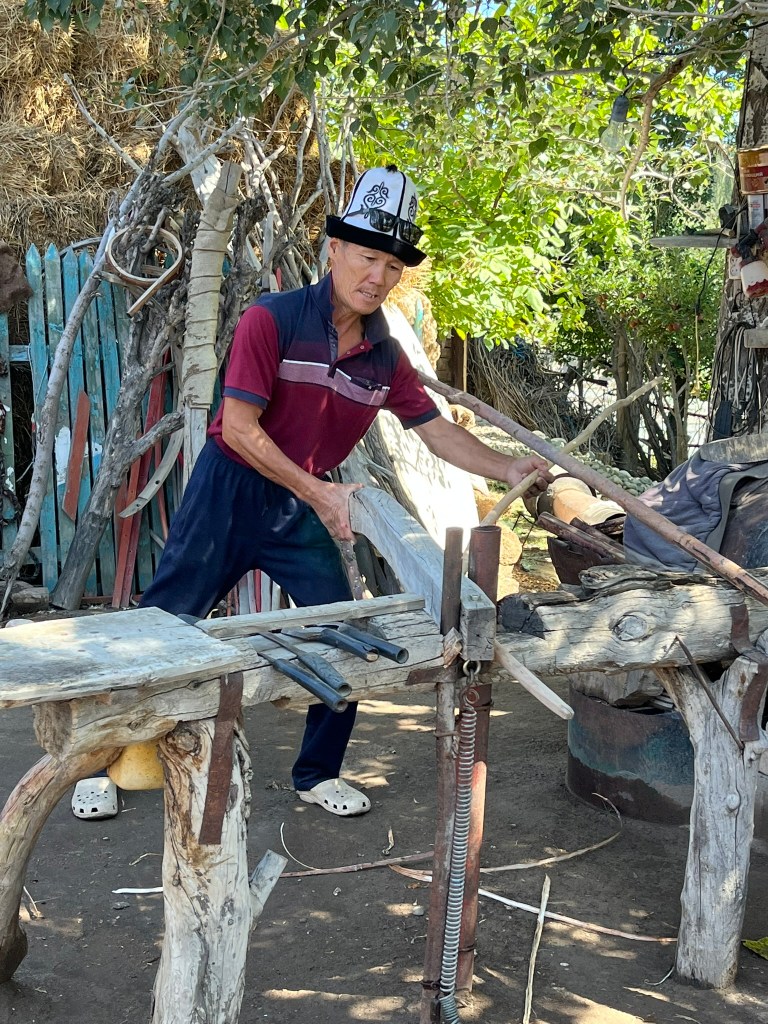
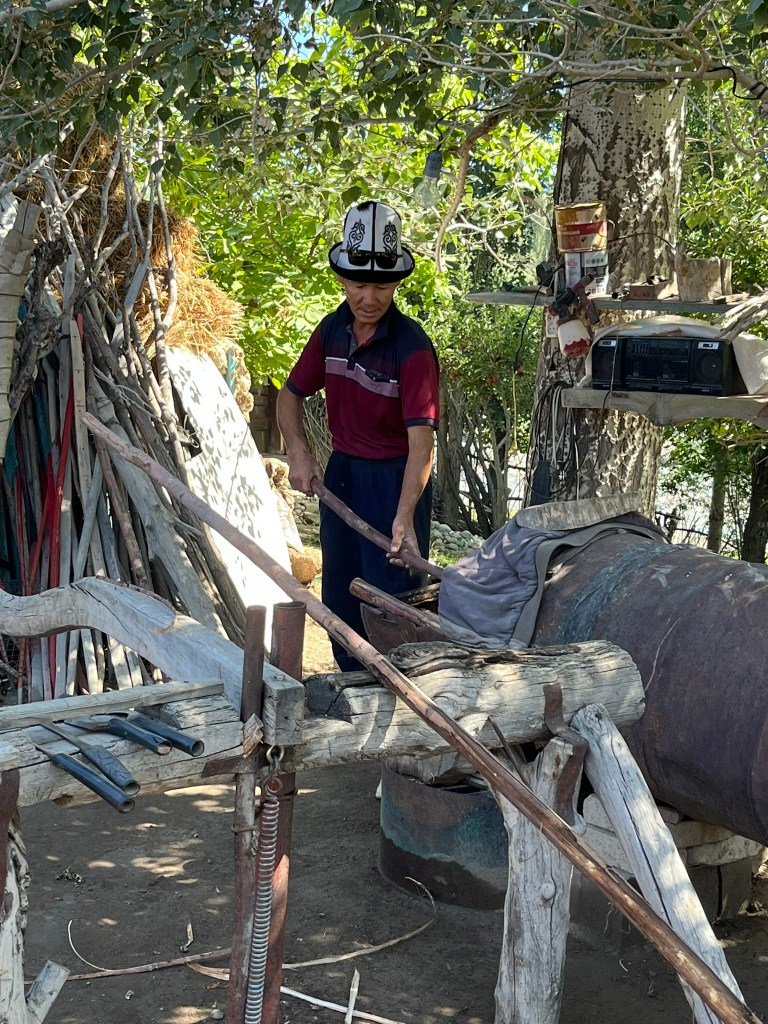
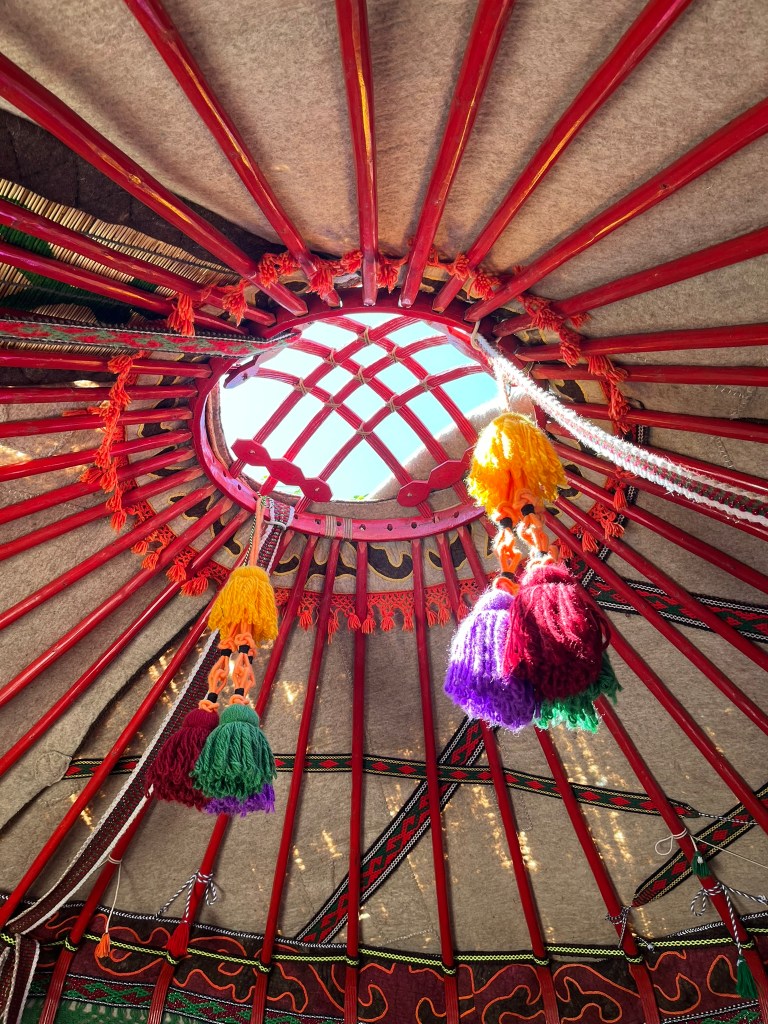
We started in Ruslan’s wood workshop and he took us through how he makes all the component parts of the yurt. The yurt’s skeleton is made of lightweight wood like birch, so that it is easy to transport when the nomads move camp. There are 4 main components; the walls, the door frame, the roof poles and the central crown known as the tunduk in Kyrgyz.
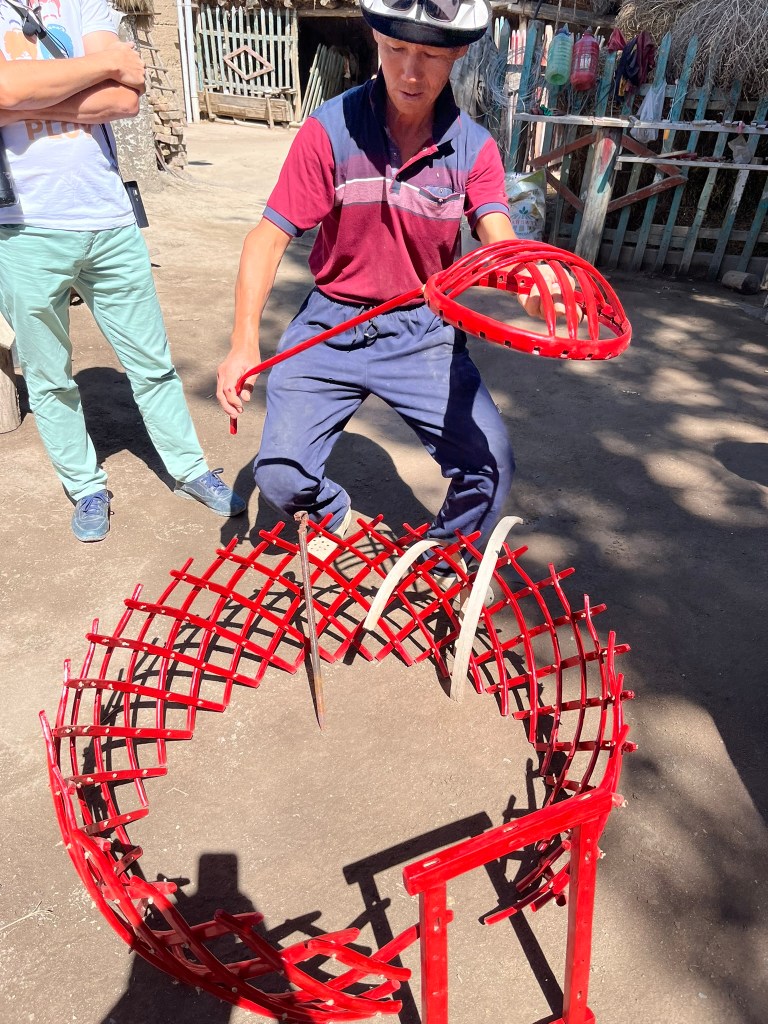
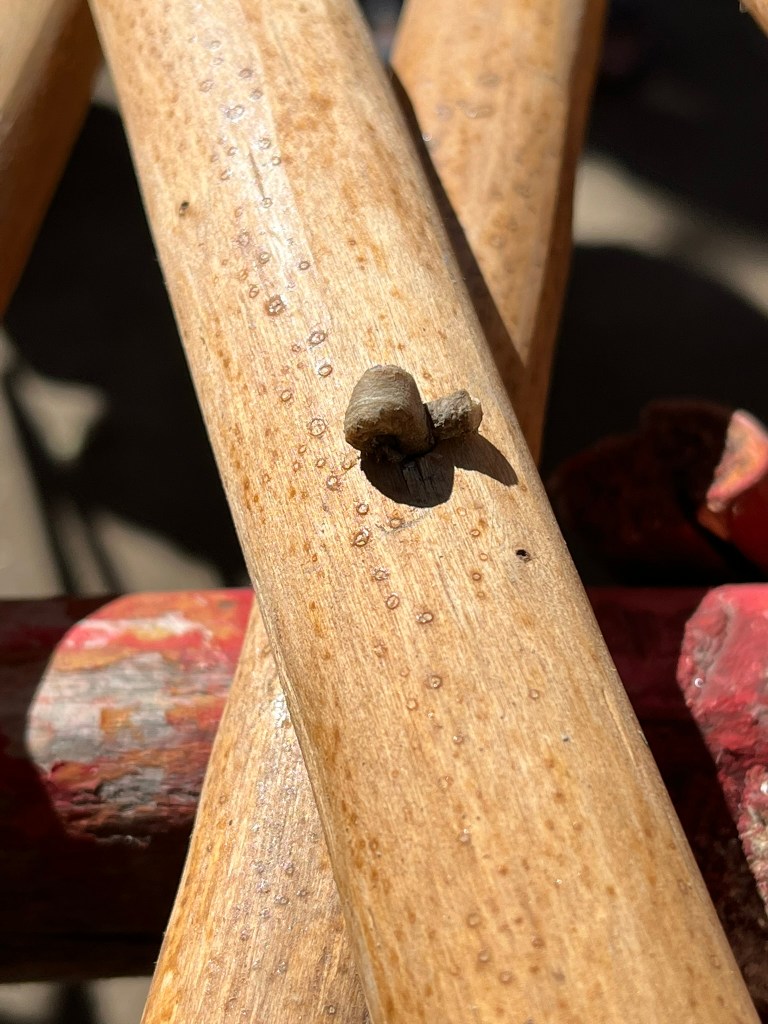
Ruslan has special tools that allow him strip the willow, get rid of any knobbly bits and if he wants to carve a pattern into the wood. To bend the wood into the exact shape each piece needs to be, he has a long series of barrels that he heats up and allows him to steam the wood. He then uses his tool to bend the wood to an exact angle. For the roof poles he needs long poles that are bent at a 60 degree angle at one end. For the wall lattice he needs a subtle bend on each piece. He then ties all the pieces together to create a lattice using cow skin as a super strong type of string.
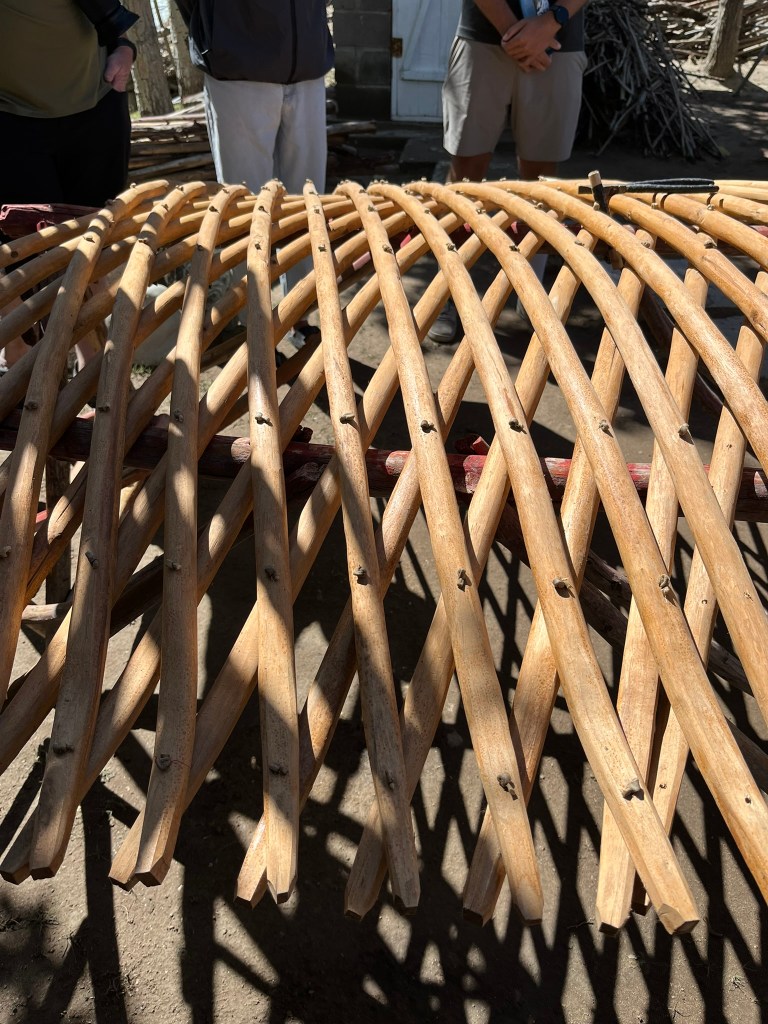
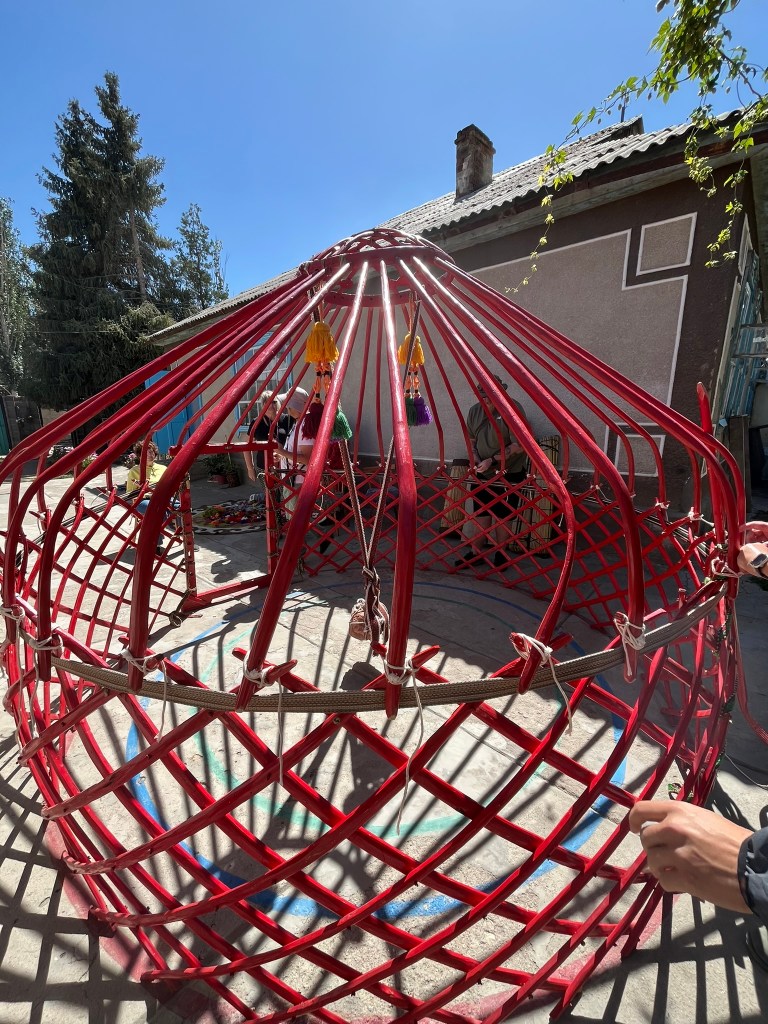
We then crossed the street to Ruslan’s house where he had a courtyard with a big circle painted onto the floor. This is where we were going to construct our yurt from scratch. A family of nomads could put up a medium-sized yurt at an every-day pace in under an hour. And at competitions a group could fully assemble one in 7-8 minutes.
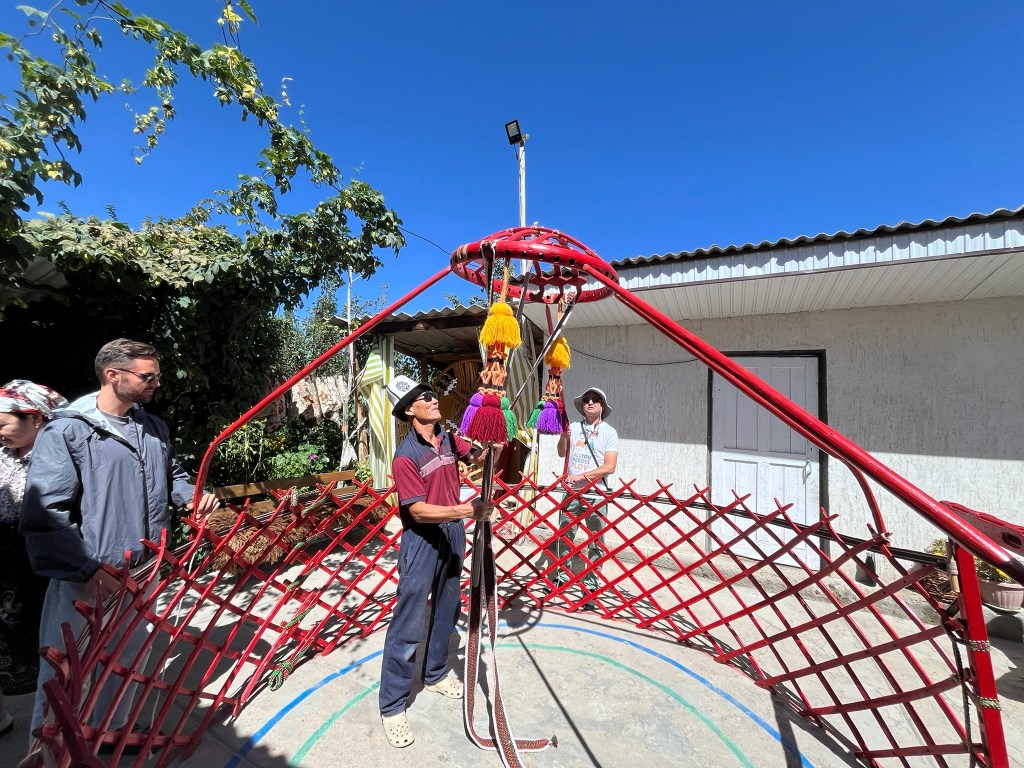
First you construct the door and then you connect sections of the wall lattice together to create a complete circle. The door and the wall lattice are tied together using strips of decorated fabric. The tunduk is then lifted into the centre of the yurt using support poles and a handful of roof poles are inserted into the square holes that have been burnt into the the tunduk. These poles are then tied to the walls using wool string. More and more poles are inserted and tied to the wall until every square hole is filled. The temporary support can then be removed. At this point all the wooden components have been erected.

Next up we wrapped reed matting (the same as we saw how to make at the felt workshop) around the wall lattice. Then long panels of felt are wrapped around the wall and the roof. The felt provides warmth in winter and coolness in summer. All of this is tied down securely with more horsehair and woollen ties. Finally the door flap is secured, a small felt panel covers the sky window in the center of the tunduk and the inside and outside are decorated. The felt is water and wind-proof however nowadays an outer waterproof layer is sometimes added for extra protection.

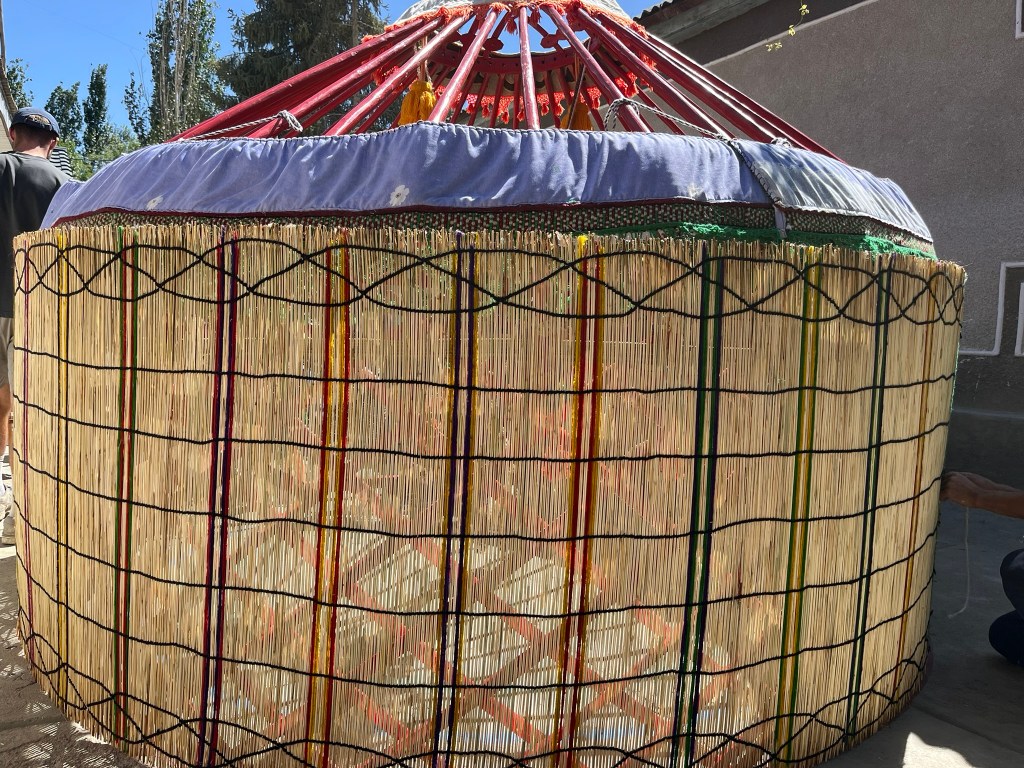
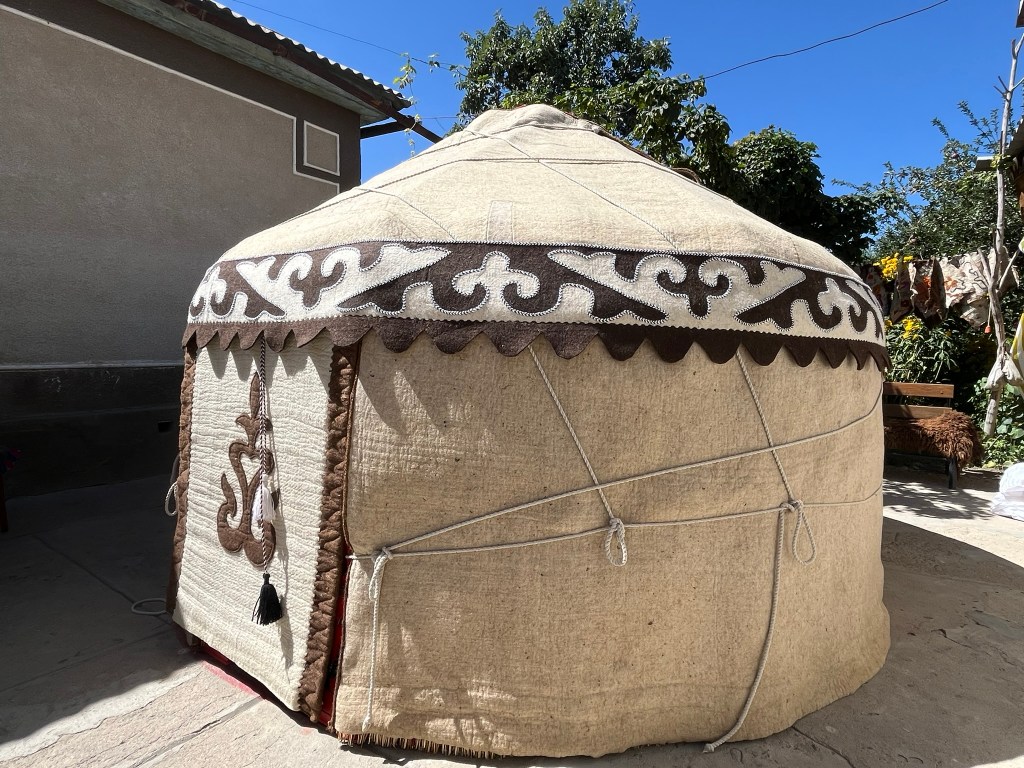
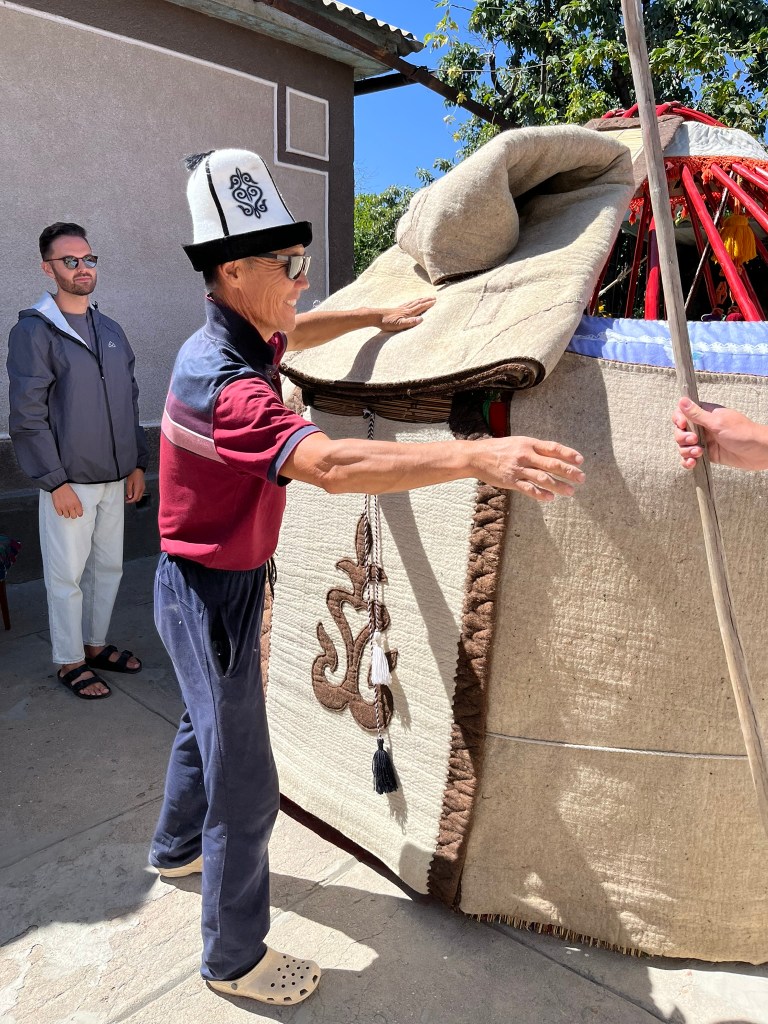
It took 9 of us about an hour to completely erect and decorate our yurt. Although Ruslan and our guide were doing a significant amount of the work and also going around retying everyone’s knots correctly. Putting a yurt together from scratch really made me appreciate how cool the yurt was that I had slept in the night before. Its especially amazing that it’s so solid and yet there is not a single nail – just good construction, evenly distributed weight across the structure and lots of ties to secure each part. Apparently to buy a yurt this sized would cost 3000 USD.
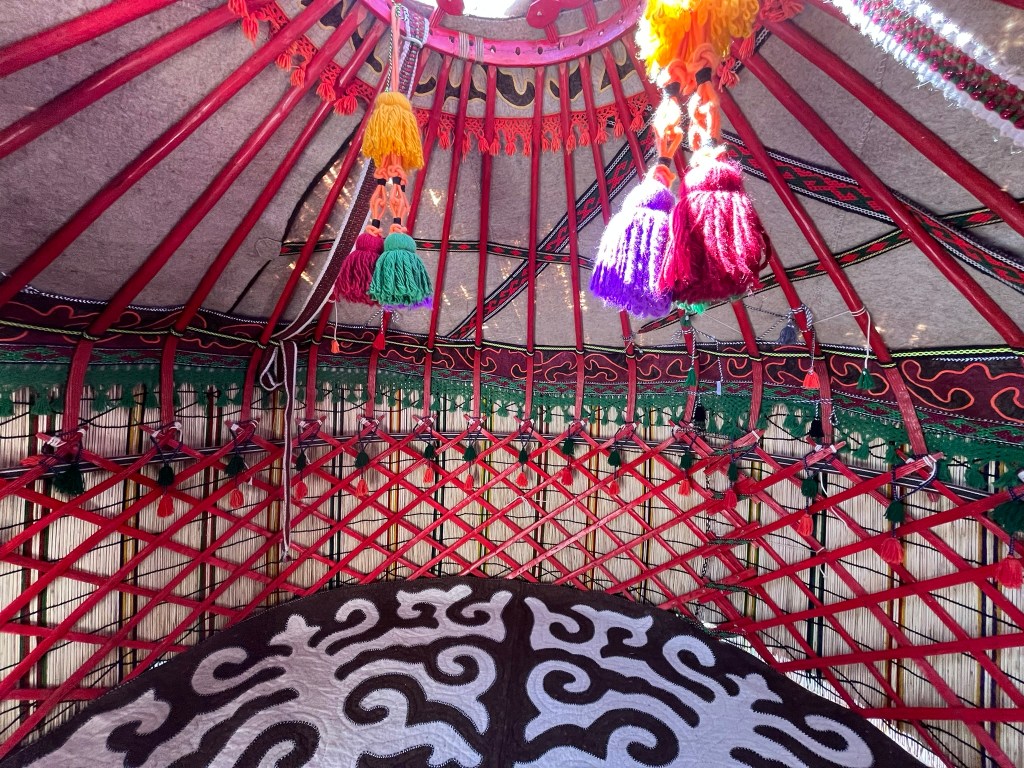
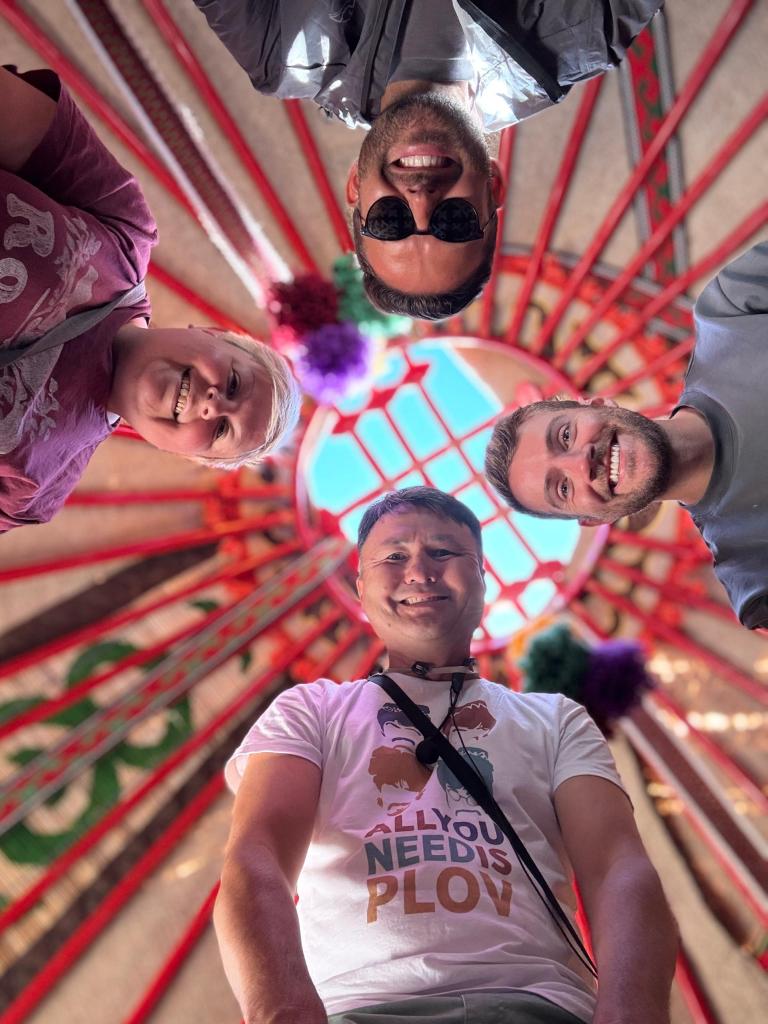
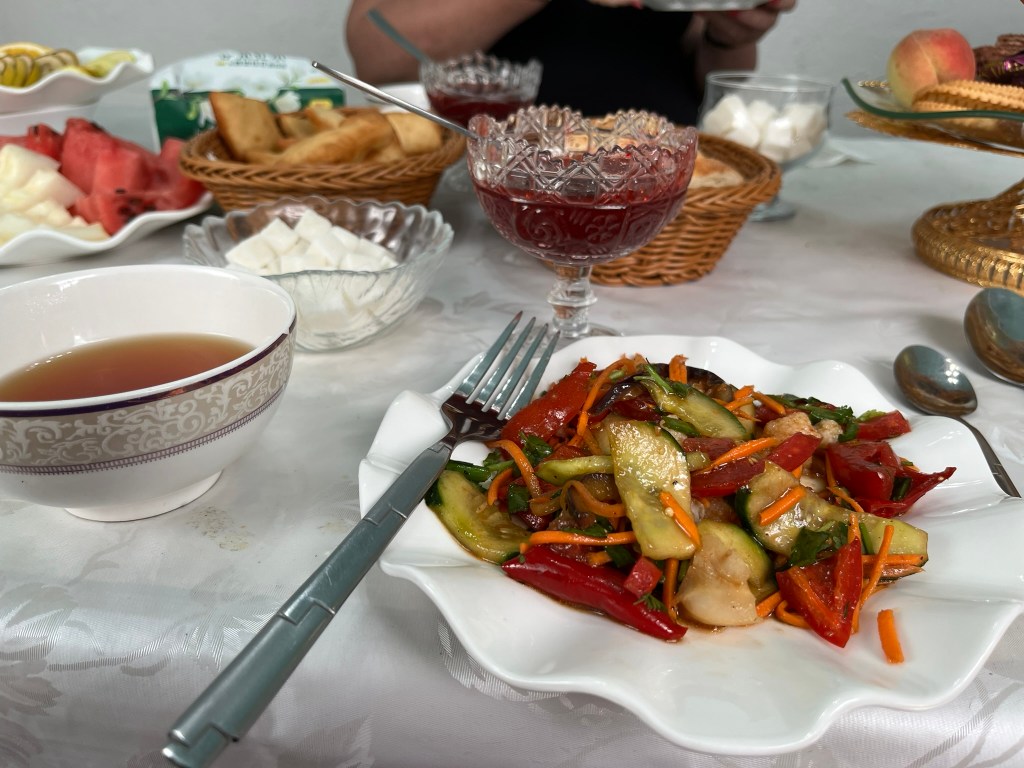
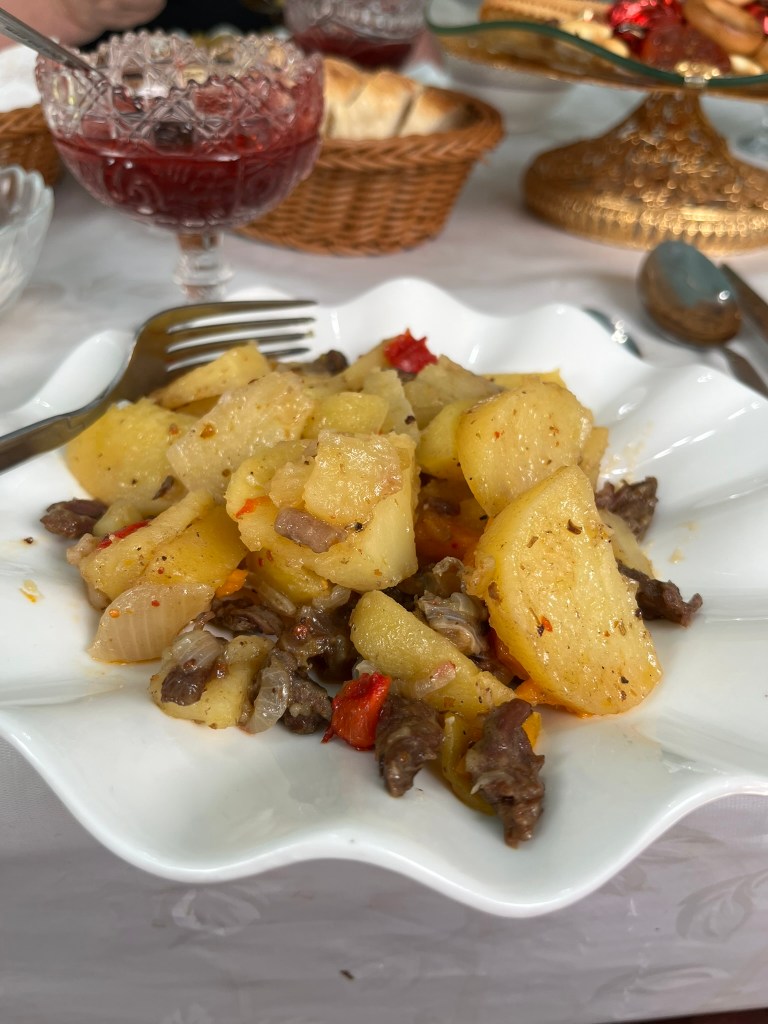
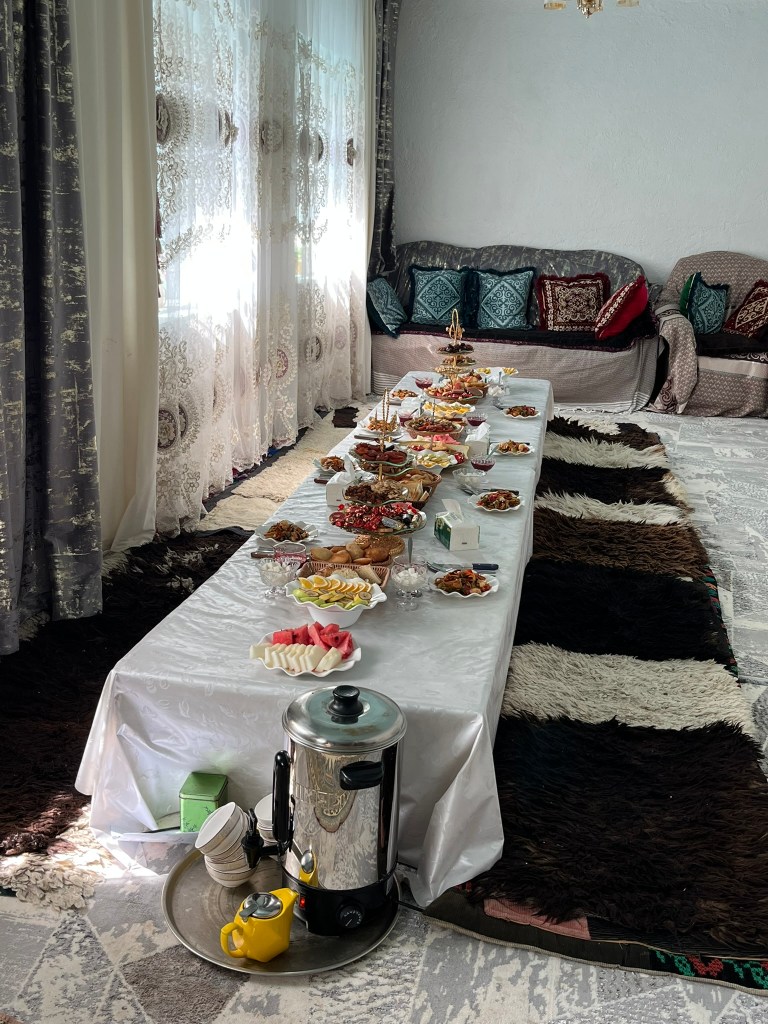
Afterwards we sat down to another great home-cooked meal in Ruslan’s house – this time for Kuurdak – fried beef with potatoes and onions. Yurt making is a must-do activity when visiting Kyrgyzstan and should ideally be combined like our group did, with a felt workshop to get a full understanding of nomad life.

And then off we headed to our appointment with the eagle hunters…


 Colette's Grand Detour
Leave a comment