Our first activity today exploring nomadic culture in Kyrgyzstan was a felt workshop in our beautiful yurt camp by Issyk-Kul lake. Muroc, a local lady, who works at the yurt camp took us through how to make all the amazing felt we have seen so far on our trip, whether that be functional or for decoration.
Before they start preparing to make the felt, they first make a reed mat, held together with woven wool. This provides the area on which they can prepare felt. It is also used to provide extra protection when setting up a yurt (see my Yurt blog post) and it can also be decorative on its own, with colorful wool woven directly through the reeds.
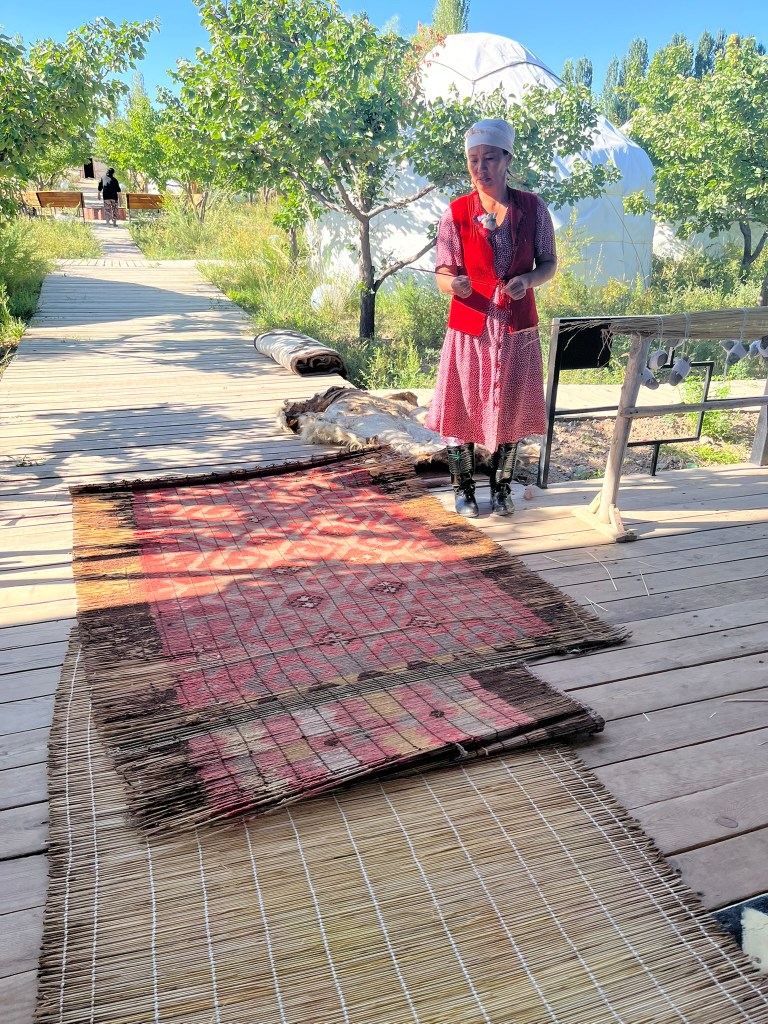
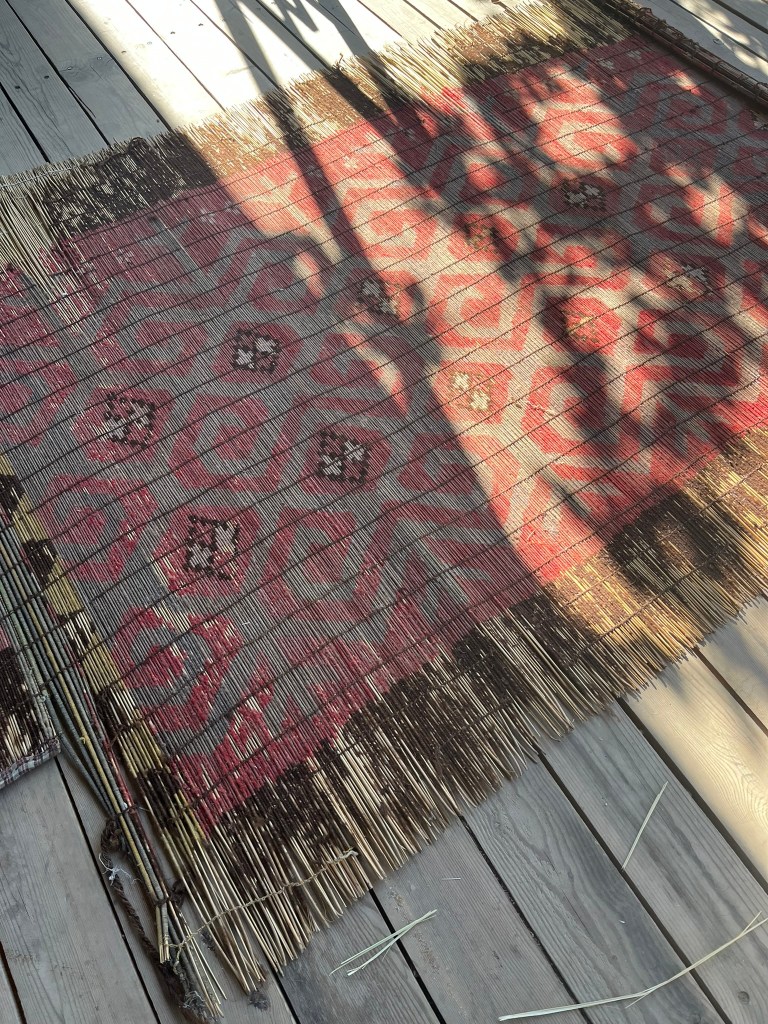
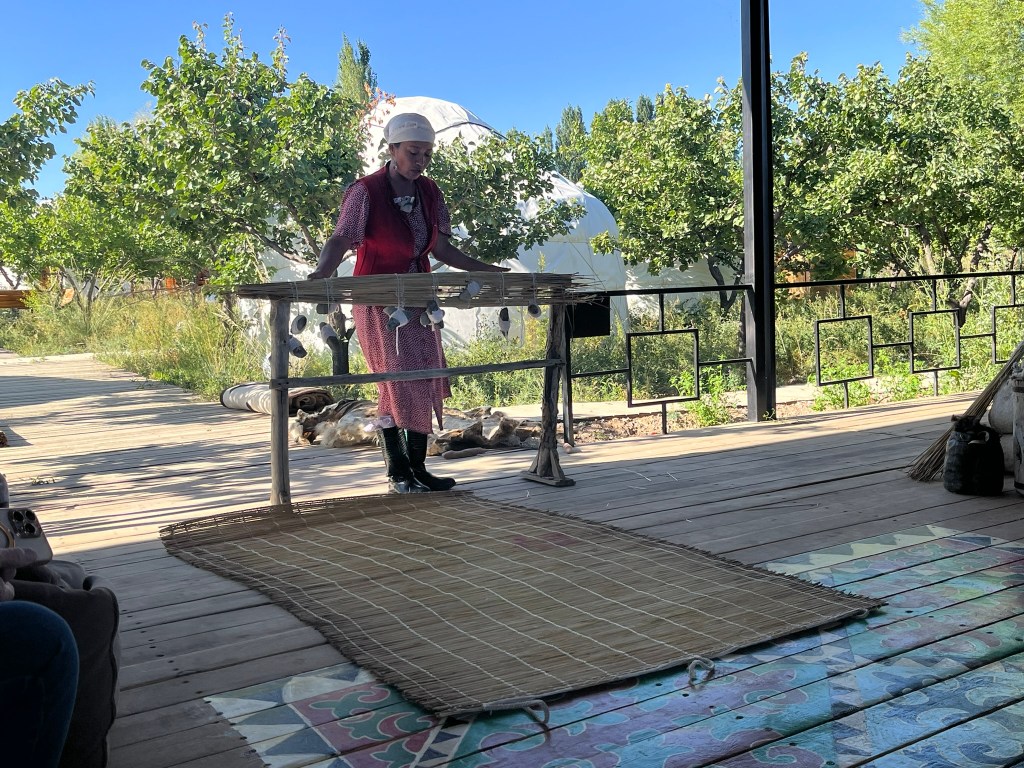
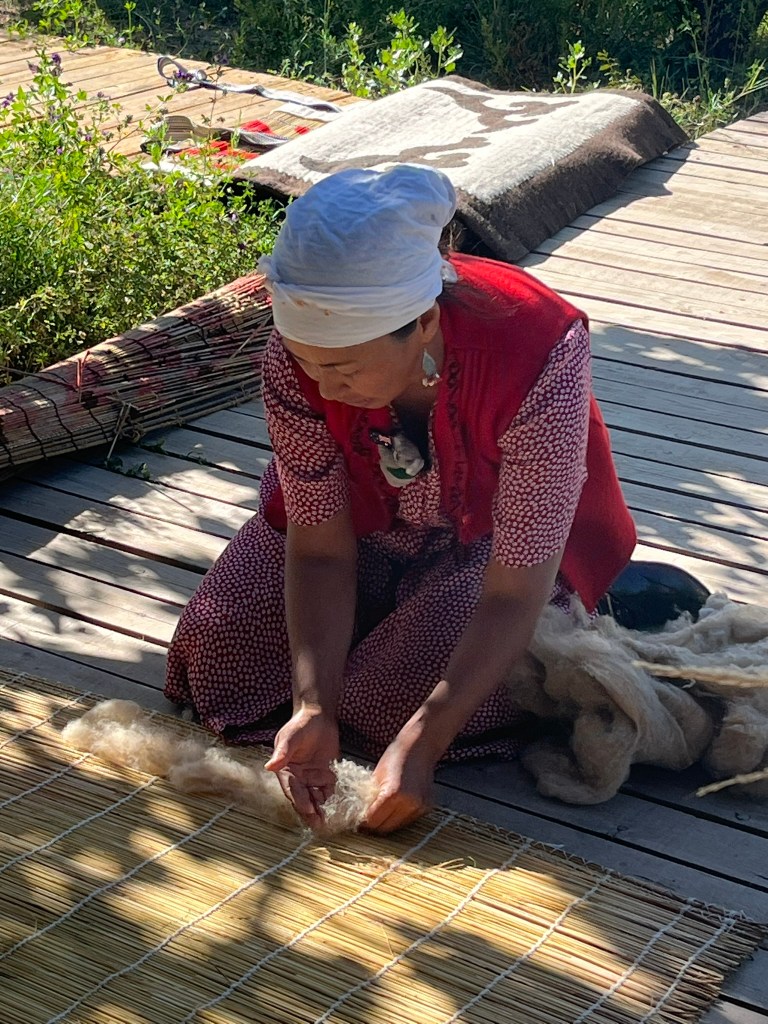
Next, Muroc showed us how they prepare the wool. They wash and dry the wool thoroughly and then cut it into small pieces. It then goes on a dried up piece of goat skin where they beat the wool continuously for about 15 minutes to make it soft and get rid of any remaining dirt. Muroc joked this was also a good exercise to get rid of stress. The wool is then laid out on the reed mat, spreading it in one direction and then another so that the wool gets matted together. Muroc set up a small example and then gave us the chance to use some of the colorful wool she had to create a piece of art work. We decided to try and create a mountain and lake scene with yurts in the front. In nomad life, this type of felting where you cover the reed maps and then place colorful wool in patterns is always done in the summer and is called alakyz kiyz.
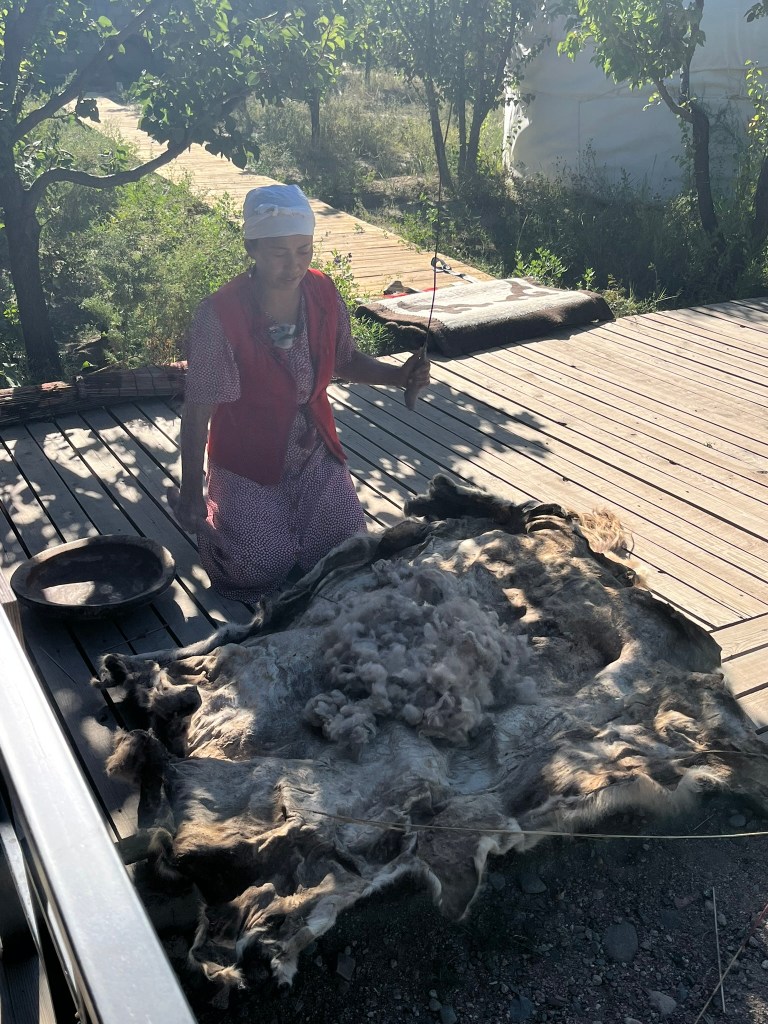
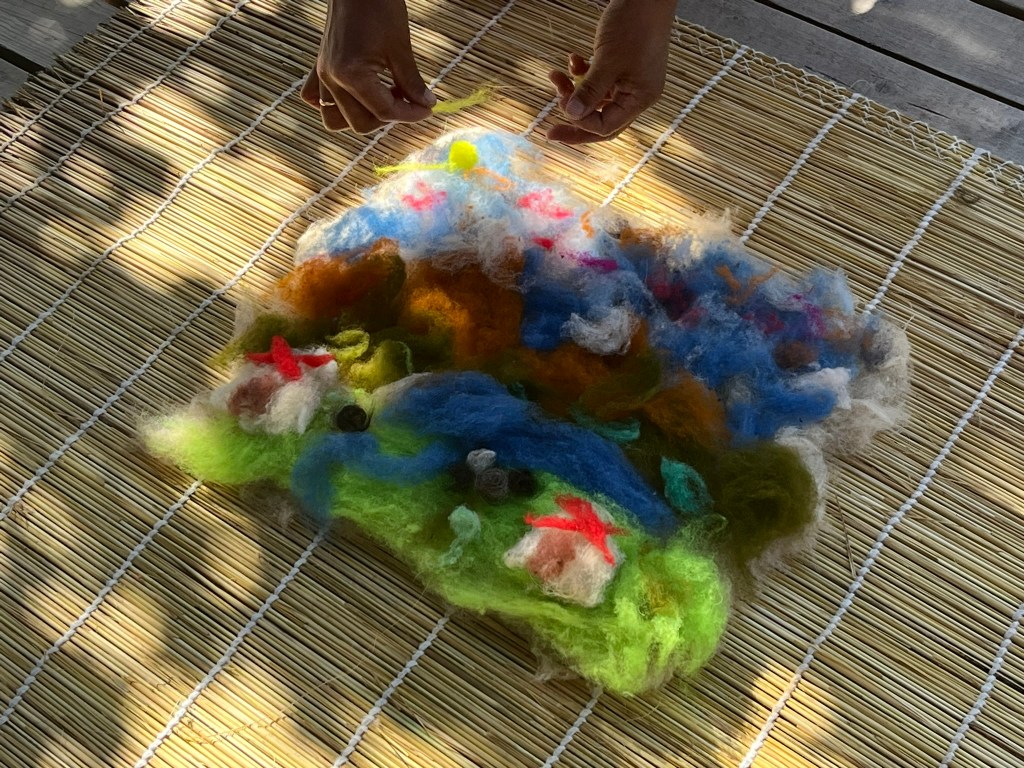
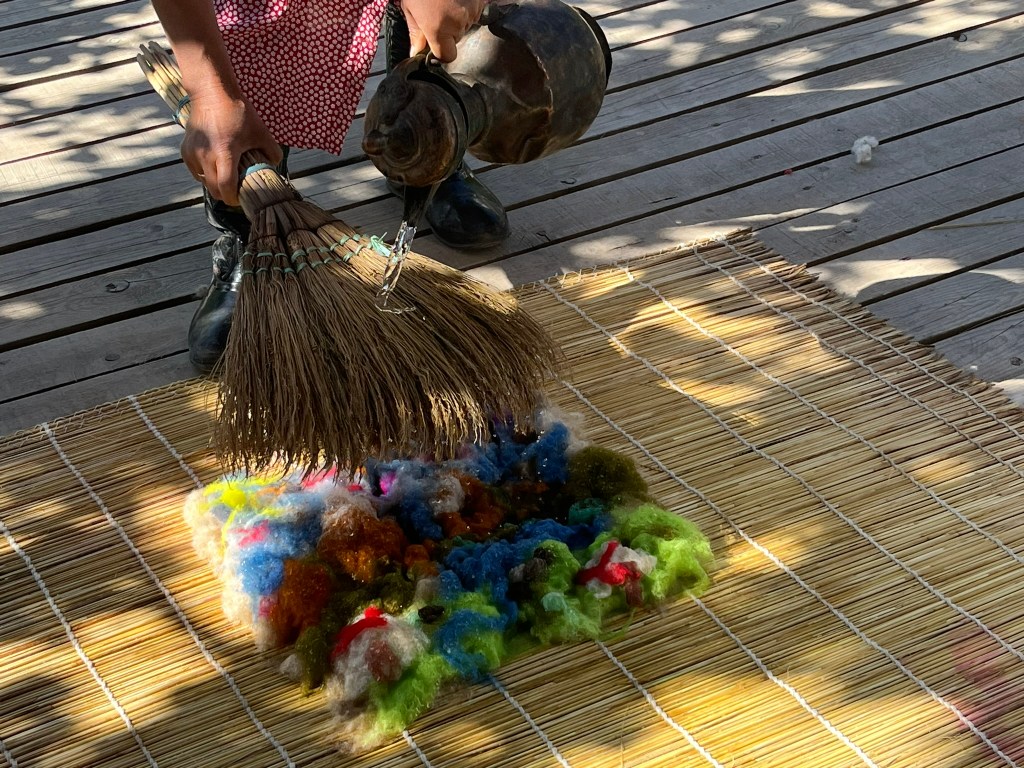
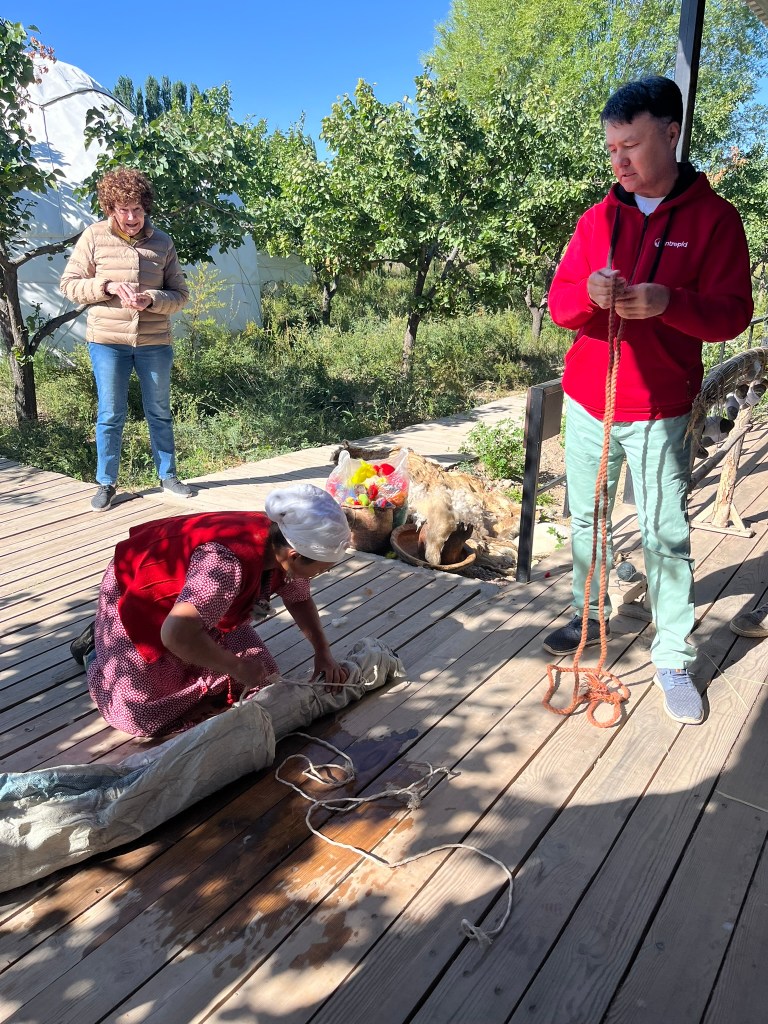
Once the pattern is complete, you slowly pour hot water onto the wool. Then you roll the reed mat and squish it and pour more water. Then you roll and wrap up the reed mat completely and pull it along with a thick bit of rope whilst helpers kick the reed mat, trying to squeeze more water out of the wool. This was a fun part of the process where Muroc got us to dance to traditional music whilst we stomped away. Eventually you can unroll it, scrub it with soap and leave it to dry. Unfortunately, our piece of art work didn’t come out quite as we expected – I will blame the green wool that we used for the grass that somehow lost its color in the process.

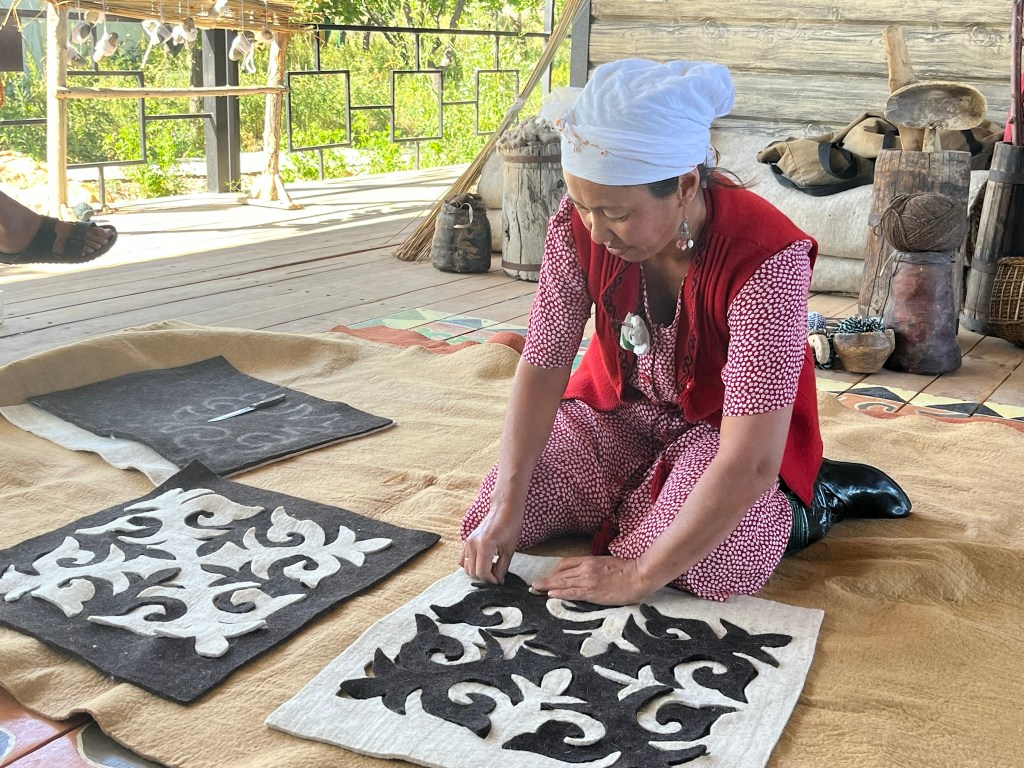
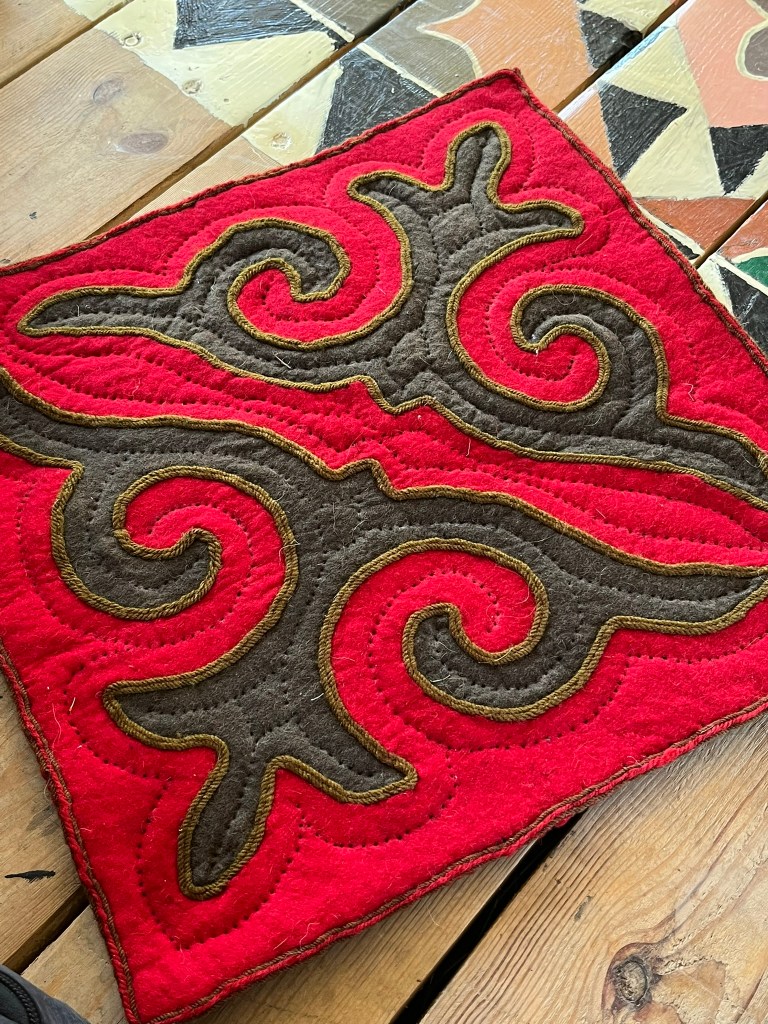
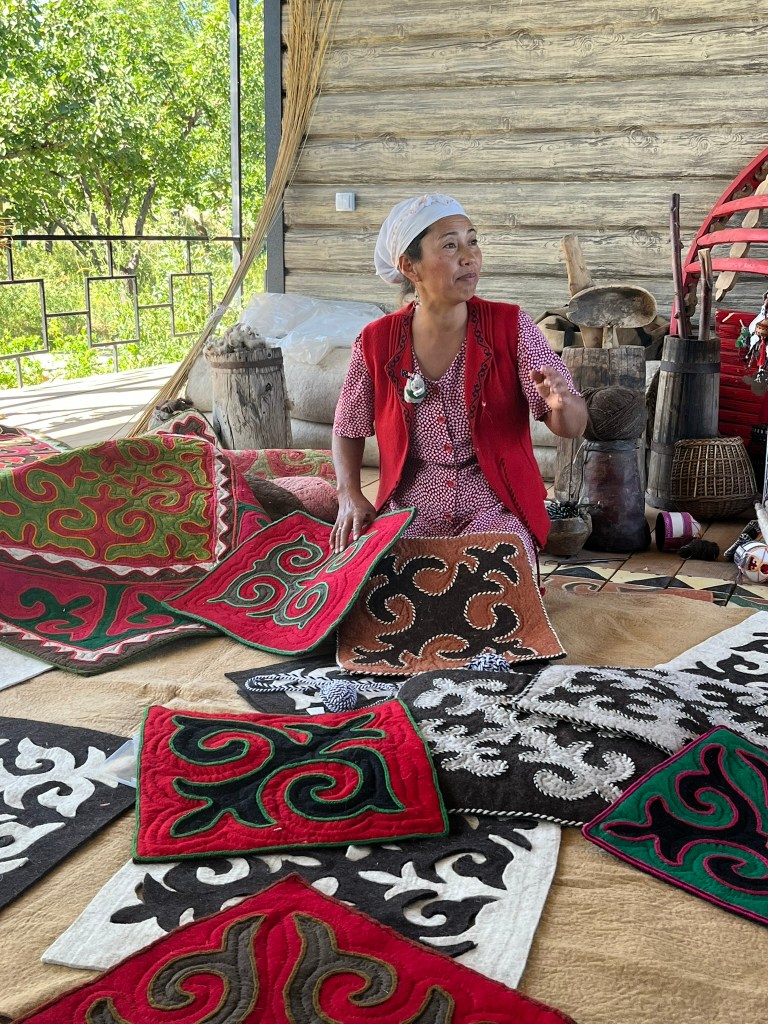
Then we moved onto the other type of felting that is only done during the winter, when wet felting would not be practical. For this, patterns would be drawn onto two large pieces of felt, one underneath the other and then the patterns cut out with a sharp knife. The colours are then swapped around to fit into each other perfectly. This type of felting is called shyrdak and it is possible to get much more accurate and defined shapes and patterns using this method. Muroc showed us how they carefully sow multi-colored wool into the design to complete these decorative felt pieces.
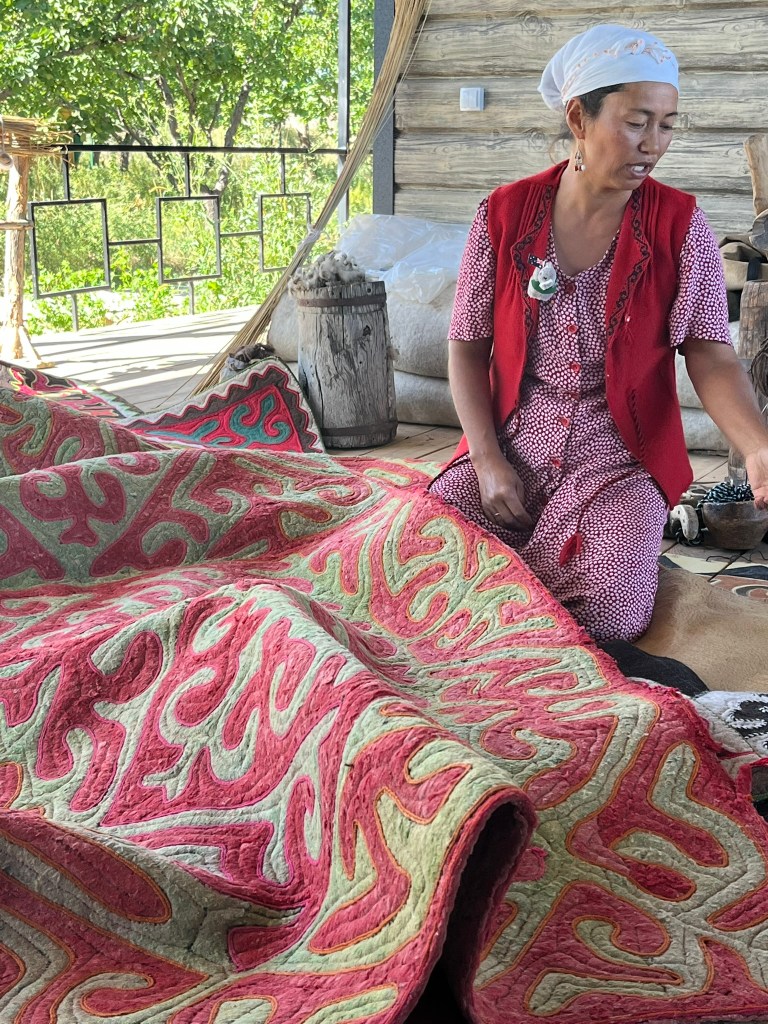
At the end of the workshop Muroc showed us a piece of decorative felt that her mother had made her when she was young. It was 60 years old and still in such good condition. It made me appreciate more the felt carpets we had been standing on when entering various yurts and how much work had gone into making them. Another must-do activity to truly appreciate Kyrgyz nomadic culture.
 Colette's Grand Detour
Leave a comment