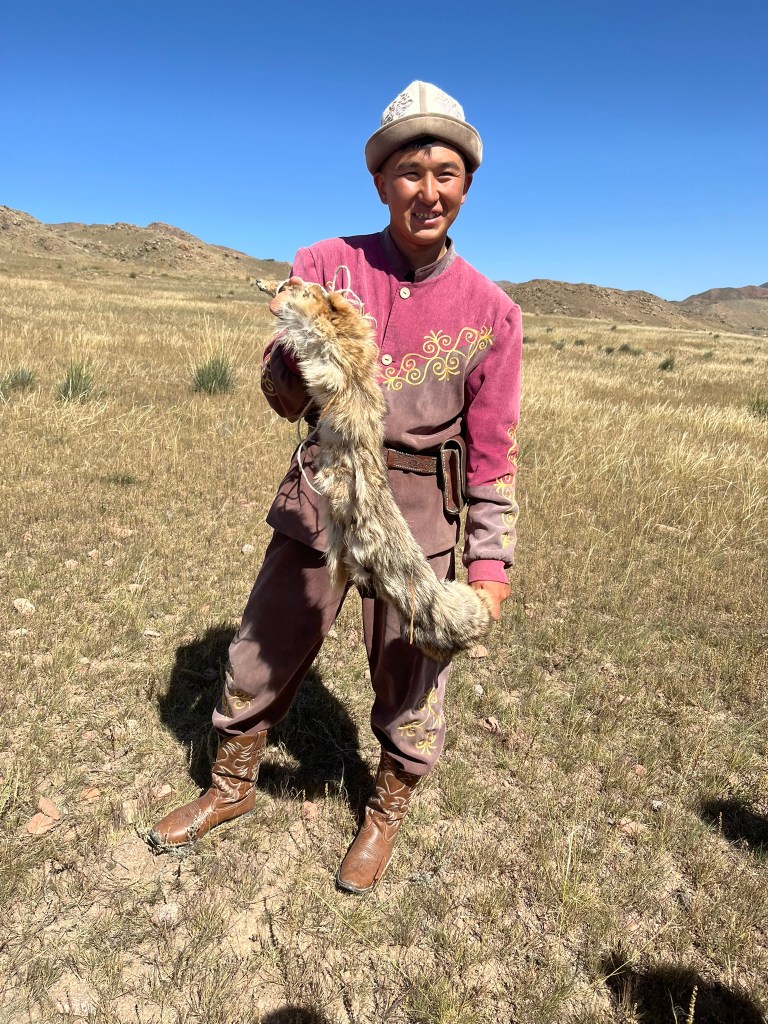
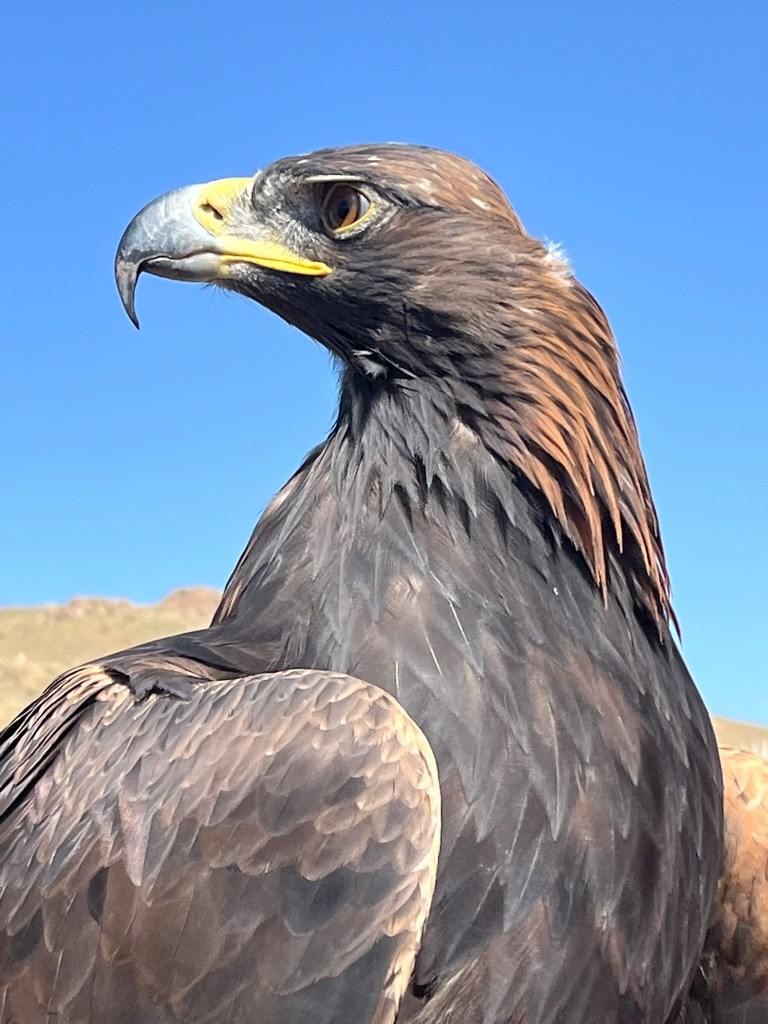
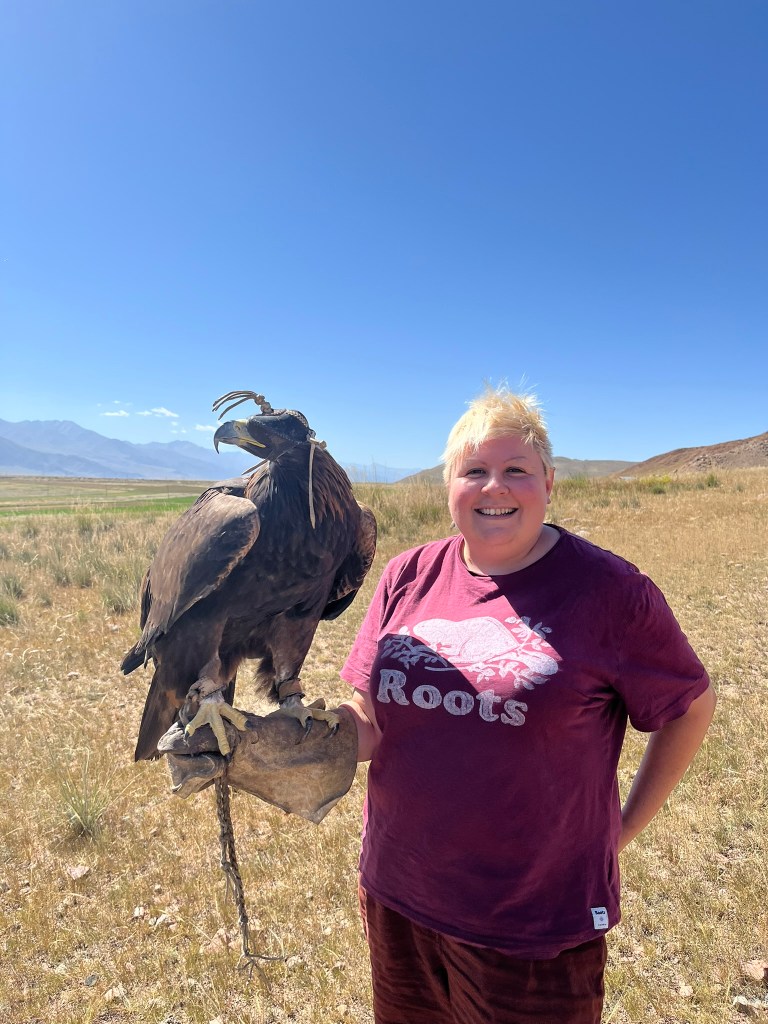
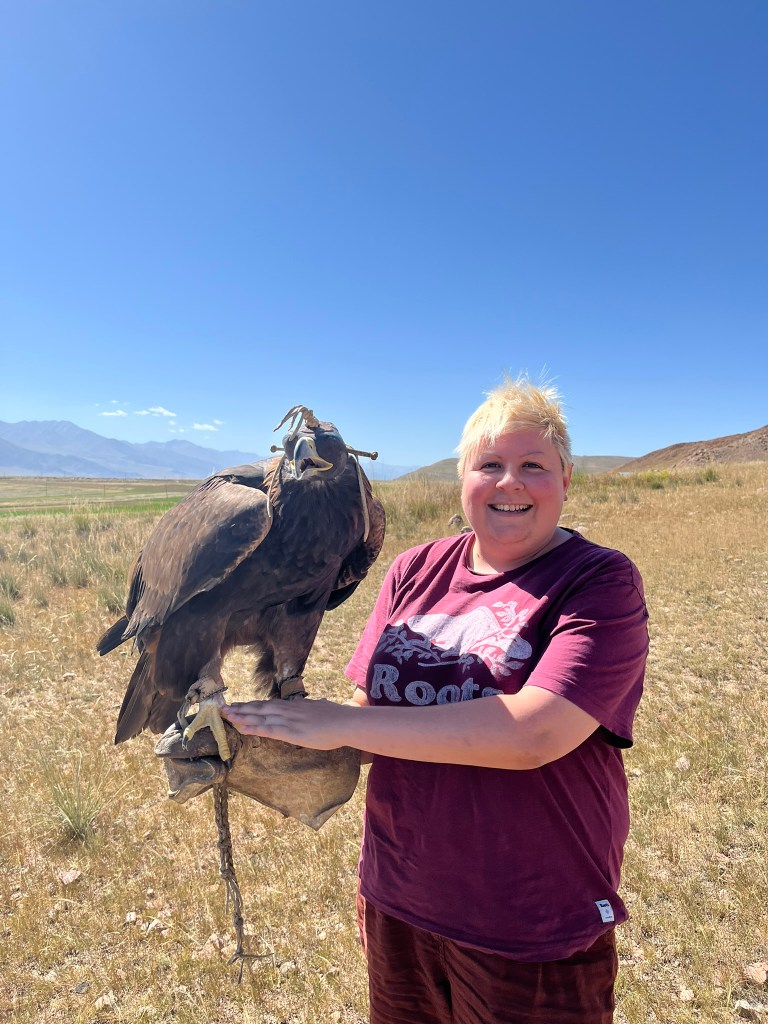
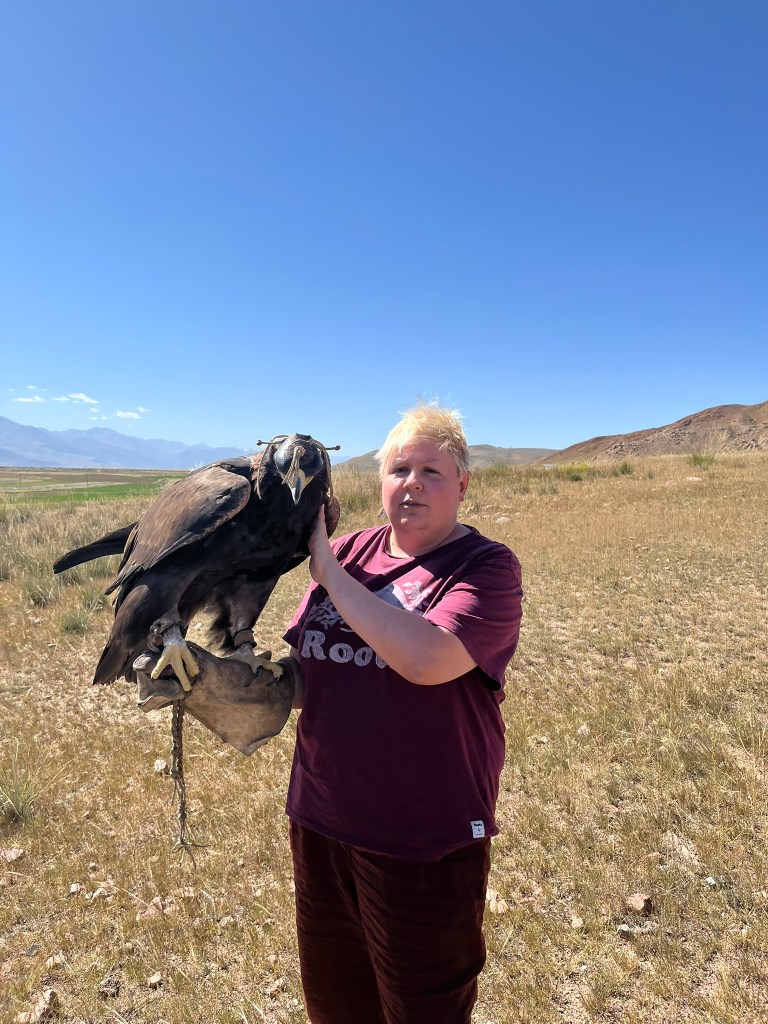
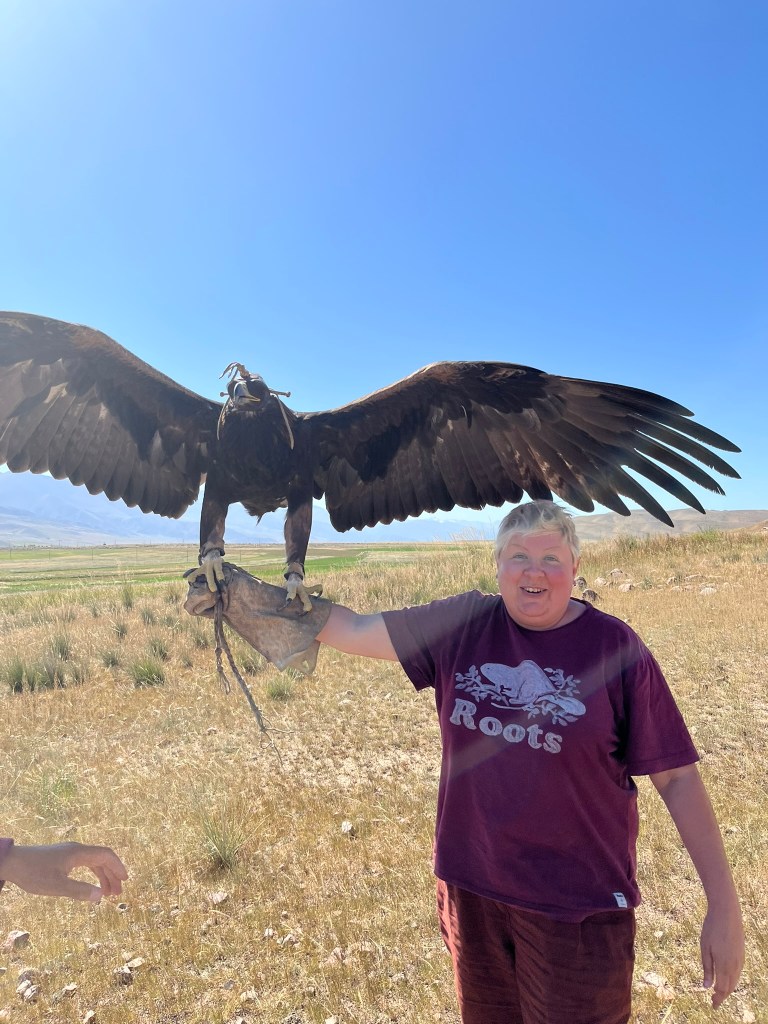
After our lunch in the village of Kyzyl -Too, we met Azamat and his 3-year old Golden Eagle called Kara Kuz (translates to ‘black eyes’) in a valley near the village of Bokonbayevo, which sits on the southern shore of Issyk-Kul Lake. Azamat is a 5th generation eagle hunter and just the day before meeting us, on National Day had become a champion eagle hunter. He has been training as a hunter since he was ten years old and started with a much smaller bird of prey, a falcon. He has 2 other brothers, also eagle hunters.
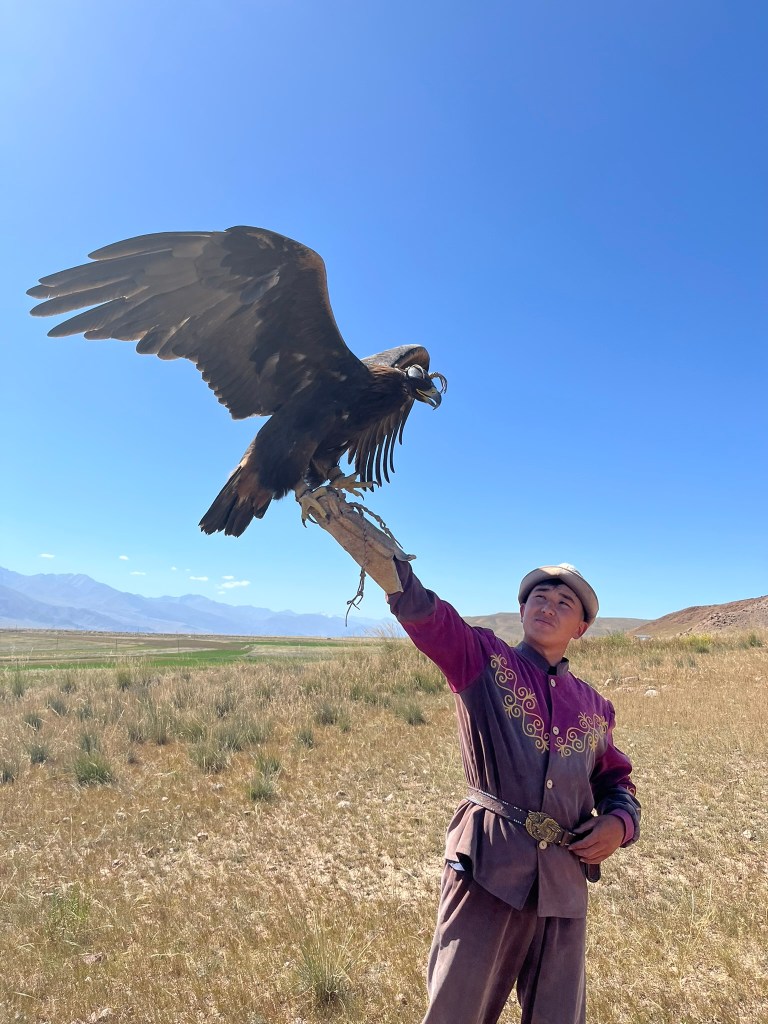
Azamat first explained how they train their golden eagles. Each hunter only has 1 eagle at a time and will train them from a baby up until the age of 10 years when they are let back into the wild. They can live up to 60 years old and it takes about 3 months for the eagle to acclimatise back to wild living. They only ever take female eagles, as these grow up to be bigger and stronger and thus able to hunt larger animals. Hunters take eaglets directly from wild nests. This can be a precarious operation, with up to 5 hunters involved to look out for the eagle parents whilst one person reaches the nest and takes the chick. They will never take more than one chick from the nest, as otherwise the eagle parents will leave the area. And they check to take only the females by looking at the number of nobbles on their feet. Seven nobbles indicates a female and three a male. The hunters intention is not to decimate the eagle population and to ensure that their nomadic practice is sustainable. By getting the bird as a tiny baby, the eagle hunter can form a special close bond with them and develop a prized hunting eagle. He said it is also possible to take an eagle from the wild when it is a bit older, but the training will be much more difficult. For eagle hunters, their eagle is a member of their family and treated extremely well.
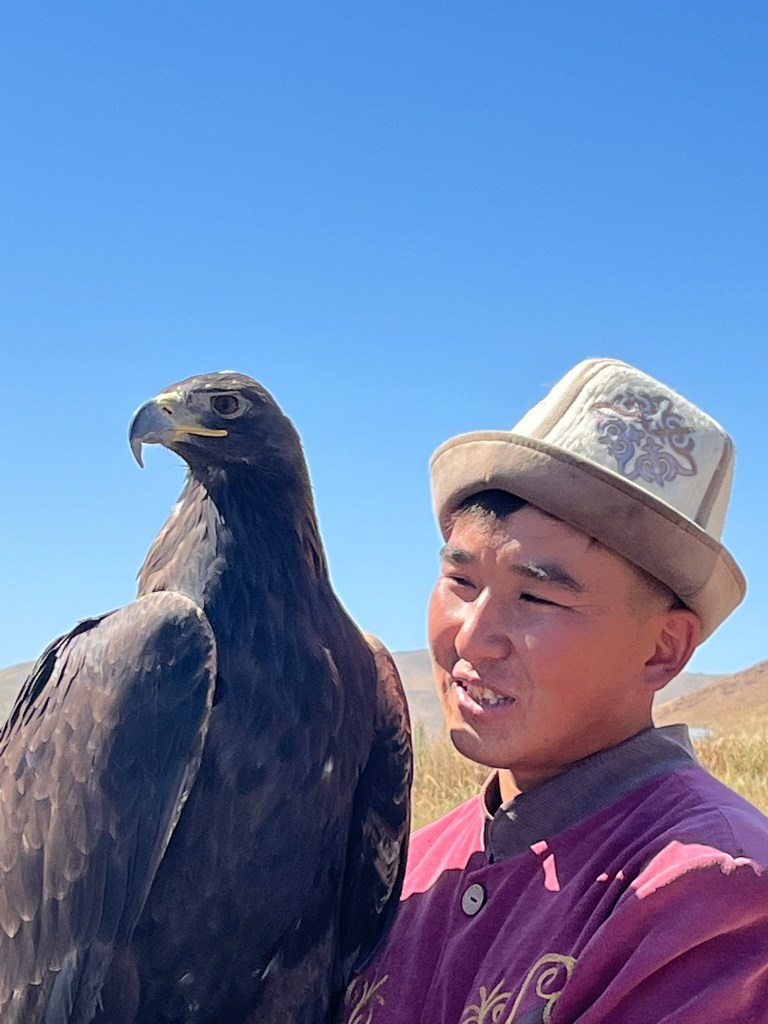
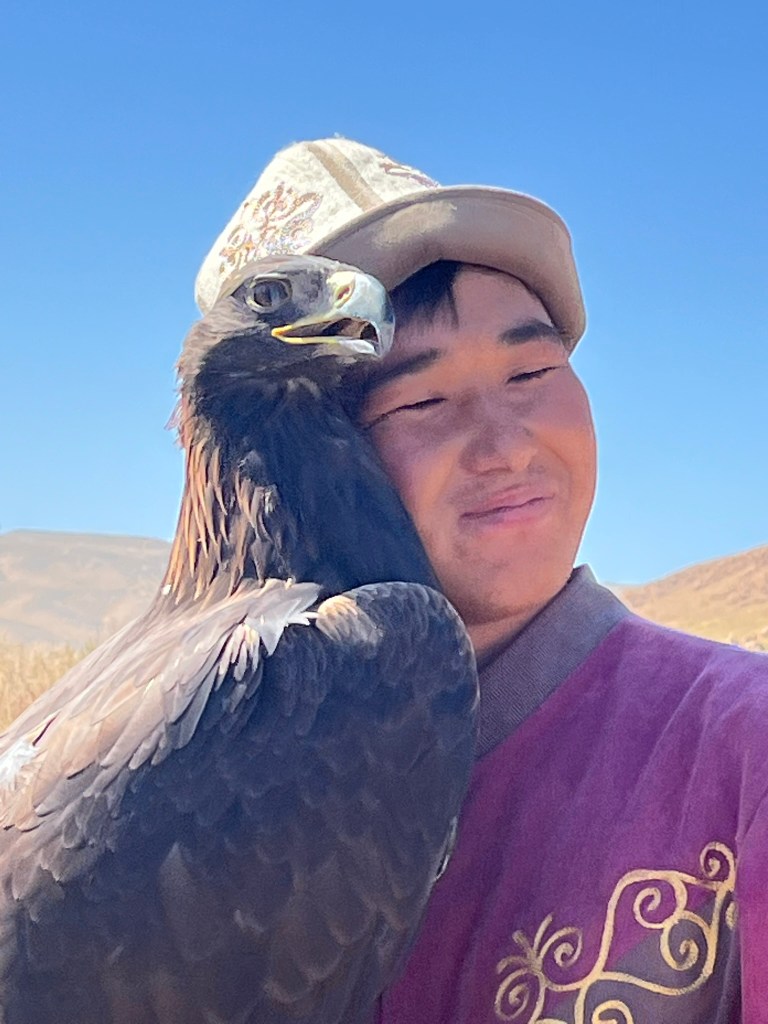
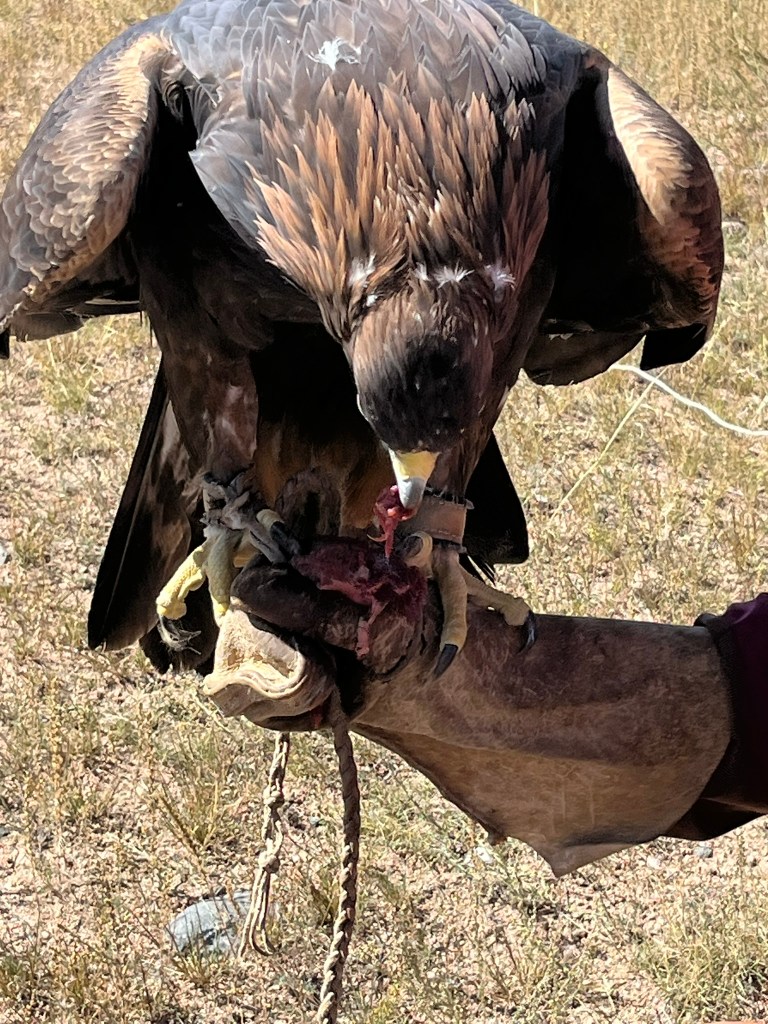
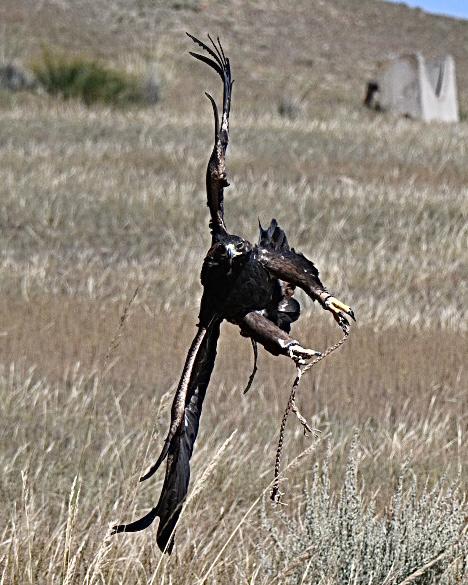
In the first demonstration, Azamat’s brother took Kara Kuz high up onto one of the hills in the valley. Azamat then signalled with his outstretched arm holding a piece of fresh meat and Kara Kuz swooped down the valley at breakneck speed directly back to Azamat. In the second demonstration, Azamat ran along with a piece of Jackal fur running along the ground, meant to imitate live prey and Kara Kuz again swooped in landing on the fur and strangling it to death. Both demonstrations were incredible. The speed at which Kara Kuz flew with her outstretched wings was breathtaking. Golden eagles have incredible eyesight and can see prey from 2-3km away and can dive for prey at 240km/hr.
Next up, Azamat showed us his traditional hunting dog, a local breed, called the Taigan. This breed has exceptional stamina and speed at high altitudes and is known for its ability to hunt alongside a golden eagle as a duo. During the summer months, Azamat trains his golden eagle and taigan side-by-side so that each knows that the other is not a threat. Then in the winter he can hunt with both. Initially the golden eagle will spot potential prey with their amazing eyesight and start to swoop in. Prey like jackals and hares will try to hide behind rocks, but then the taigan can attack and flush them out. To get away from the taigan it leaves its hiding place and the golden eagle can then spot it again and attack. The teamwork of the 2 animals increases the likelihood of a kill significantly.
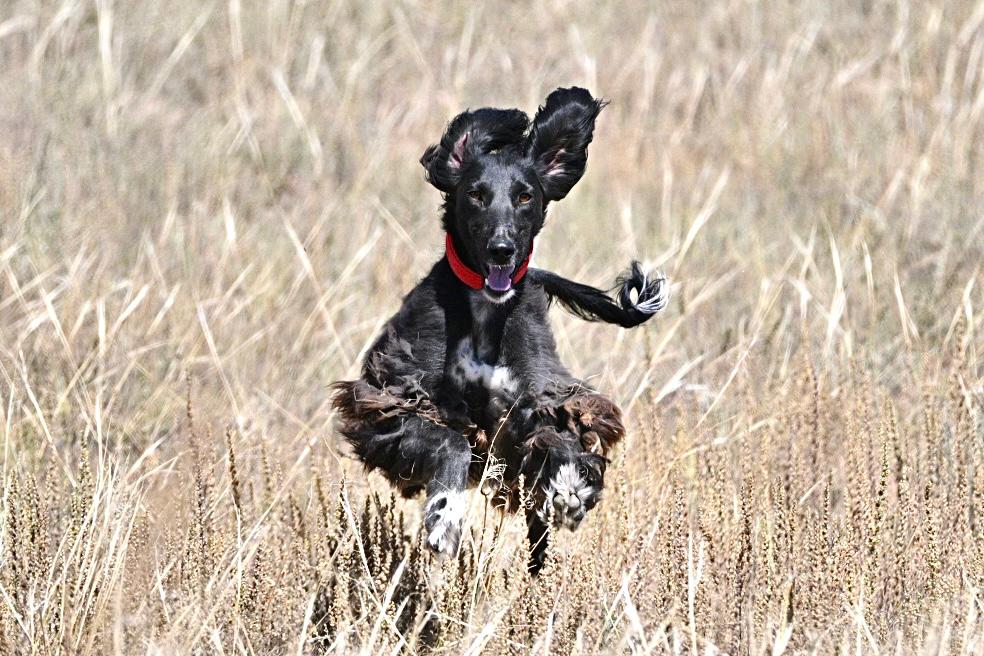
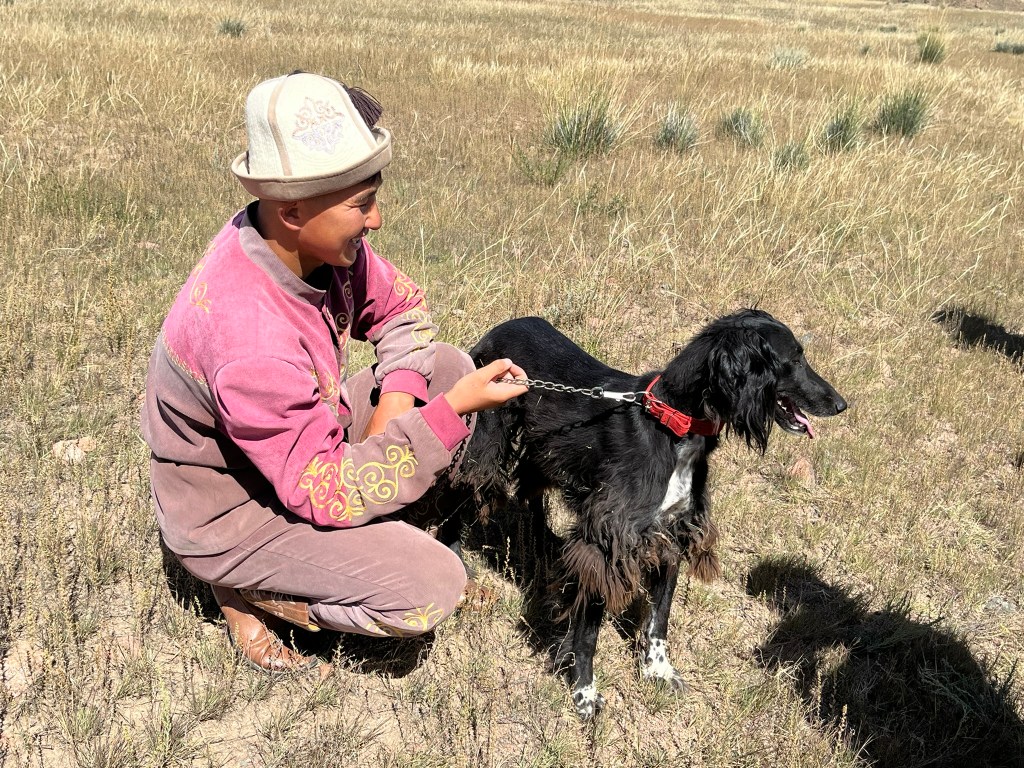
When Azamat is hunting in the winter, he will be on horseback with the eagle on his arm. The eagle is released when prey is spotted, diving at epic speeds. Azamat and his taigan will follow, finishing the kill and retrieving Kaza Kul. He hunts for fox, jackal, wolf, hares and deer.
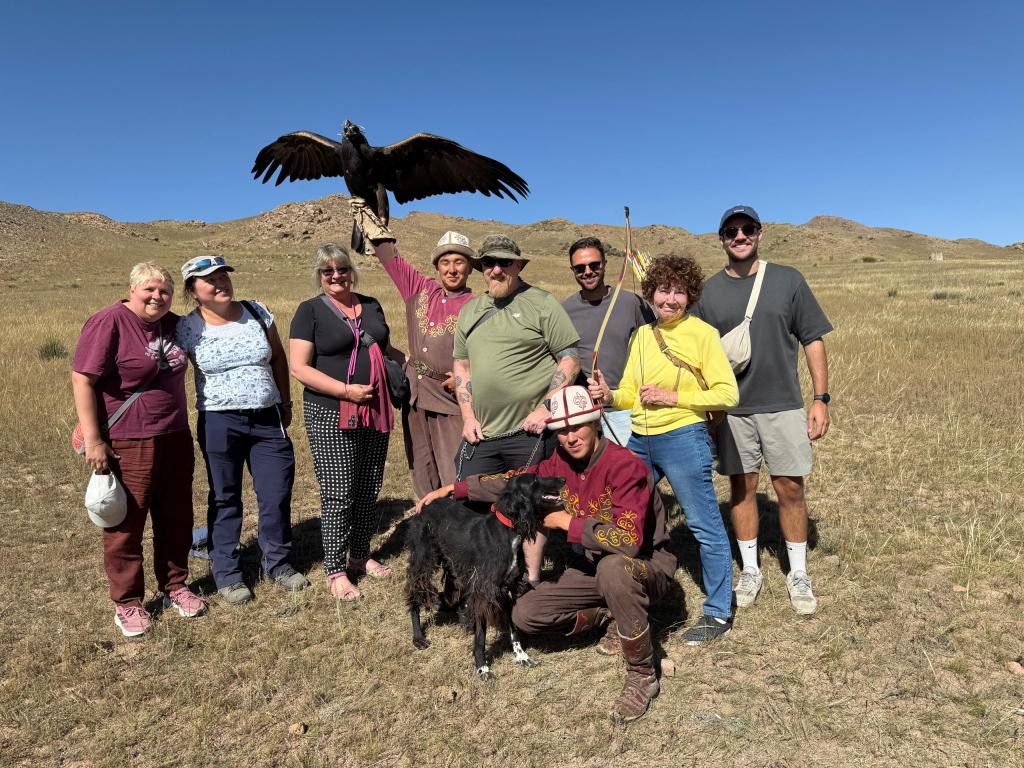

We ended our time with Azamat and his brother with another traditional nomad tradition, archery! Eagle hunting was not included in our group itinerary, but the whole group was interested in seeing such an important part of Kyrgyz culture, and our guide kindly arranged it for us as an optional extra. This is a must-do activity whilst staying at Issyk-Kul lake in my opinion and was easily the highlight of our day already filled with other highlights.
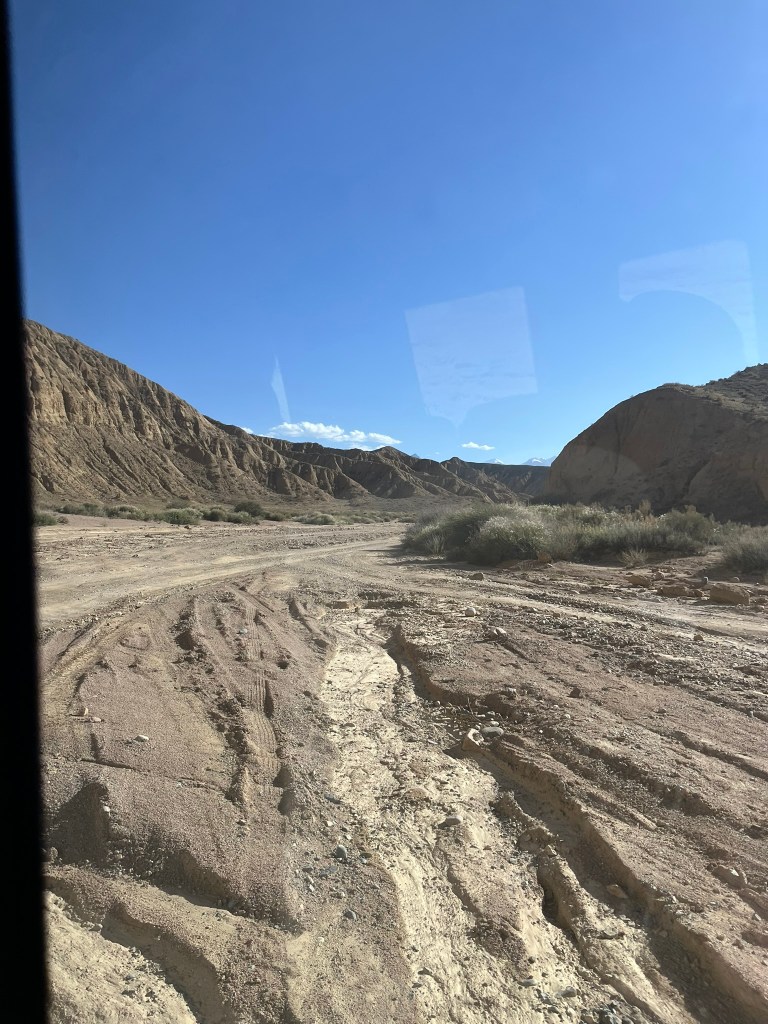
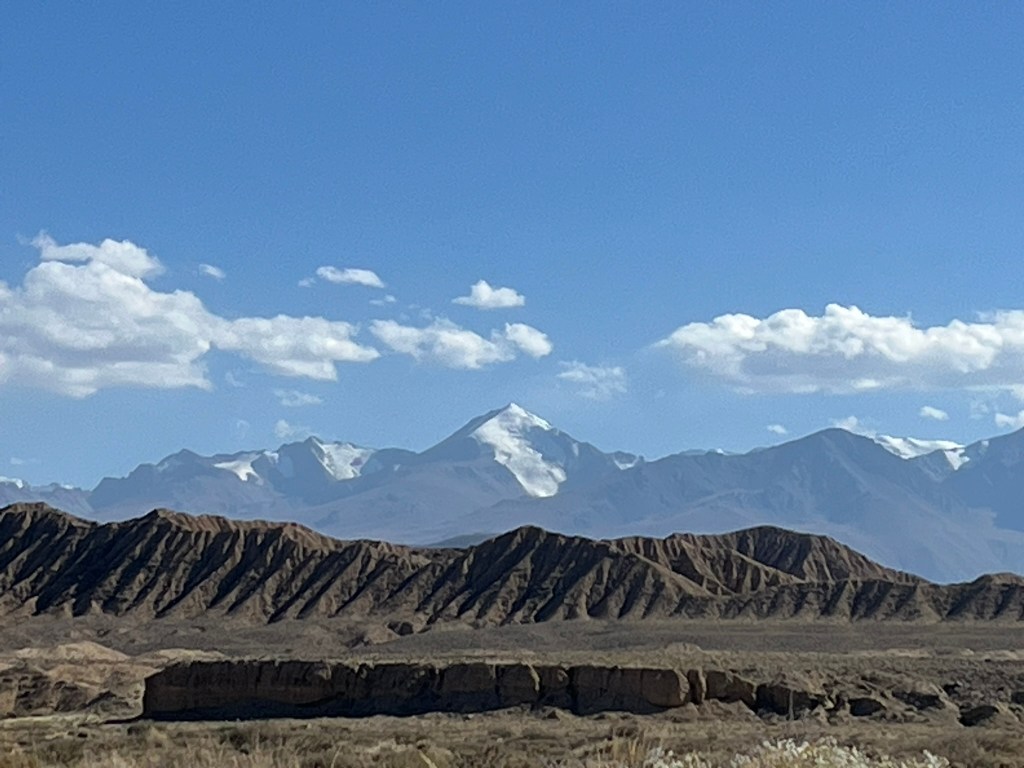
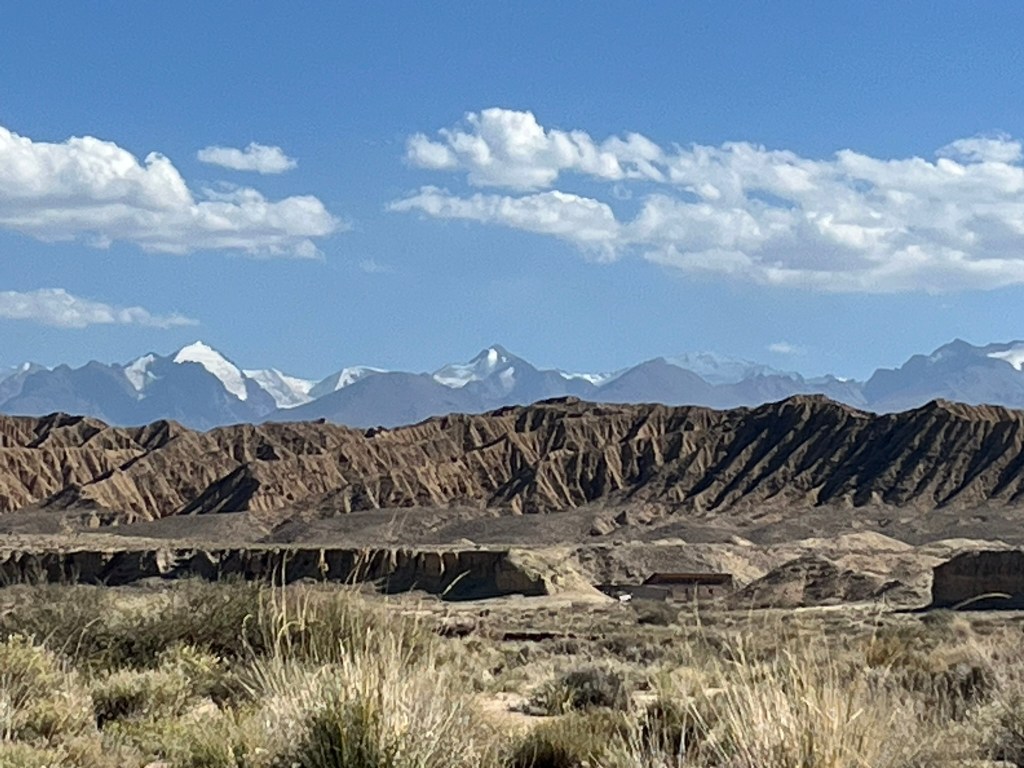
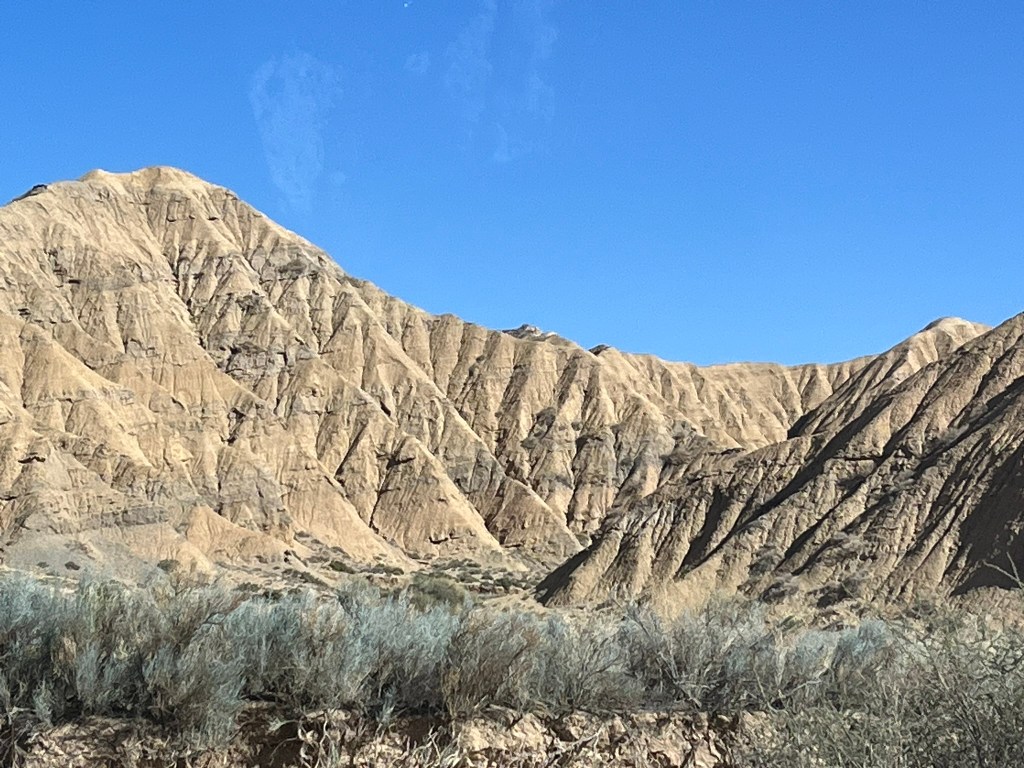
We ended the day driving to the lakeshore through a spectacular canyon called Aksay. All around a brilliant day, full of brilliant nomadic culture activities.


 Colette's Grand Detour
Leave a comment