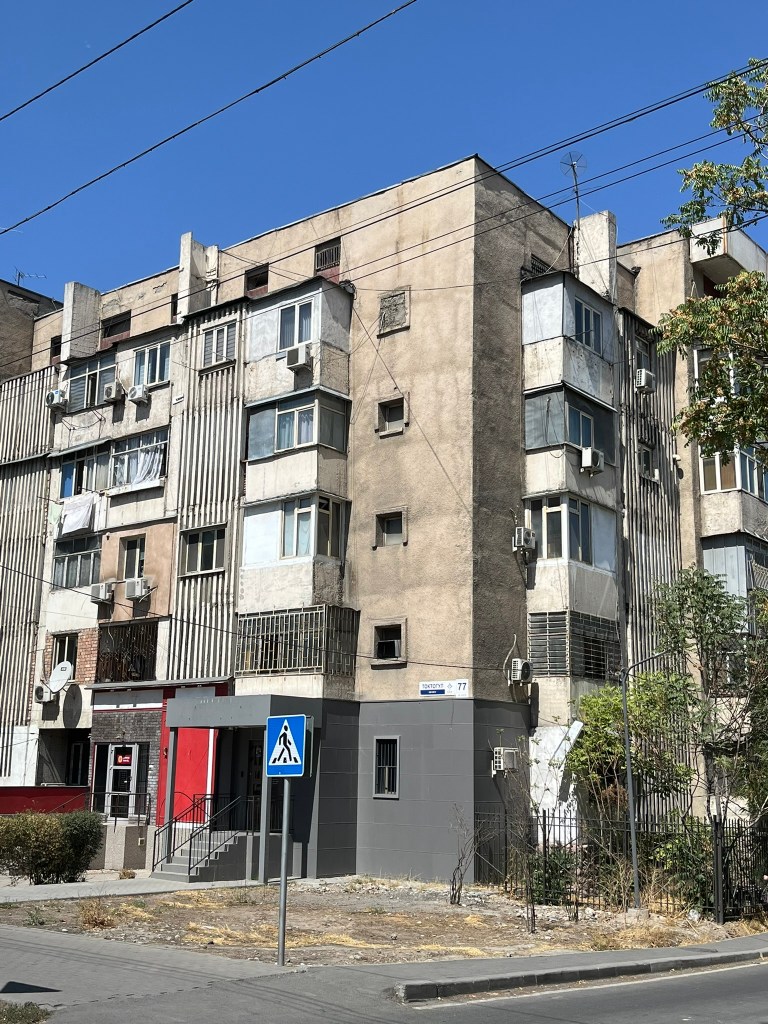
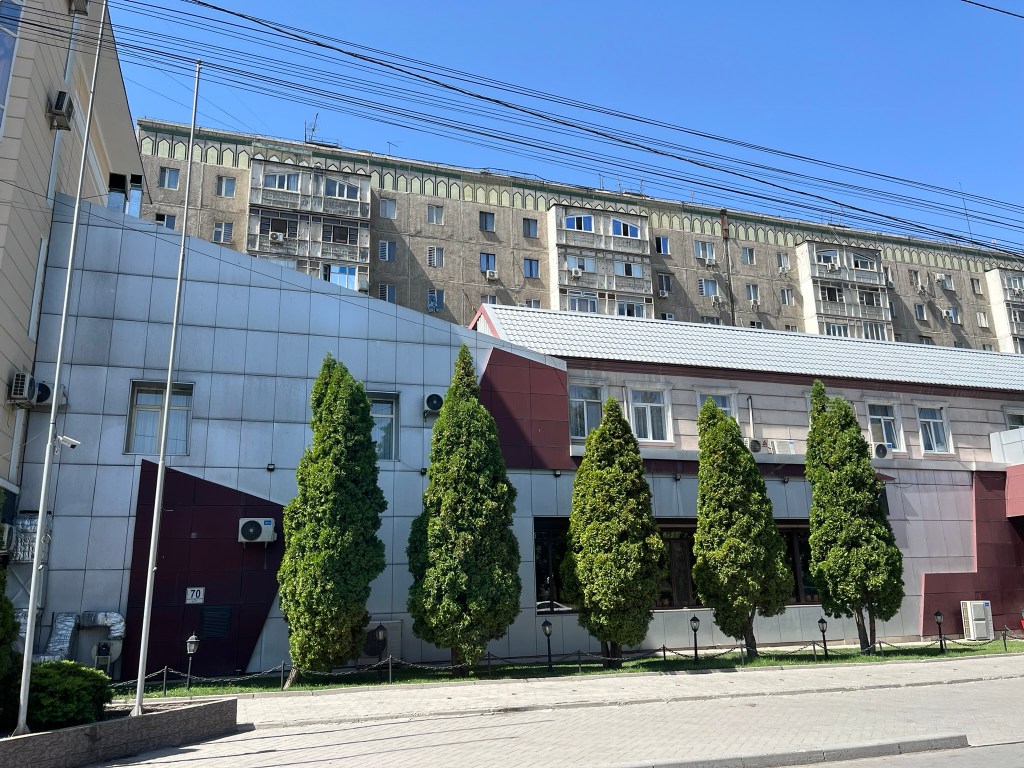
Bishkek is the capital and largest city in Kyrgyzstan, with a population of around 1.2 million people. It is the country’s political, cultural and economic center. On the surface this feels similar to the other Central Asia capital cities I have visited this year. The Tien Shan mountains provide a stunning backdrop to the cities wide tree-lined boulevards, Soviet-style apartment blocks and tons of parks and green space.
Bishkek was established in 1825 by the Kokand Khanate as a fortified town known as Pishkek. Before this the Chuy valley area was inhabited by nomadic and semi-nomadic tribes. Bishkek was not one of the great silk road cities like Samarkand or Bukhara, but was instead just a valley that trade routes passed through, connecting the Ferghana Valley with Kashgar. In 1860, during Russia’s expansion into Central Asia, the Russians arrived in Pishkek and destroyed the fortress. Afterwards it was rebuilt as another Russian military outpost. Similar to other towns I have visited on my trip, Russians and Ukrainians were encouraged to move to the fertile Chuy Valley and displace the local nomad population. It was in the late 19th century that the layout of today’s city was established with a grid plan of wide streets and boulevards. At this time it was a regional center of agriculture and trade.
After the Bolshevik Revolution, Pishpek was renamed Frunze (a commander in the revolution) and the city became the capital of the Kyrgyz Autonomous Soviet Socialist Republic. During this period there was a focus on industrialization, education, culture and urbanisation of nomadic society. It was seen as a ‘showcase modern socialist city’. During this time the population grew rapidly with the arrival of more Russians and Ukrainians and by the 1980’s the Slavic population outnumbered the Kyrgyz population in the city. The city’s name reverted to Bishkek after the collapse of the USSR and Kyrgyzstan’s declaration of independence in 1991. There isn’t consensus as to the origin of the name, Bishkek. Some sources mention a legendary warrior, others the wooden paddle used to churn fermented mare’s milk and others think it simply means ‘flat land near mountains’
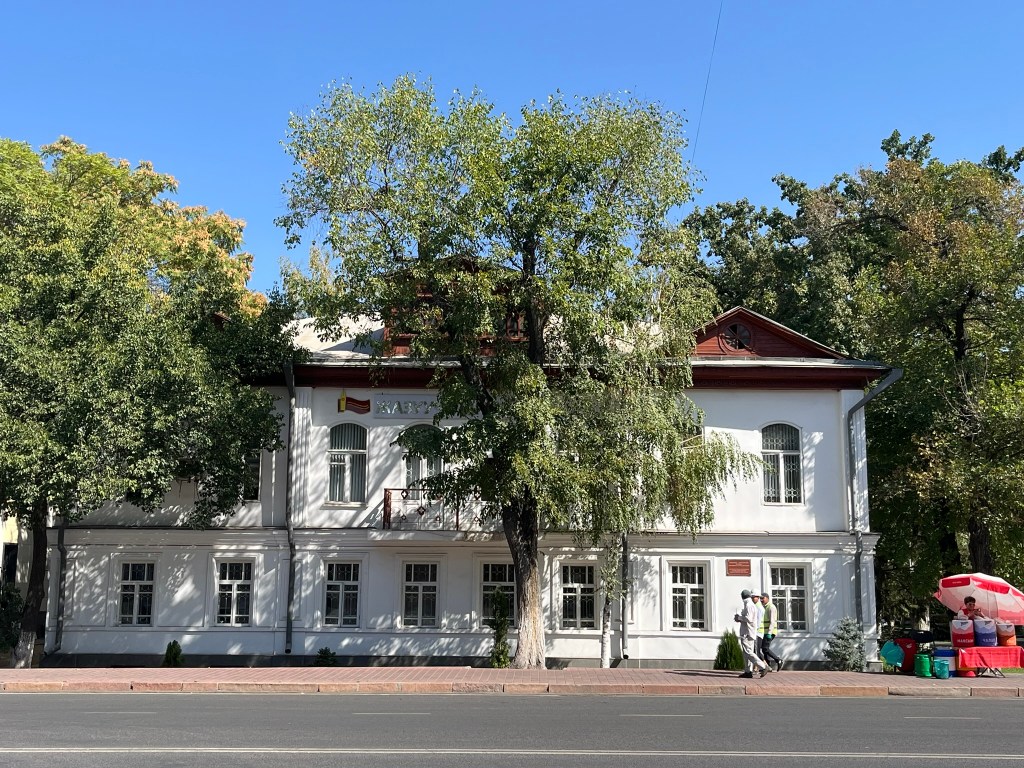
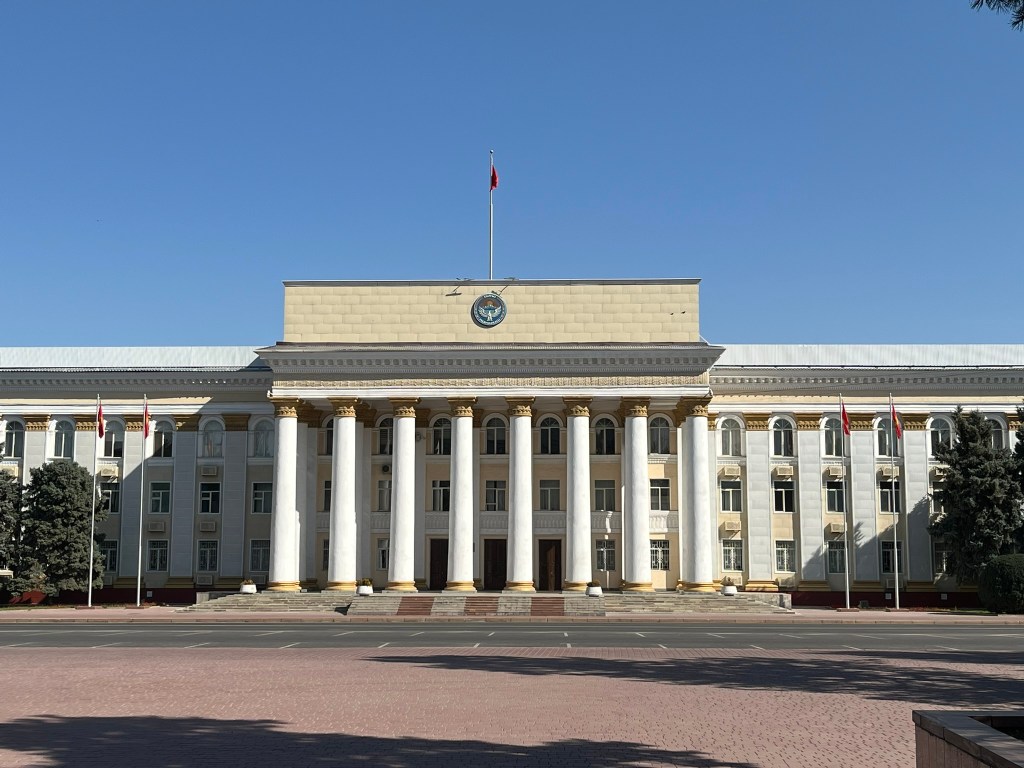
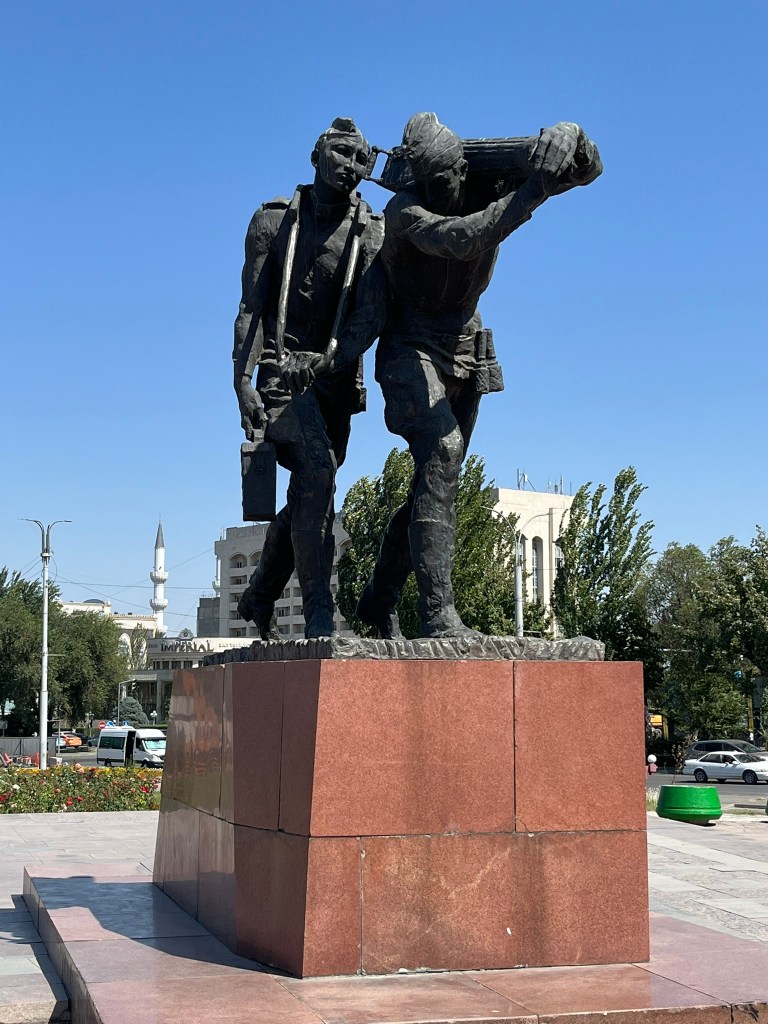
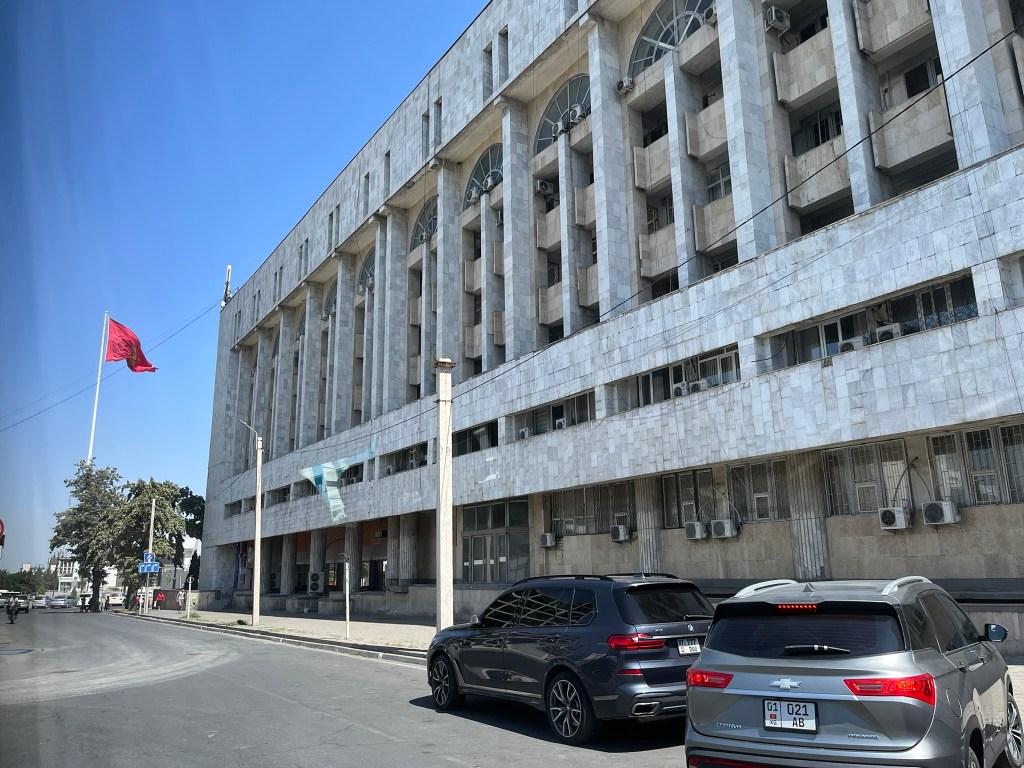
We started our city tour in Aloo-Too Square. One thing that is very easy to see is that Bishkek has kept and maintained a lot of Soviet-style government buildings whereas other capitals in the region have slowly moved away from this architectural style. The square is a huge wide open space surrounded by towering buildings, mostly covered in marble cladding. We saw the Parliament building, the Presidential Administrative Building and the State History Museum. In amongst these monolithic structures there are various statues that commemorate important points in Kyrgyz history. They seem to be replaced and updated quite frequently, depending on trends and political sentiment as the statue in the middle of the square had apparently only been finished 2 months earlier and this was the third time it had been replaced in ~20 years.
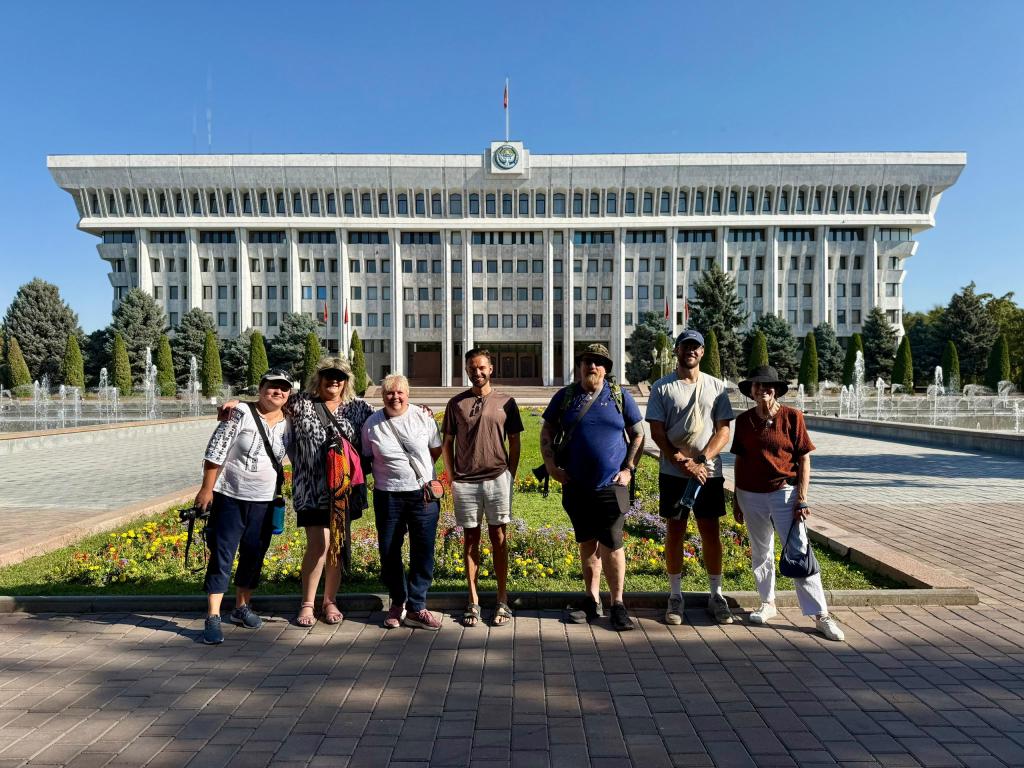
We were lucky enough to see the changing of the guard during our walk, although those doing it didn’t seem to be very well-trained and were probably young men undertaking their year of compulsory national service. The city is preparing for the country’s national day on August 31st, so there was loud music being tested during the ceremony which I am sure was super distracting to the soldiers.
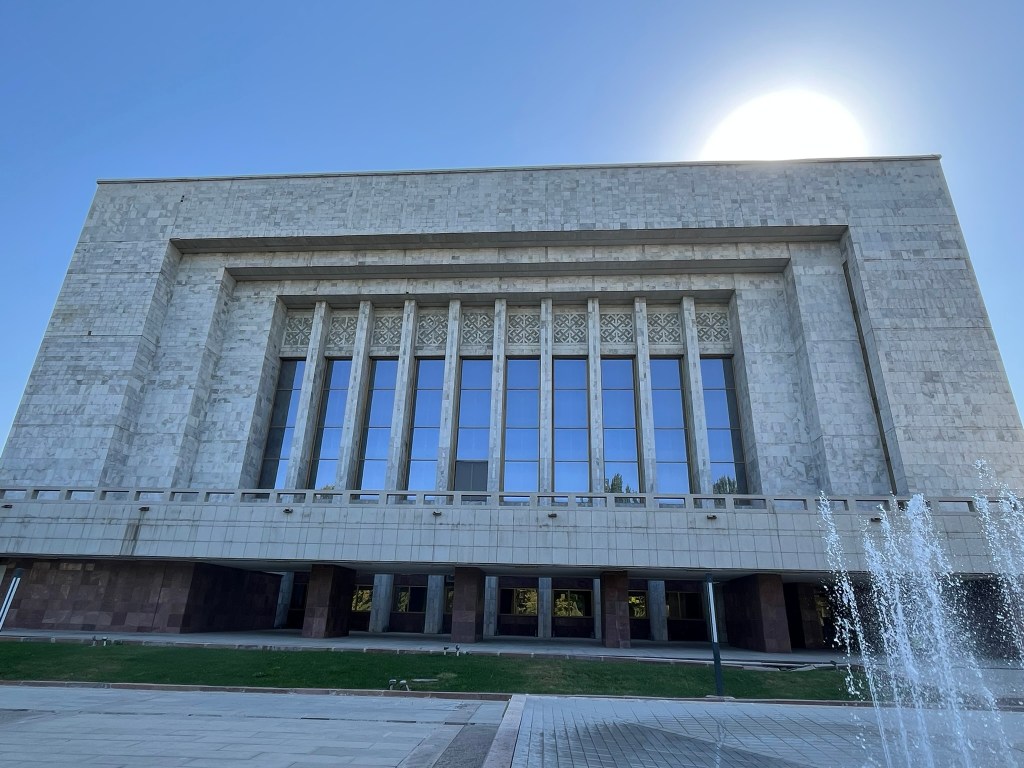
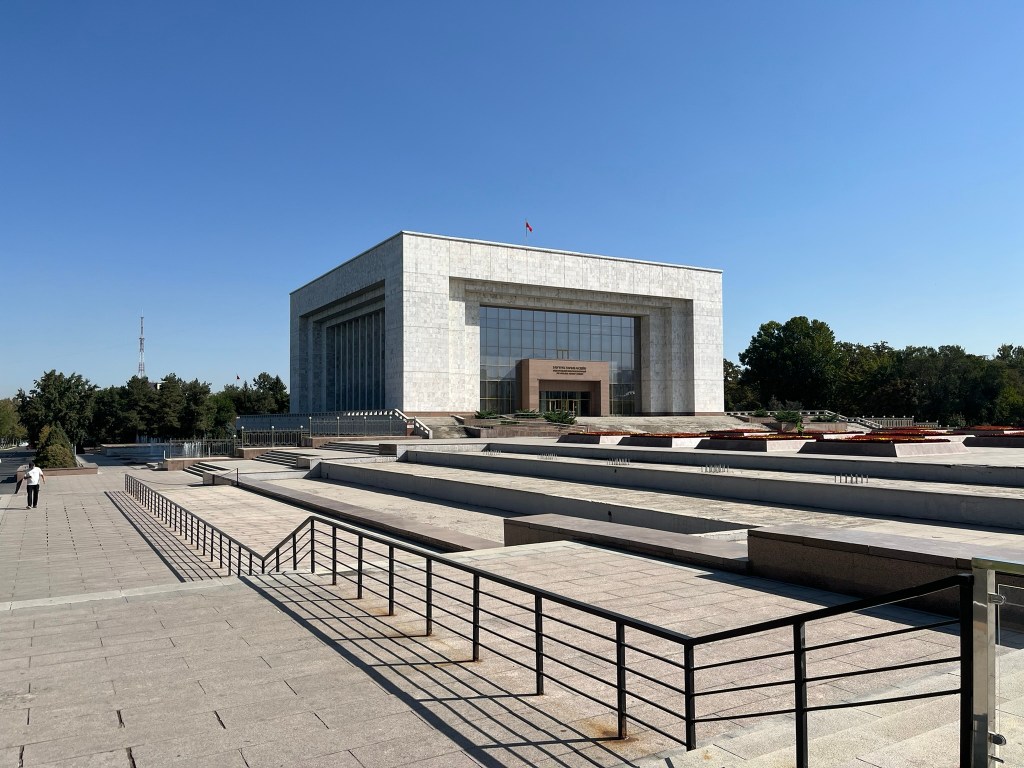
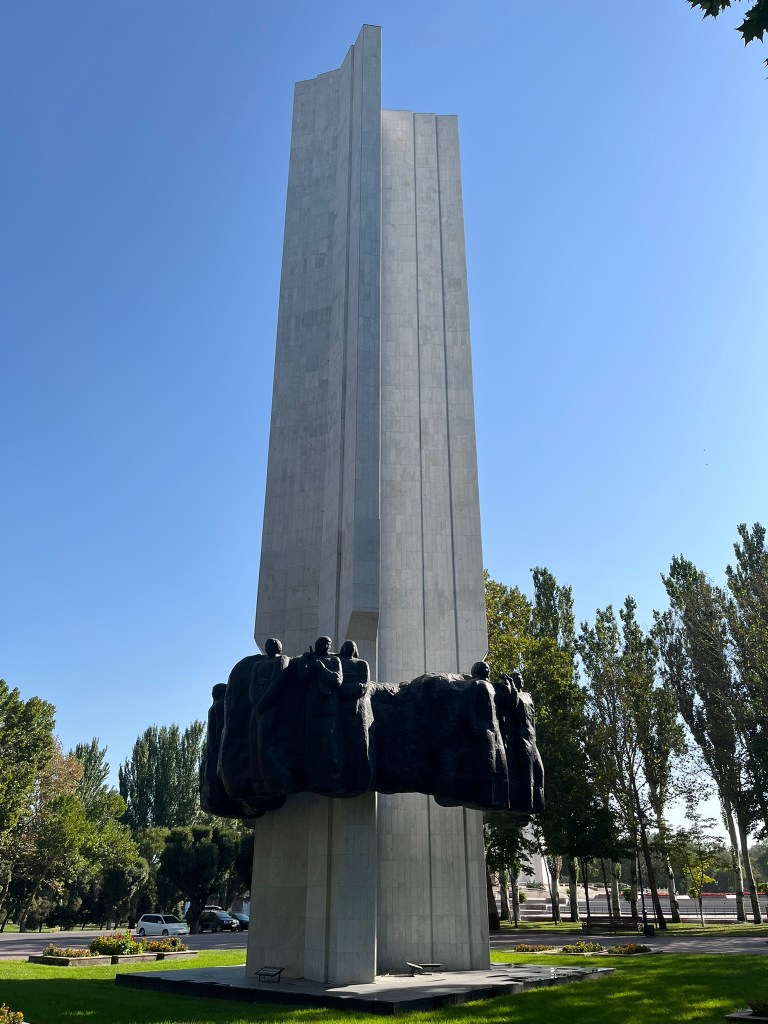
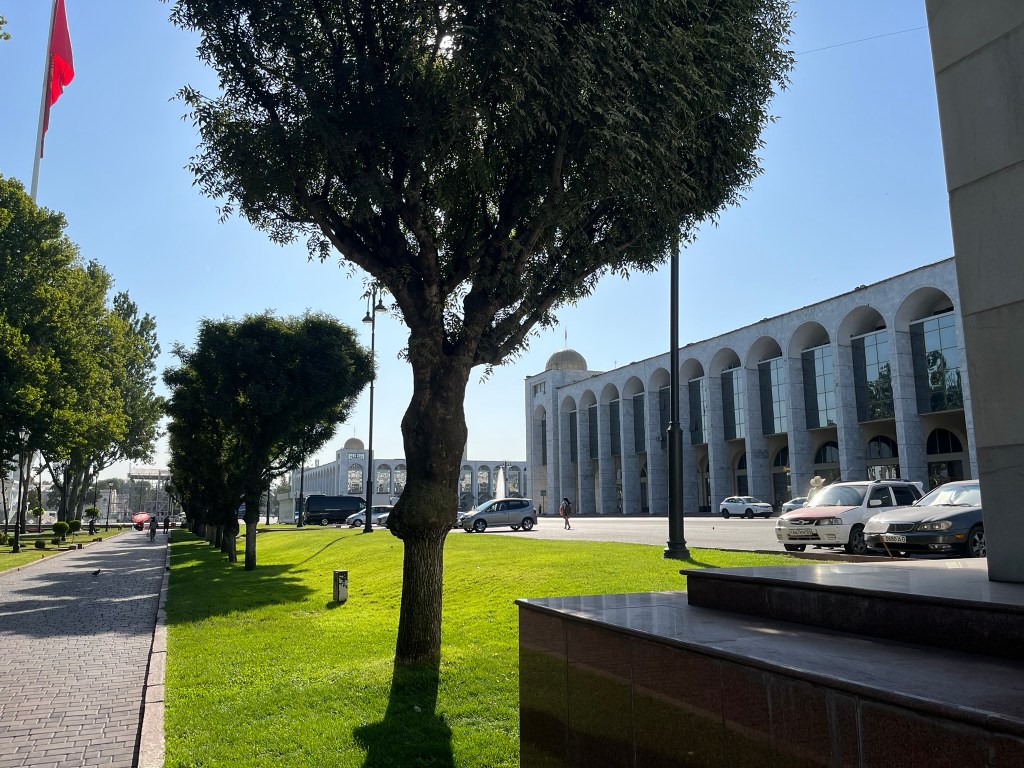
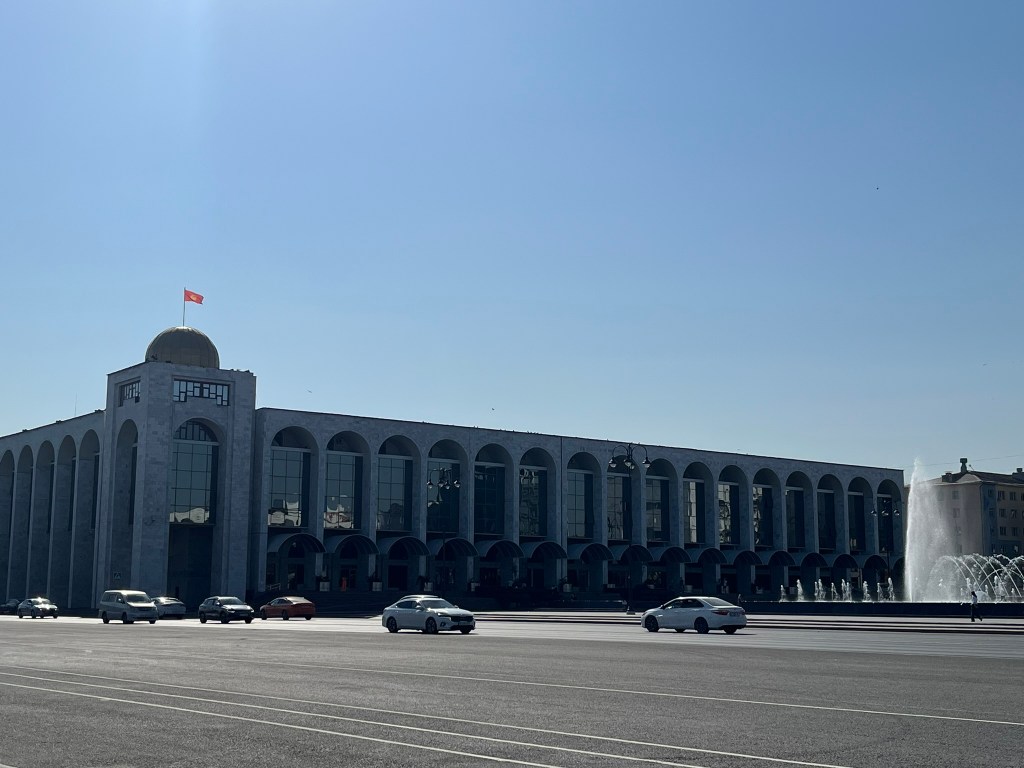
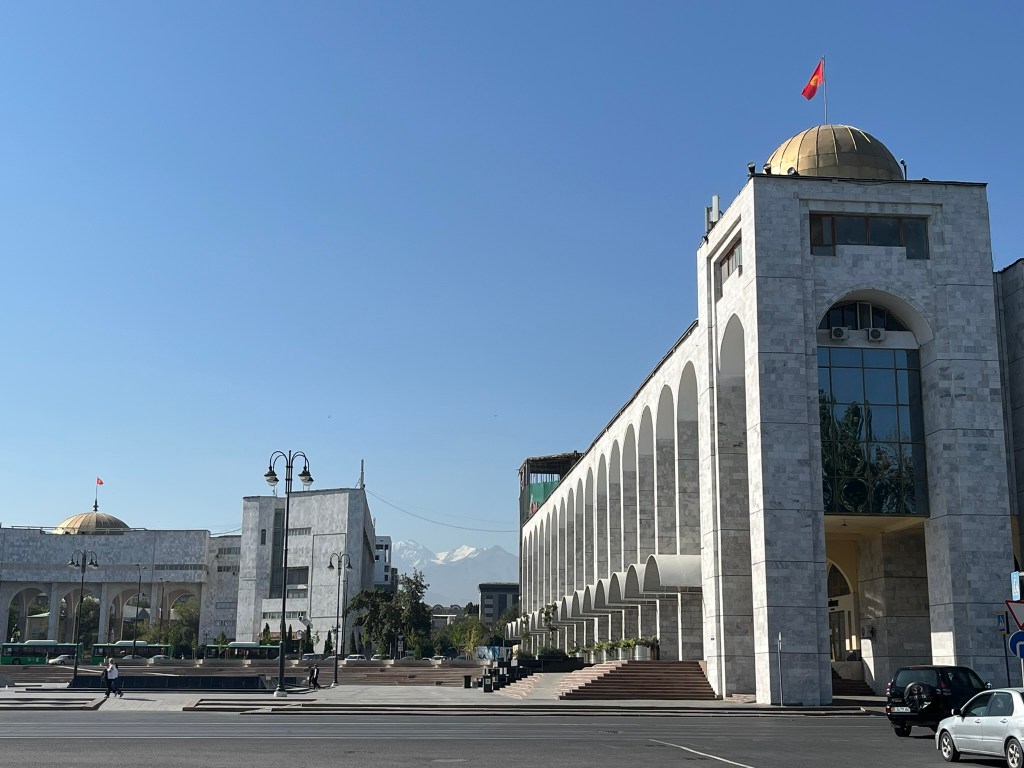
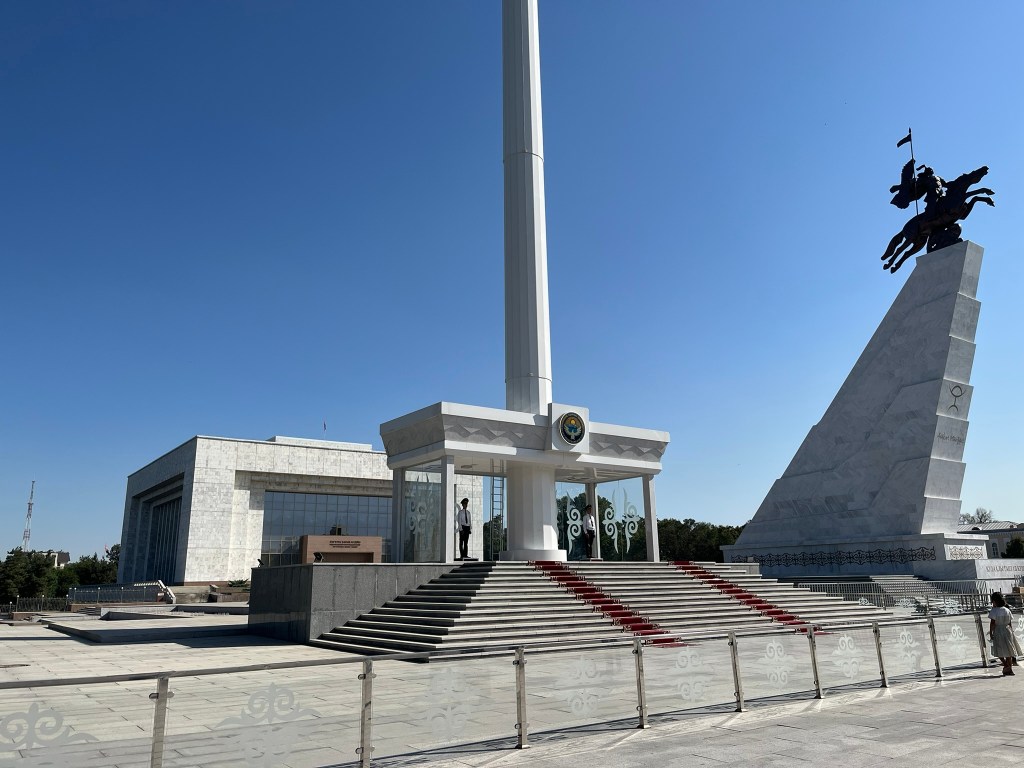
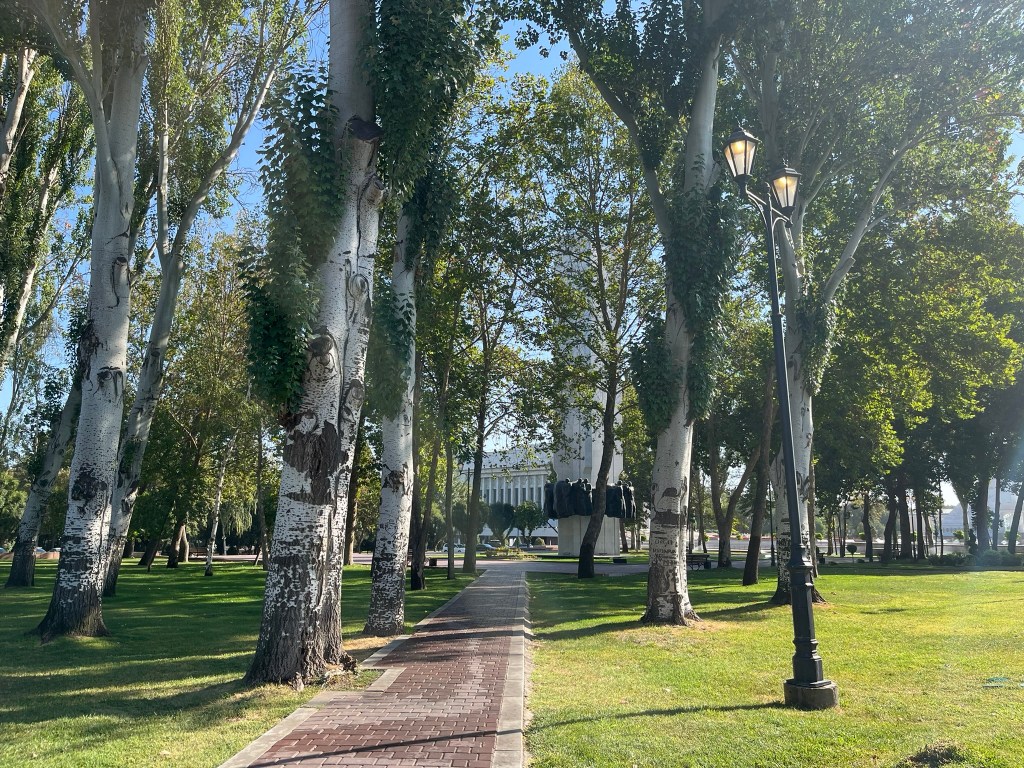


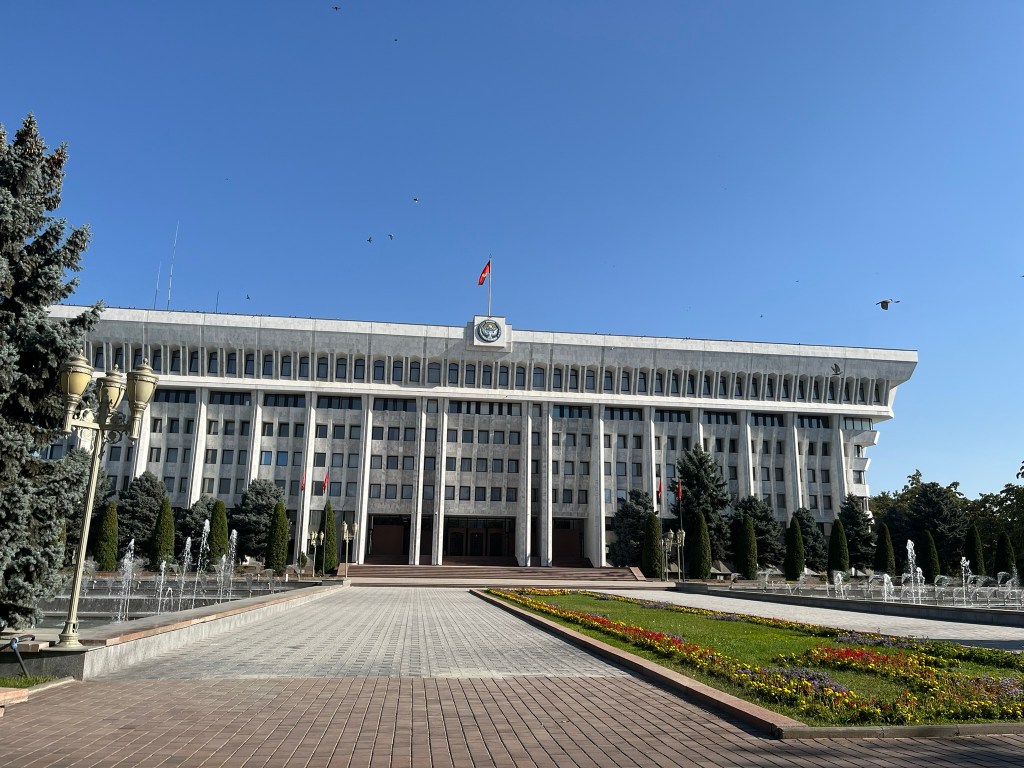
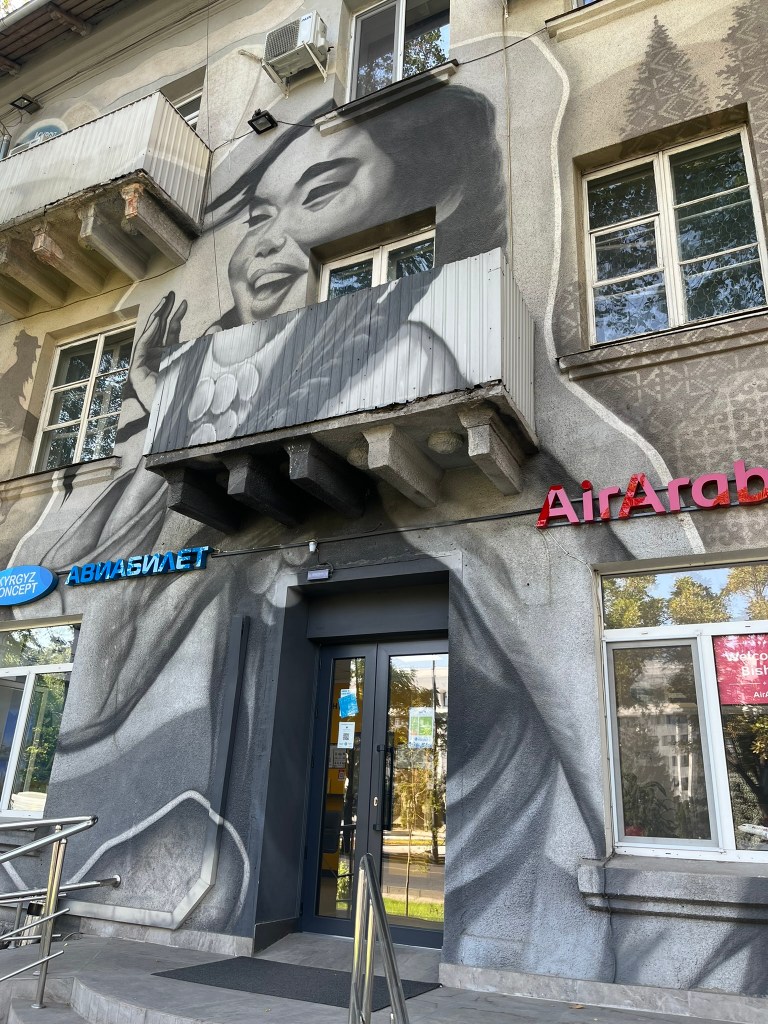
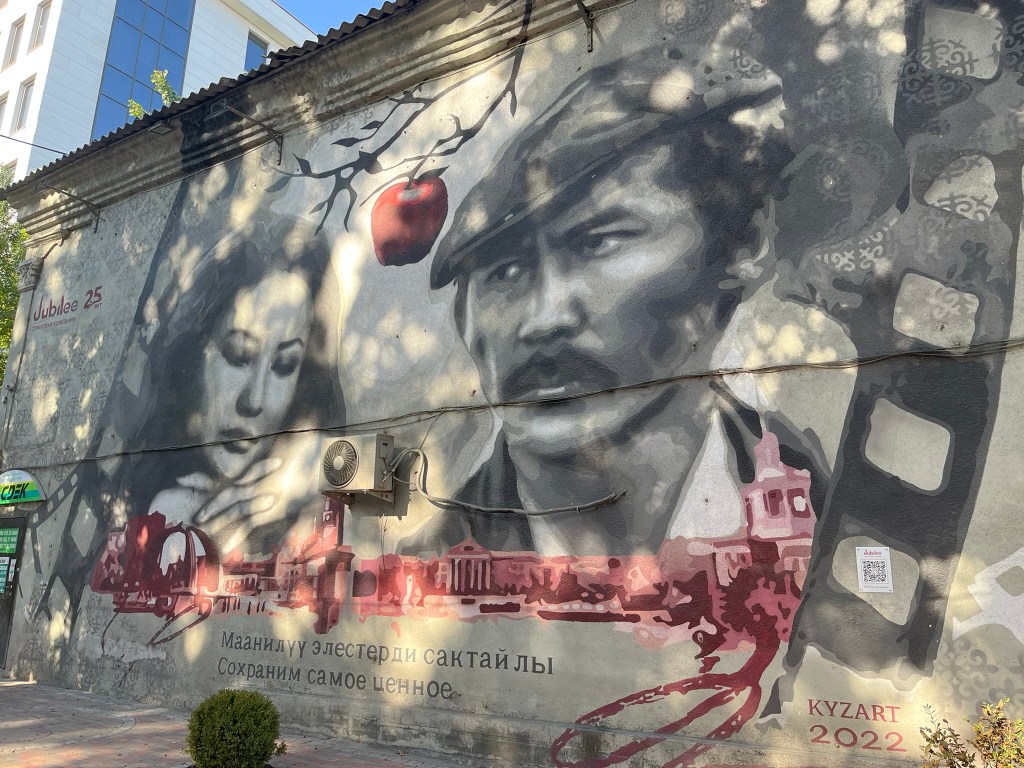
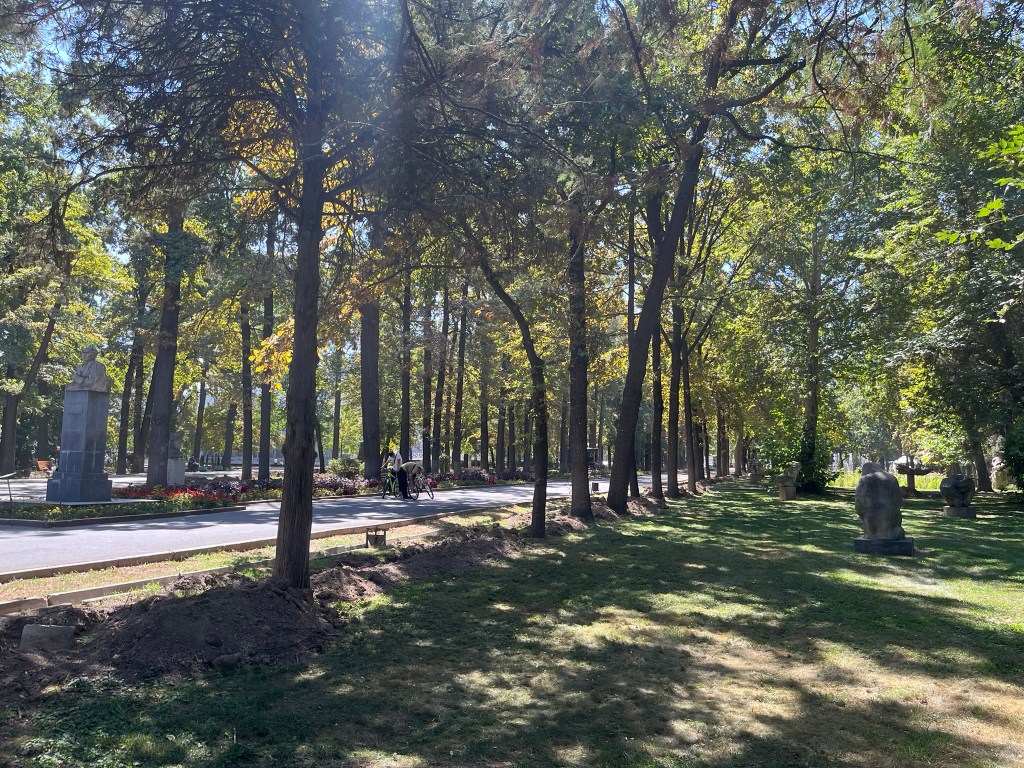
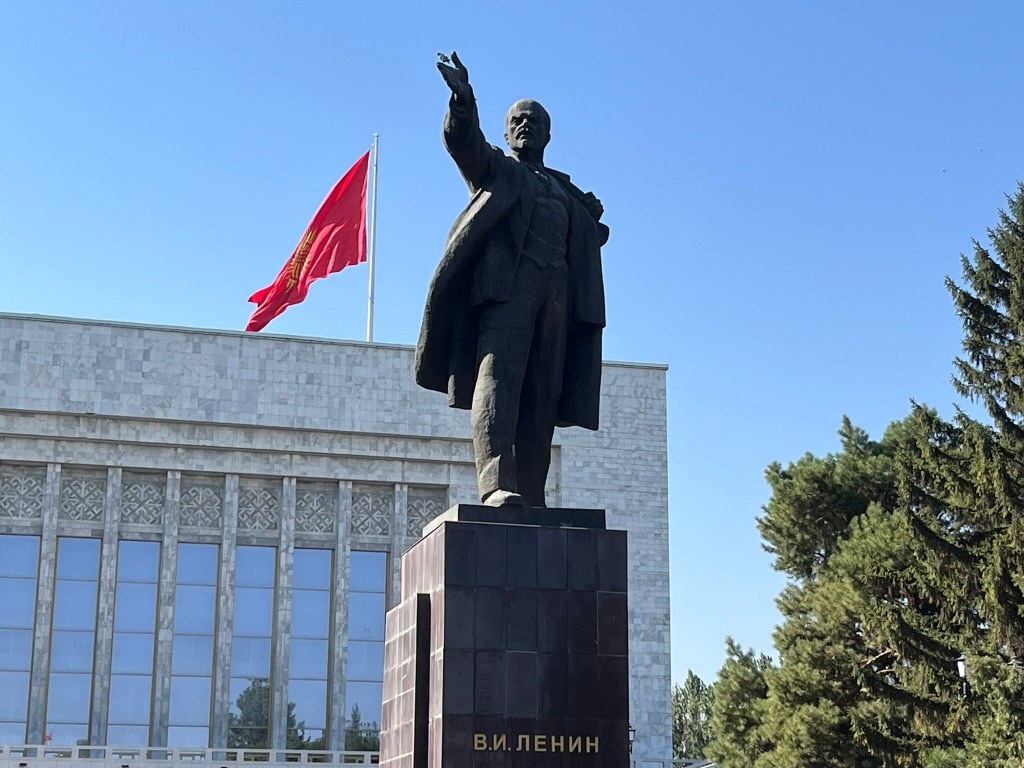
Behind the museum, there is a huge Lenin statue with a nice backdrop of the national flag and the snow-capped Tien Shan mountain range. This leads into Oak Park which is a big open-air sculpture gallery.
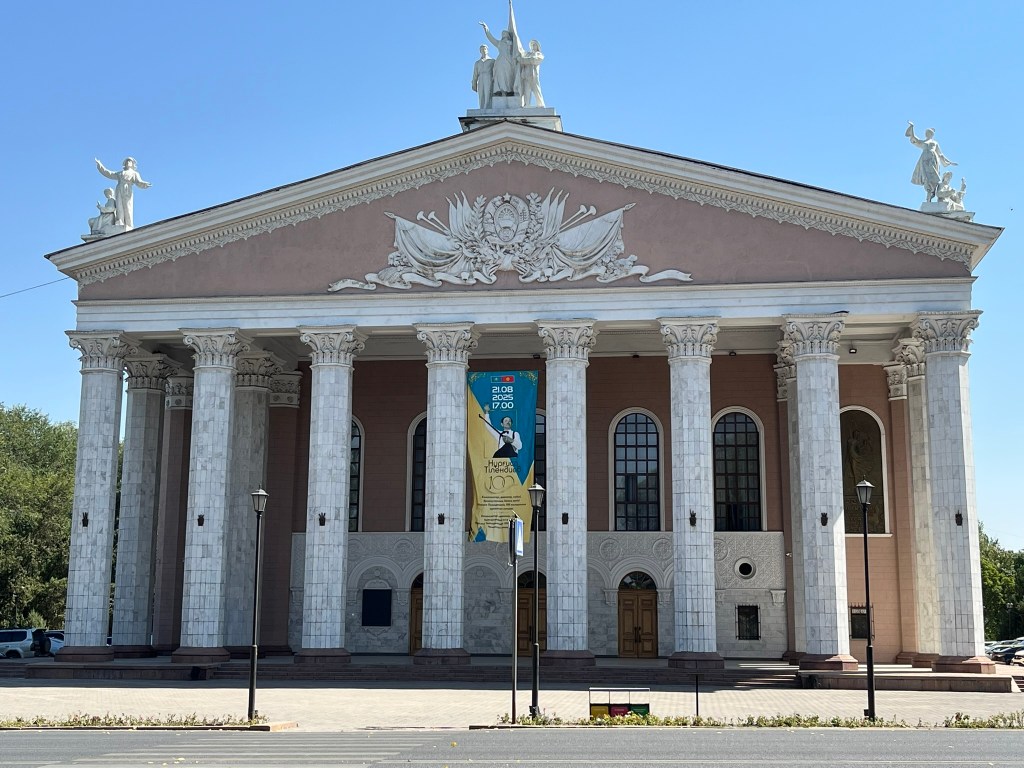
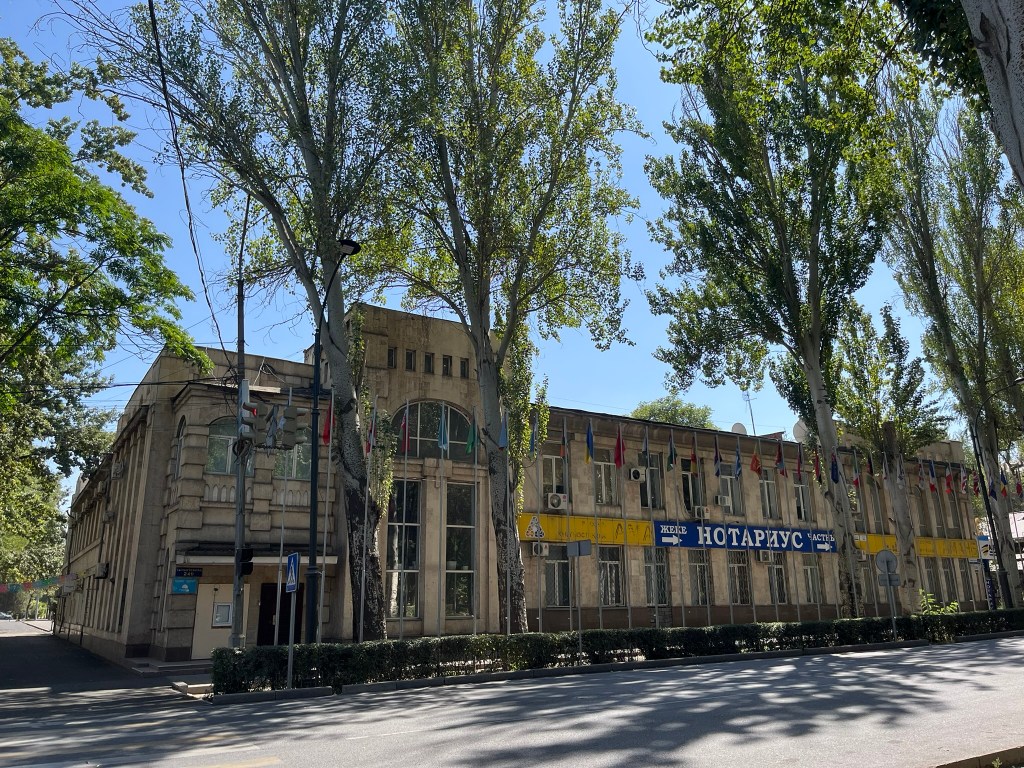
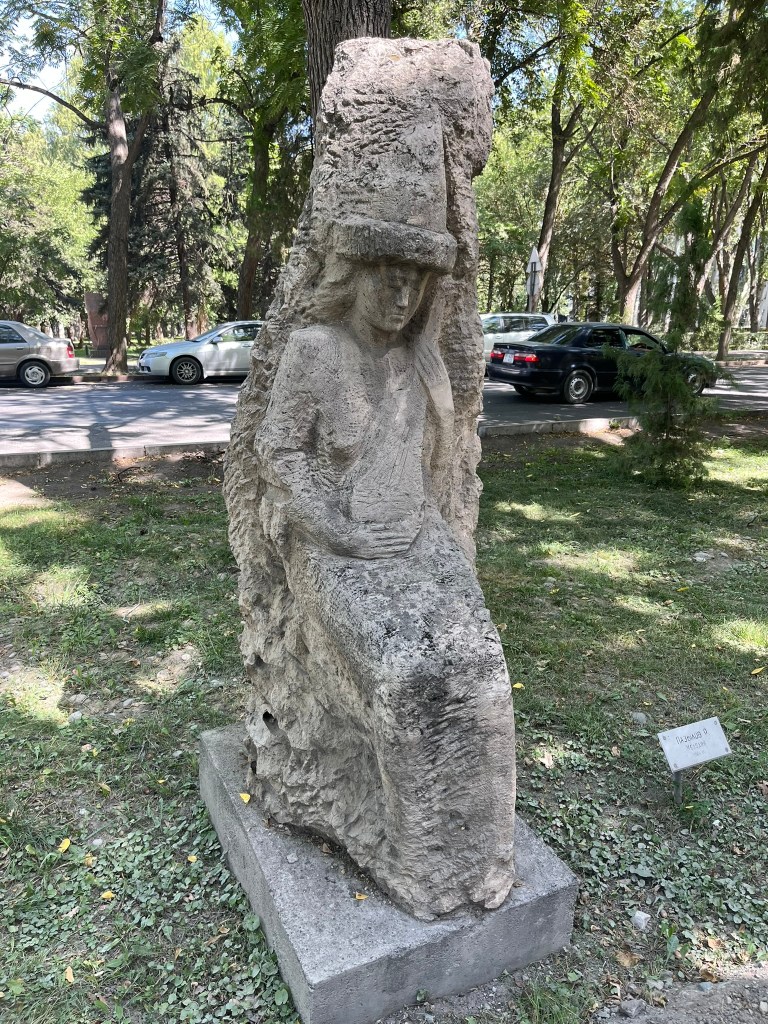
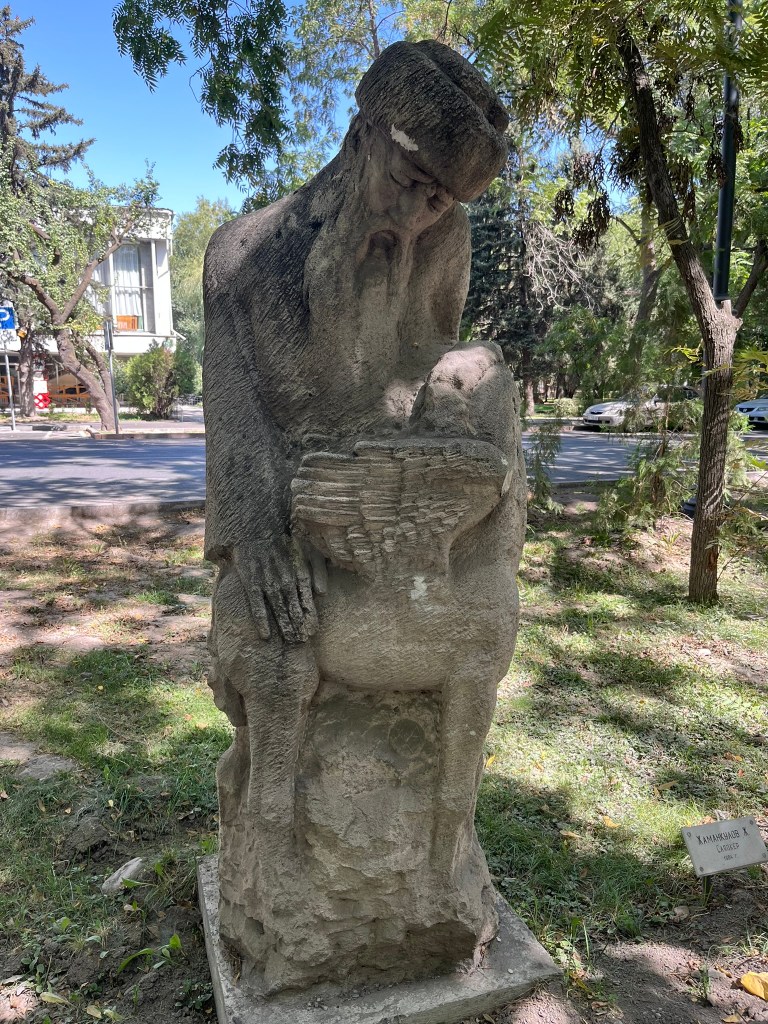


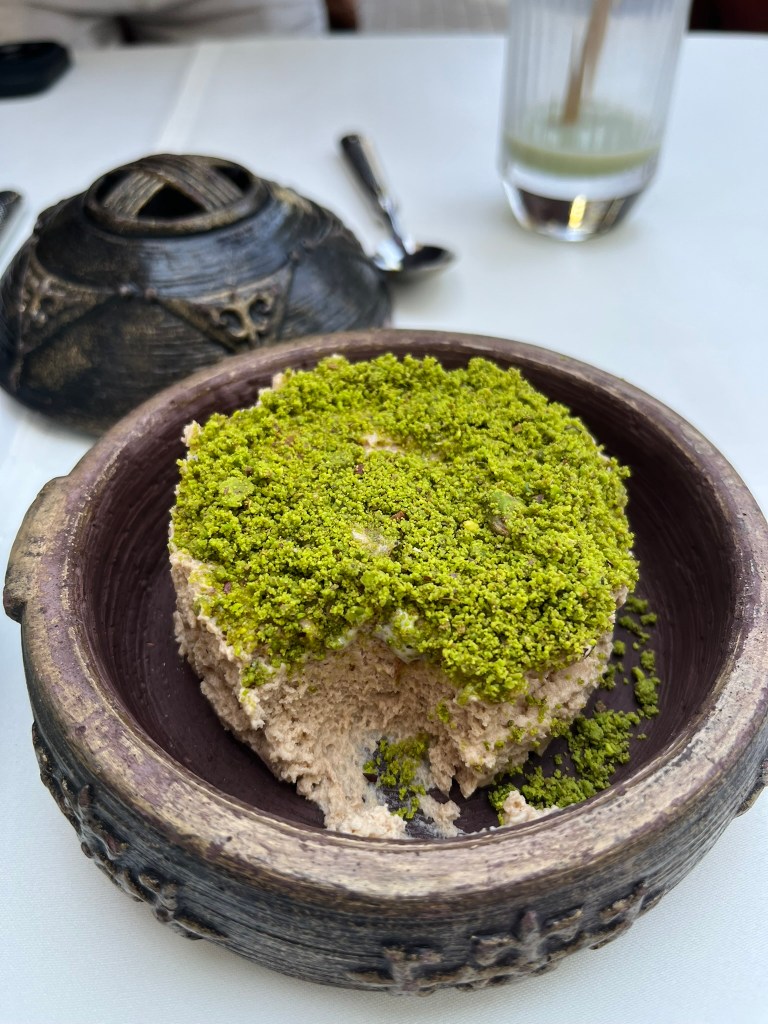
We stopped briefly for a coffee and to try a local dessert called Sary Mai that I thought was a type of hazelnut mousse but was actually entirely made of a slowly cooked clarified butter. I was a bit mortified that I had basically just been eating mouthful’s of butter!
On our way to Victory Square we stopped by a local street vendor selling 3 types of summer drink from big metal tanks. I had been curious what these ladies were selling so it was great to stop and try each drink. The first was Maksym, a sour, fizzy fermented grain drink. Apparently it is thirst-quenching but it was too malty for me. The next was Chalap, a salty, tangy drink made of fermented sour milk. Again, not for me. And the third, and most palatable, was Kvass, a sweet-sour fermented rye bread drink that was pretty ok. Thankfully we only had 1 cup of each to share between the group!

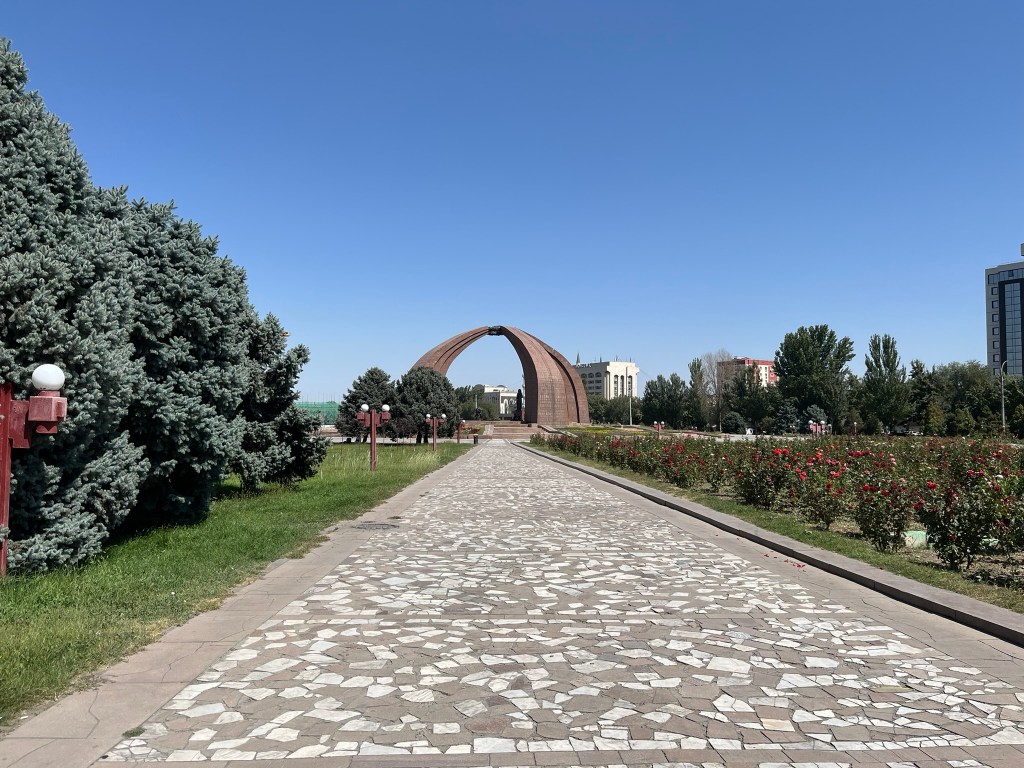
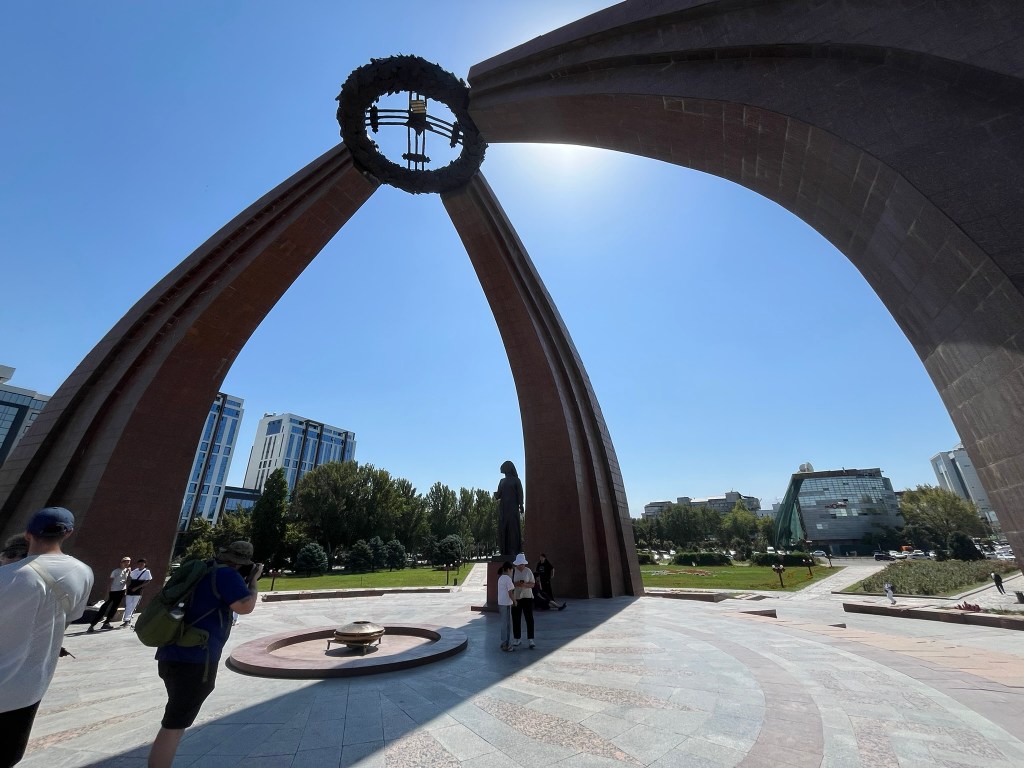
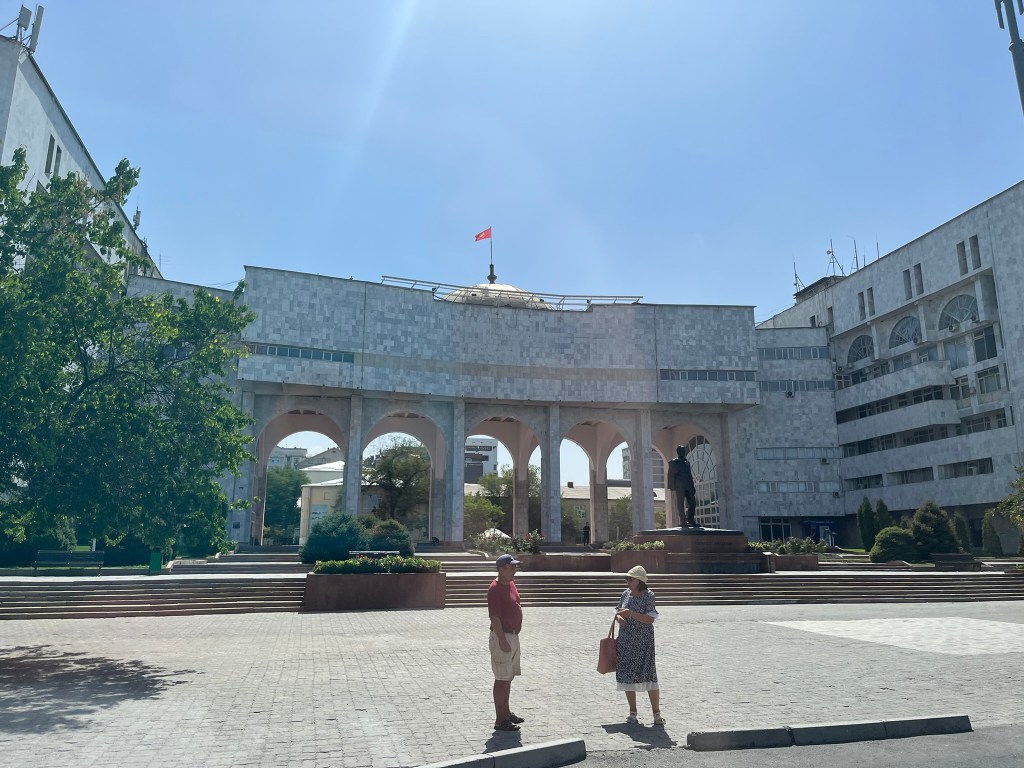
We ended the walking part of the tour in Victory Square. Like most of the other monuments we had seen, this area was built in the 1980’s and dedicated to those involved in The Great Patriotic War. The three granite arches reach up into the sky like the ribs of a traditional yurt and bend inwards to connect to the central tunduk holding the yurt together (same thing as a shanyrak in Kazakhstan).
We then hopped onto our bus to see some of the Soviet mosaics that Bishkek is famous for. These are scattered across the city rather than being in prominent locations like the main squares. They were commissioned between the 1960s-80s to help beautify public spaces. A colored class tile called smalti, as well as ceramic and stone was used to create these mosaics. This style of art was chosen over painting because it would weather the harsh climate better. The style is a mix of socialist realism depicting workers and farmers combined with Kyrgyz folk art.
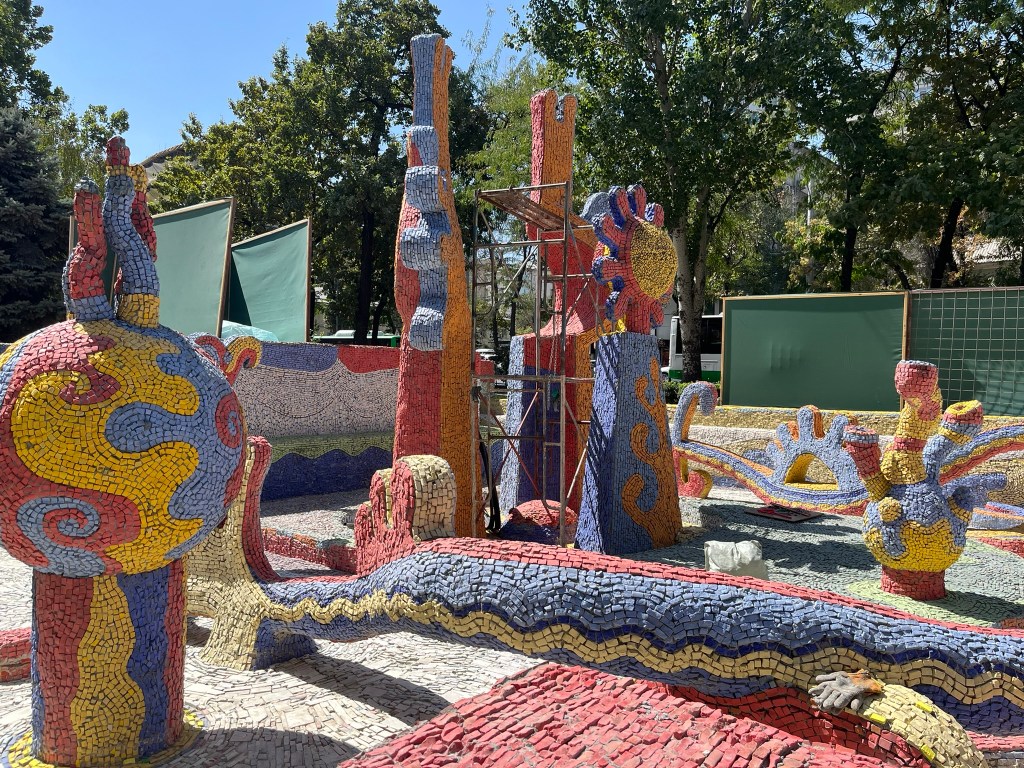
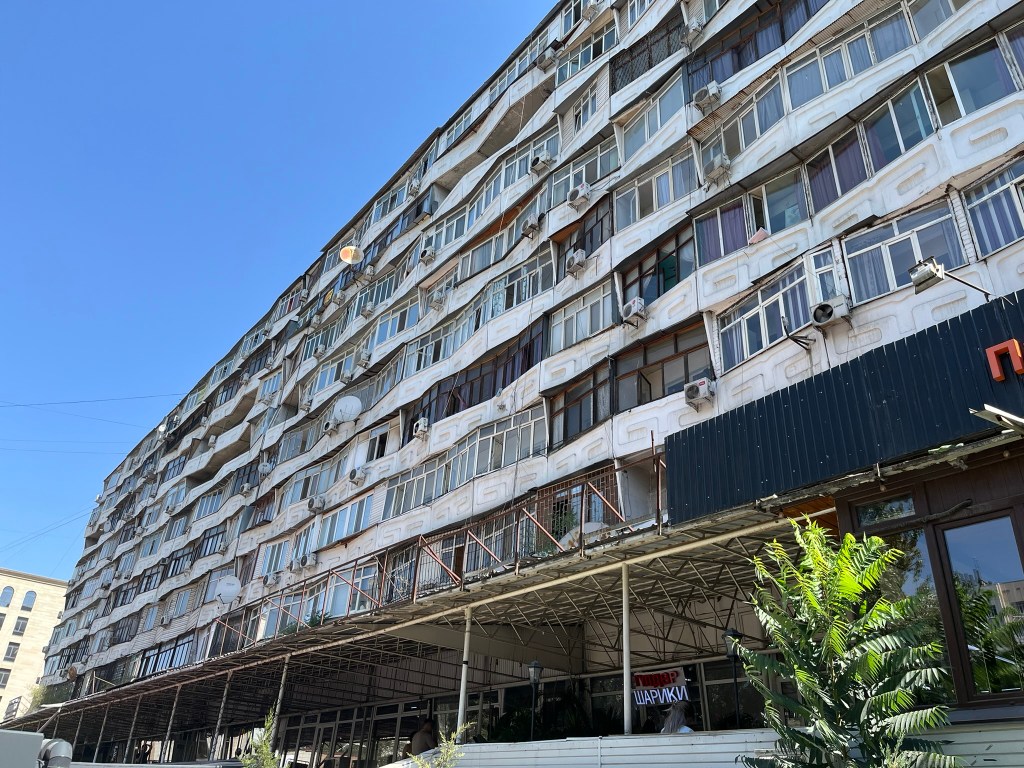
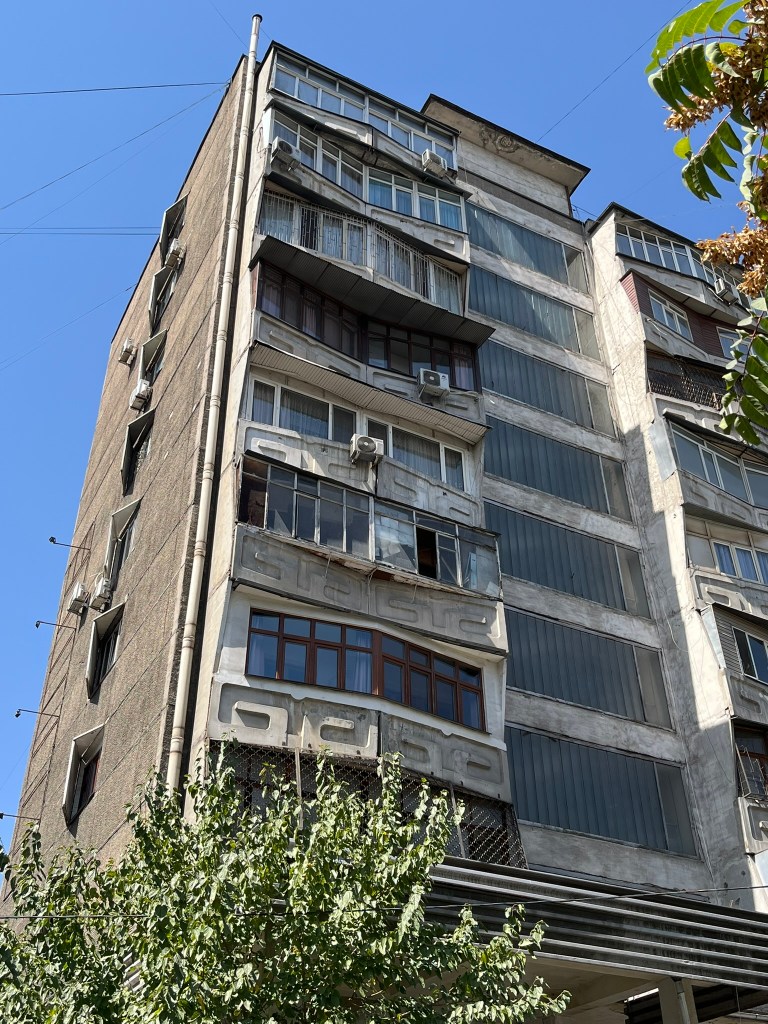
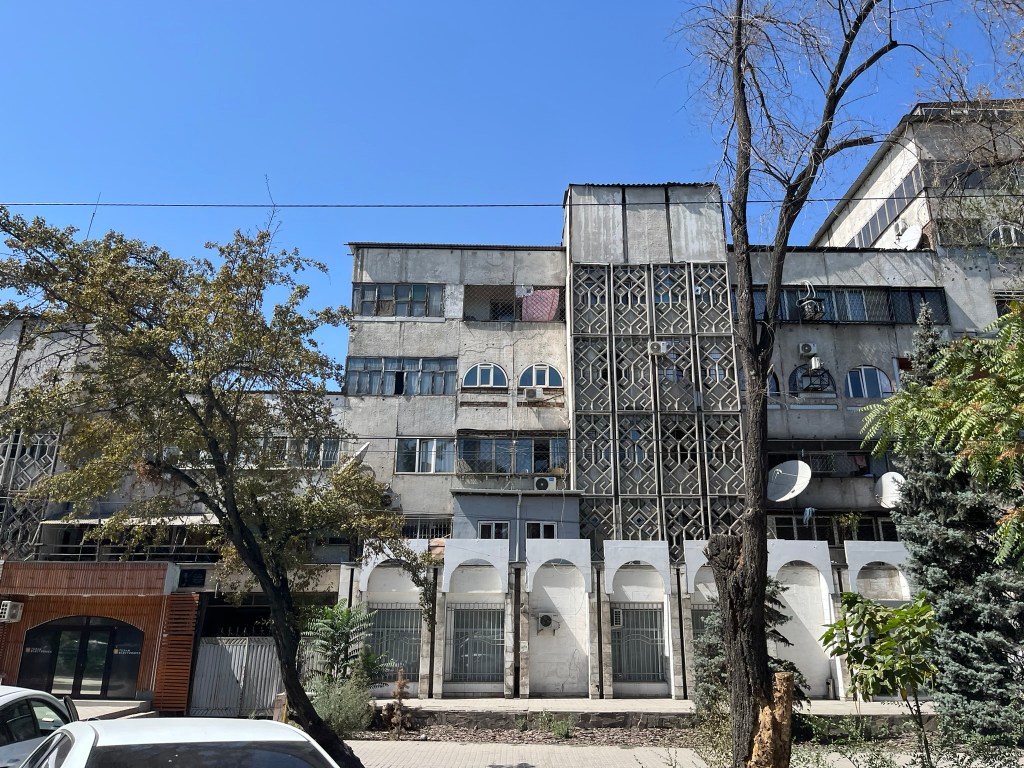
Over time these mosaics have been neglected or even destroyed but there is now a growing movement to protect and restore them. The Sunny Fish Fountain is currently under renovation, but was very striking and just sitting in a regular neighbourhood. Behind the fountain there was also a super interesting soviet-era apartment block with a really bizarre balcony design.
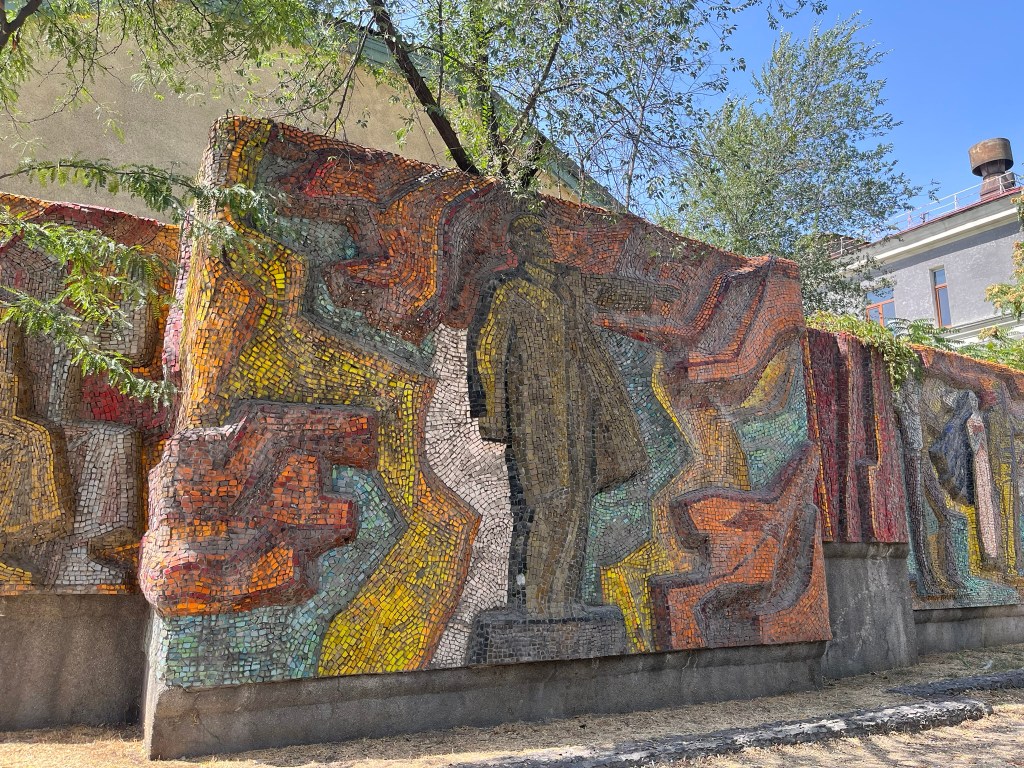
The ‘Lenin is with us’ mosaic was in another non-descript location, showing him in his characteristic ‘arm stretched out’ pose surrounded by a range of other Soviet figures. The arm pose is meant to symbolize the march towards communism and that he was leading his people forward.
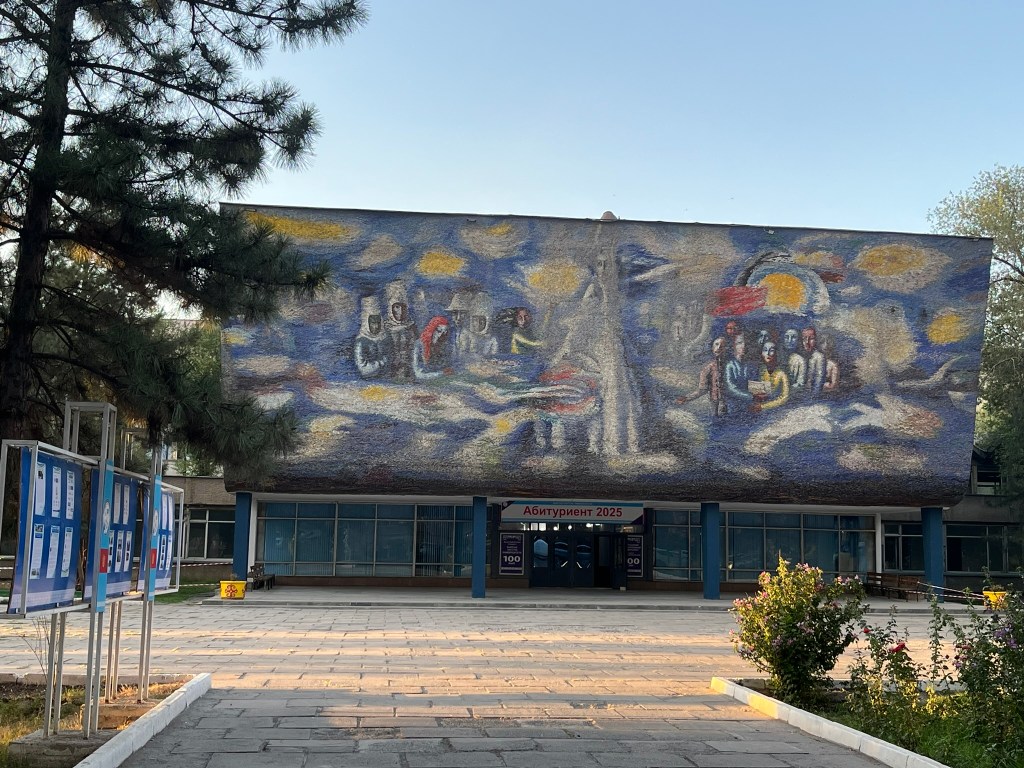
The final mosaic we saw was at the National University and called ‘Path to Enlightenment’. It sits at the entrance to the campus and looks a little different to the other mosaics we saw. This one had a more ‘dream-like’ design with traditionally dressed people emerging from the sky. It felt much more like a painting and was much more detailed. Some notes on Google question how this mosaic was allowed during a time when art was closely monitored and it didn’t follow the norm of being straightforward and ideological.
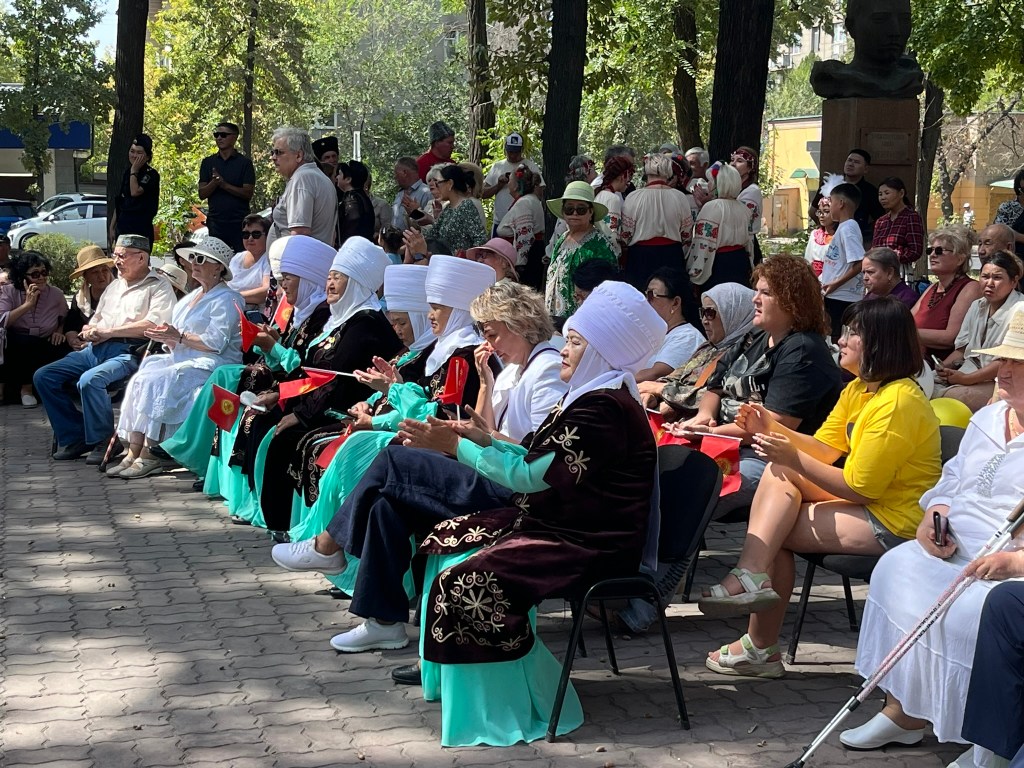
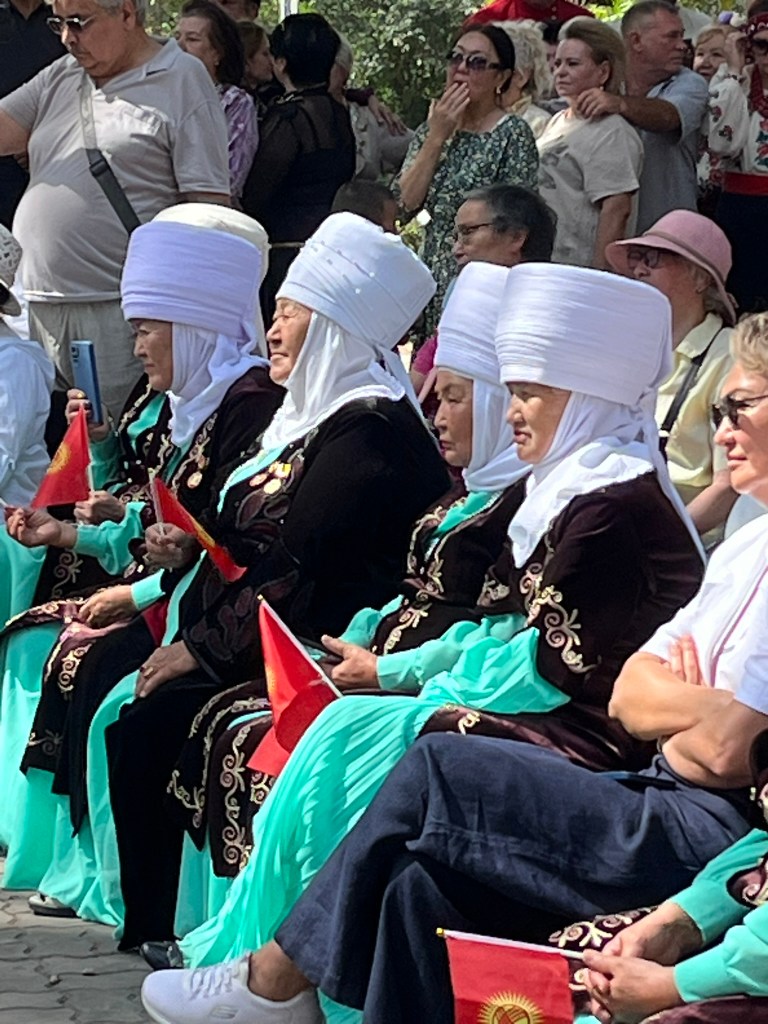
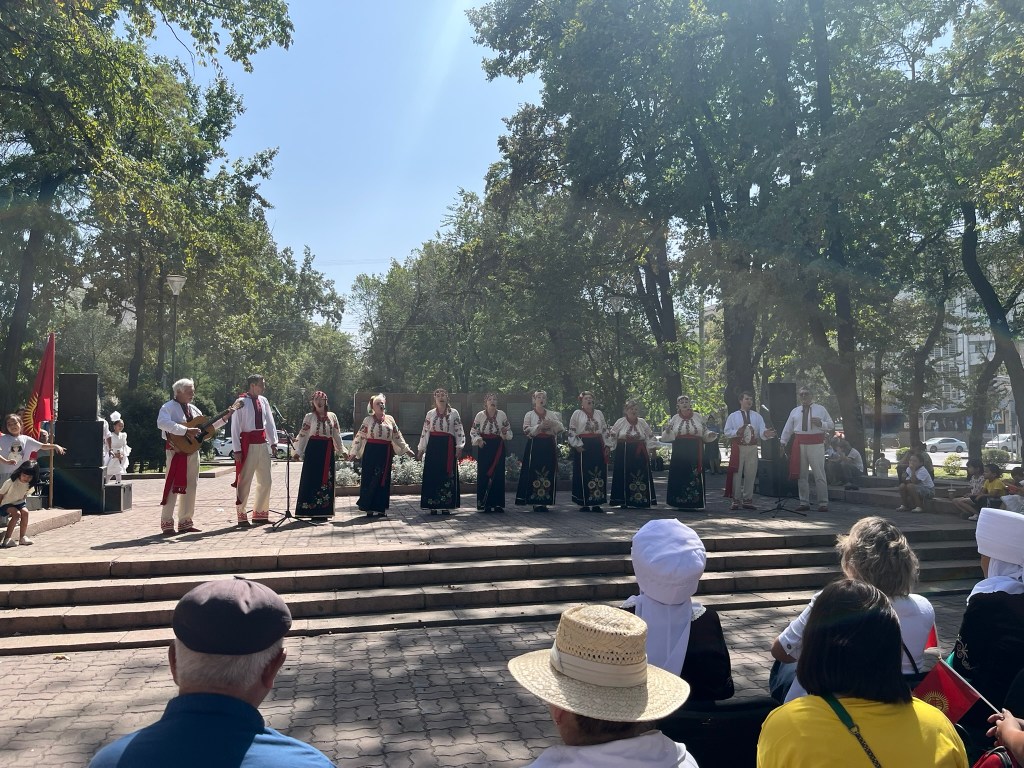
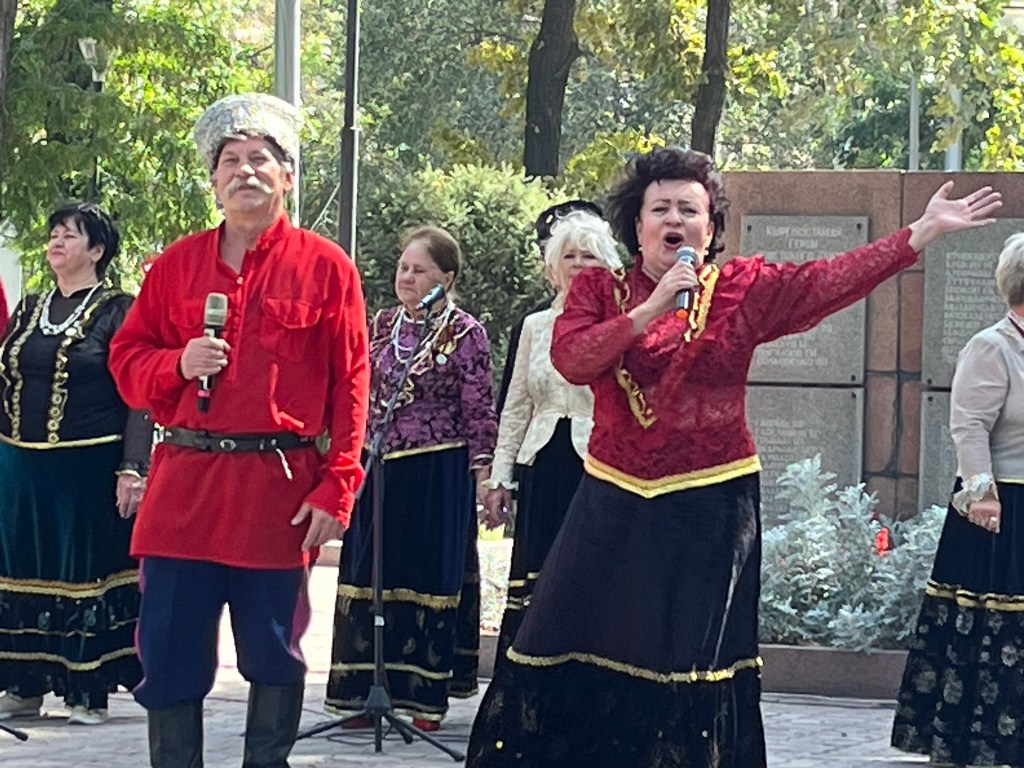
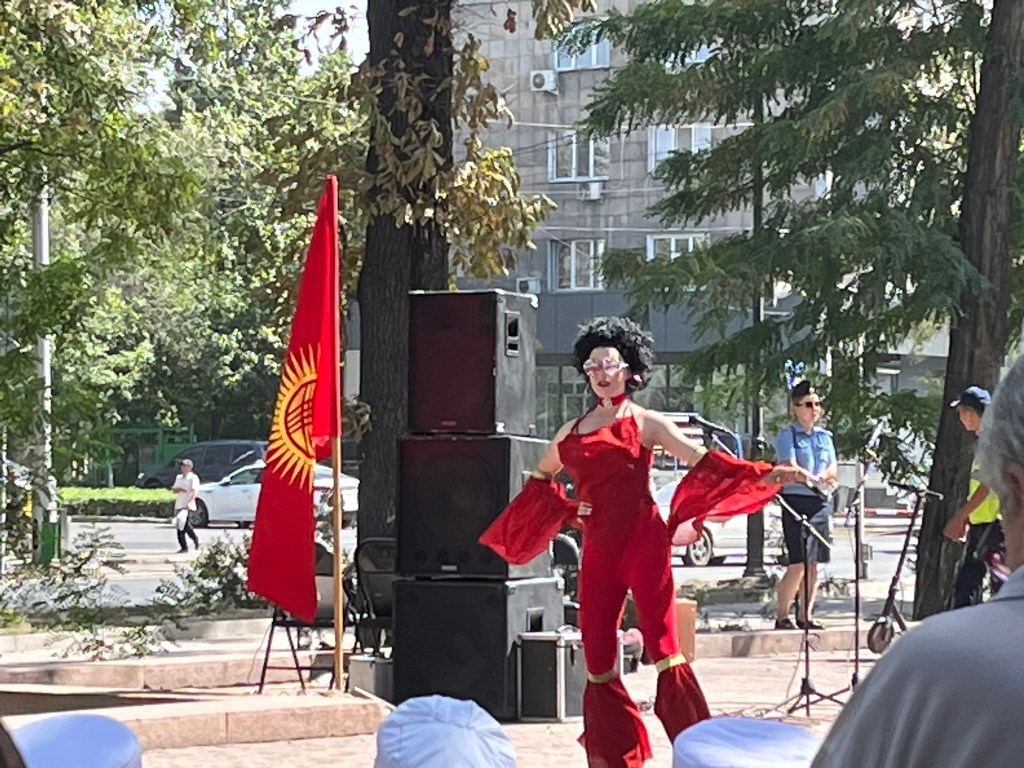
The highlight of the day was a small concert we stumbled upon along one of the tree-lined pedestrian areas in the center of a wide boulevard on our way back to the hotel. We decided to stop and watch the show, which was being held in honor of tomorrow’s National Day. It was mostly locals in the audience, and then a few tourists like us who had stumbled upon the event. The locals were quite happy to share the experience with tourists and we were dragged into lots of photos. We could see different groups dressed up, ready to take to the stage, to either dance, sing or both. Our guide explained that these groups were wearing outfits from different nomadic tribes.

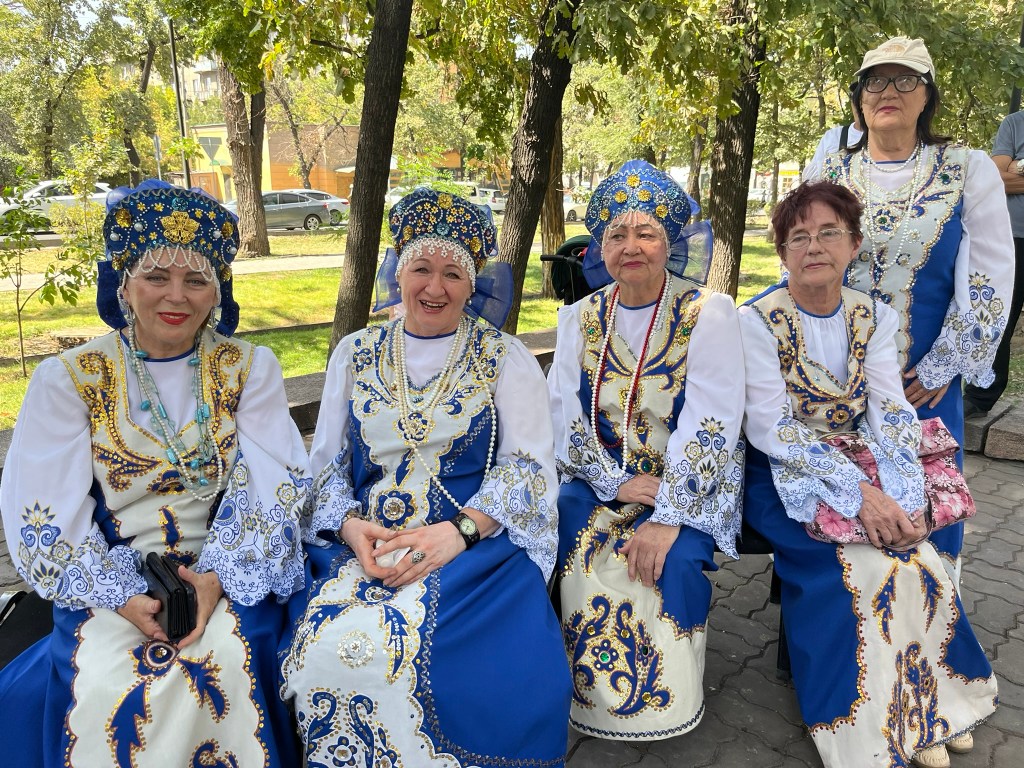
We saw a group of ladies in brilliant blue traditional Kygryz outfits adorned with beads and embroidery. Another group of ladies wearing the traditional elechek (tall, white headscarf) that is wrapped around their heads like a turban. Another group wearing traditional outfits embroidered with flowers and motifs. And finally a group dressed as Cossacks who had travelled from Russia to perform at the celebrations. We left just as a group arrived on stage wearing lycra, afro wigs and sunglasses decorated with the flag of the UK and bizarrely dancing to Raspuitin by Boney M. I have no idea how that fits in with their national day celebrations!
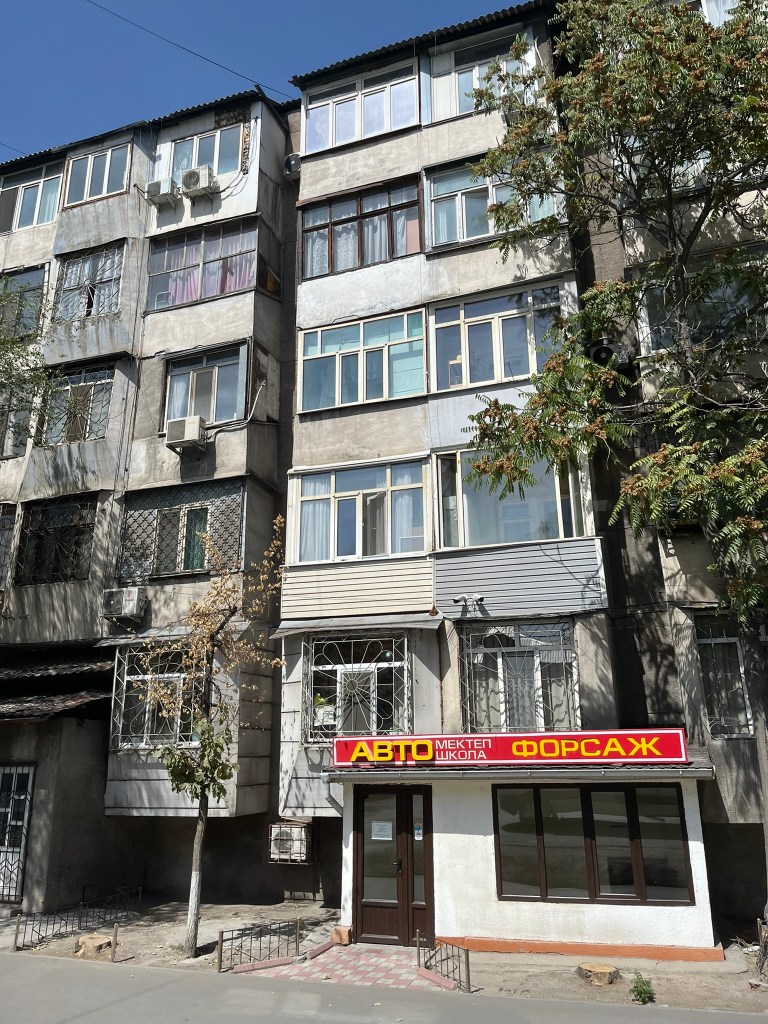
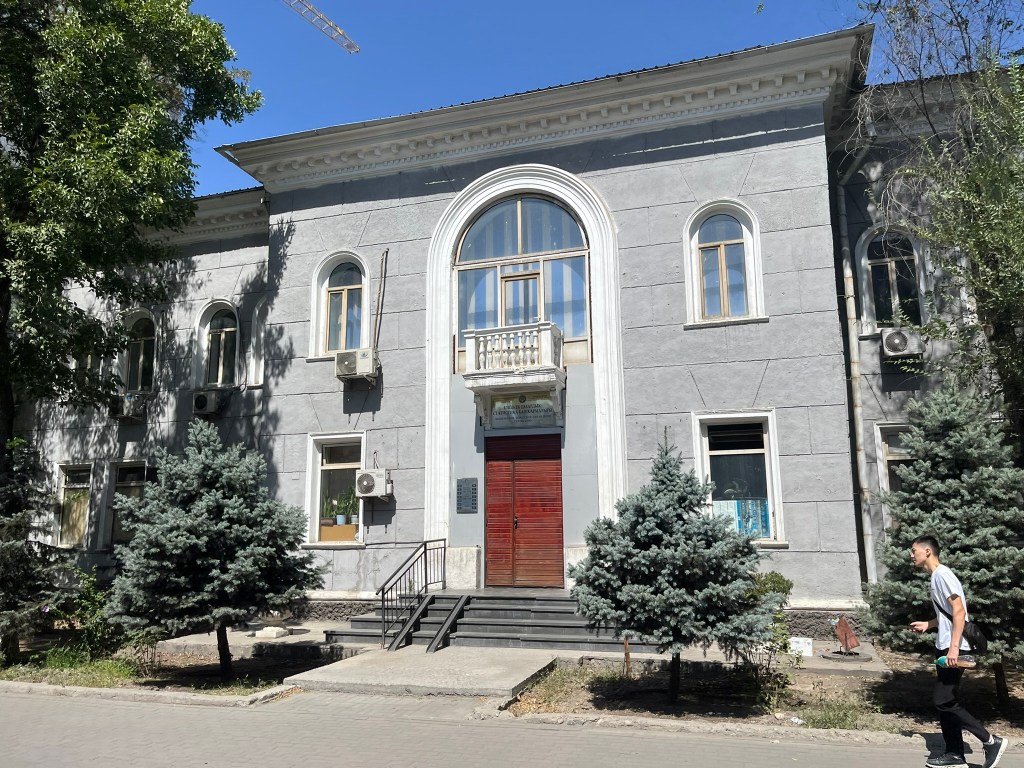
Bishkek was an interesting city to walk around, especially as it had retained a lot more of its Soviet government buildings. So it felt different from the other cities we have visited and it was easier to imagine what it would have been like during the Soviet Era. You could also easily see the city is evolving with a lot of areas under construction and new apartment blocks and malls popping up away from the historical center.


Tomorrow we leave Bishkek and head back to Issyk-Kul Lake to stay in yurts for 2 nights.
 Colette's Grand Detour
Leave a comment