Today we took the northern route around the top edge of Issyk-Kul Lake to reach Bishkek. Its a pretty long drive (over 6 hours in total), but we broke it up with a boat trip out onto the lake and a visit to the Cholpon-Ata petroglyphs.
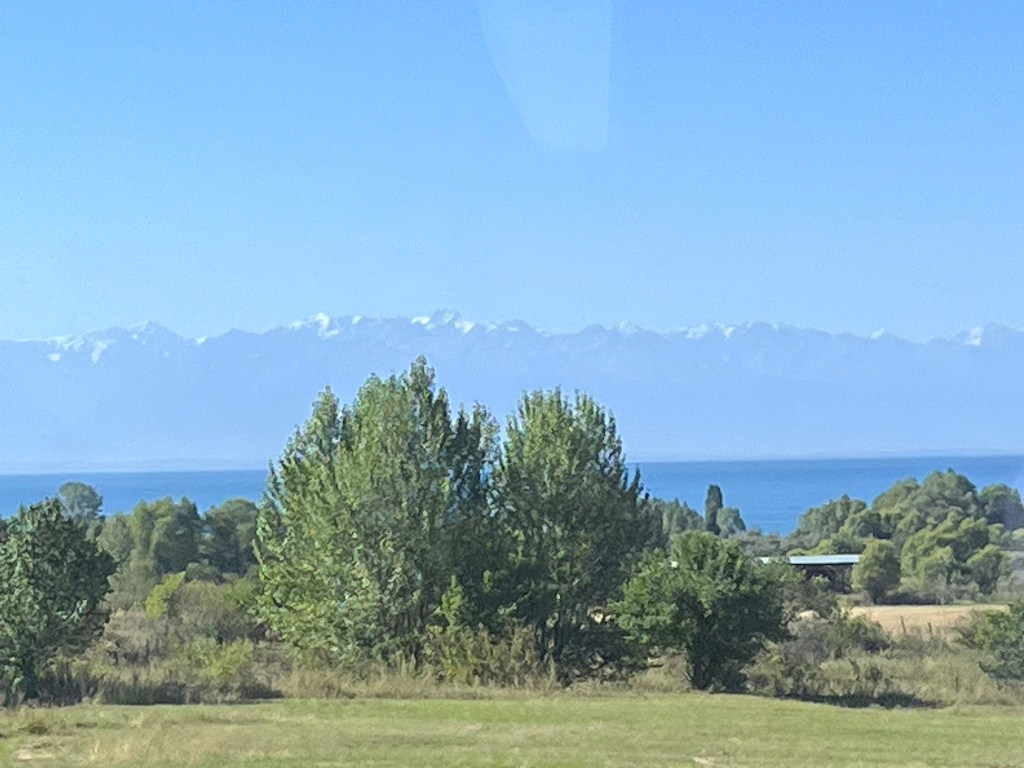
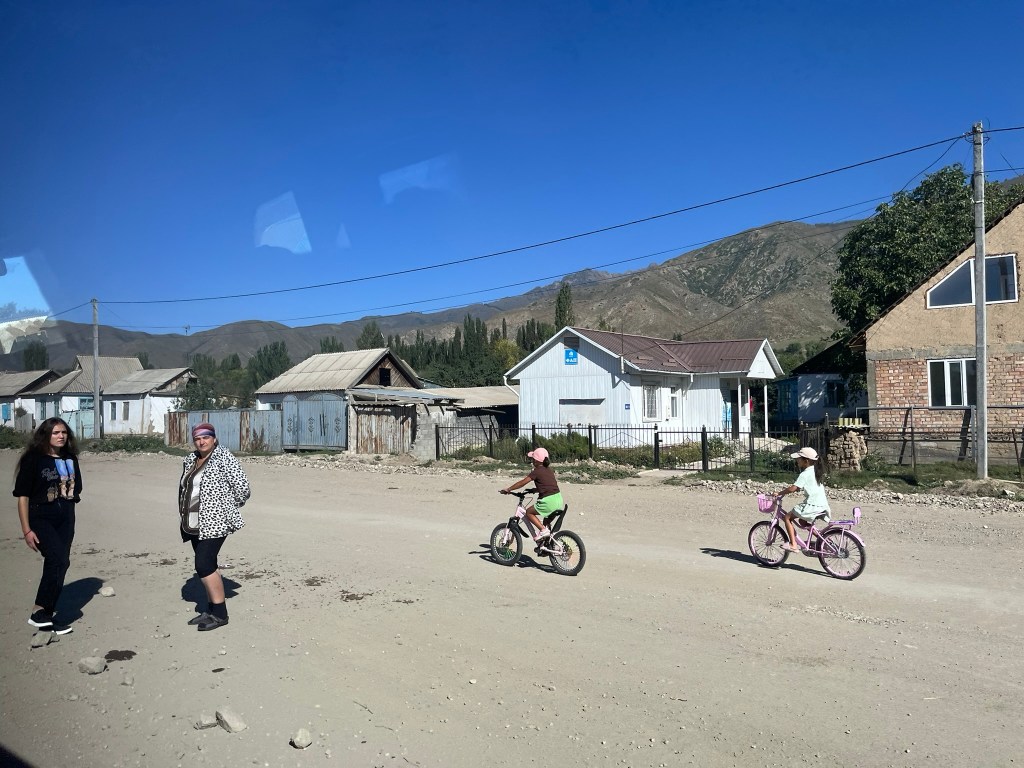
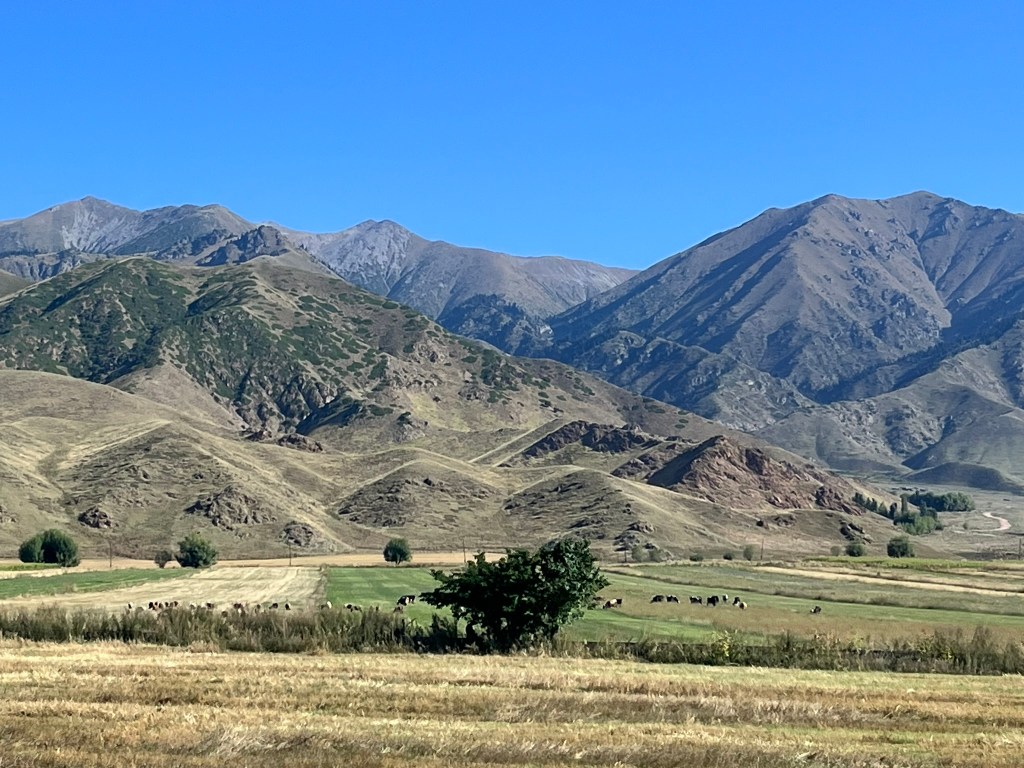
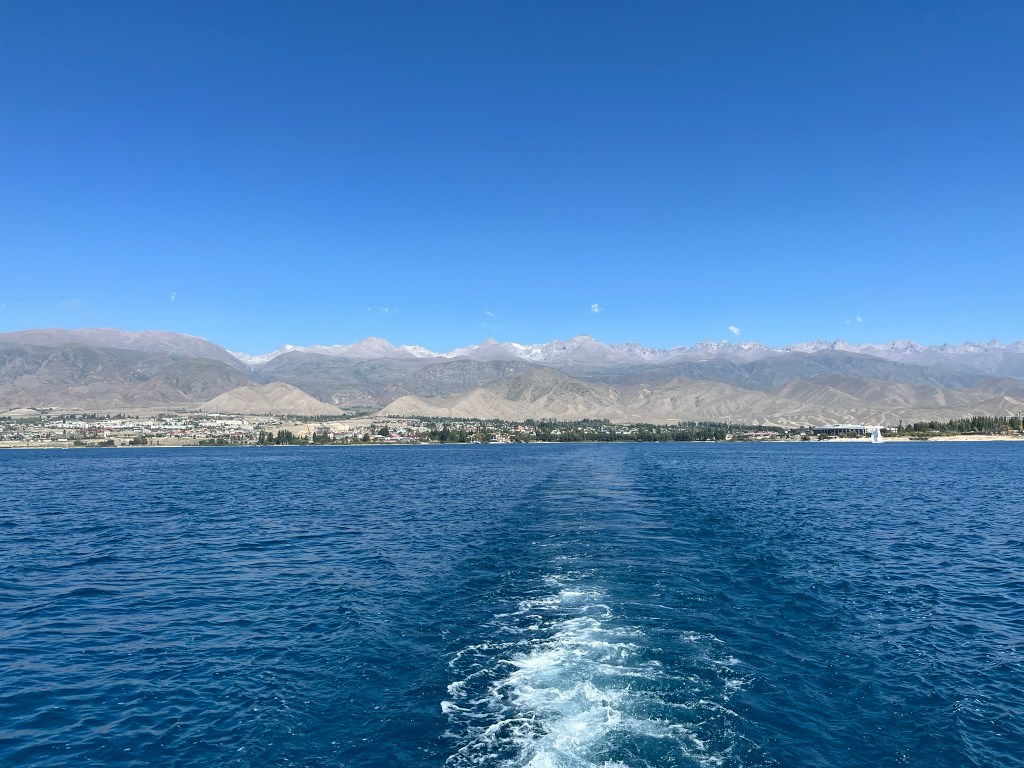
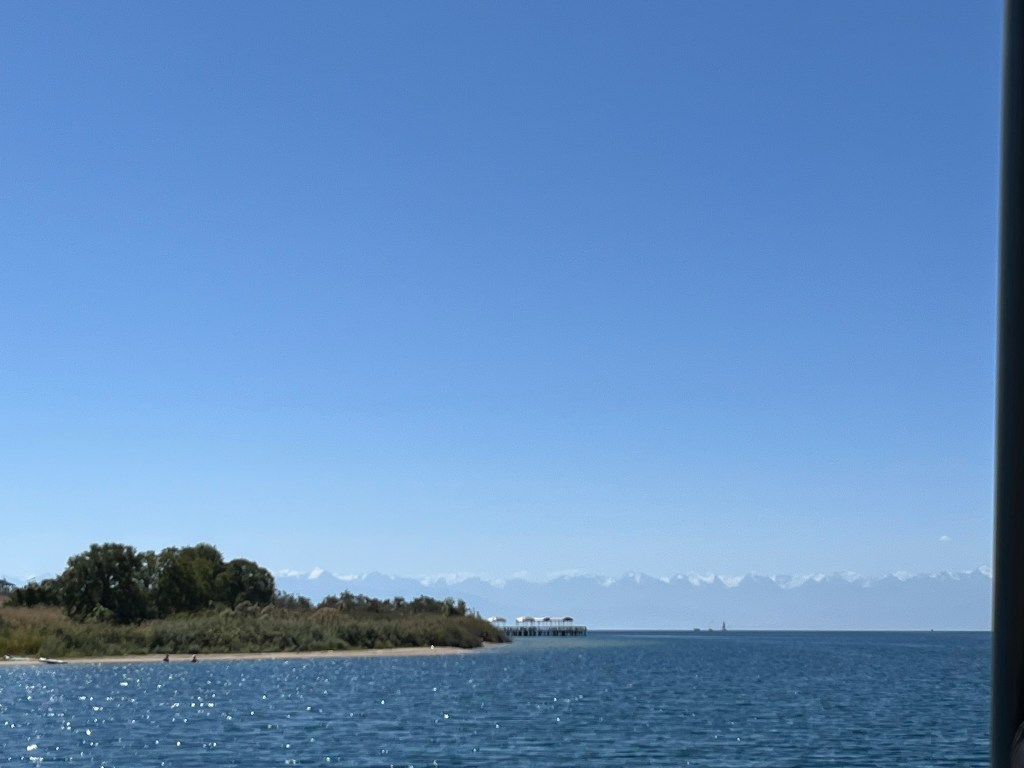
Issyk-Kul Lake is the second largest saline lake in the world (after the Caspian sea) and also the second largest high-altitude lake (after Lake Titicaca in Peru). To give you an idea of size, it is about 2/3rds the size of Cyprus! And lies at an elevation of ~1600m above sea level. At its maximum it is ~670m deep. It also surrounded by snow-capped mountains all year around, making it a pretty unique place.
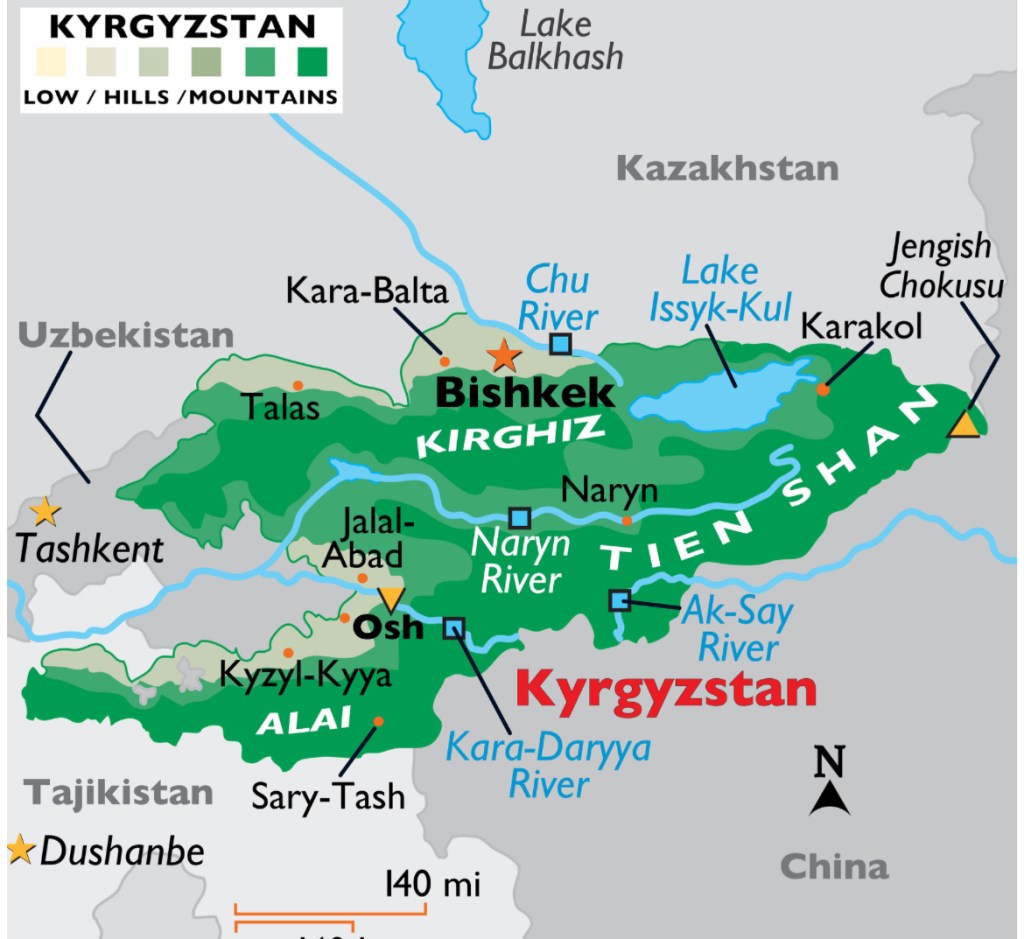
The lake sits in a tectonic depression between two mountain ranges of the Tien Shan. As the India plate continues to collide with the Eurasian plate, the tectonic plates crumple. Some parts get uplifted into mountain ranges and other bits get squished down into deep basins between those mountain ranges. Glaciers from these mountains feed the lake through numerous rivers, but there is no outlet and water is only lost though evaporation, hence the lake’s salinity. This salinity means that even during the coldest winters the lake never freezes. Ancient settlements have been found submerged beneath the water thought to be from Scythian and early Turkic periods.
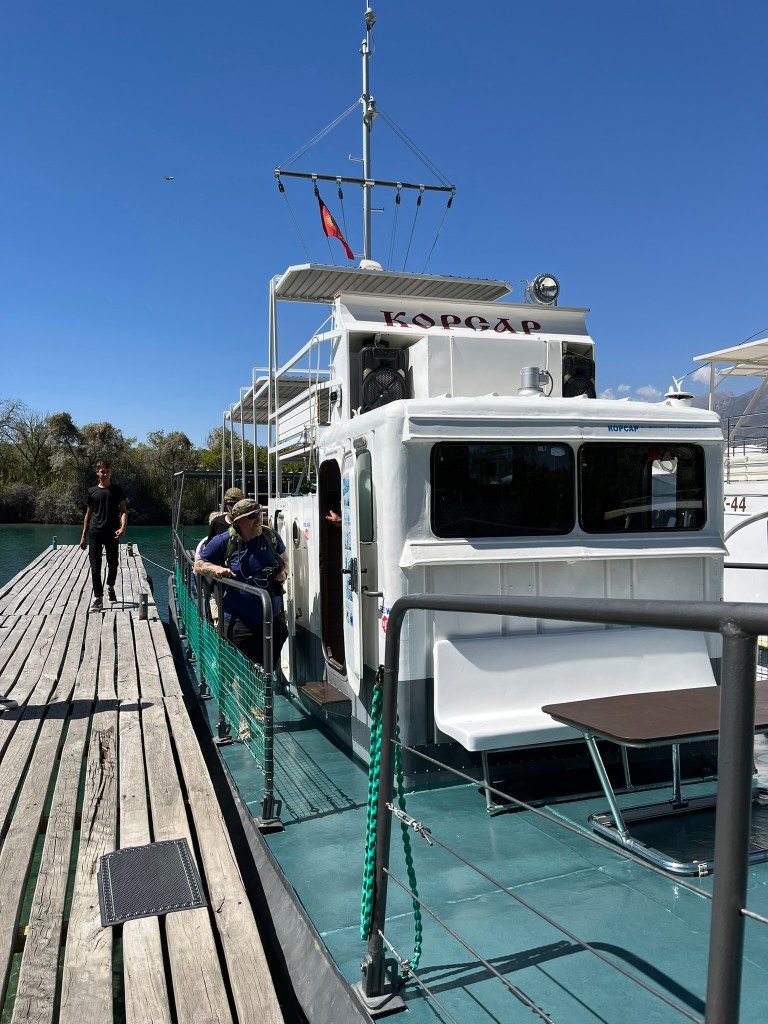
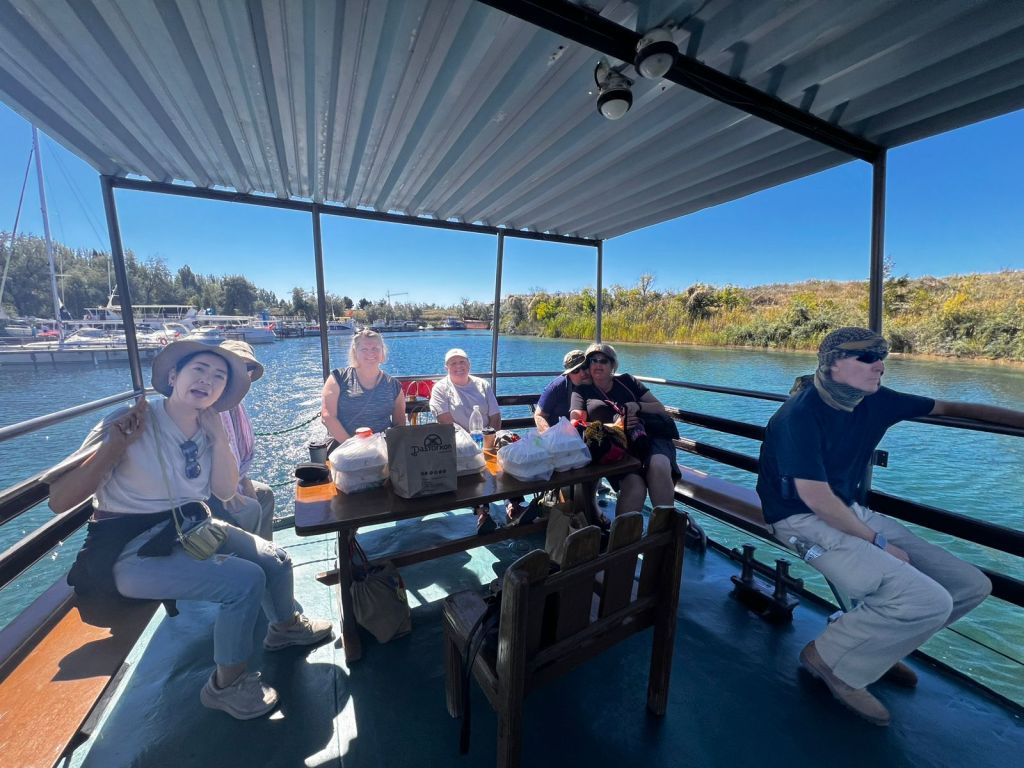
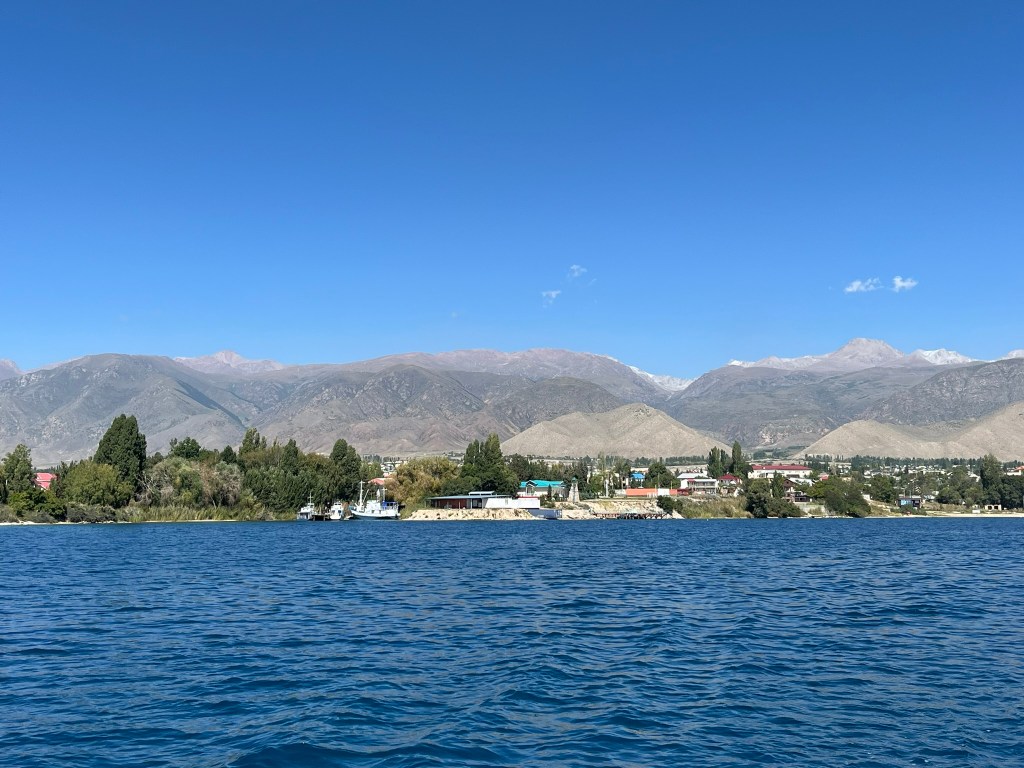
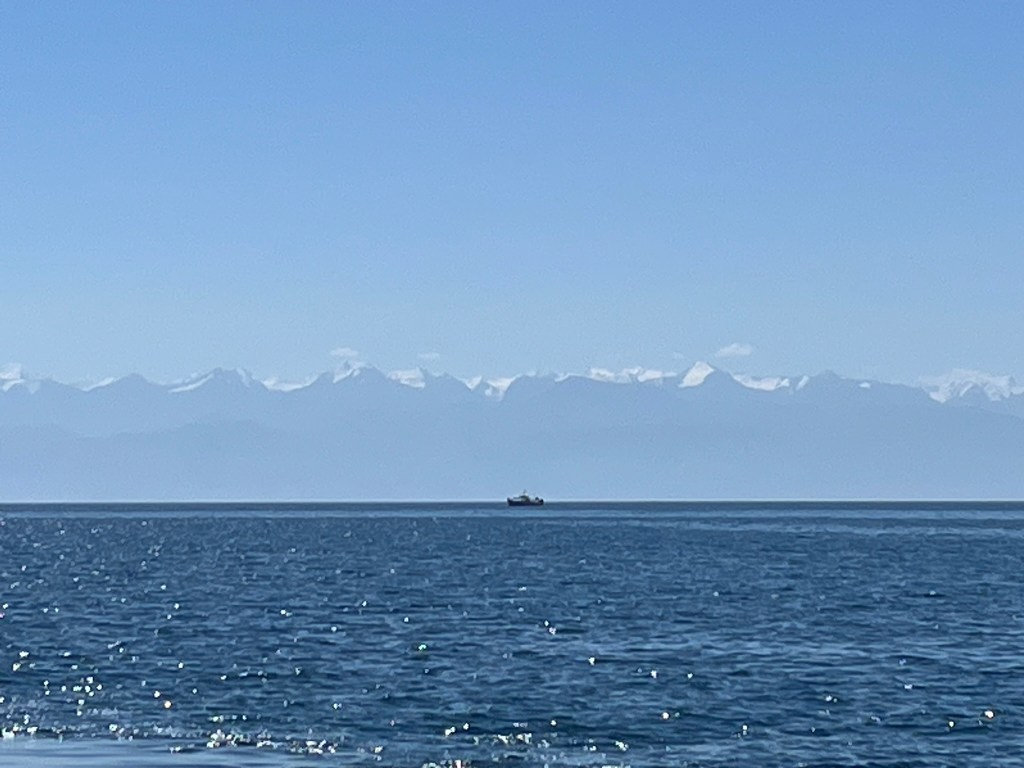
Traders passed along both the northern and southern shores on the Silk Road. Later during the Russian Empire and Soviet times it was developed as a resort area. Important people with the USSR government and ‘celebrities’ like cosmonauts would come here to relax in the Summer. Even today it is one of Kyrgyzstan’s main tourist attractions. We took a one hour boat ride out onto the lake to have lunch and enjoy the view. The water is super clear and the few folks who chose to swim said it was a great temperature. I especially liked the mountain backdrop. We could see along the shore line, really nice looking beaches full of people sunbathing. This was just a short pitstop at the lake as we will be coming back in a few days to spend longer on the southern shore.
After lunch we headed to the Chopon-Ata petroglyphs. This is an area where an ancient glacier used to sit and when it receded, it left a huge sea of boulders from the lake shore all the way up to the mountain. Petroglyphs have been found here carved into these boulders from the Scythians (~1000 BC) and the Turkic nomads (4th-7th century AD). They have also found religious stone circles and burial mounds of stones. It seems that this area has had religious significance for many thousands of years. Most of the carvings depict animals like Ibex, deer, horse and camels, predators like snow leopards, and hunters. There are also some more spiritual symbols like sun disks and infinity circles.

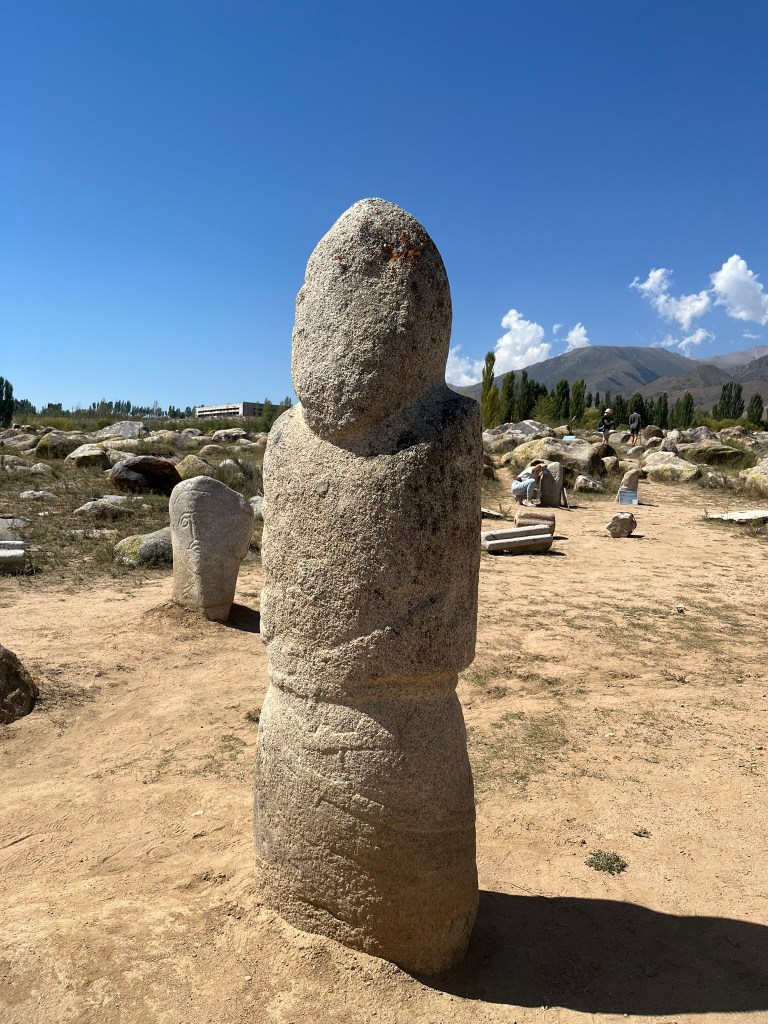

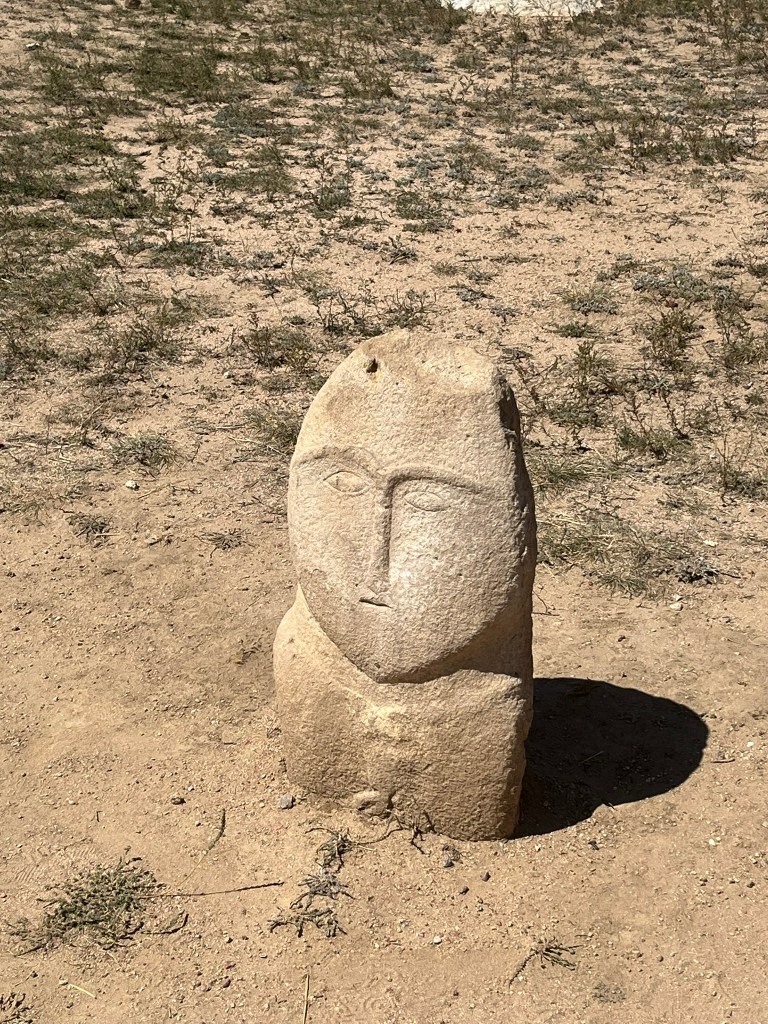
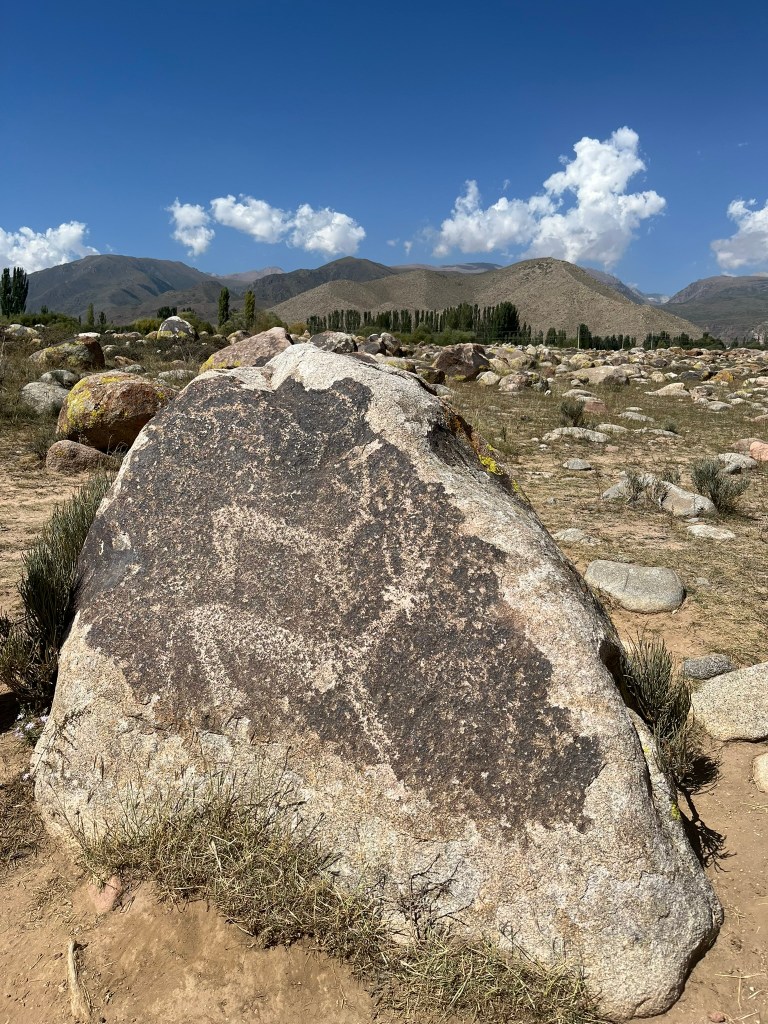

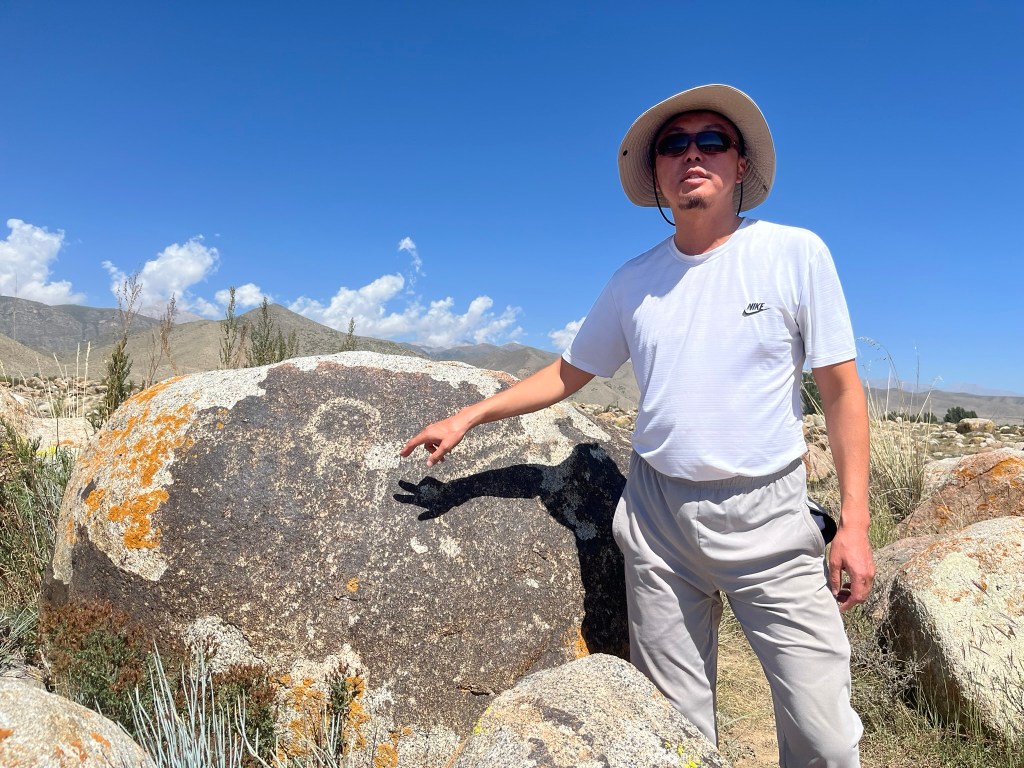
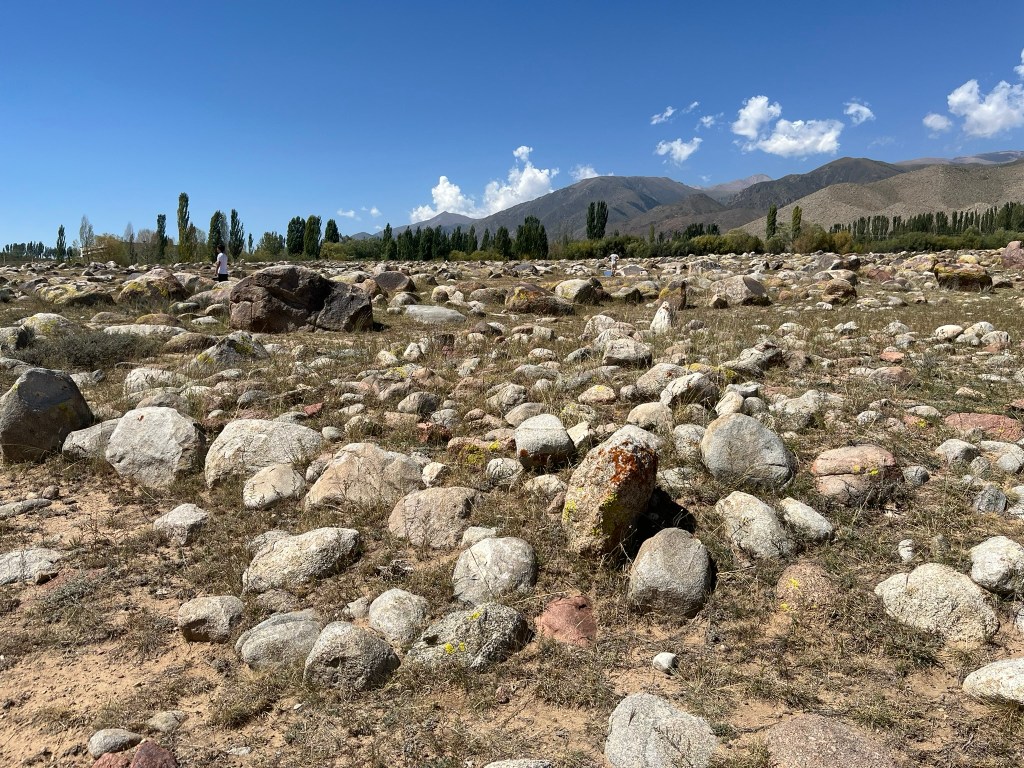
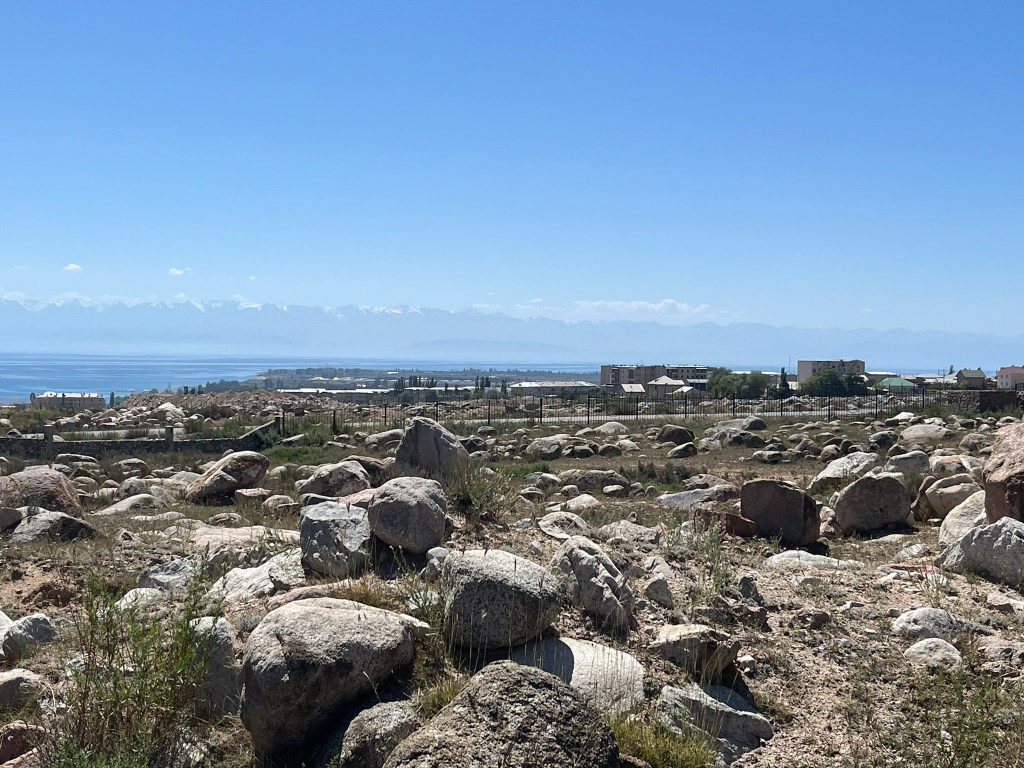
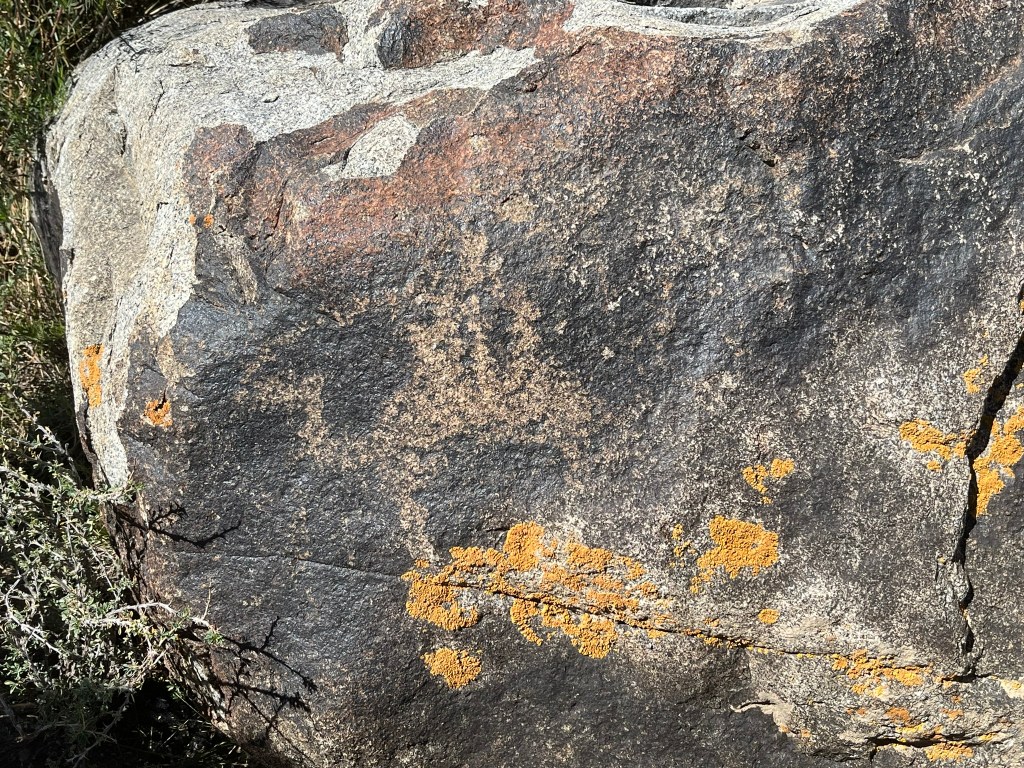
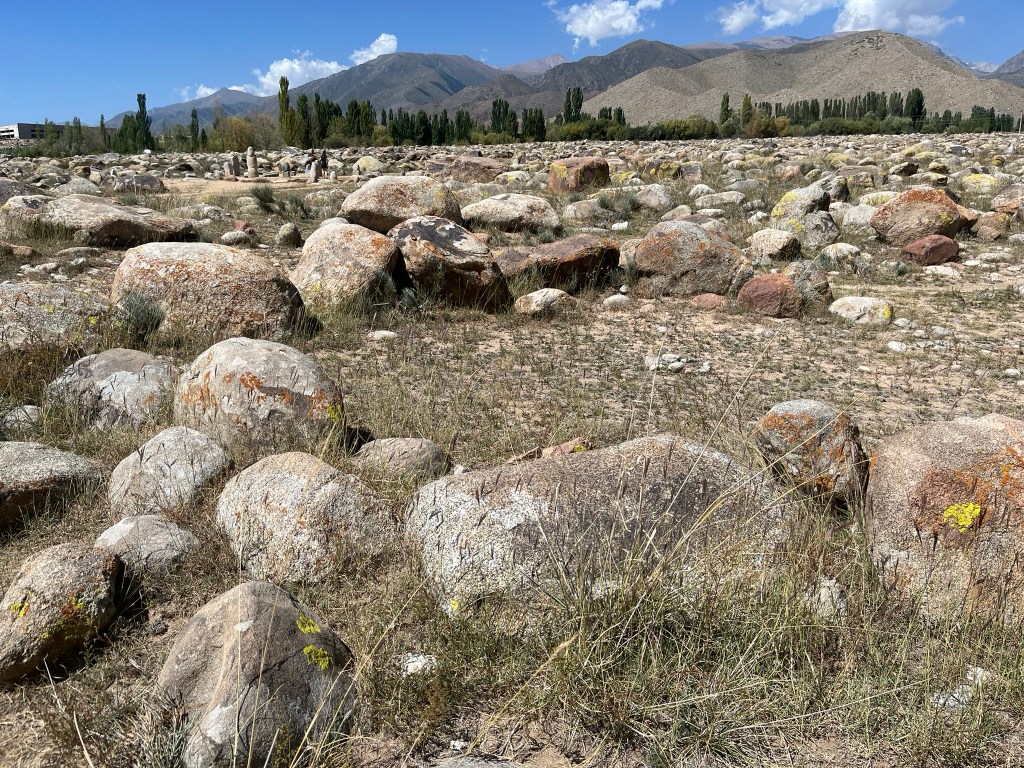
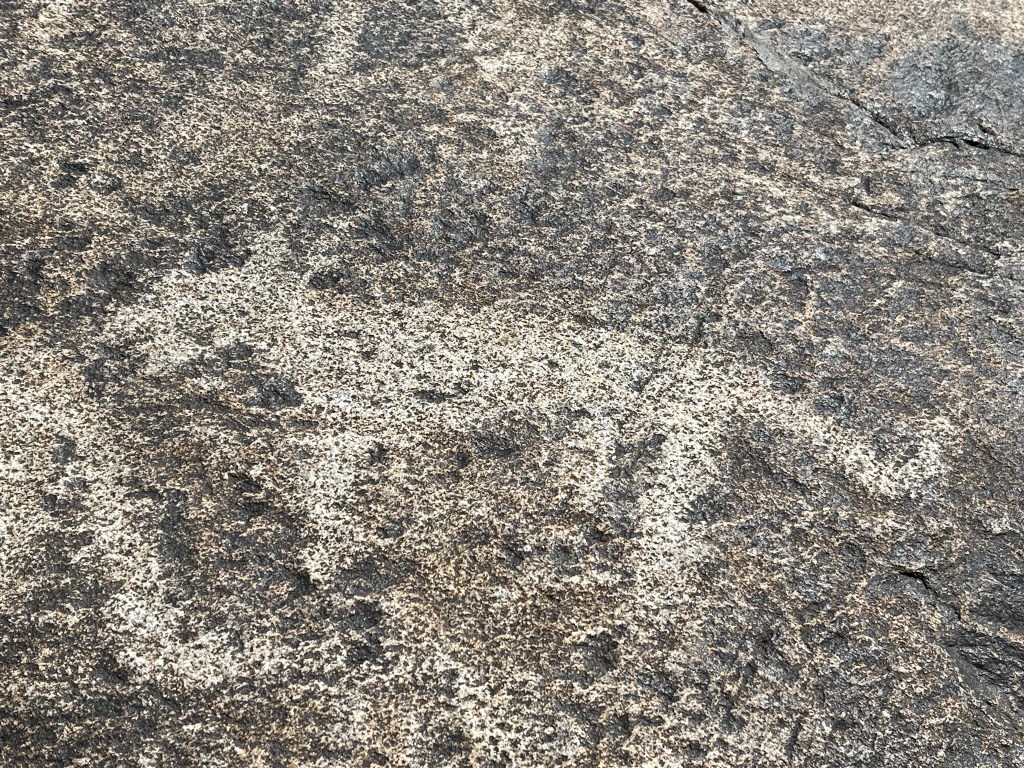
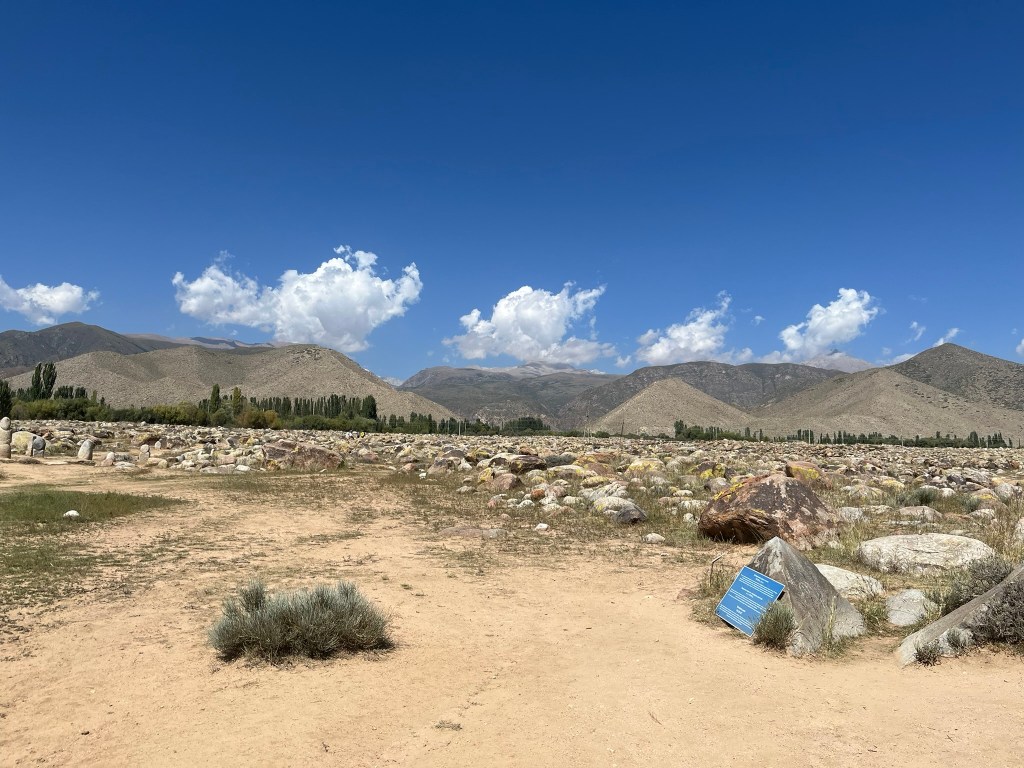
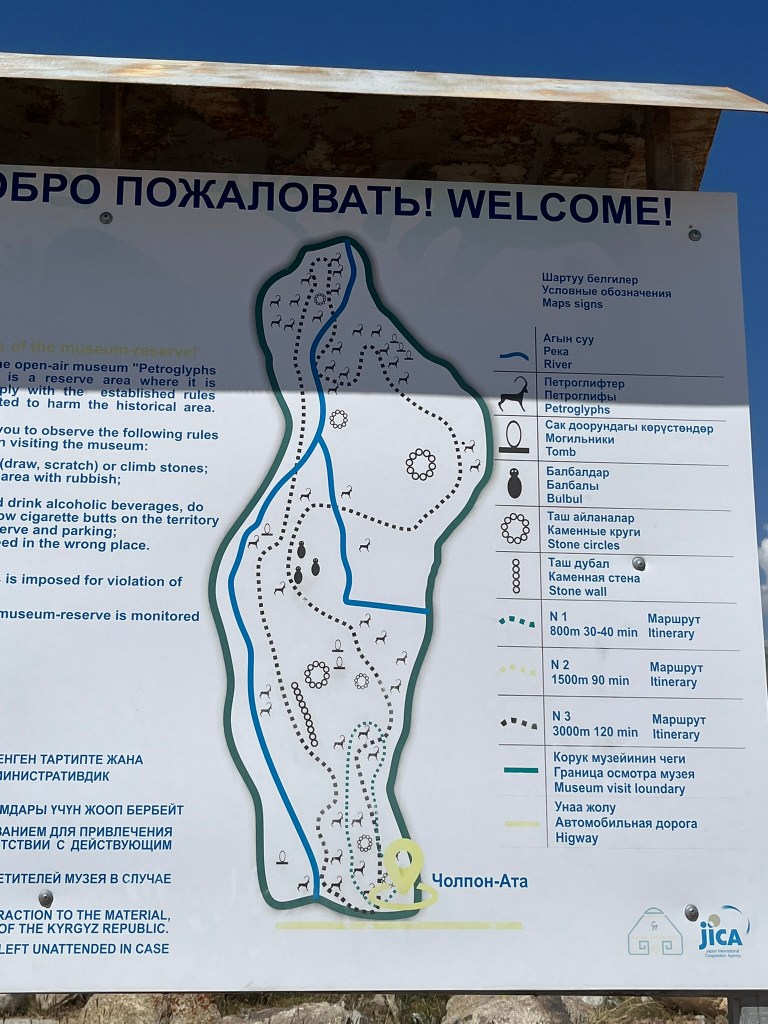
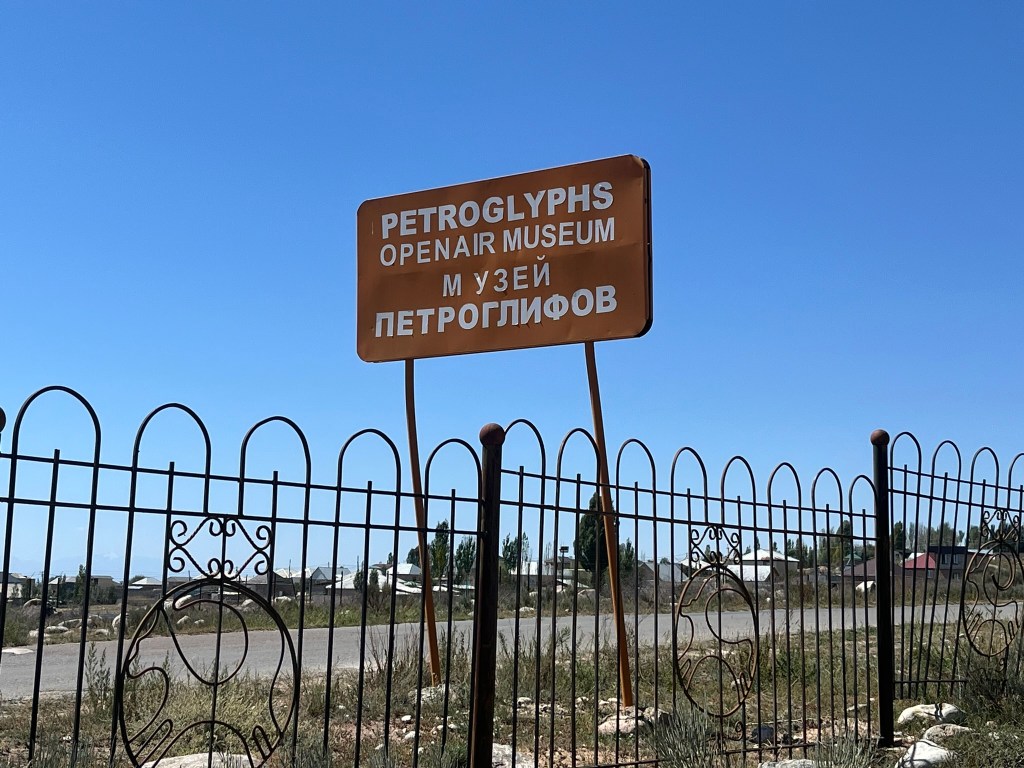
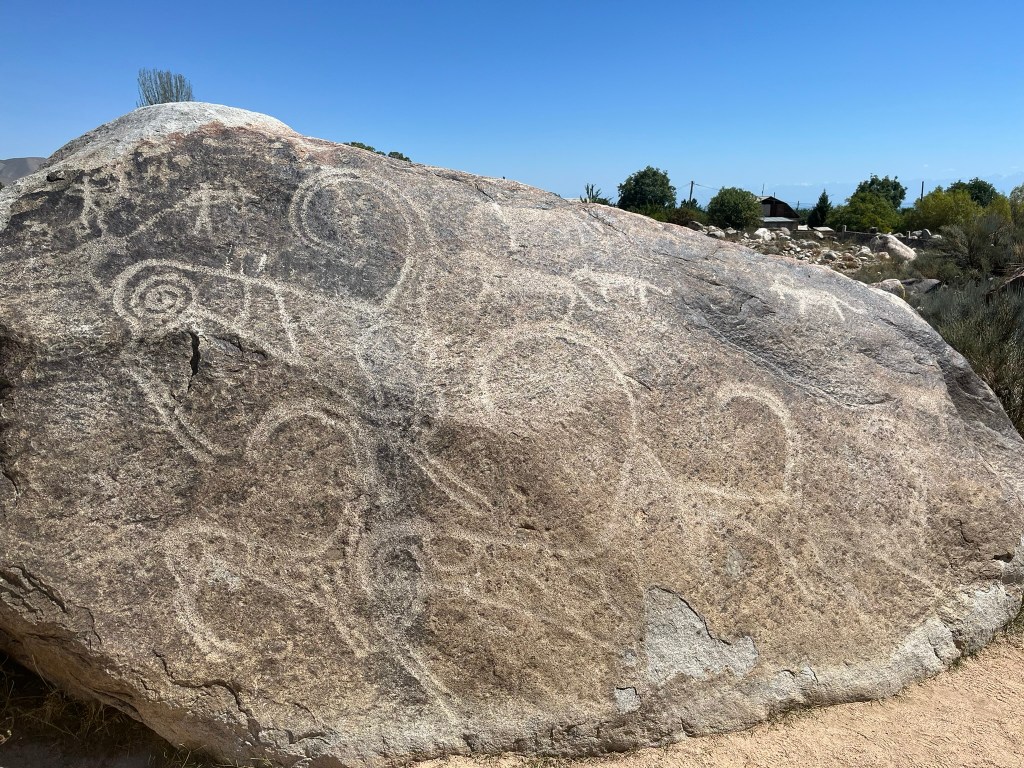
As you can see from the photo, it is an open-air museum. It was pretty impressive and I wasn’t expecting such a huge area. There are quite a few other petroglyph sites around the lake, but this one is the most accessible to visit.
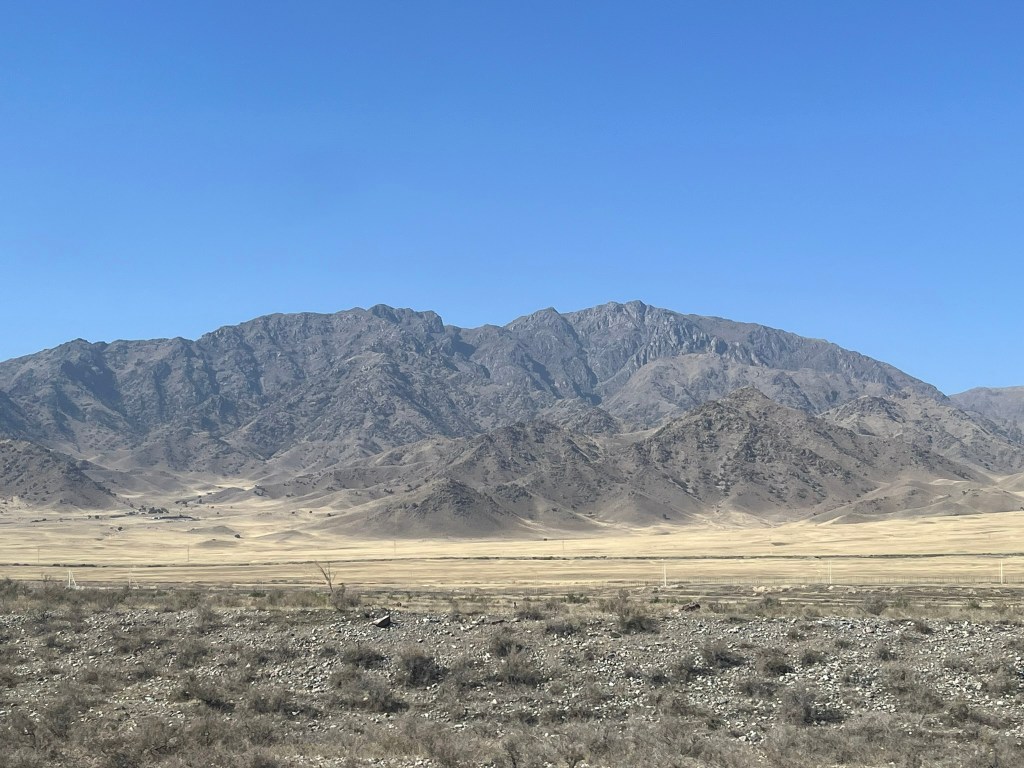
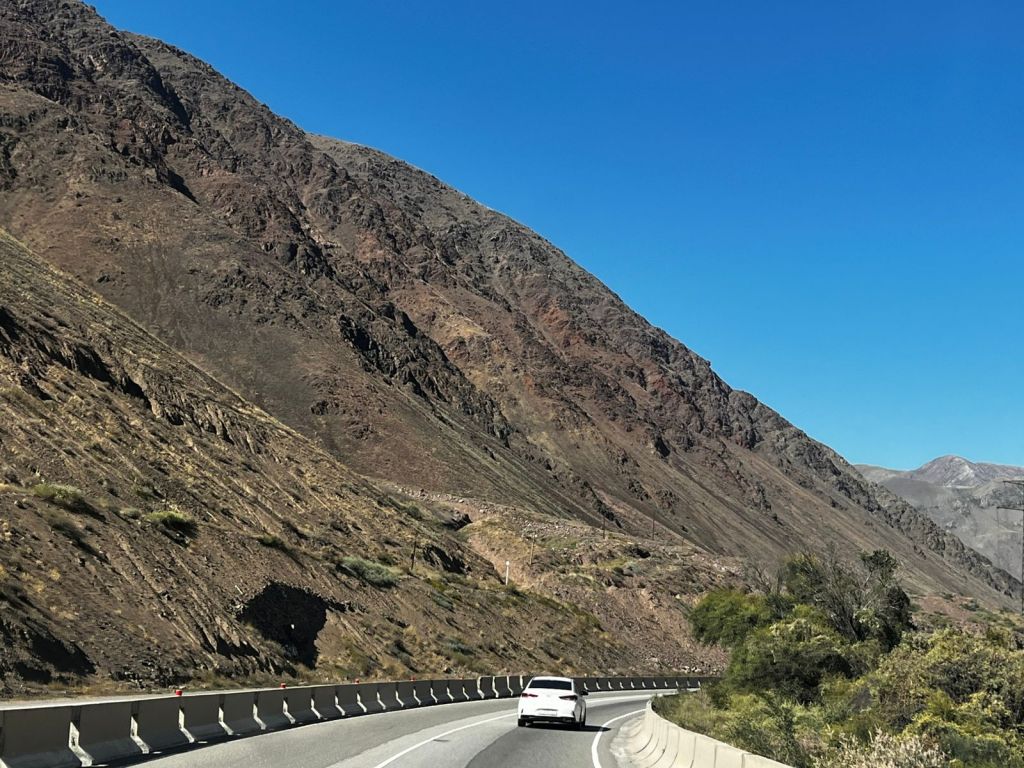
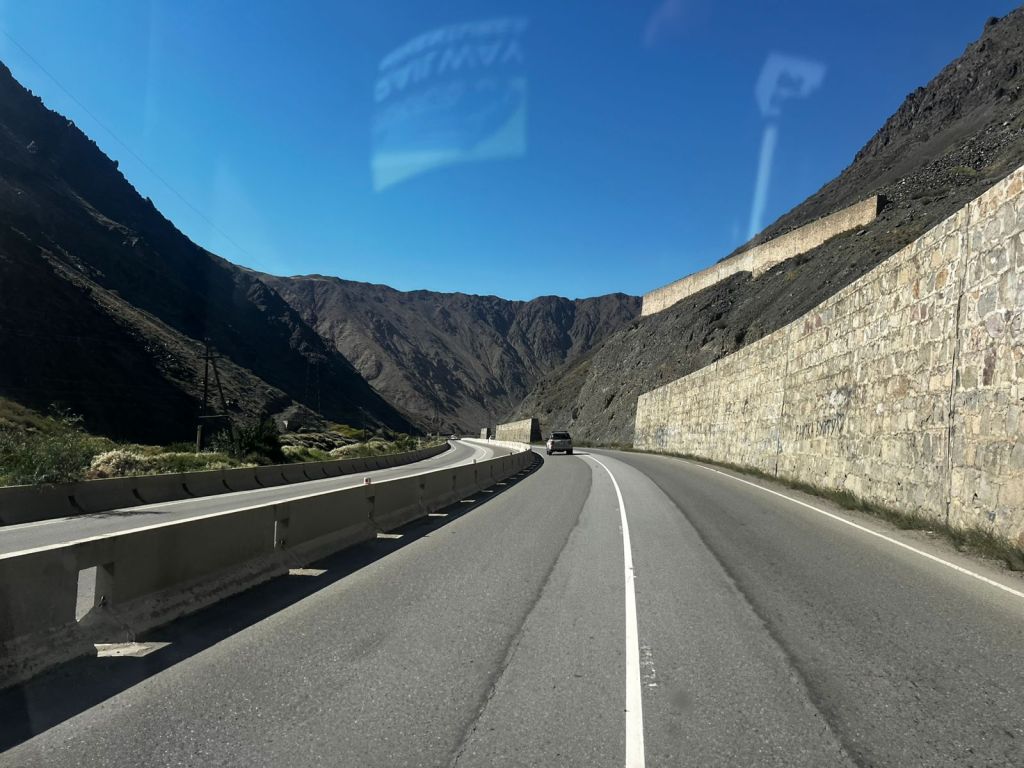
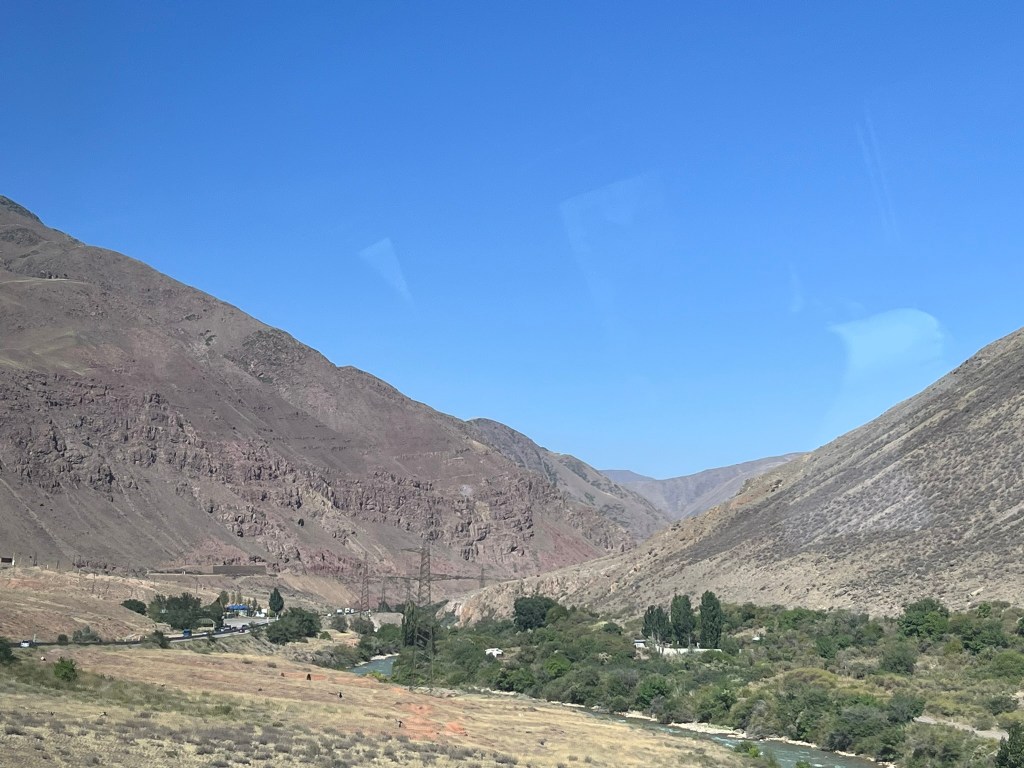
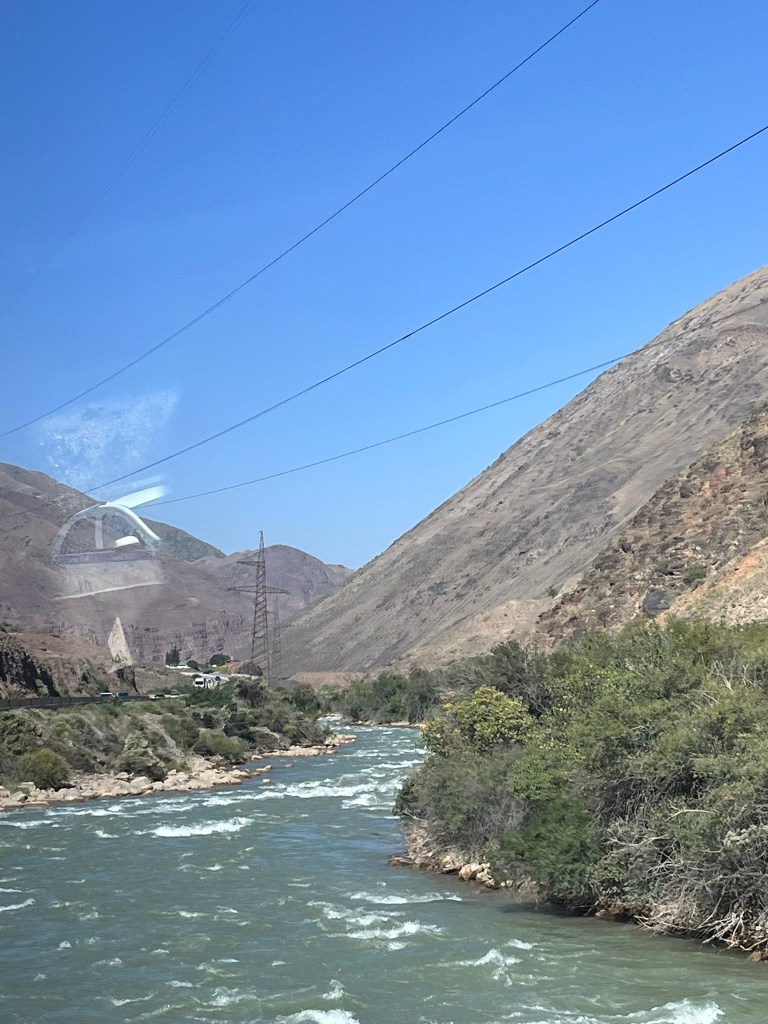
From here, we started our journey toward the capital of Kyrgyzstan, Bishkek. To head out of the Issyk-Kul basin we passed through the Boom Gorge, a deep, narrow canyon cut by the Chu River. The highway passes through the gorge and it is a very dramatic drive with tight bends and steep walls as you quickly descend to a lower elevation. This made a great end to an interesting but long travel day.

 Colette's Grand Detour
Leave a comment