The most seismically active parts of Kazakhstan are in the south and southeast of the country, specifically around the Tien Shan mountain range near Almaty and the border regions with Kyrgyzstan and China. The most recent notable event is a magnitude 7 earthquake in January 2024 that occurred around 260km southeast of Almaty.
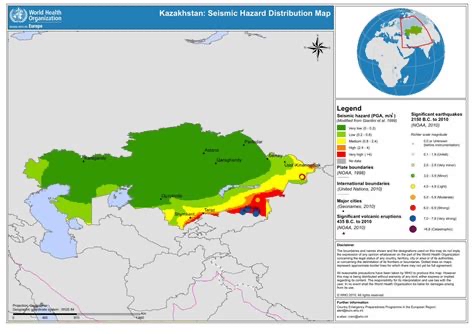
From the historical record, its easy to see that the region has had some major earthquakes. The 1911 Chon Kemin earthquake was magnitude 8, causing severe damage in Almaty and killing around 450 people. The 1887 Verny earthquake near Almaty was somewhere in the range of 7.3-7.8 in magnitude and killed 330 people. So it is definitely possible for modern-day Almaty to experience very large magnitude earthquakes.
Since Almaty is one of the most at-risk cities in Central Asia for earthquakes, the government enforces strict seismic construction codes which have been in place since the Soviet era and are updated periodically. New buildings in Almaty must use reinforced concrete frames, flexible foundations and materials designed to absorb seismic shockwaves. There are strict restrictions on tall buildings in certain areas due to ground instability concerns. One challenge is dealing with older Soviet-era buildings that have not yet been replaced or reinforced.
There are a network of seismic stations across southern Kazakhstan monitoring for earthquakes in real-time. This data is shared with Kyrgyzstan and China as well since they are also affected by earthquakes whose epicenter originate in Kazakhstan.
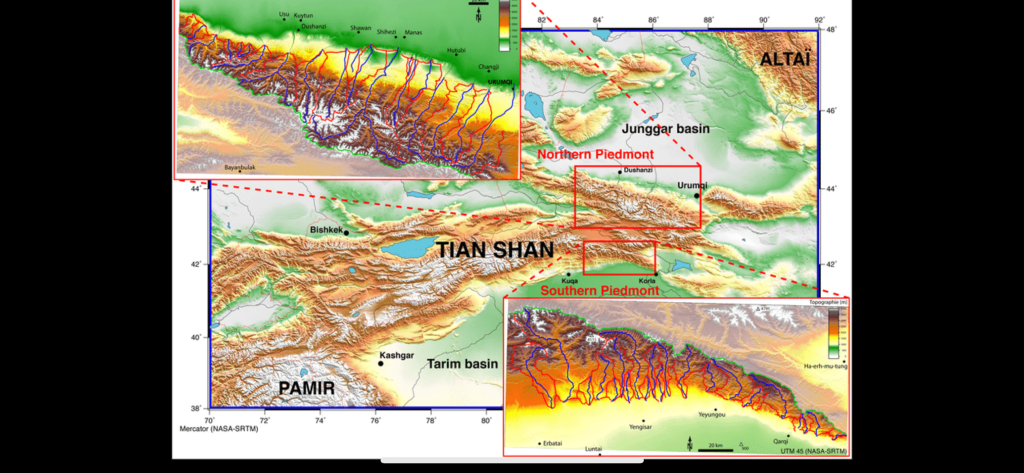
This region is seismically active because it sits on the northern edge of the Indian-Eurasion plate collision zone. Although this process started 50 million years ago, the plates are still pushing against each other, just a few centimeters each year and slowly (I mean very slowly) crumpling and deforming the crust. This is pushing on the Tien Shan mountain range, which consequently lets pressure build up on fault lines far away from plate boundaries. The Tien Shan mountains have many active thrust and strike-slip faults where stress can accumulate over time and release periodically.
North and Central Kazakhstan are not high seismic risk areas because they sit on stable rock that is rigid and absorbs little tectonic stress.
 Colette's Grand Detour
Leave a comment