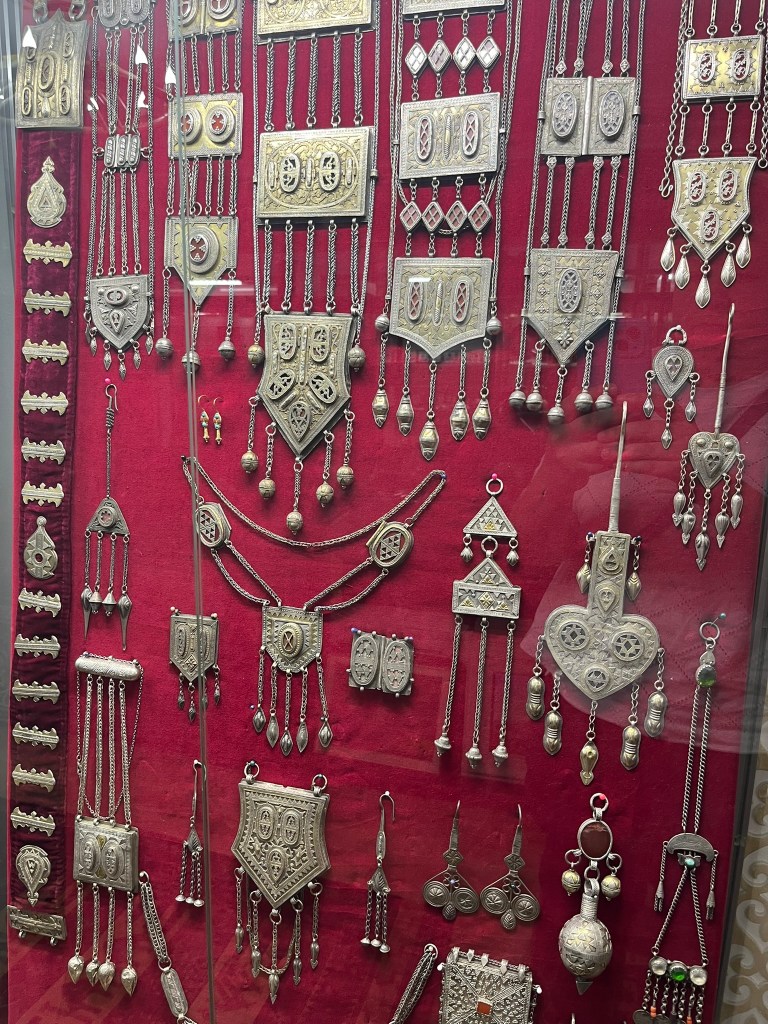
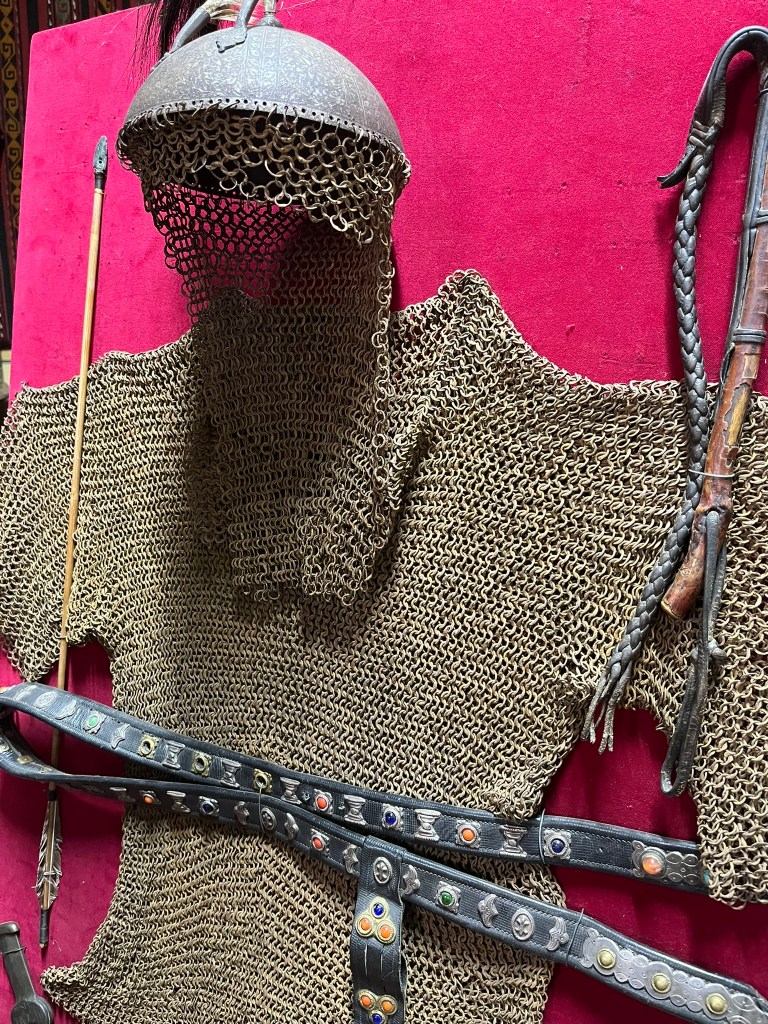
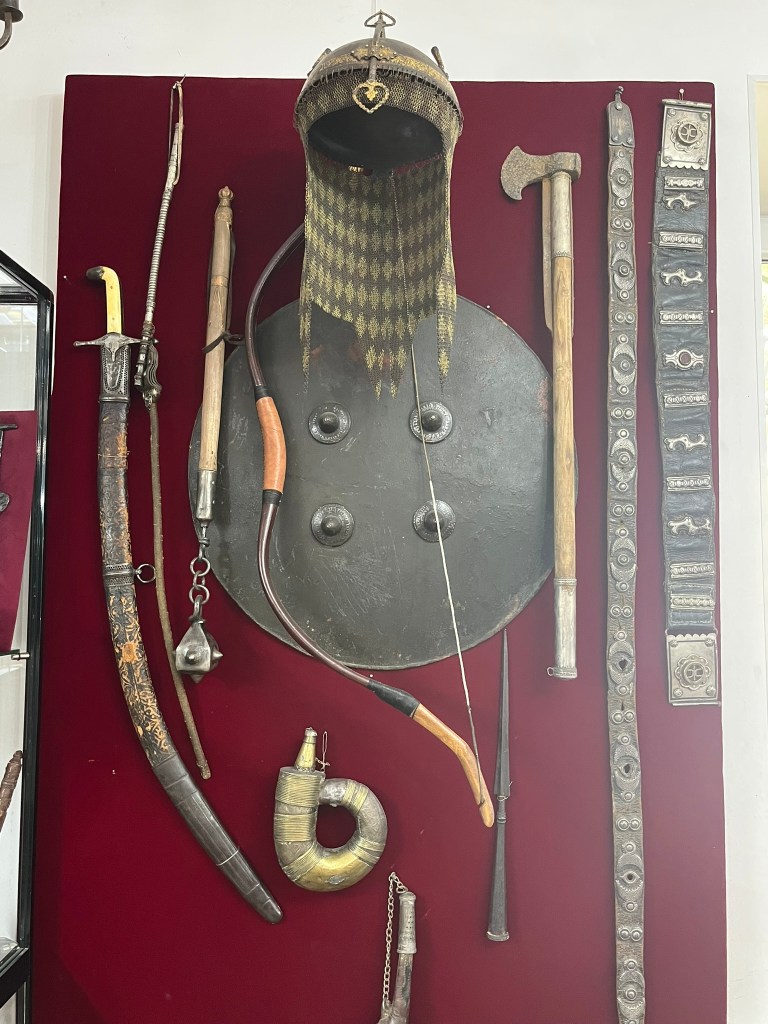
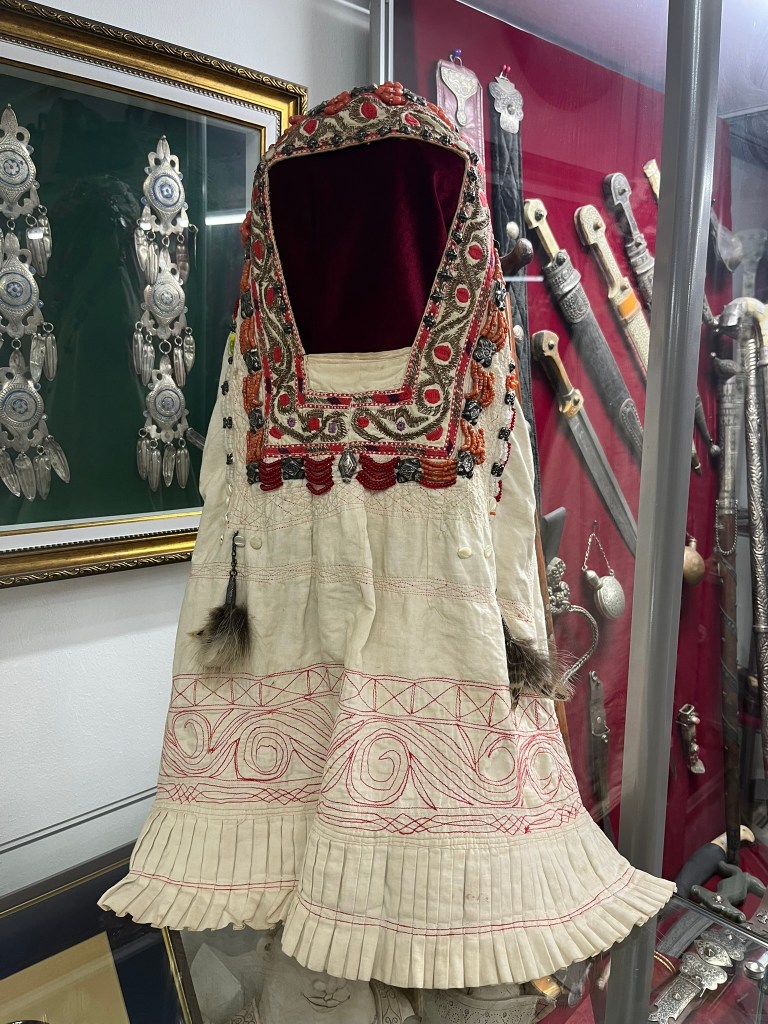
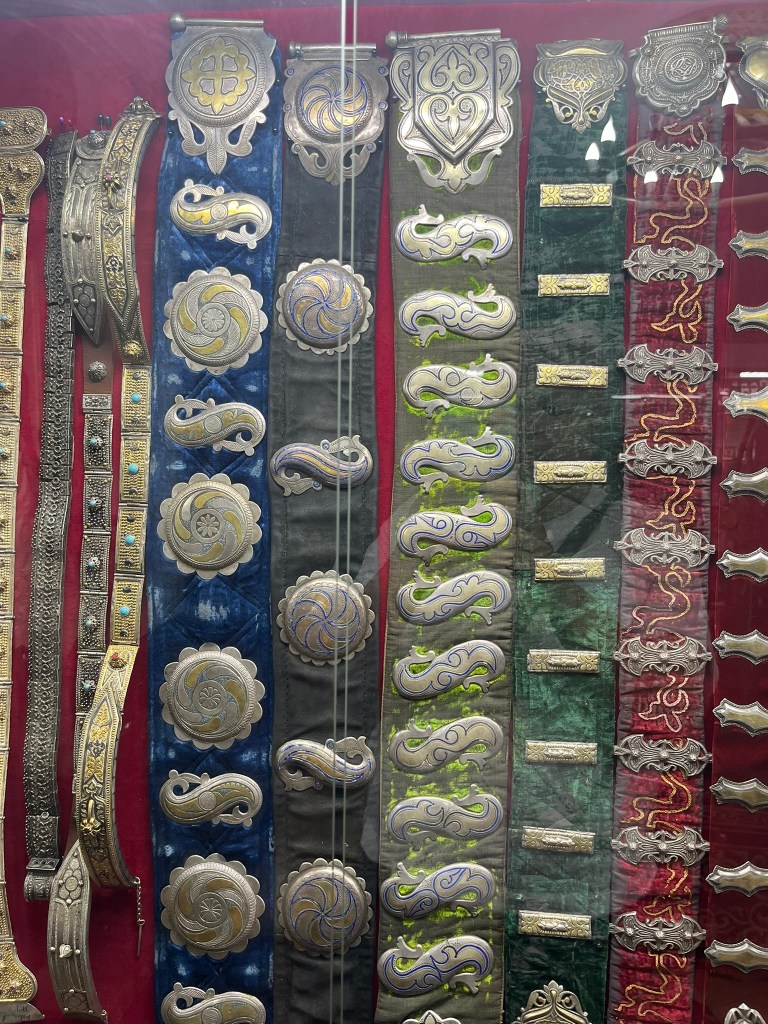
As part of our tour of Astana we visited the museum of a renowned local jeweller called Berik Alibay. Inside his museum he has collected a huge range of historical Kazakh artifacts ranging from typical household items to clothing, jewellery and warrior weapons. Later in the trip we will be staying in traditional yurts so visiting the museum gave our guide an opportunity to introduce us to this traditional way of living.
Firstly we talked about the traditional drinks that Kazakh nomads enjoy. Nomadic life favored food that is practical and nutritious and with access to horse, camel, cow, sheep, and goat, almost every drink comes from fermented or fresh milk. Or tea. The most iconic drink is fermented horse milk which is initially mixed in a wooden churn with a special paddle and then transferred into leather bags to make it easy to move around with. I think I was given this in a restaurant in Astana ‘on-the-house’ but I couldn’t bring myself to try it.
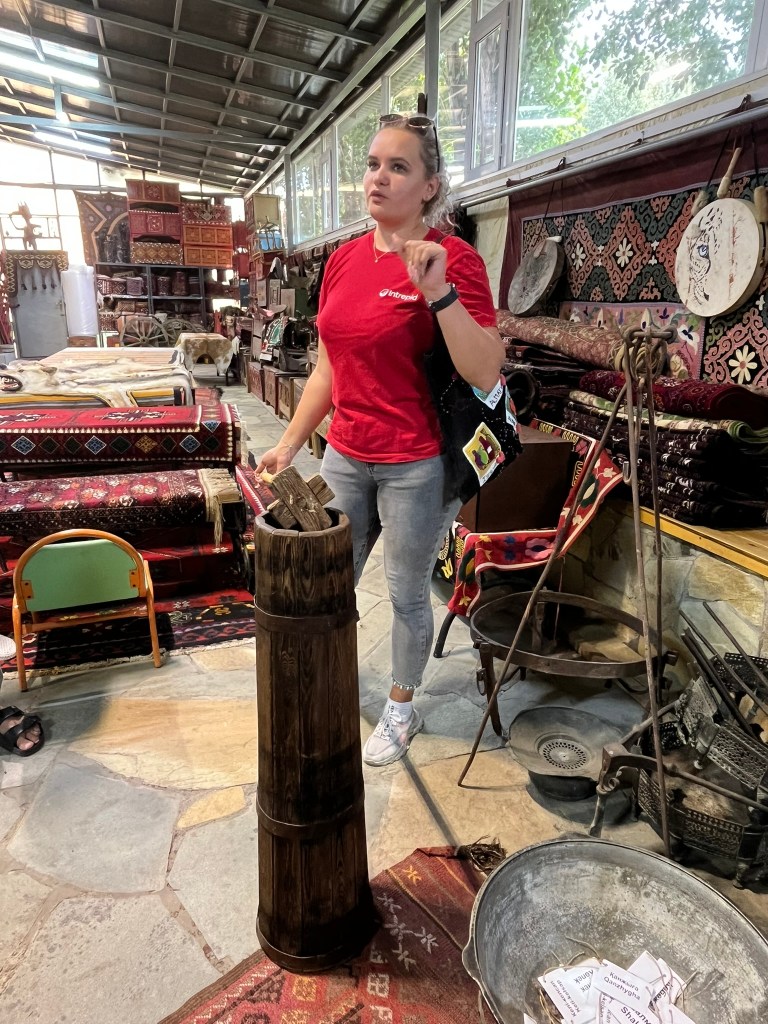

Tea is the other important drink for Kazakhs and we were shown the absolutely giant teapots that locals use. Black tea with milk was quickly adopted by nomads, when tea caravans from China brought this new drink into Central Asia in the 18th and 19th century. Tea is extremely important even in modern Kazakhstan. It is drunk at every meal, and in-between meals and is seen as a way to socialise. The selection at every restaurant we have been to so far has been extensive.

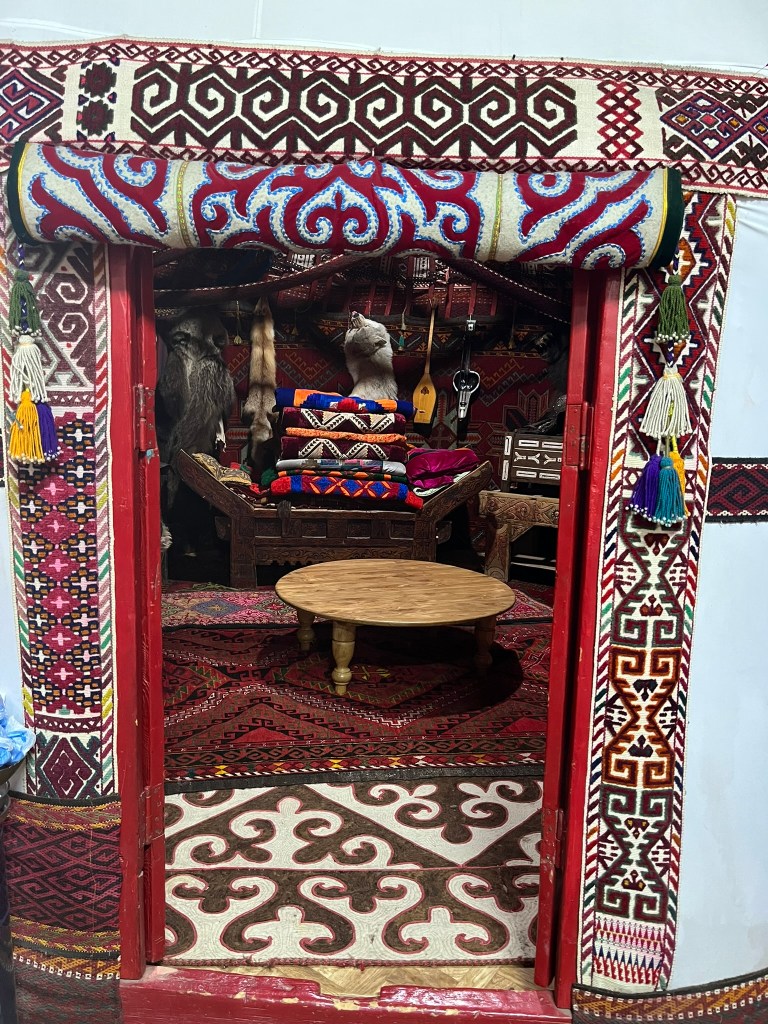
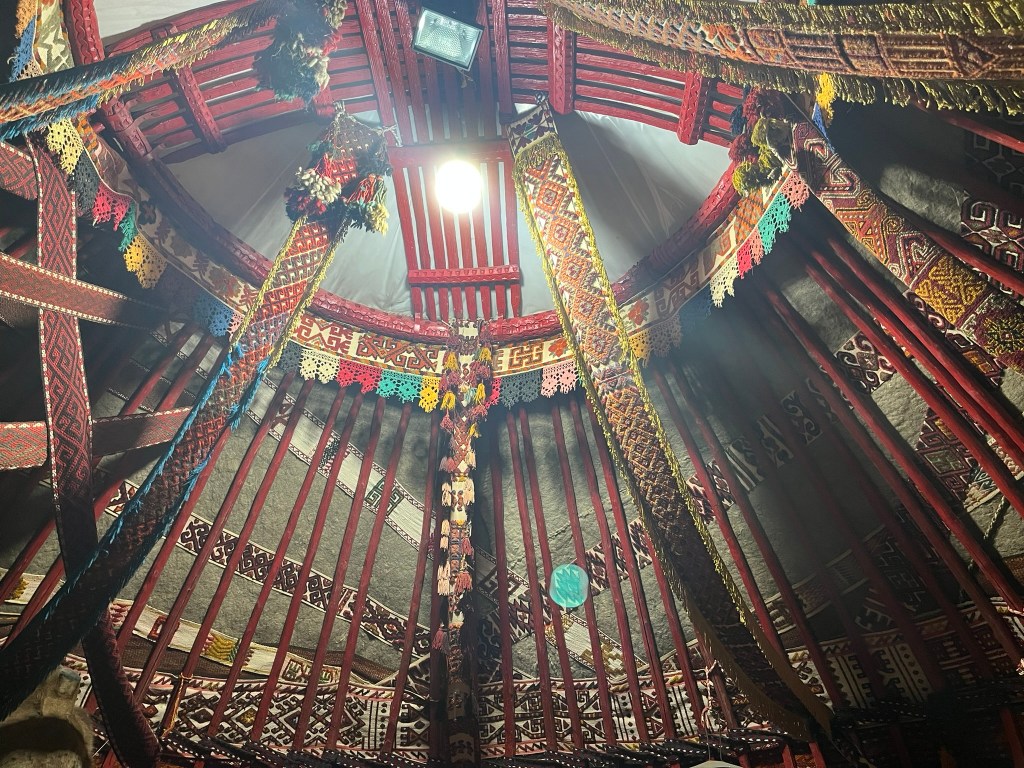
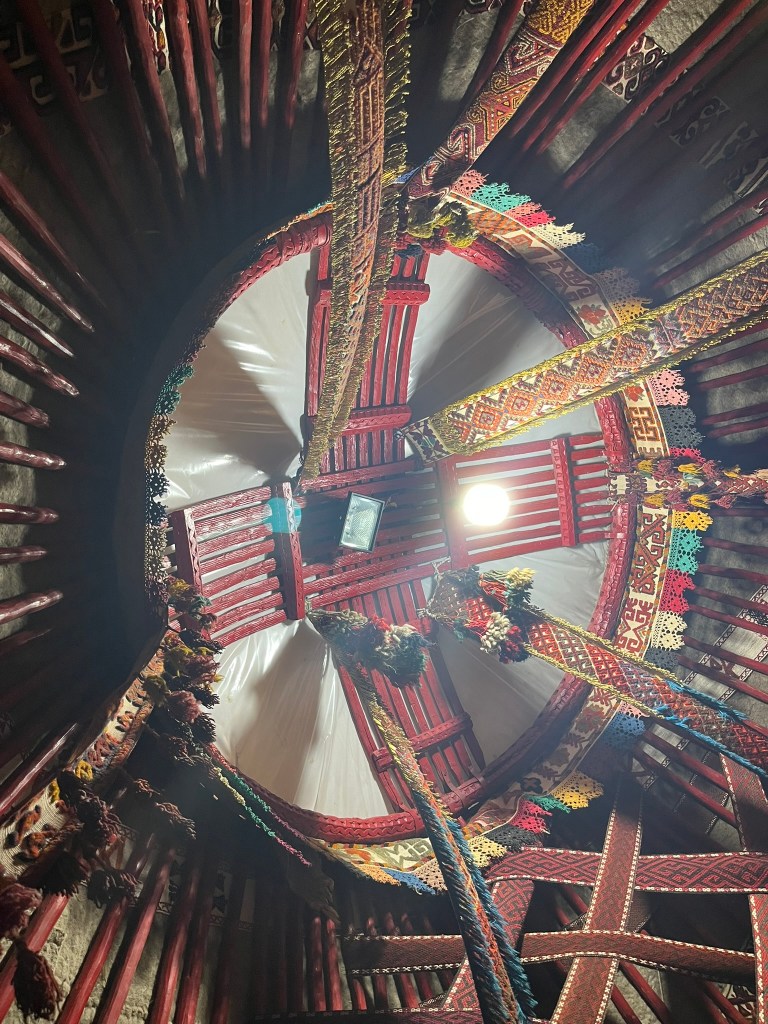
We then spent some time sitting inside a yurt. The structure is formed of a lattice wall that can easily collapse if the tribe is moving, the roof poles connect with the lattice wall and slope upwards to create the dome shape and finally the most important piece, the shanyrak, or round wooden ring where the roof poles slot in. The centre of the roof is open, allowing sunlight in and smoke out. The shanyrak is very important in Kazakh culture and is even their national emblem.
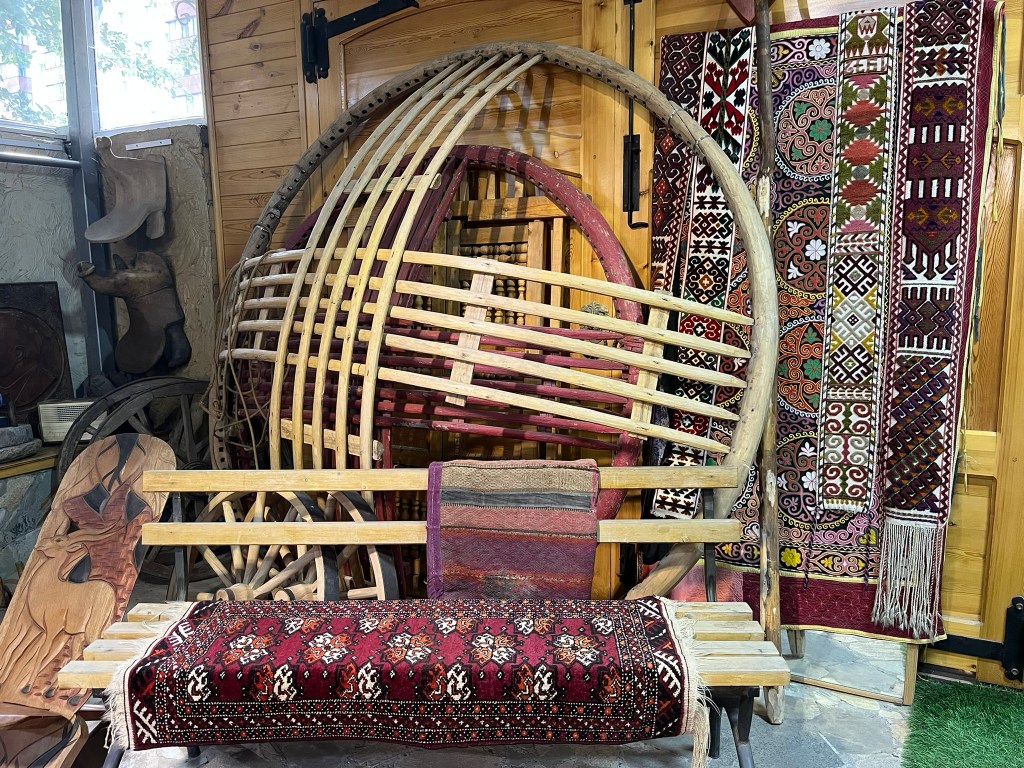
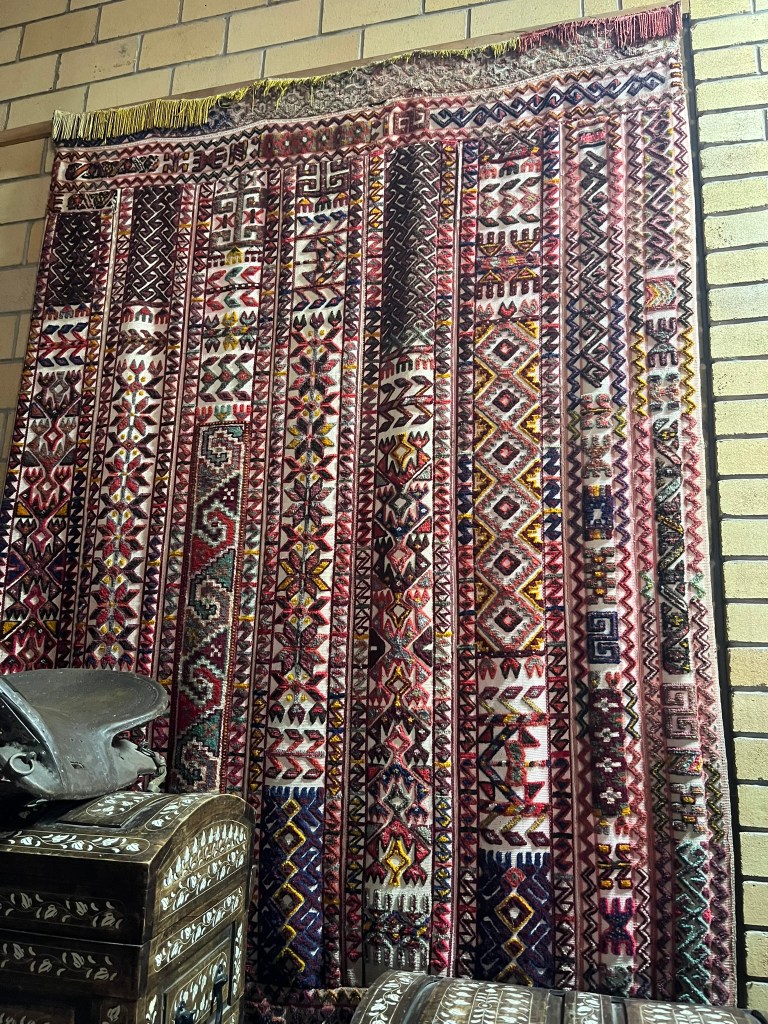
Felt is wrapped around the frame and decorative woven bands are wrapped around the top of the walls. Inside the walls and floor would be covered in rugs to keep in the warmth. On the outside, one might assume the inside of a yurt would be quite bare, but they are quite brightly colored and vibrant. Amazingly, 2-3 people can erect a medium-sized yurt in about an hour. Making it easy to move frequently.
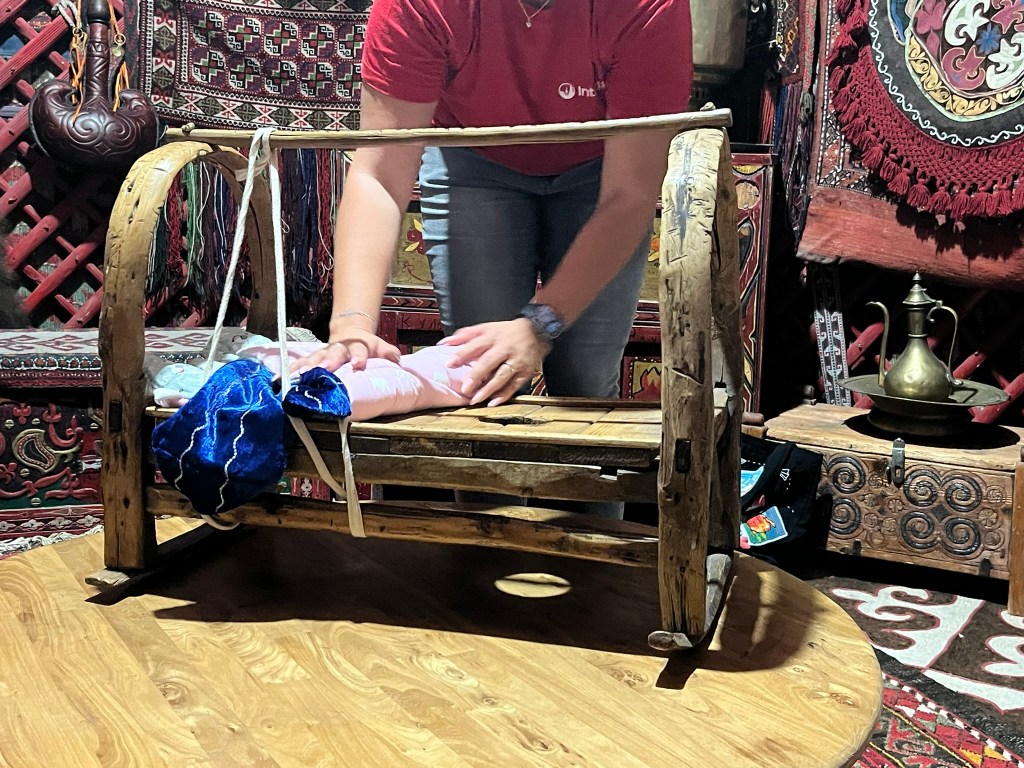
Traditionally the space is divided into the right-side for men, where they can store their hunting gear, weapons and tools. And the left side for women, providing storage for kitchen equipment and a cradle. Our guide showed us the unique way Kazakhs have designed their cradles to suit their nomadic lifestyle, with straps to tie the baby in and a hole in the bottom for babies to use as a toilet, ideal for taking them on long horse rides. A cradle is a precious item for Kazakh nomads and would be passed through the generations as a family heirloom.
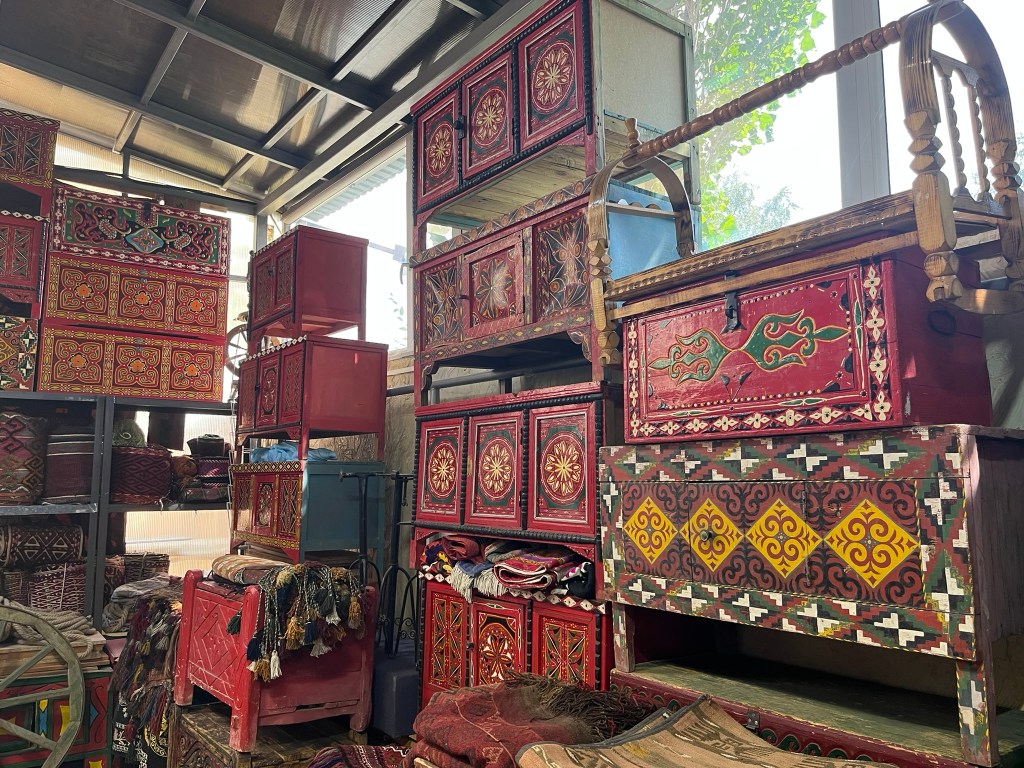
Each family would have brightly decorated wooden chests known as sandyk that serve as storage, somewhere to sit and something that could be strapped to horses easily when on the move. All these items would be carried by Kazakh pack horses during the seasonal migration. These animals are well-suited for the harsh steppe and desert environments and can comfortably carry up to 100kg over long distances.
This was a great introduction to the way that Kazakh nomads live and I’m looking forward to staying in a yurt later in the trip.


 Colette's Grand Detour
Leave a comment