Ahmed Yasawi was a Turkic poet, and Sufi mystic and spiritual leader who played a significant role in the spread of Islam across Central Asia. He was born in the 12th century, nearby Shymkent in southern Kazakhstan. He was the first poet to translate Islamic mystic poetry into the Turkic language, which made his ideas accessible to the local nomadic people and gave Islam in Central Asia a distinct flavor. The poetry he wrote was simple and clear, using folk rhythms and an oral style that made it easy for nomads to memorise and recite. His ideas focussed on humility, patience and justice. He had many disciples who spread his teachings across the region. The Yasawiyya Order was founded by him and influenced many future Sufi movements like the Bektashis in Anatolia.
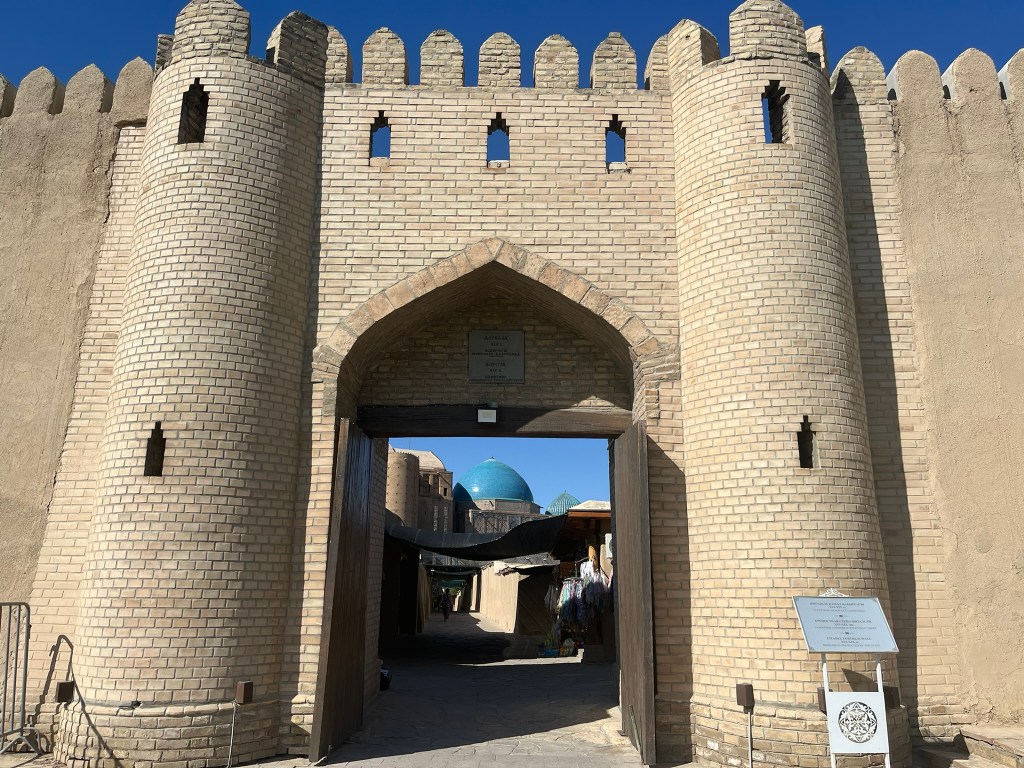
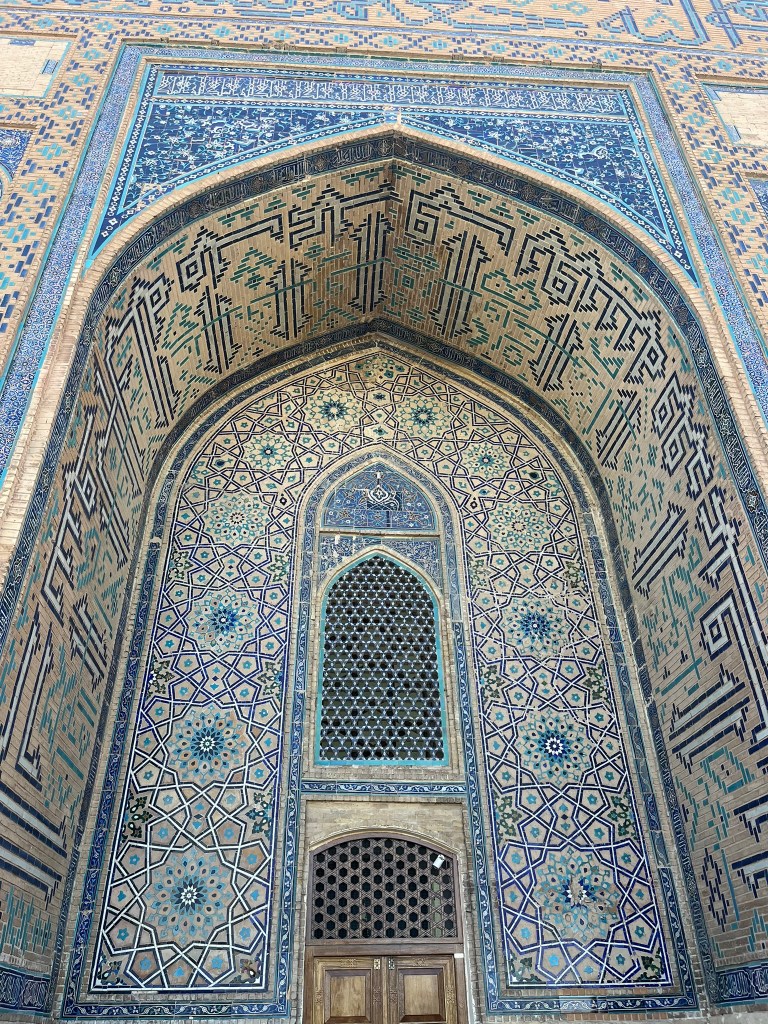
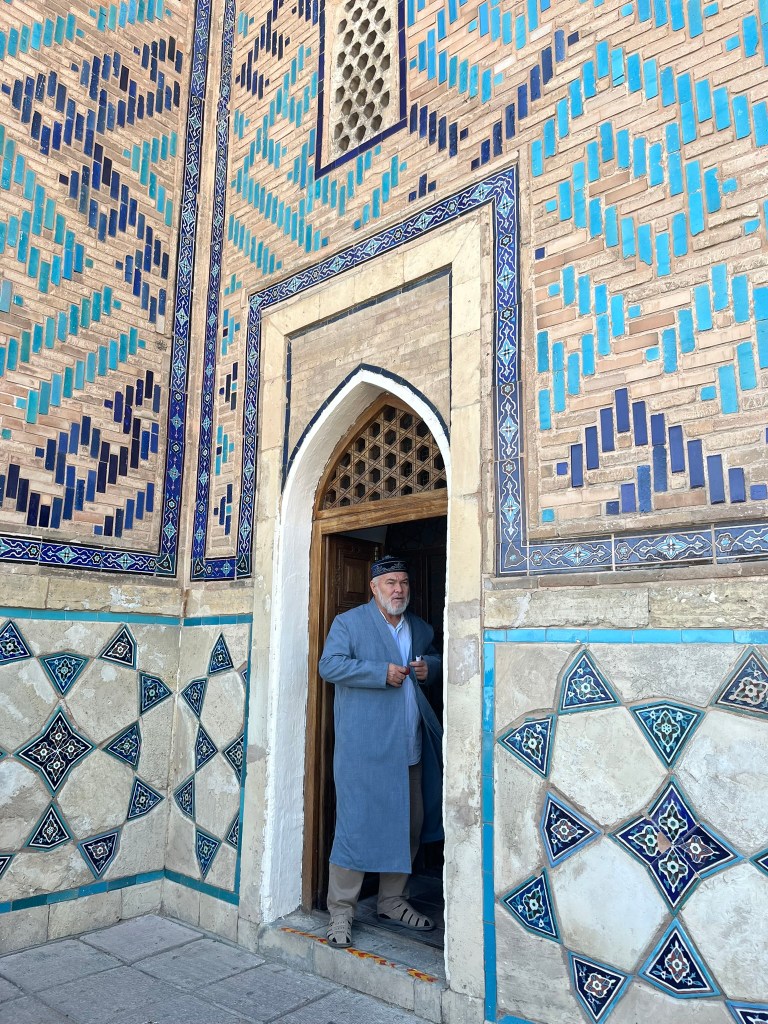
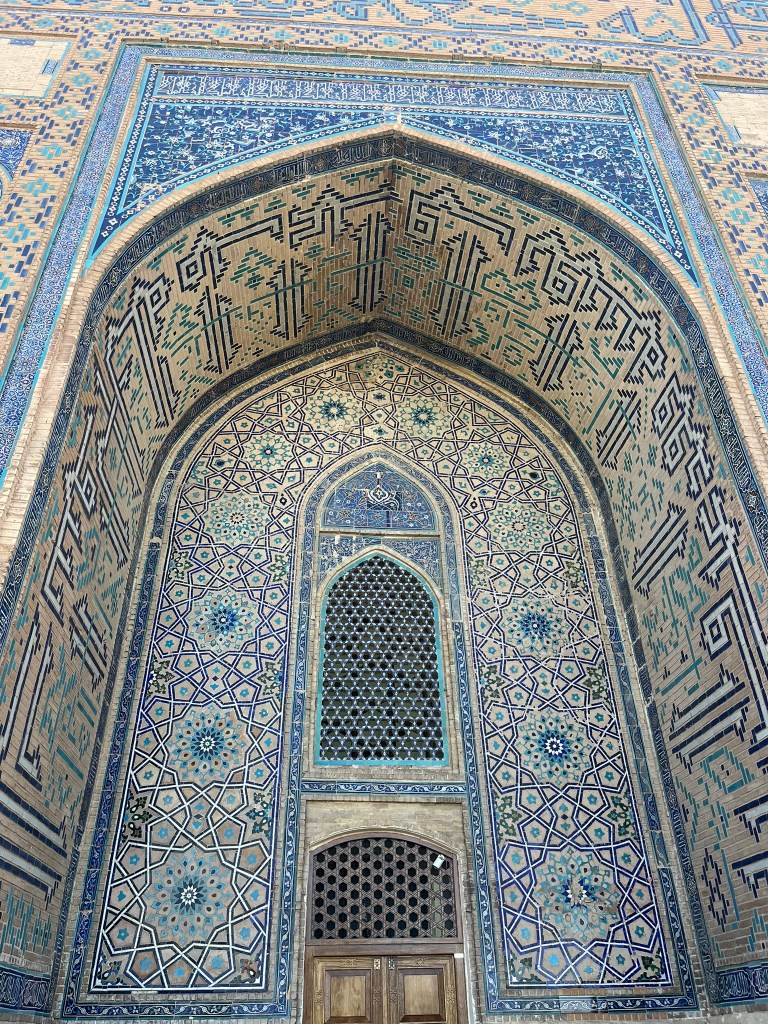
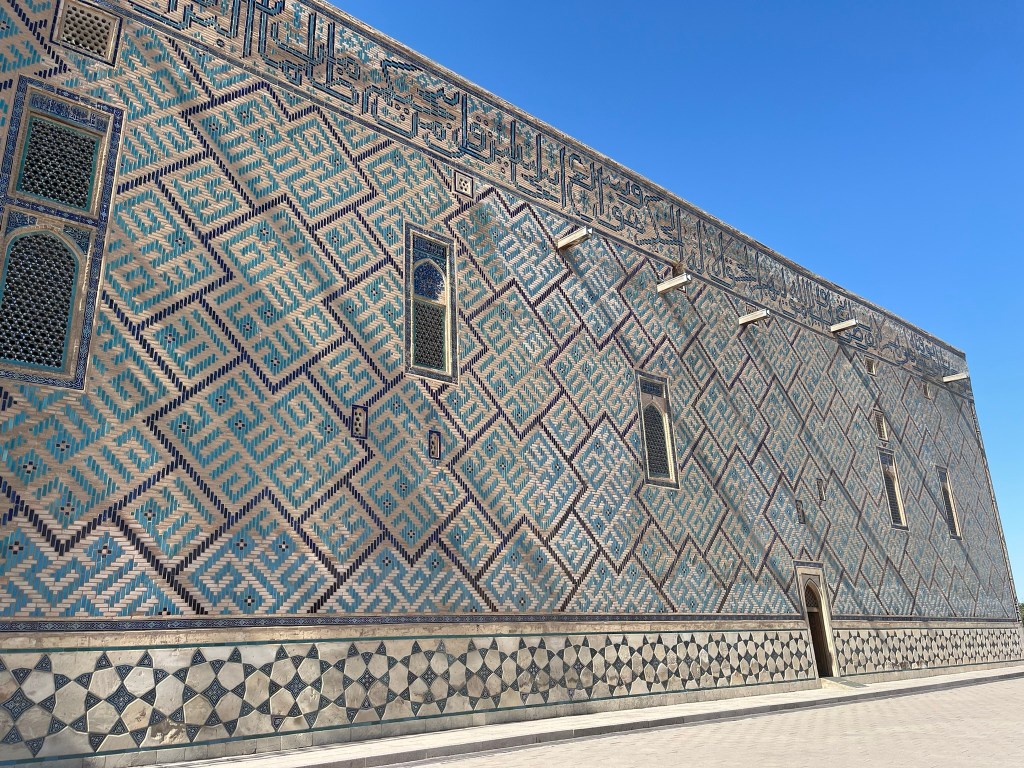
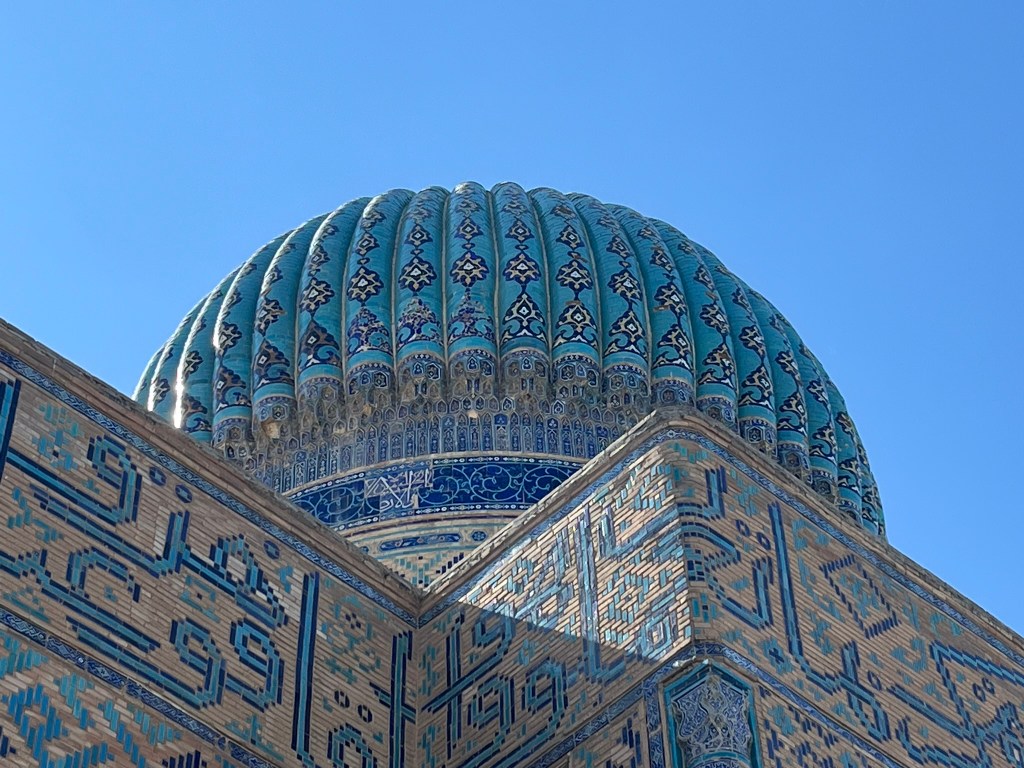
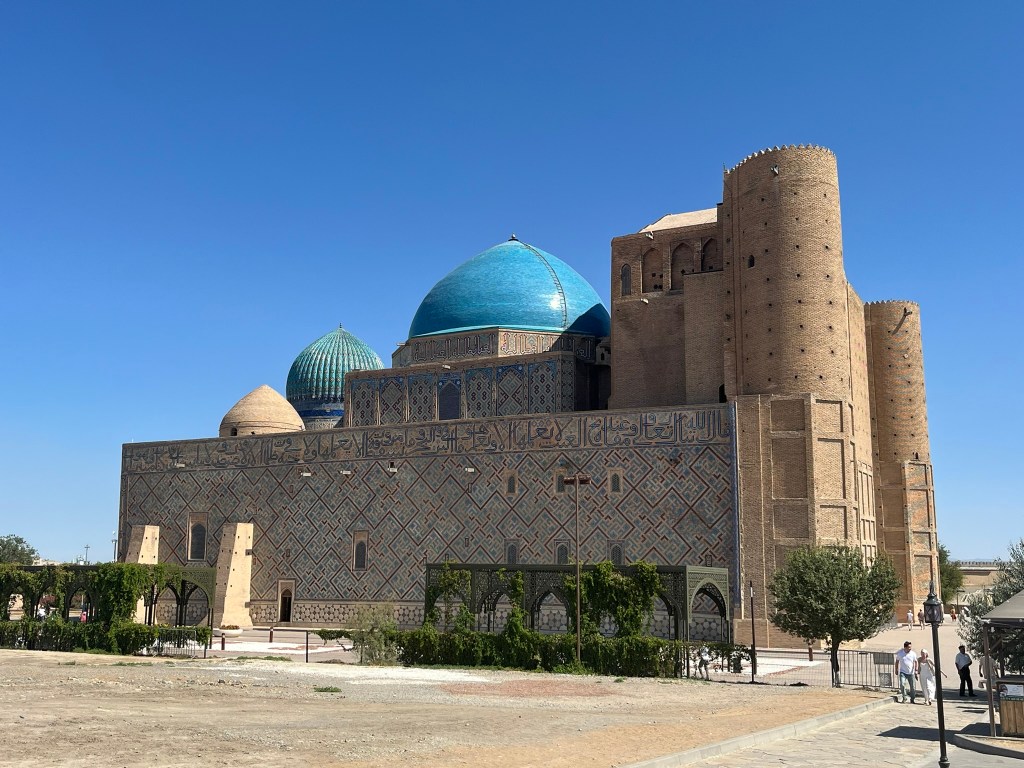
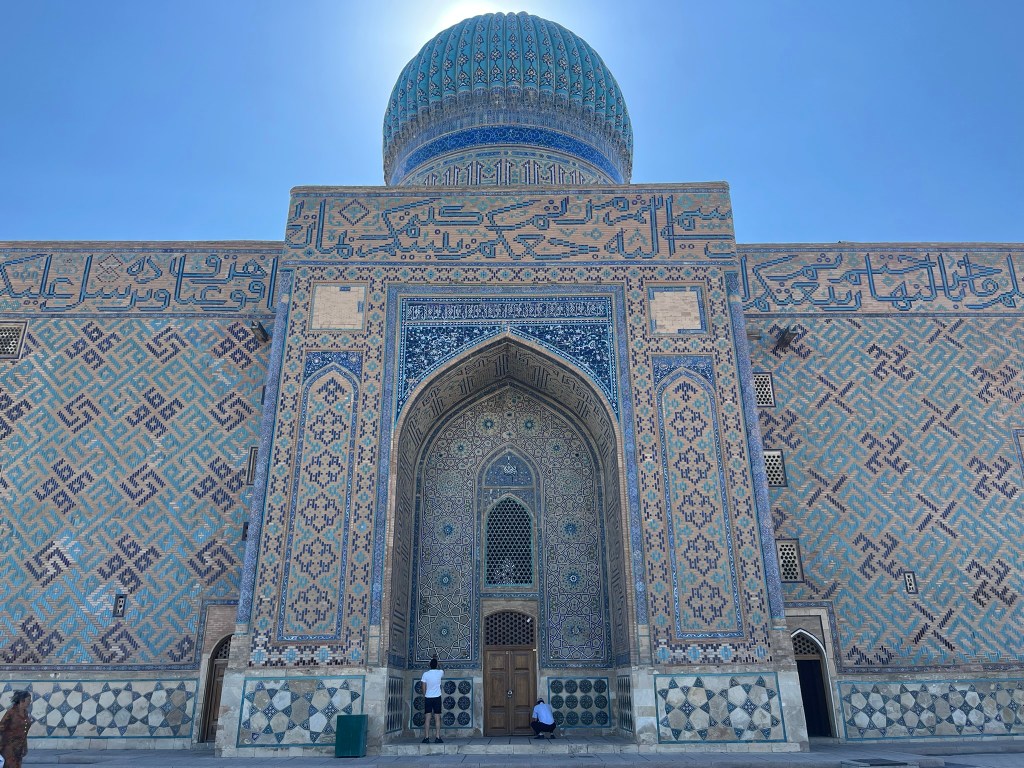
At the age of 63 he retired to an underground cell in Turkistan, living and praying in isolation until his death. His reasoning was that he felt he should not walk the earth for longer than the Prophet Muhammad himself had (who lived until 63 years old). 200 years after Yasawi’s death, a grand mausoleum was commissioned by Timur the Great to honor him and the impact he had on Islam in Central Asia. It was also an excellent way for Timur to exert his power in the region. The mausoleum is an prime example of Timurid architecture and features the largest brick dome in Central Asia. It is covered in the classic blue glazed tiles that can also be seen in other great Timurid cities like Bukhara and Samarkand. Unfortunately, Timur died before the project was finished leaving the minarets and some of the walls incomplete. It was given UNESCO World Heritage site status in 2003, the first in Kazakhstan.
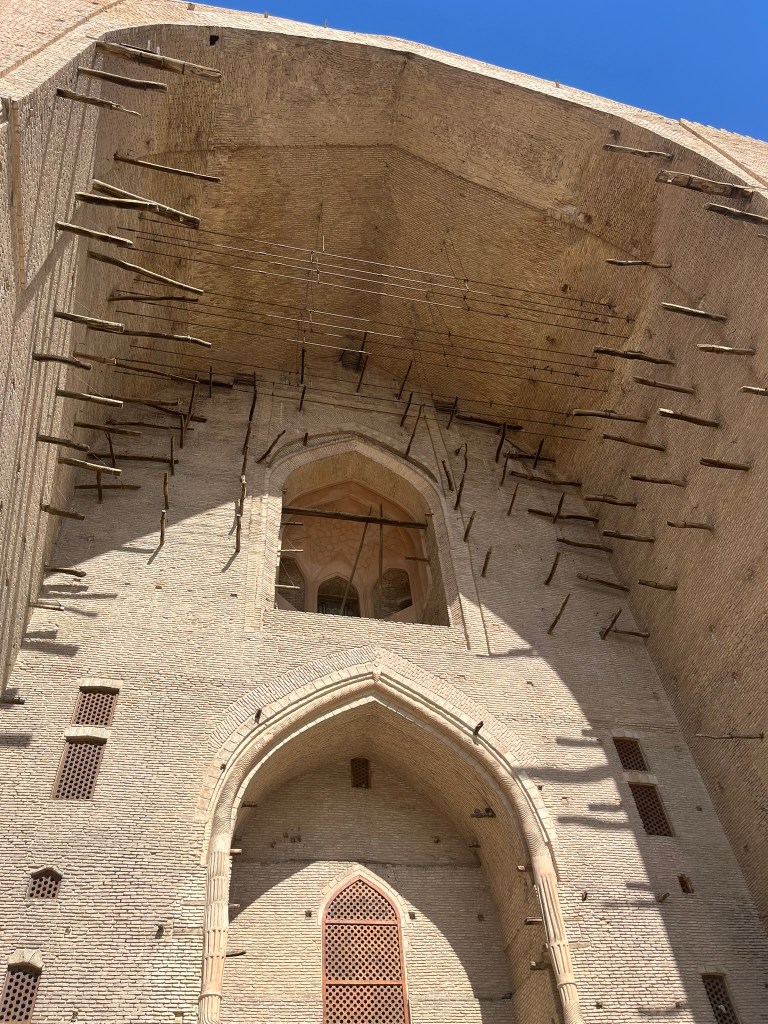
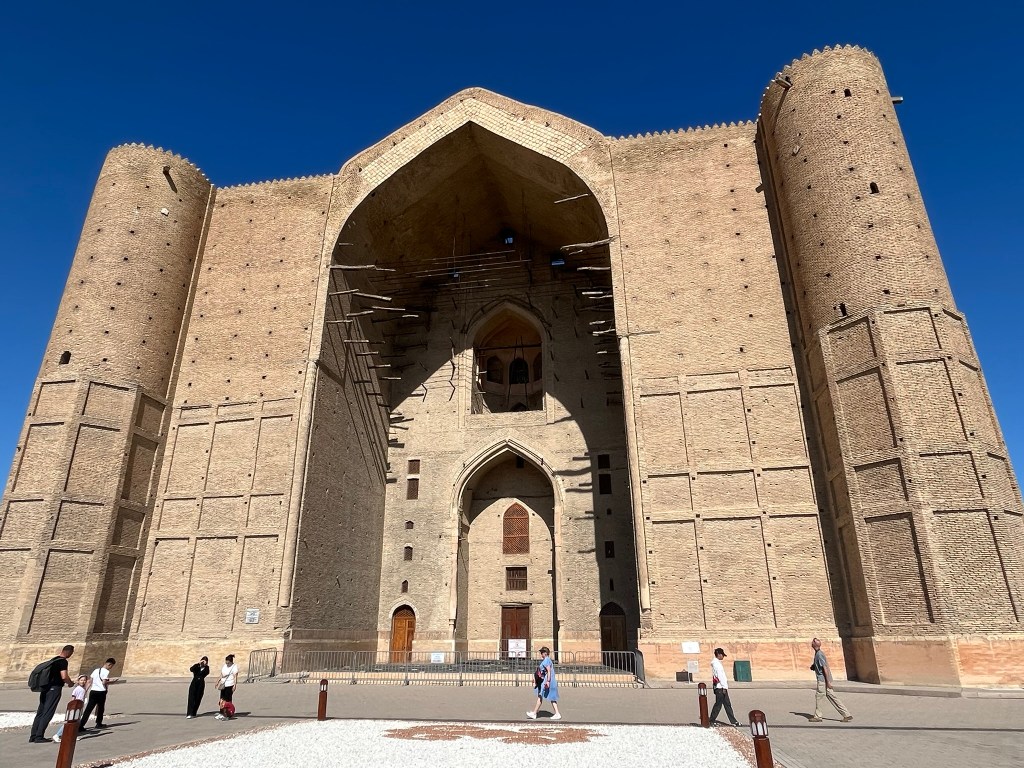
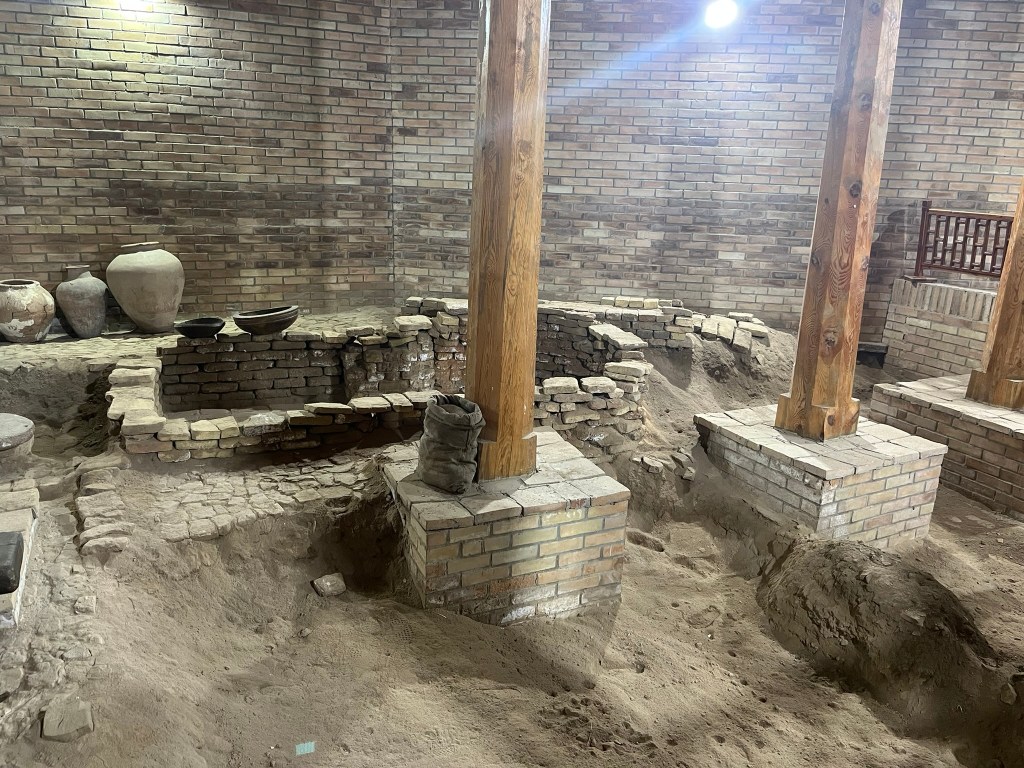
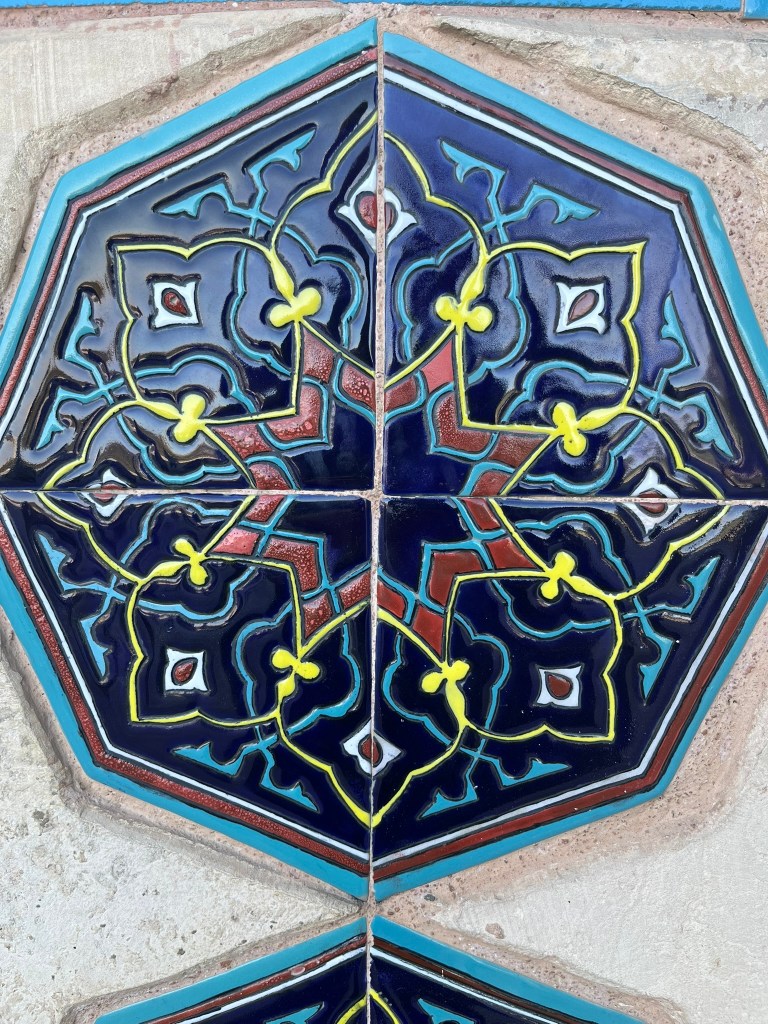
This morning we took a short walk from our hotel to explore the mausoleum as well as the remains of the underground cell in which Yasawi died. Standing tall and on its own away from other buildings, with its bright blue dome and intricate tile work, it is an extremely striking building. The mausoleum is based in a wider archeological park that houses other smaller tombs and a museum. There are lots of local tourists visiting, as it is a major pilgrimage site for Kazakh Muslims.
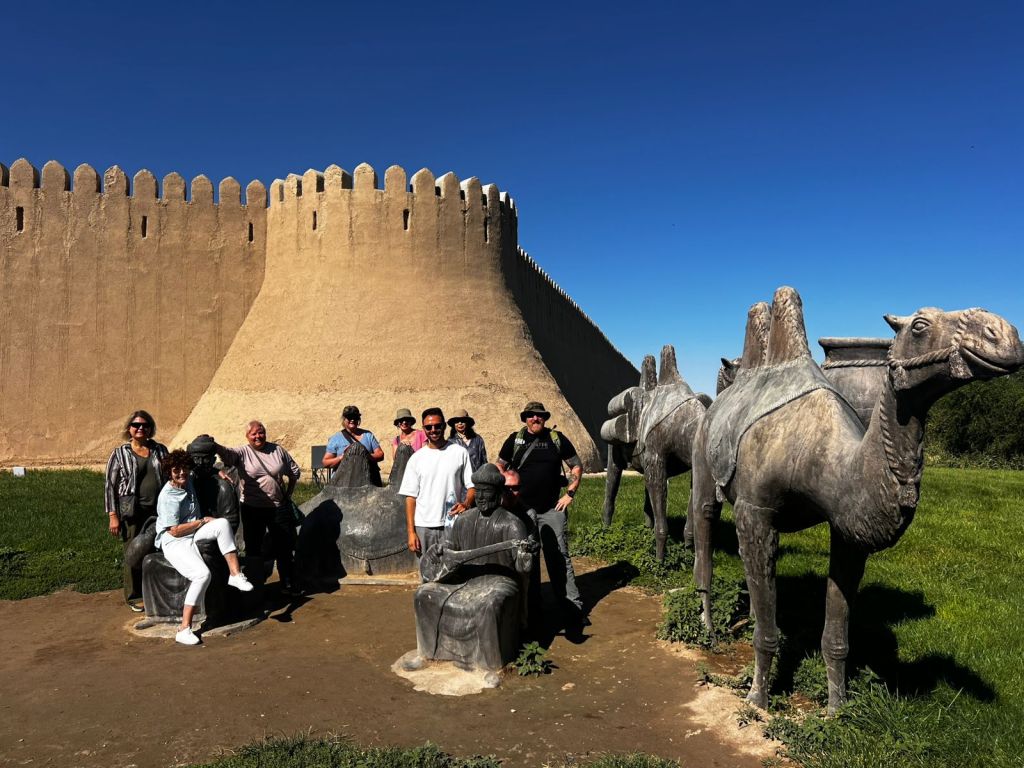
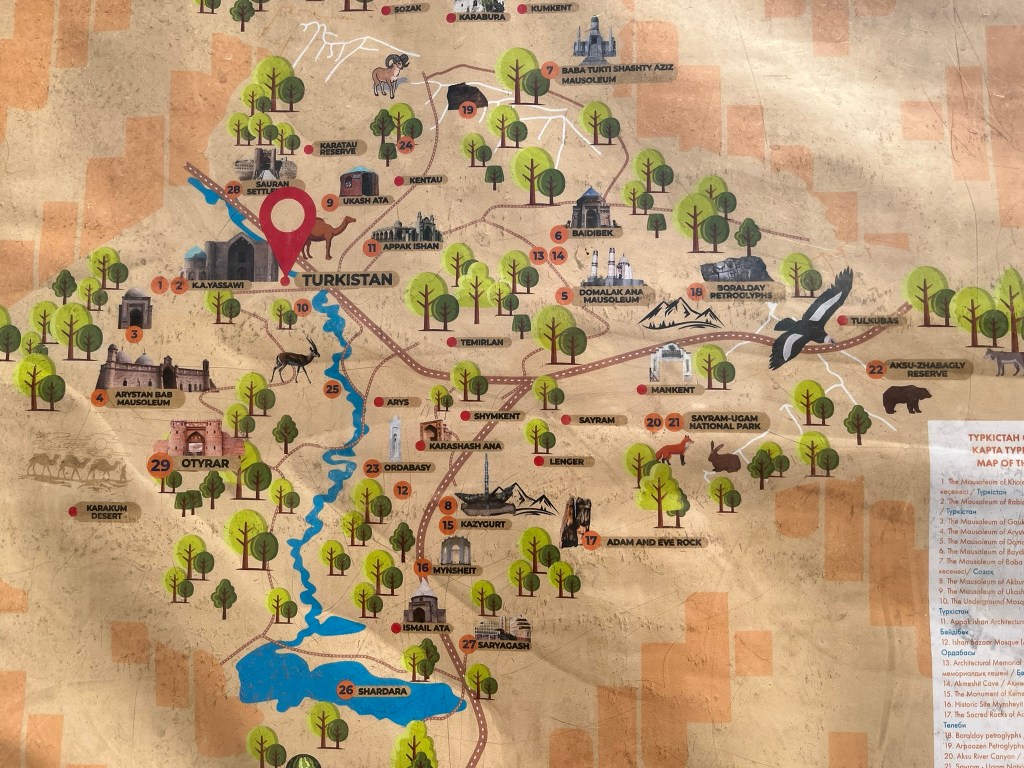

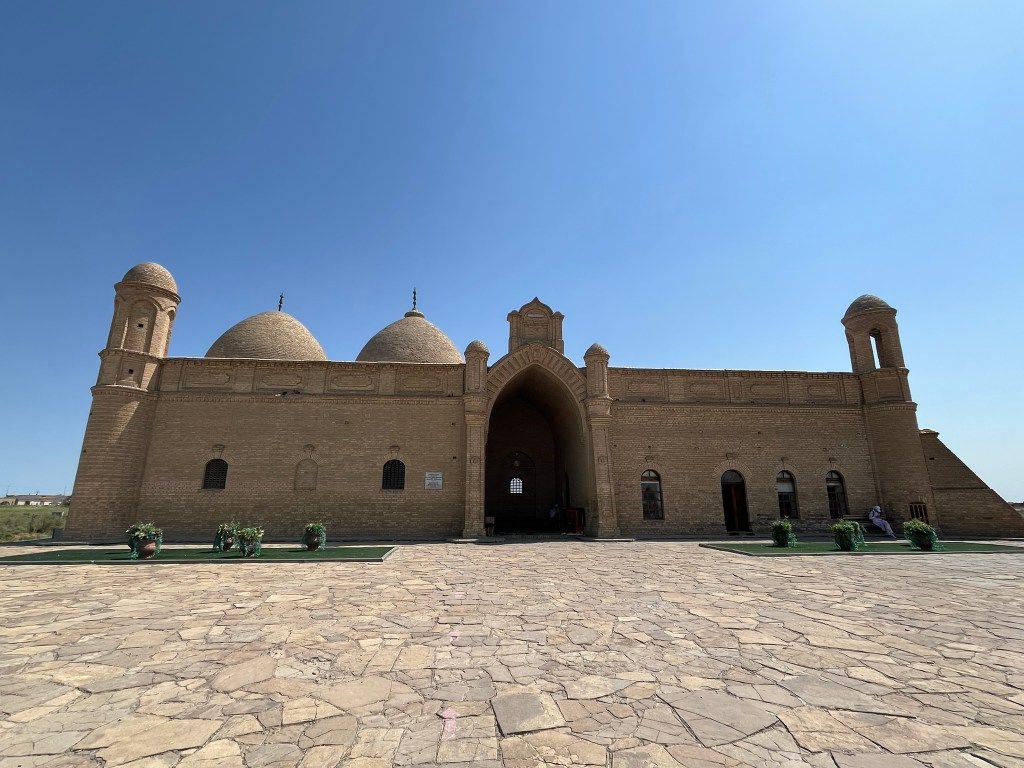
The pilgrimage does not start at Yasawi’s mausoleum though. It actually starts about 45 minutes drive away in Otrar at the mausoleum of his teacher, Arslan Bab. There is a famous legend that says that Prophet Muhammad gave Arslan Bab a date, asking him to pass it along to his next student. Apparently Arslan Bab survived for many hundreds of years, until a young child approached him in the 12th century saying he had something for him. This was Yasawi. And from that point on Arslan Bab raised and educated Yasawi until his death. For his role in teaching Yasawi, he is seen as the spiritual forefather of Turkic Sufism. Arslan Bab’s mausoleum is much smaller and less grandiose than Yasawi made with simple clay bricks and sits within an area of smaller burial sites of Sufi disciples.
 Colette's Grand Detour
Leave a comment