My journey through Kazakhstan is starting in Astana. Previously known as Nur-Sultan. And before that Astana. And before that Akmola, Tselinograd and Akmolinsk. The changes in name are an way easy to track the city’s key historical events.
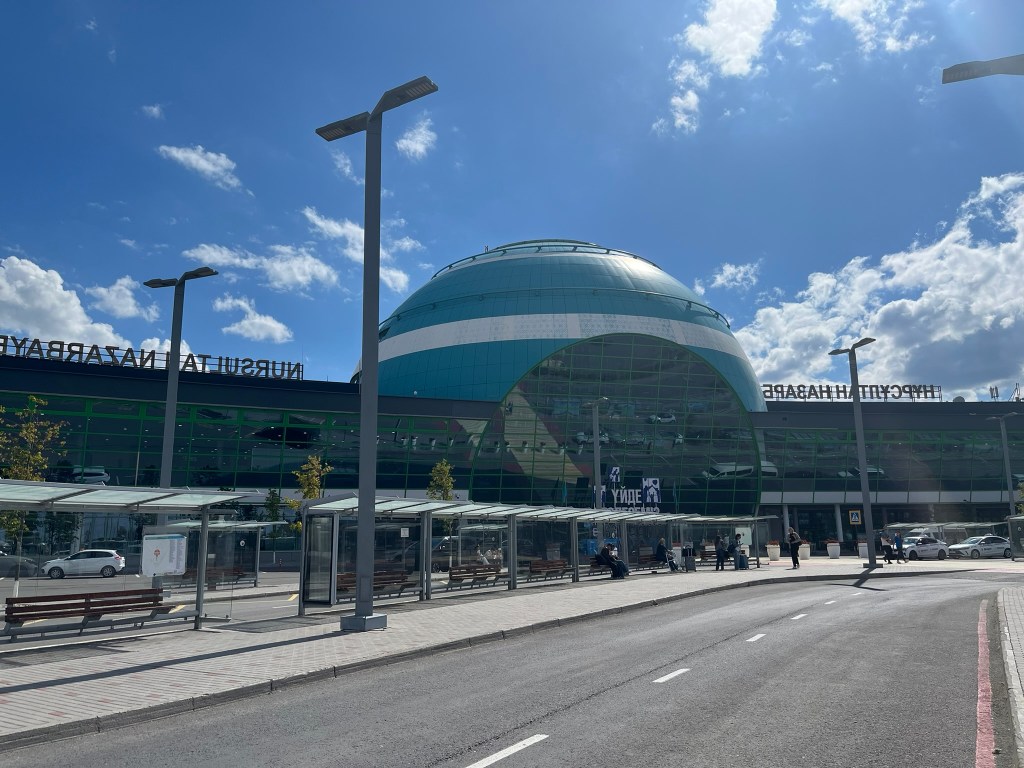
Astana is not an old city. Really its only been in existence since 1830 and even then it was just a frontier post for the Russian empire looking to control the northern Kazakh steppe. At that time it was known as Akmolinsk, built on the banks of the Ishim river as a military and trade post. By the 1860’s it had grown from a frontier post to a small provincial town. It was only in the Soviet era when Khrushchev launched the Virgin Lands Campaign and declared the center of Kazakhstan as an enormous new grain-farming region that it was renamed Tselinograd (which translates to Virgin Lands City). Large numbers of workers moved to Kazakhstan from all over the Soviet Union and the town grew to a mid-sized Soviet city.
After gaining independence in 1991 the now established city reverted to its Kazakh name, Akmola. At this point the capital of Kazakhstan, was still in Almaty. Almaty sits close to the border of both China and Kyrgyzstan in the south-eastern corner of this huge country, surrounded by mountains with little room to expand and has high earthquake risk. President Nursultan Nazarbayev wanted to move the capital somewhere more central, with room to expand, low seismic risk and importantly somewhere he could build a new, planned capital. He chose Akmola and in 1997 the government moved there and in 1998 it was renamed Astana (which literally means Capital in Kazakh). I’ll go into how the capital subsequently changed its name to Nur-Sultan and then back again to Astana in a later blog when I discuss the first President.
Now of course, its not true that there was absolutely nothing there before the frontier post was established. The northern Kazakh steppe was used by nomadic Kazakh tribes for centuries prior and the Ishim river provided water and pasture land making it an ideal location for seasonal settlements. But there were no permanent towns, just wintering camps and summer pastures. The Silk Road trade routes did not pass through the exact site of today’s Astana, choosing routes further south, but the area was part of various empires and khanates through the centuries.
From the late 1990’s onwards, Astana underwent massive development. The President’s goal was to build a modern city with futuristic architecture. A Dubai of Central Asia. This was an opportunity for this new young country to make a statement to the world that Kazakhstan was modern and forward-thinking. Many high-profile architects from around the world have contributed to some of the unique architecture that is peppered across the city. Including Norman Foster who designed the Khan Shatyr Entertainment Center in 2010, famously the largest tented building in the world and designed to represent a nomadic yurt. And the Palace of Peace and Reconciliation in 2006 which is in the shape of a giant steel and glass pyramid.
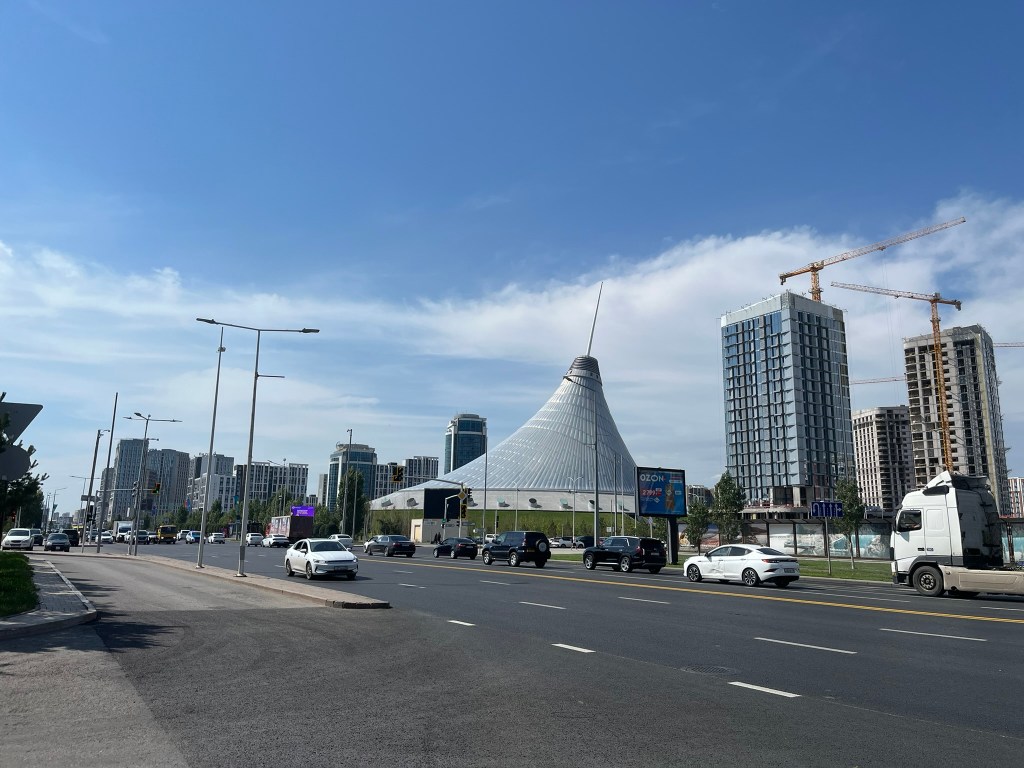
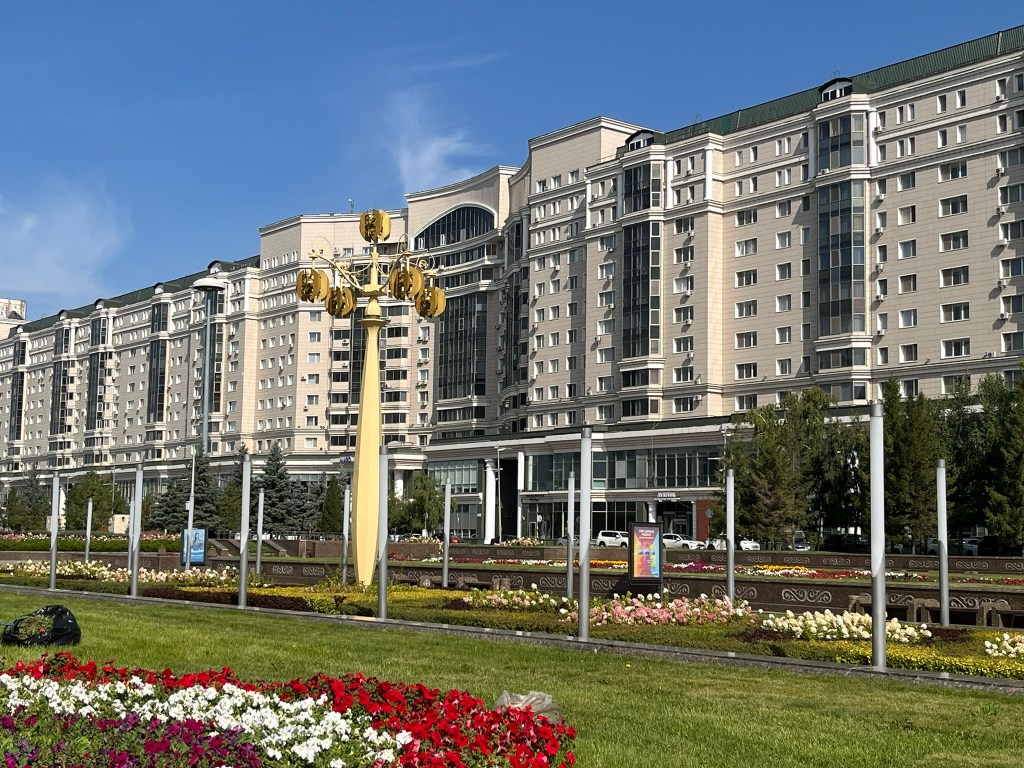
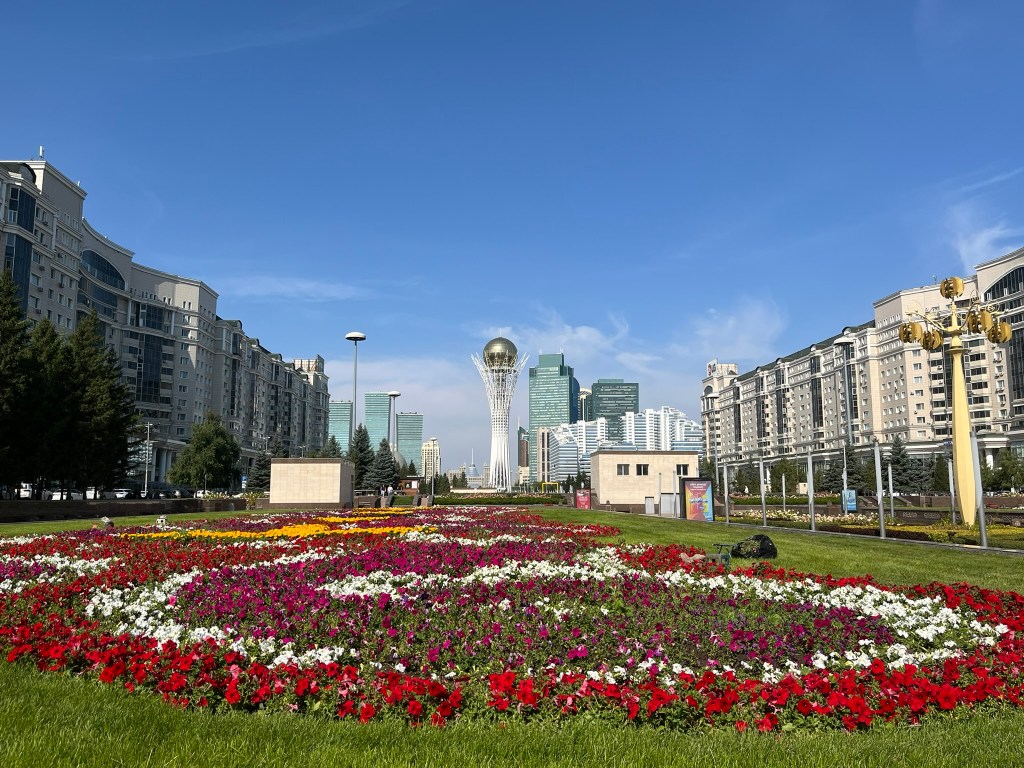
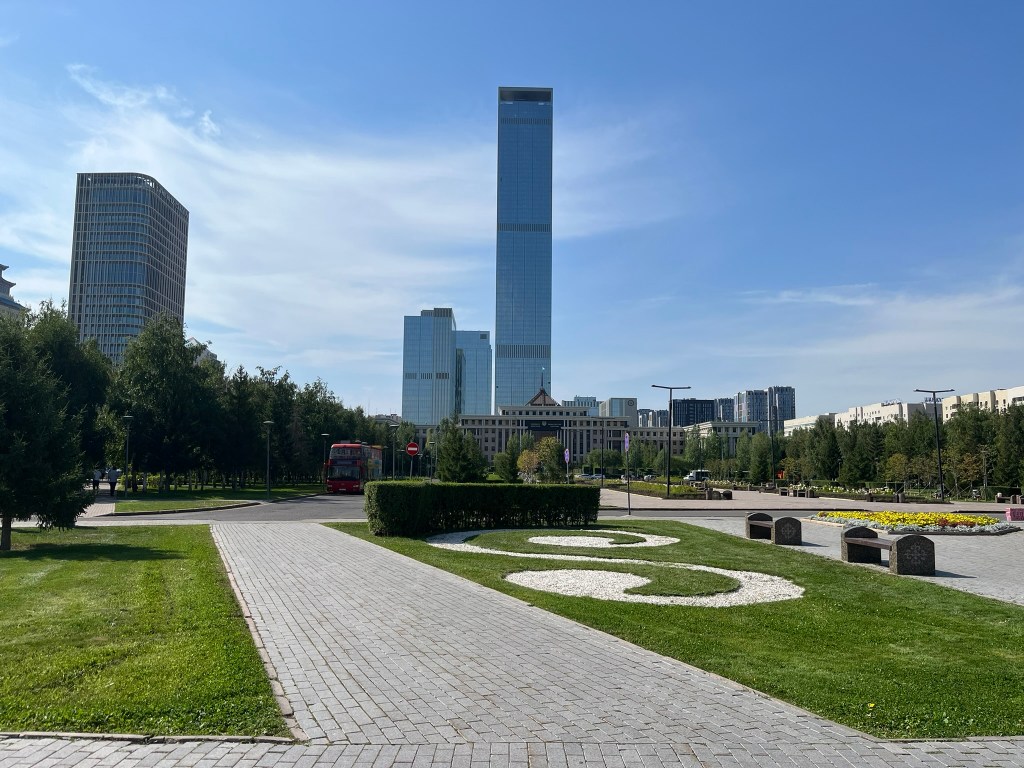
Today we explored a number of the quirky buildings that make up this somewhat dystopian looking city. It gave me vibes of Dubai combined with the weirdness of Ashgabat in Turkmenistan. Our tour started right outside our well-located hotel on Nurzol Boulevard. This is the main park in the city and cuts through its center east to west, lined with trees, fountains, sculptures and flowerbeds. It also connects a large number of the city’s landmark buildings.
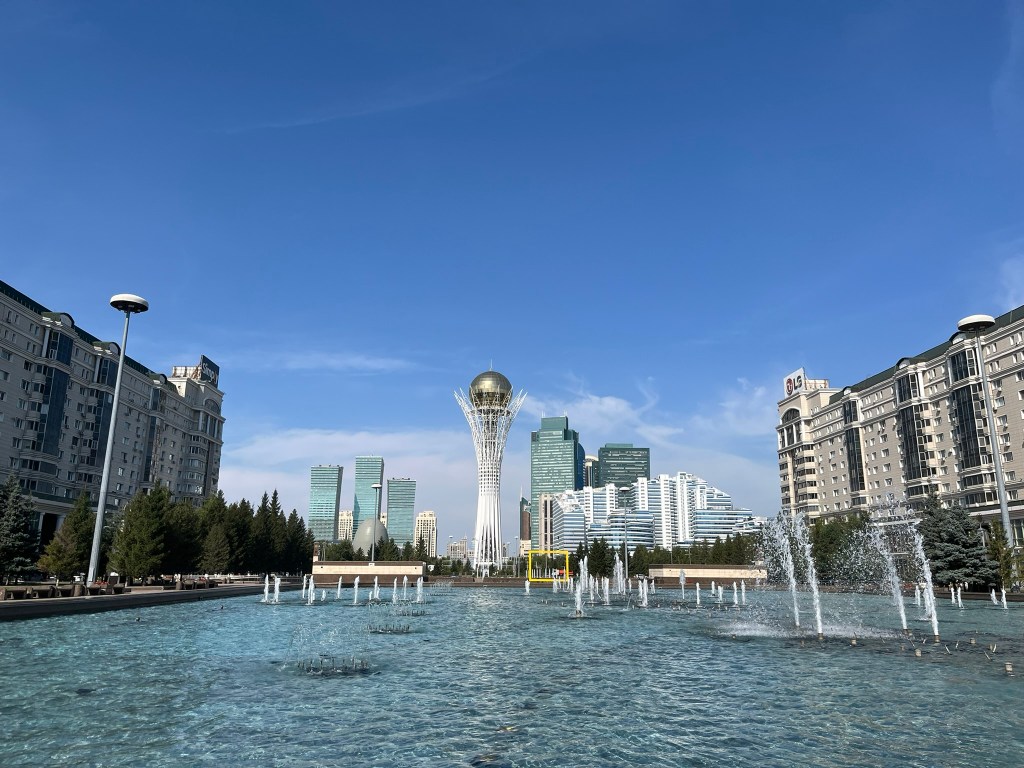
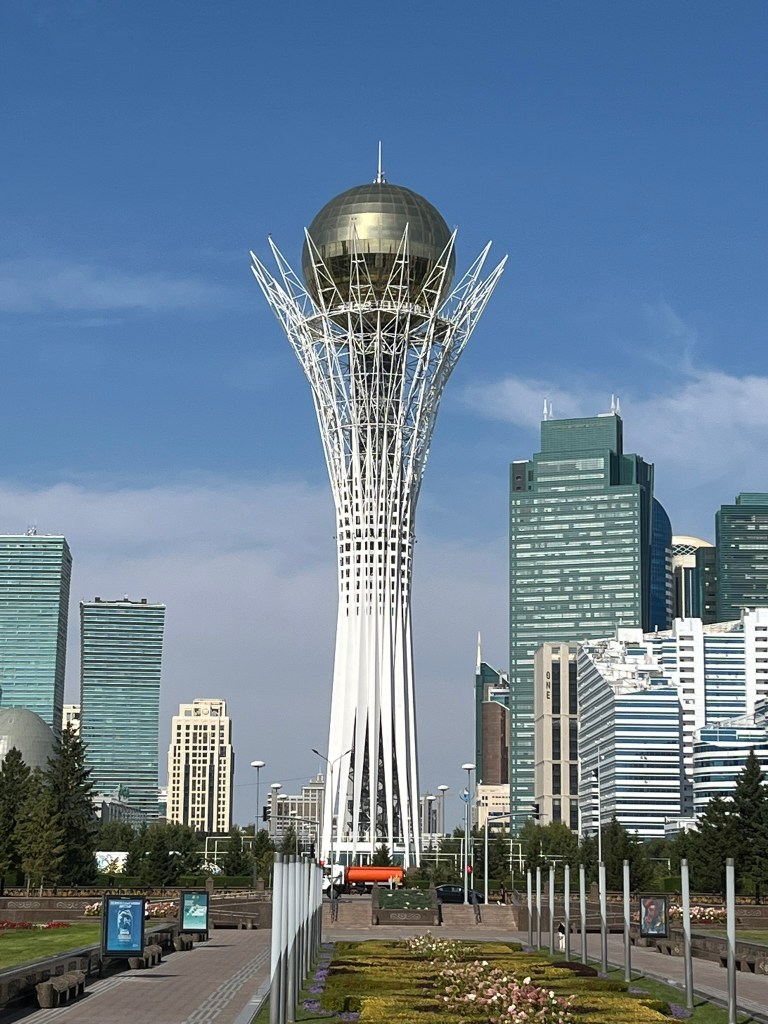
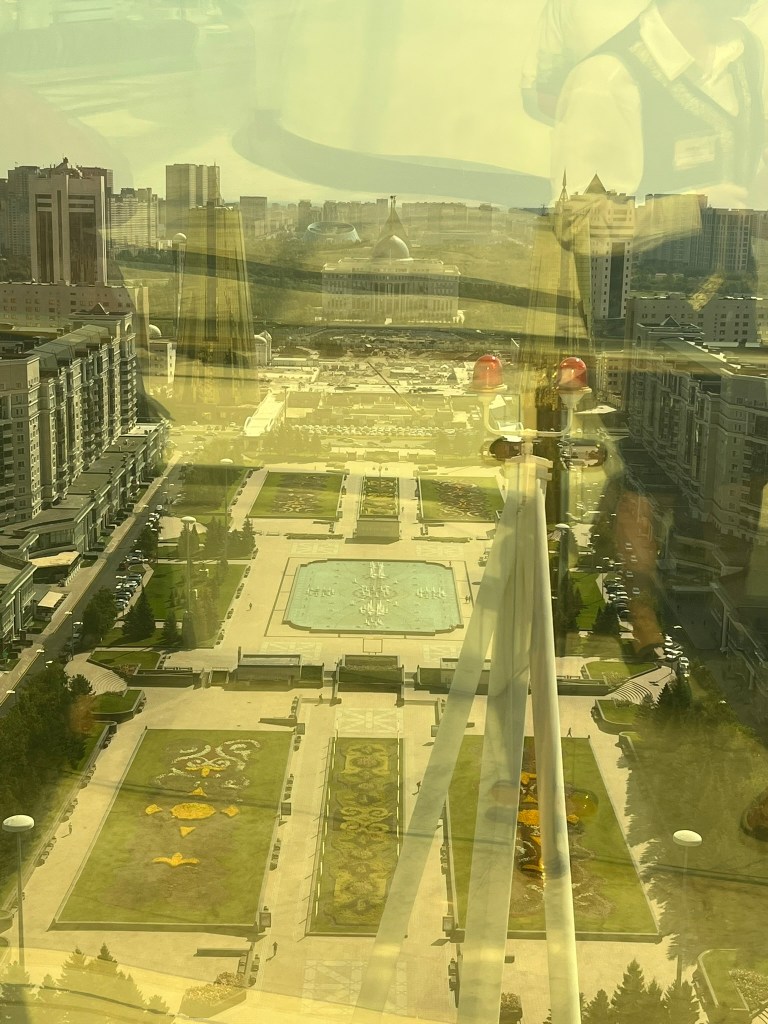
We started at Bayterek Tower which is meant to represent the tree of life holding the golden egg of a mythical bird known as the Samruk. The observation deck sits within the egg and lets you get a good view of the city. Unfortunately there is no outdoor viewing deck so all the pictures you take have a terrible reflection and golden hue. You quickly get a sense that this is still a pretty small city. And that the transition from city to steppe is very abrupt. You also get a sense of just how ‘in the middle of nowhere’ this city really is. The steppe runs off into the horizon, grass as far as you can see and nothing else. In fact the next closest city is over 200km away. Even the closest small town is 100km away.
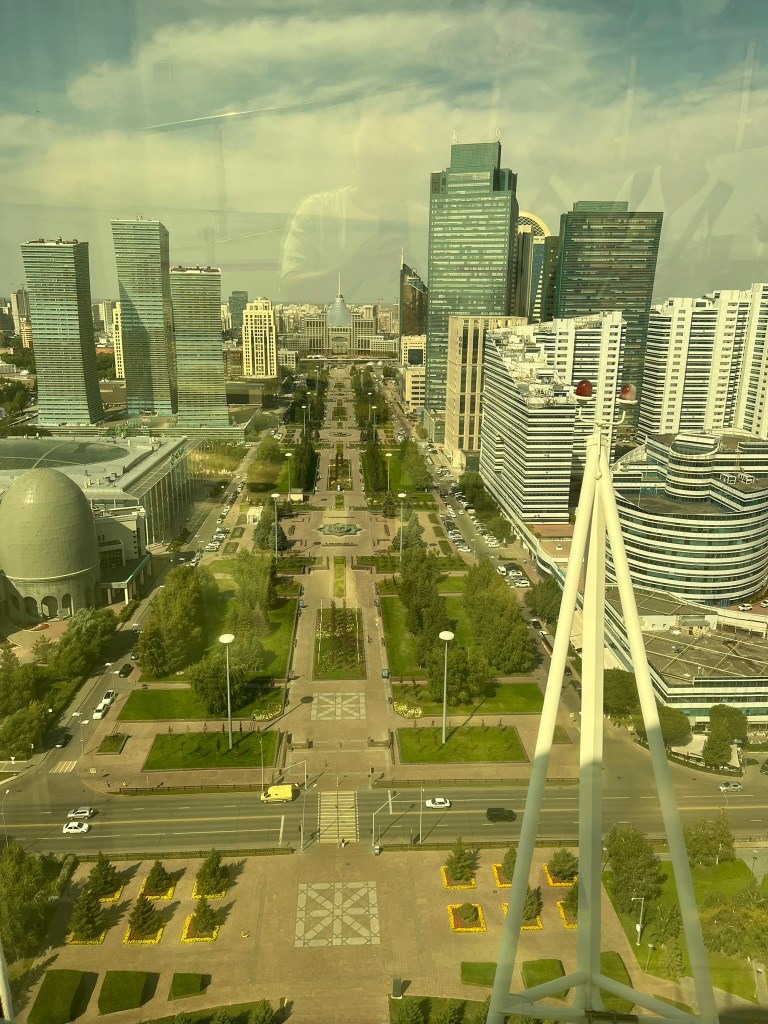
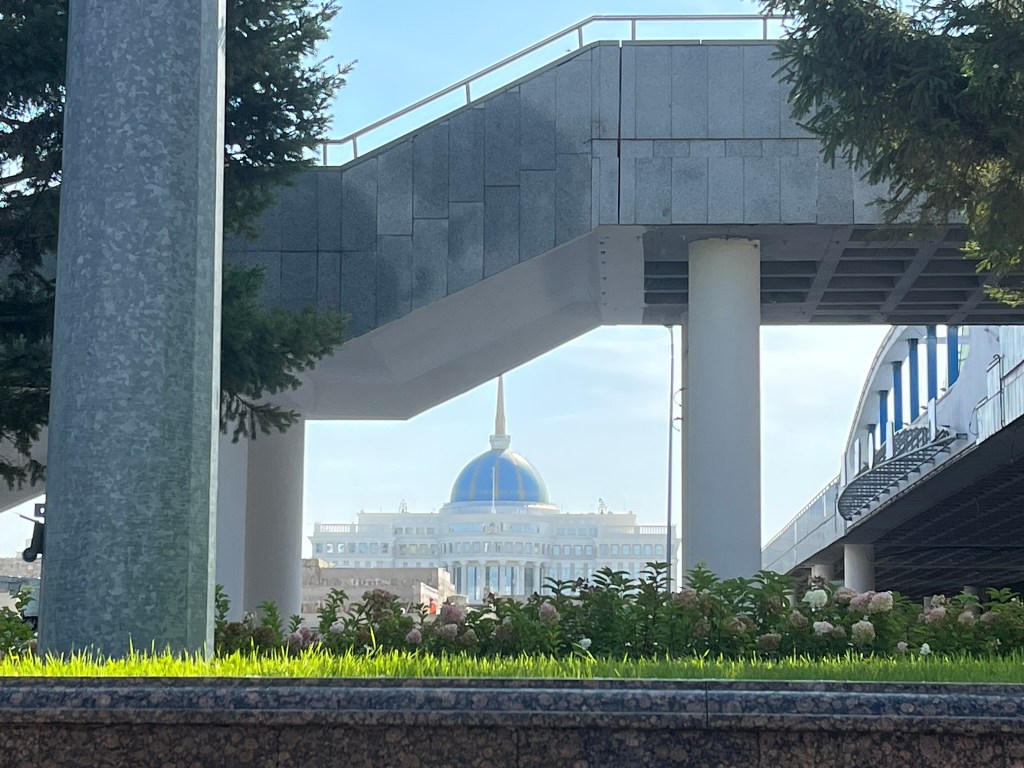
Close by is the Ak Orda Presidential Palace. There is a lot of construction going on along this part of the boulevard so we didn’t walk much closer than the spot where our hotel is located. And it is surrounded by some interestingly designed ministry buildings.
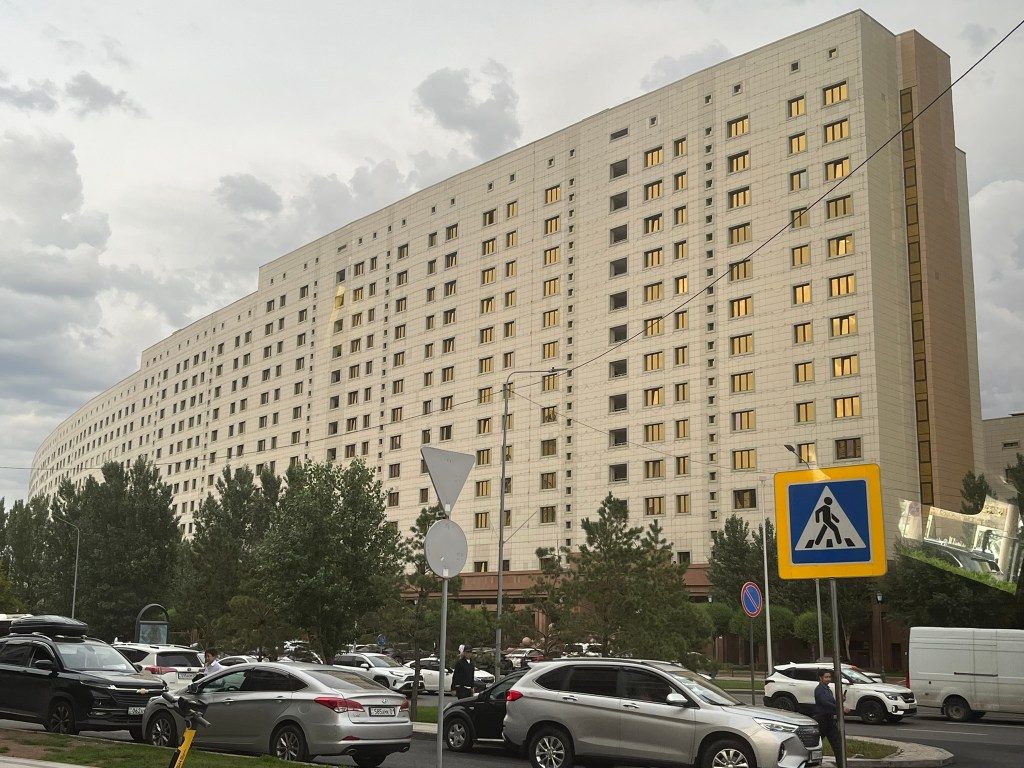
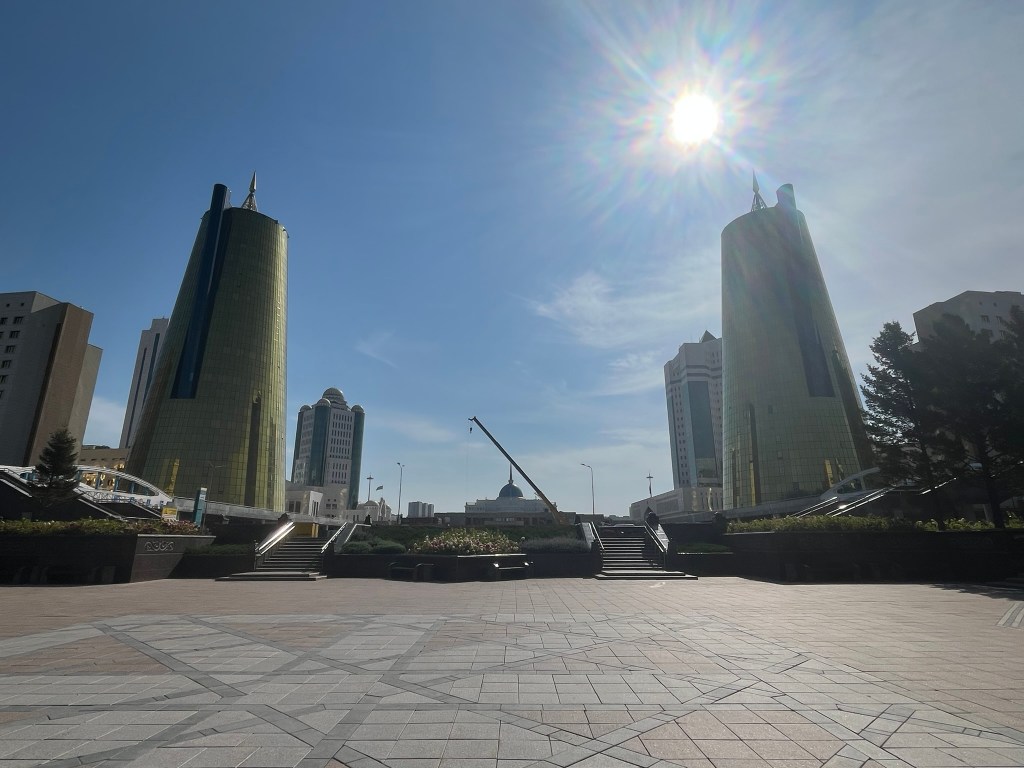
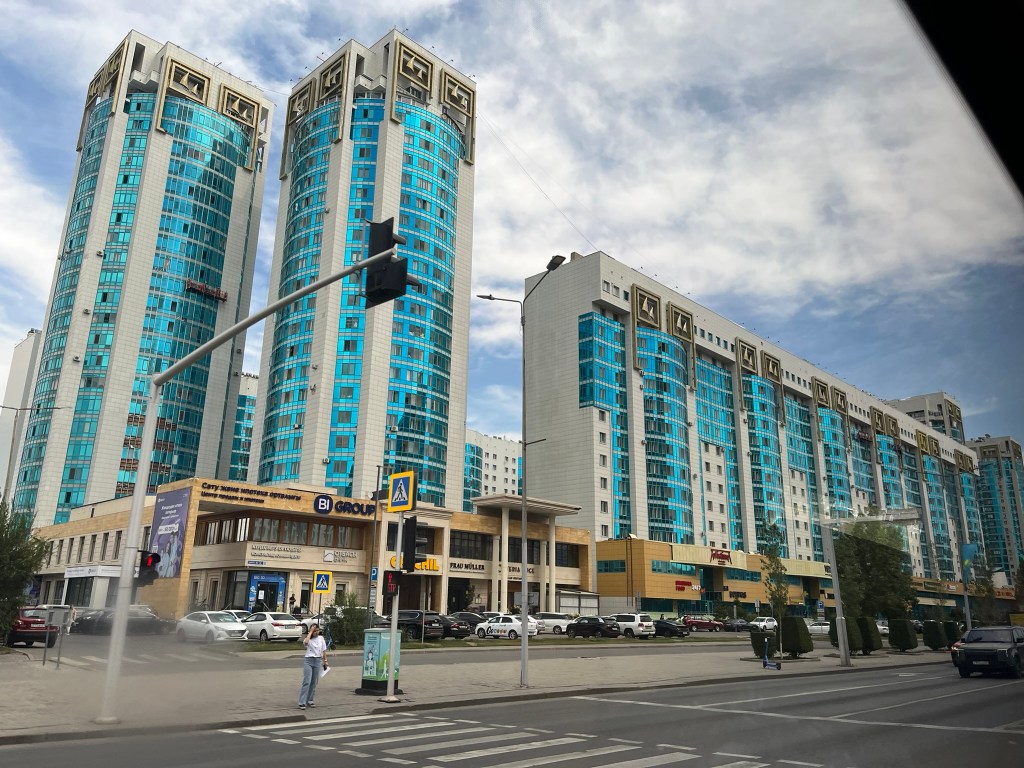
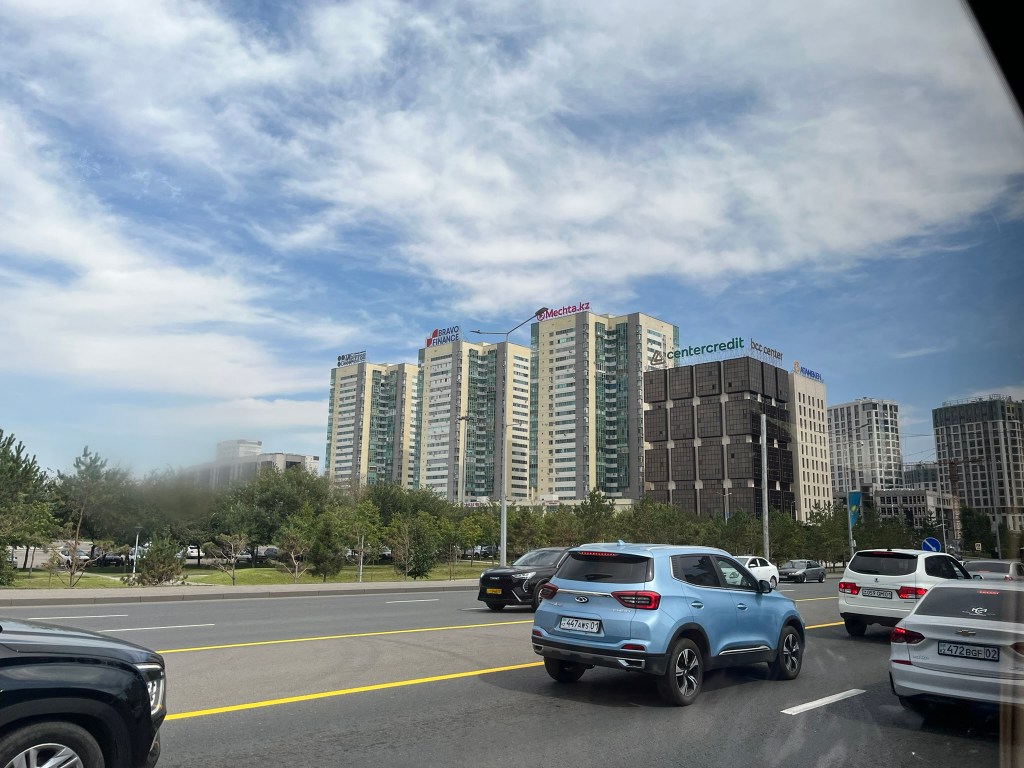
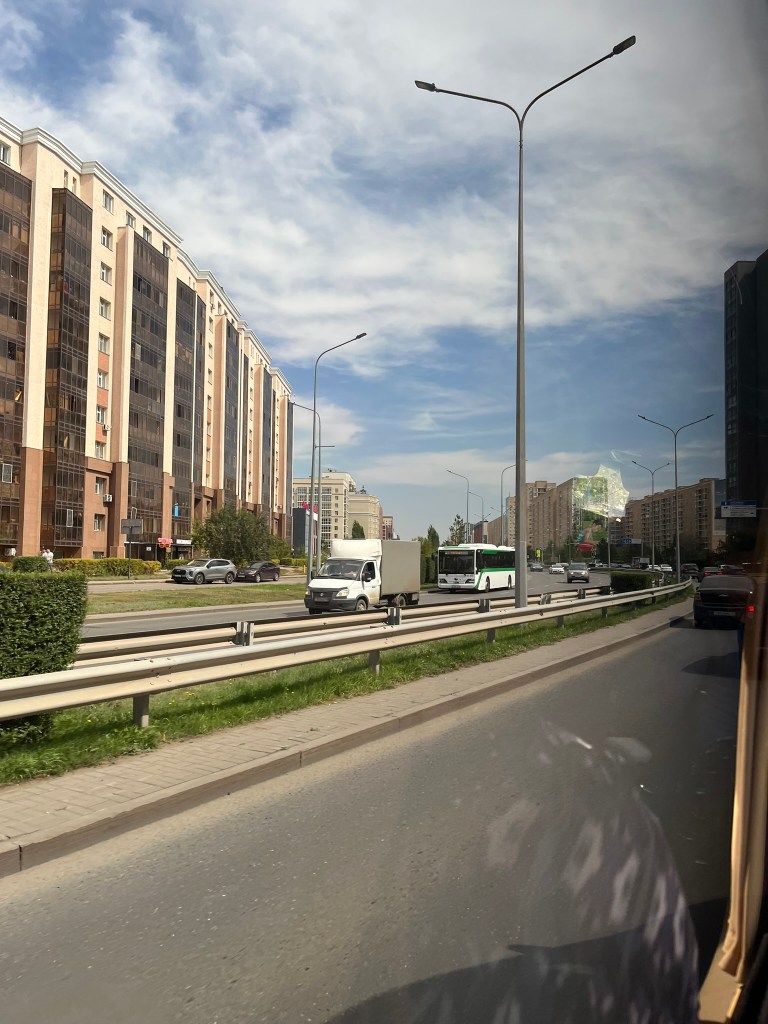
Astana is not a big city nor is it a highly-populated one. Although Kazakhs have been encouraged to move here. And all the government ministries are here. It is still not popular due to its lack of culture and bitterly cold winters. Its population is currently around 1.4 million. The streets are wide and grand with row upon row of apartment buildings, but really very few people are around during the day, giving it a bit of a ghost city vibe. Our guide said that there are actually far more apartments than needed for a population of 1.4 million but that a lot of people from Almaty have bought apartments here as a back-up plan in case Almaty suffers a major earthquake.
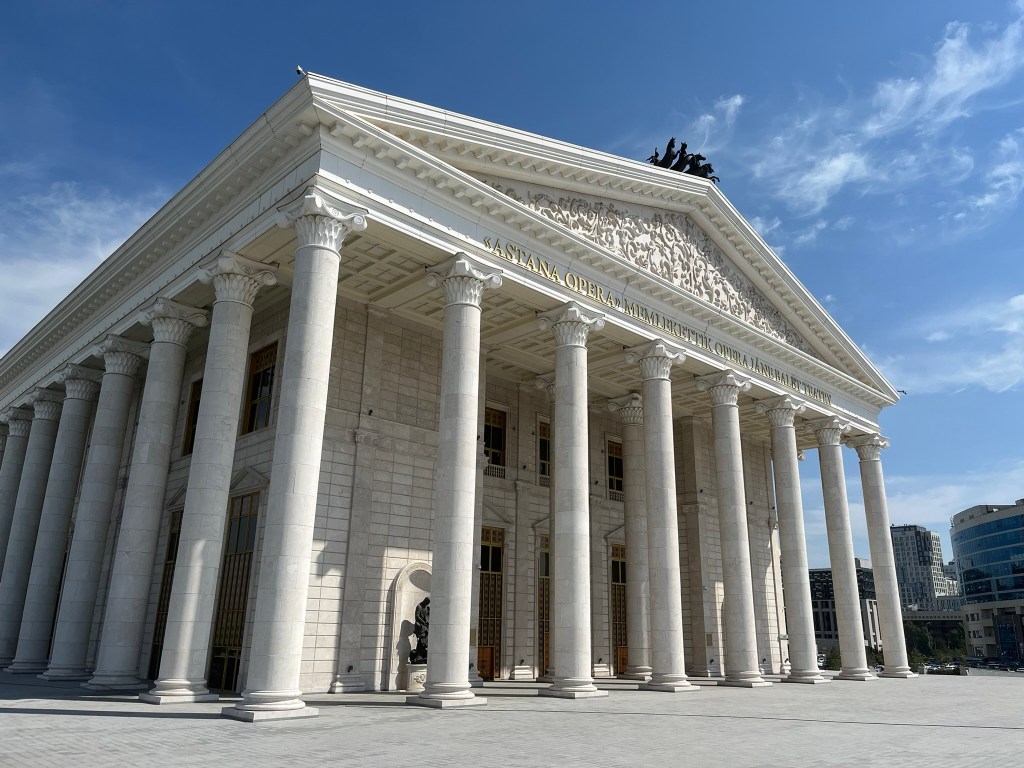
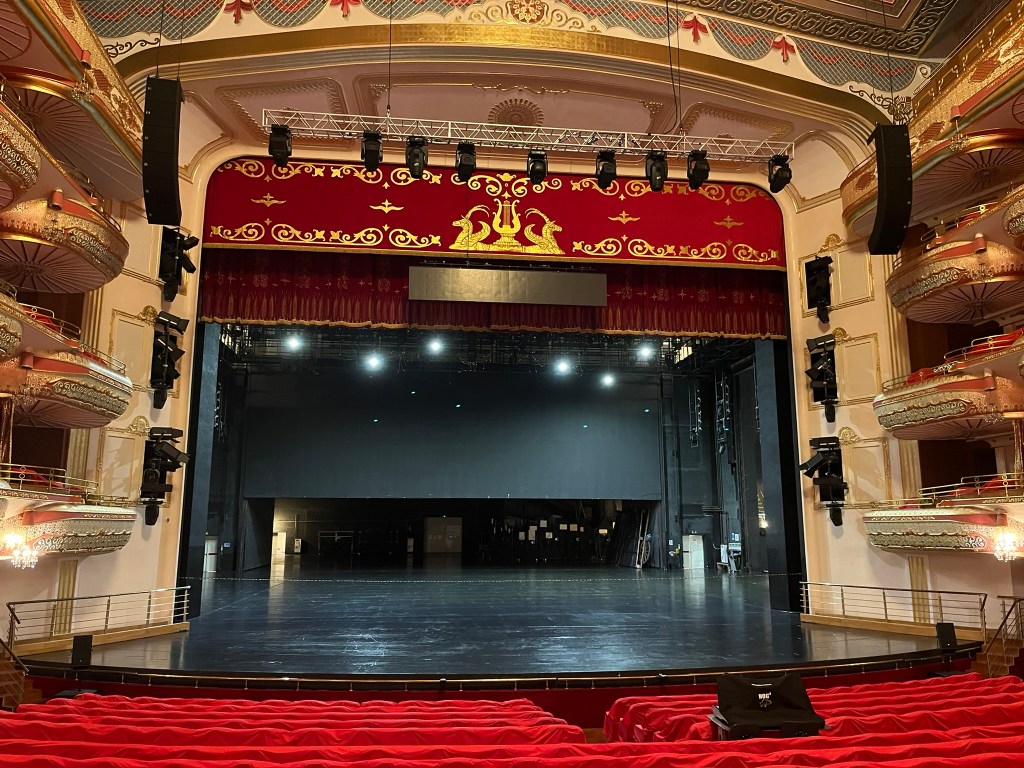
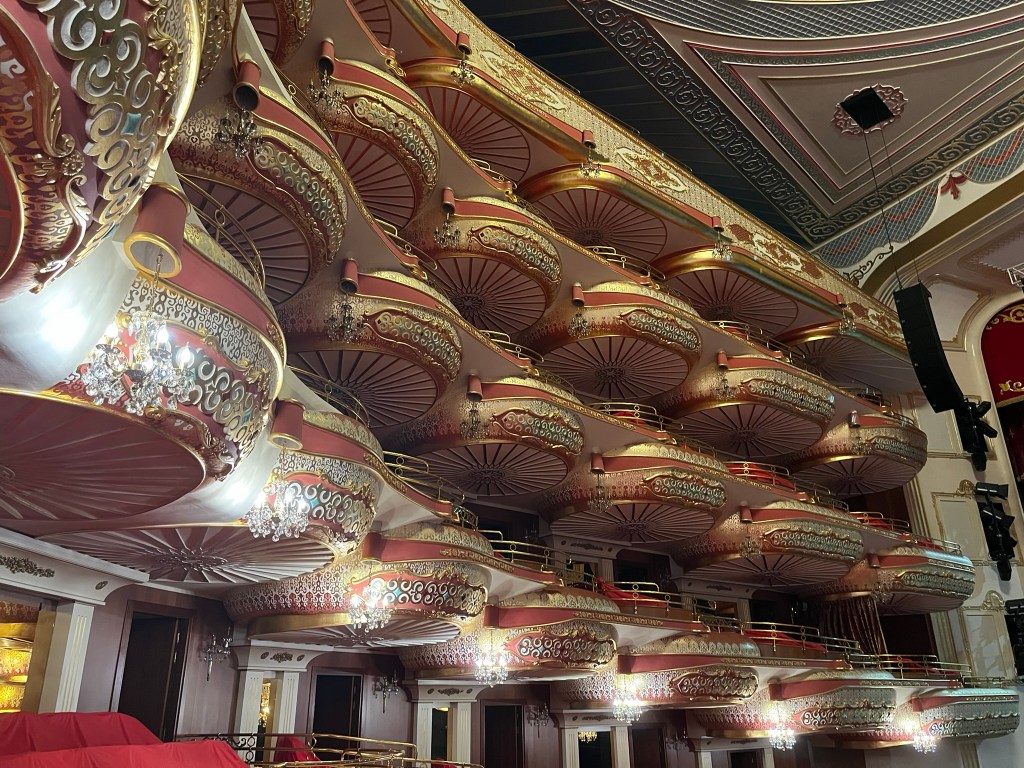
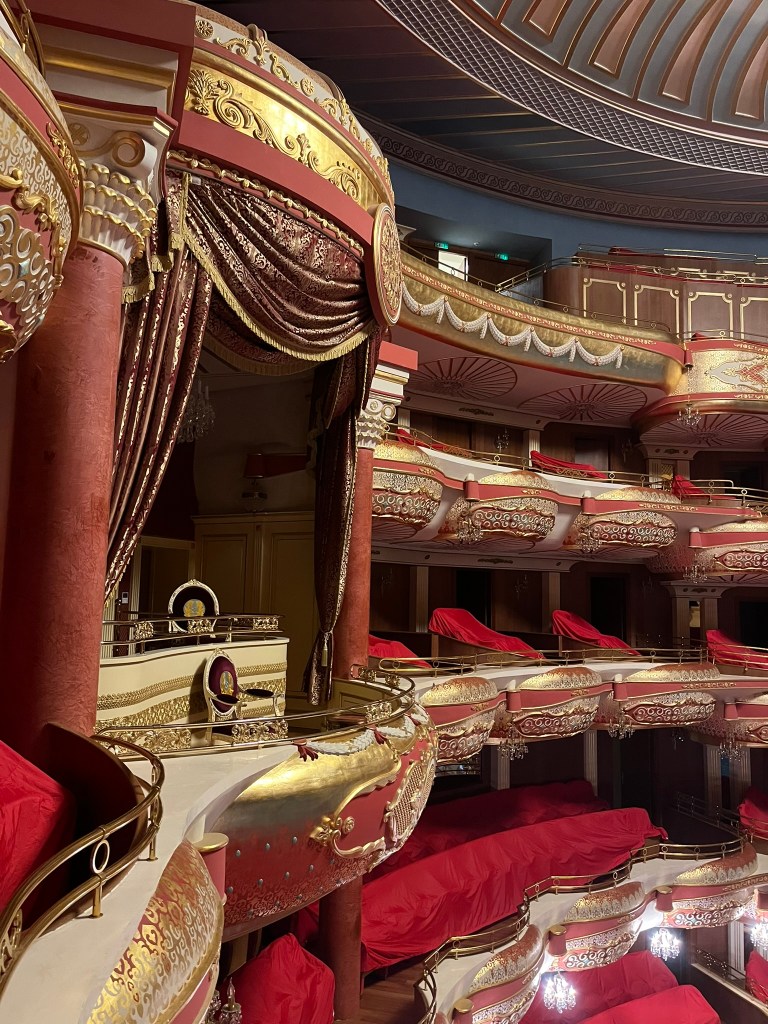
Next we headed to the Astana Opera House and had a tour of the building. I don’t think many people likely get a tour of this place, because we had to ring someone to open the door and entered in darkness until someone switched on the lights. This is another one of President Nazarbeyev’s pet projects and it must have cost a fortune, being one of the largest opera houses in the world and full of imported marble. We saw a number of other theatres and arts houses as we drove around, so you can see the effort the government is making in trying to inject culture into the city. The theatre was impressive, but we spent over an hour there being shown each area in great detail, which was far too long! Across the street we got to see the giant nomadic yurt entertainment center designed by Norman Foster. It was difficult to get a sense of its size from the outside but it holds an indoor beach resort with sand imported from the Maldives, alongside shopping, cinemas and food courts. So it must be pretty big.

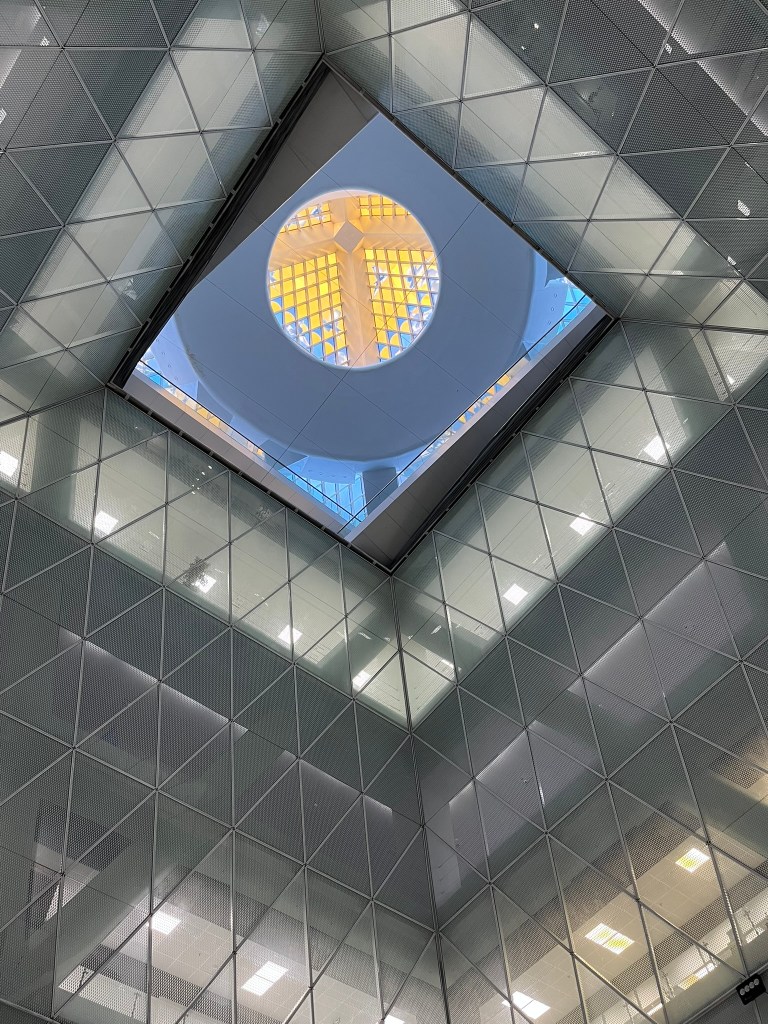
You get a sense that the country is desperate to show its tourists how modern they are. And our next stop followed this pattern. The giant pyramid we had seen from the observation gallery of the tower is in fact the other Norman Foster building. It was built to host the Congress of Leaders of World and Traditional Religions which is apparently held every couple of years here in Astana and draws in religious leaders from all over the world to discuss peace and unity. I must admit I have never heard of this Congress before, although it seems quite important.
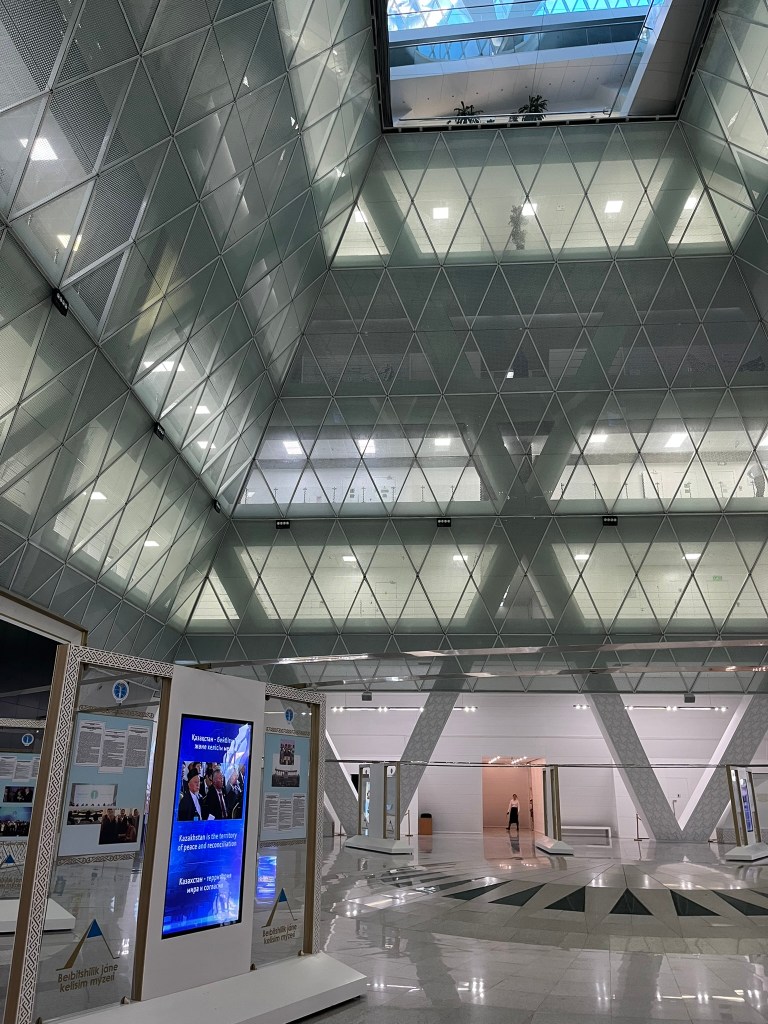
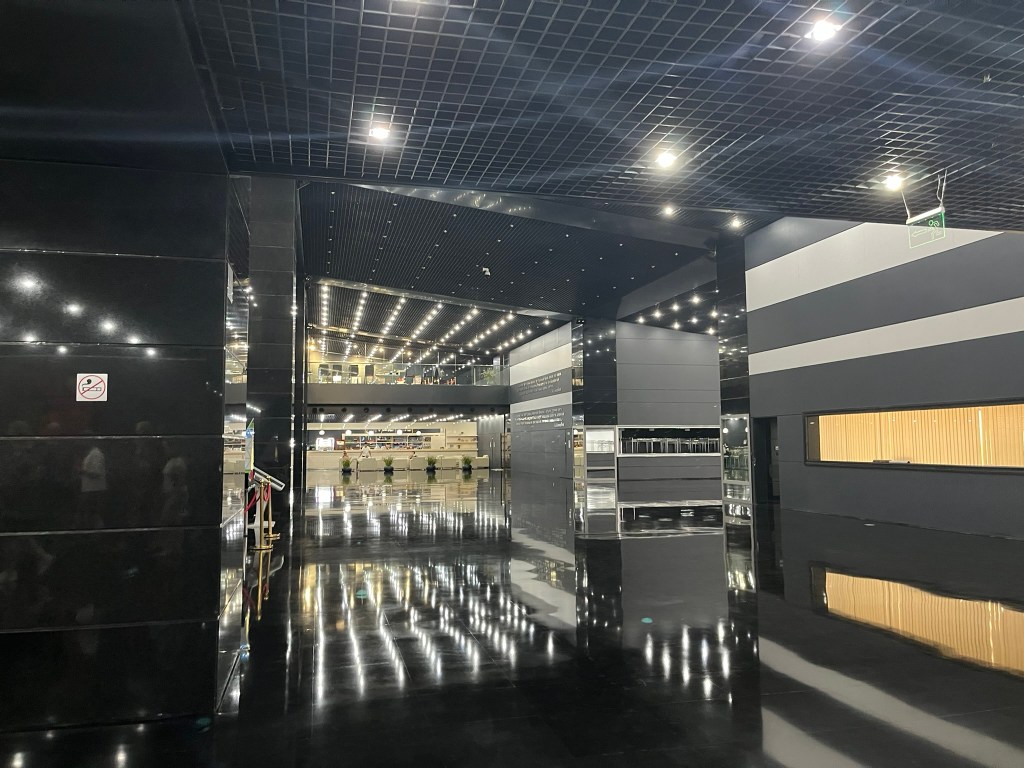
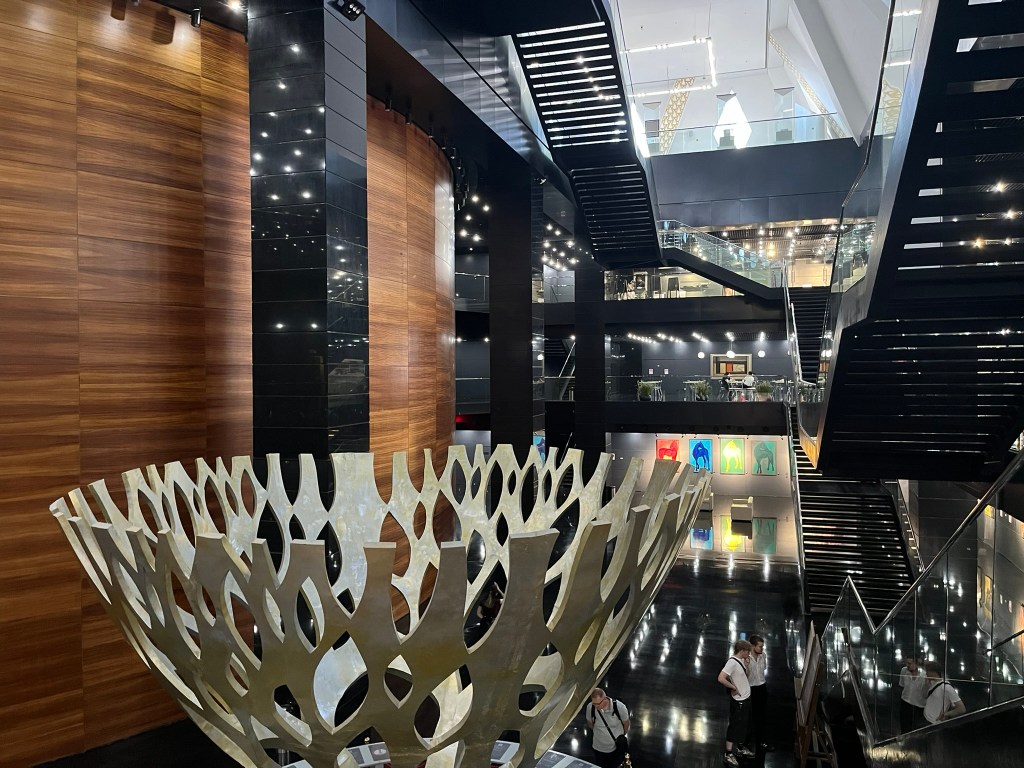
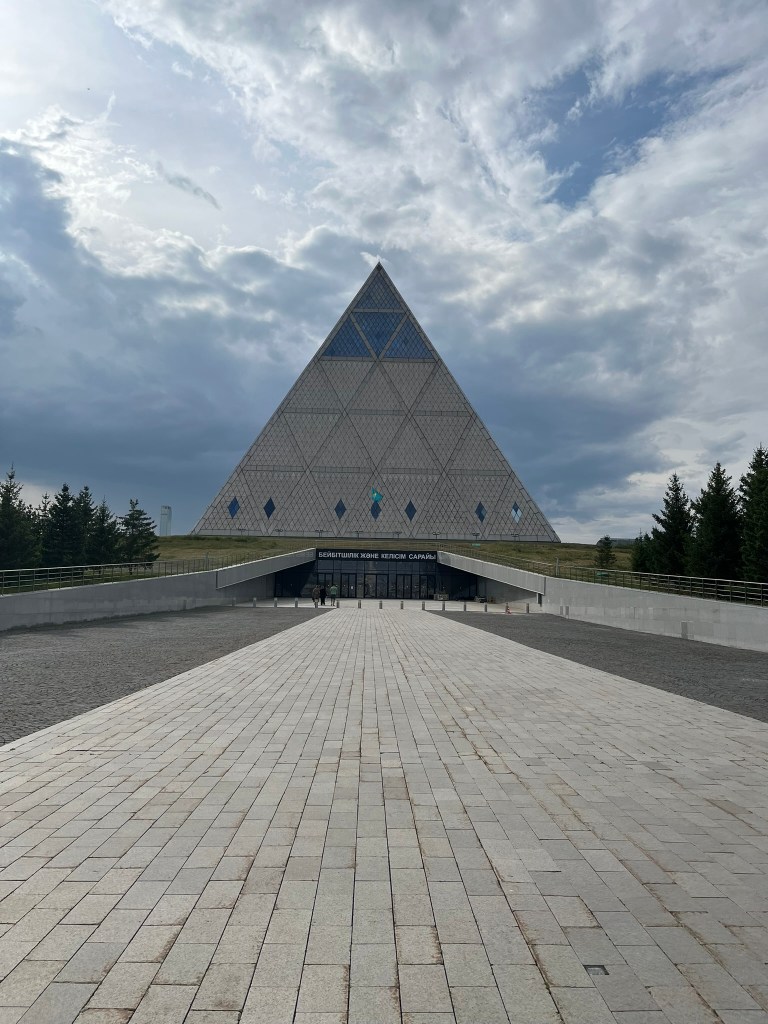
Across the street from the pyramid stands Independence Square. In its center stands the Kazakh Eli monument of independence depicting the national symbol of a golden Eagle on the top. To its left is the Hazrat Sultan mosque, and a brand-new arts university. And to its right, the National Museum. All of this is still along the 2km-long Nurzhol Boulevard.
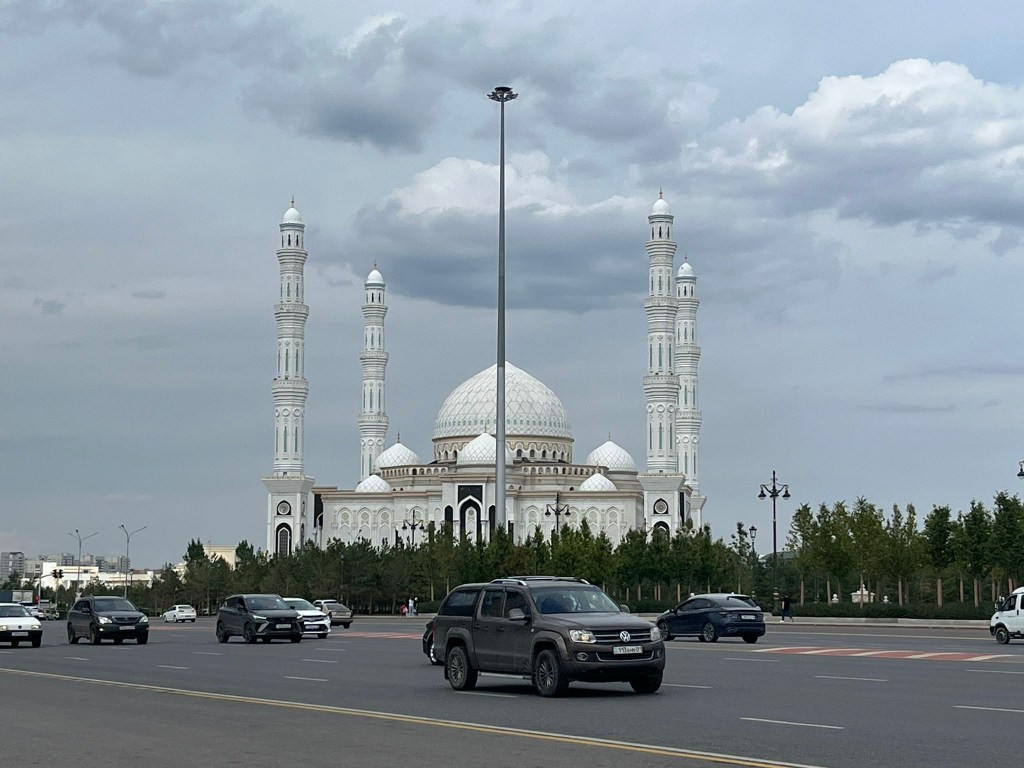
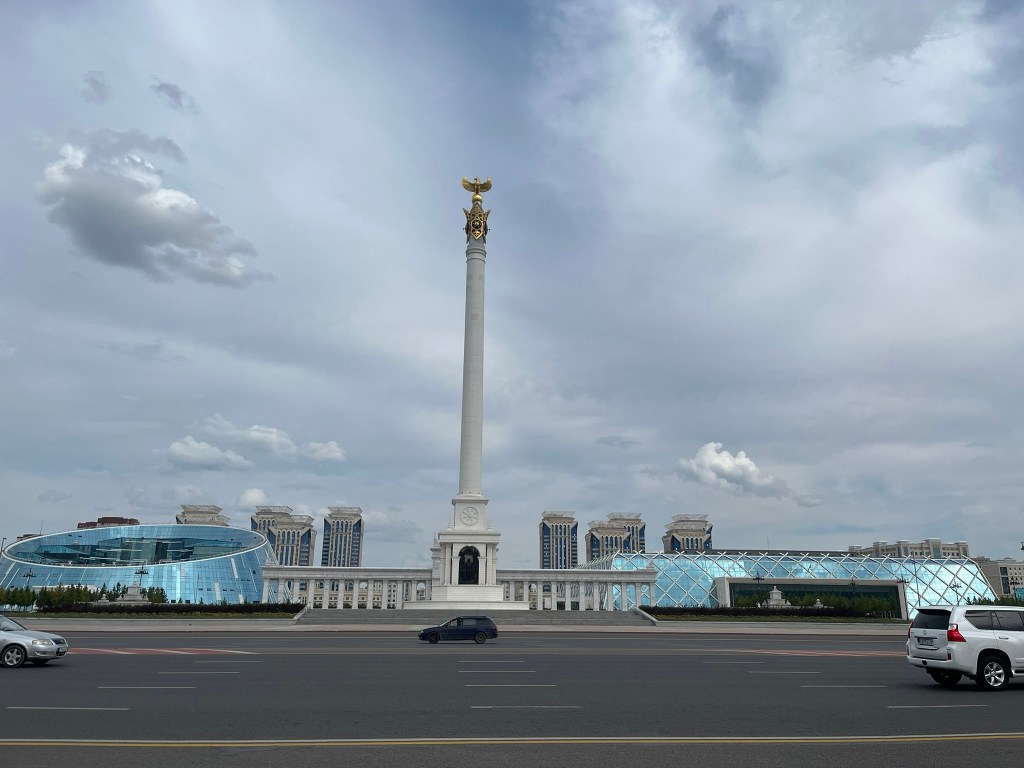
After a quick lunch pitstop we headed to the museum of a renowned Kazkh jeweller, where we also had the opportunity to start learning about the lifestyle of Kazakh nomads. I’ll talk about that in a separate blog post.
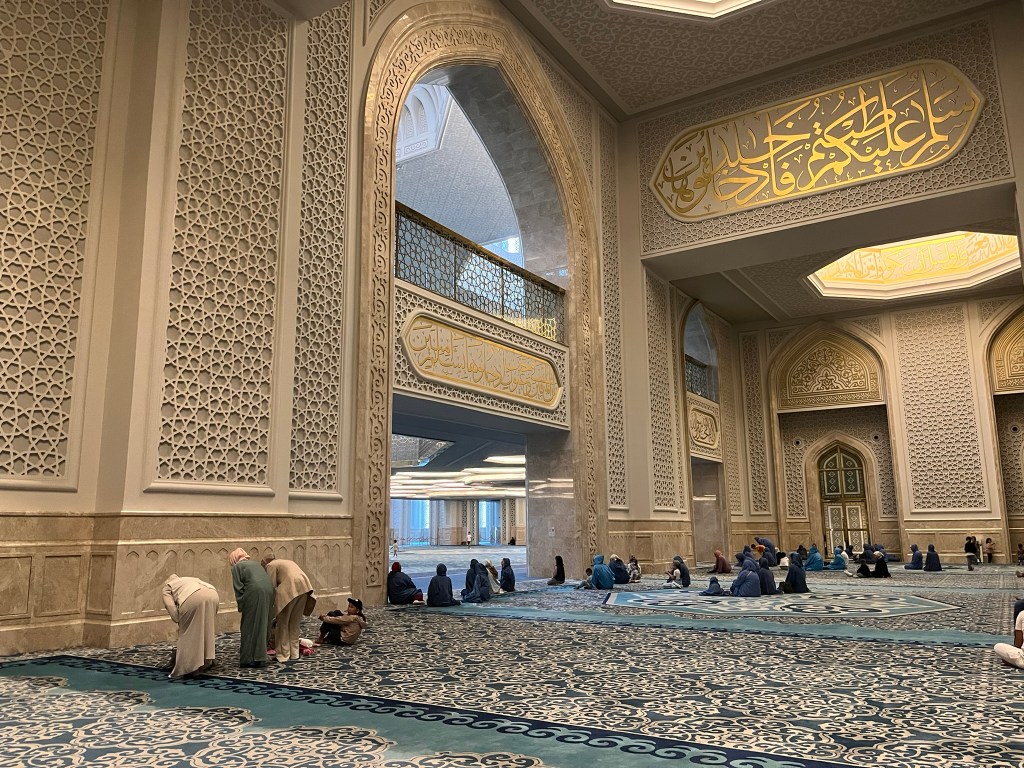
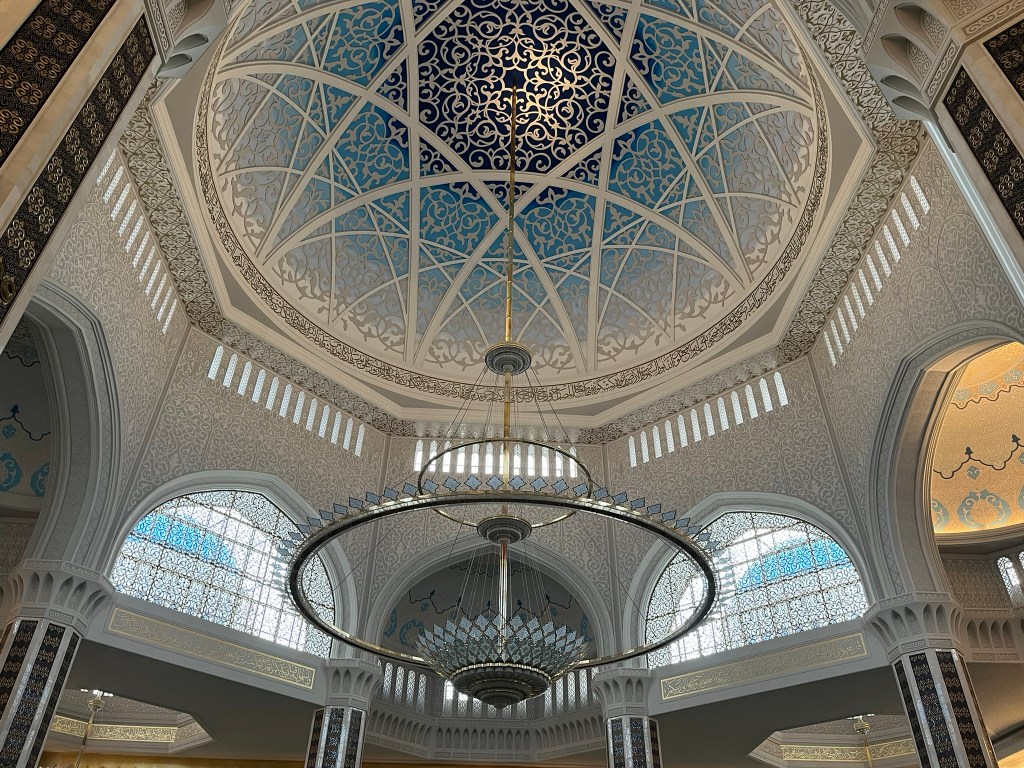
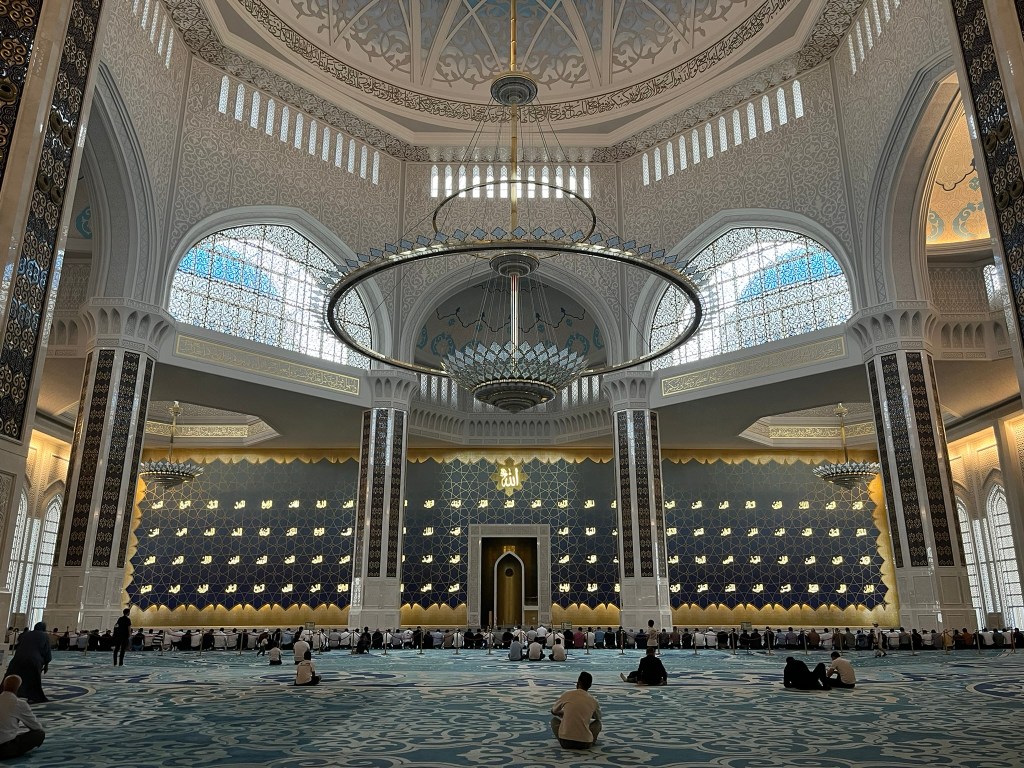
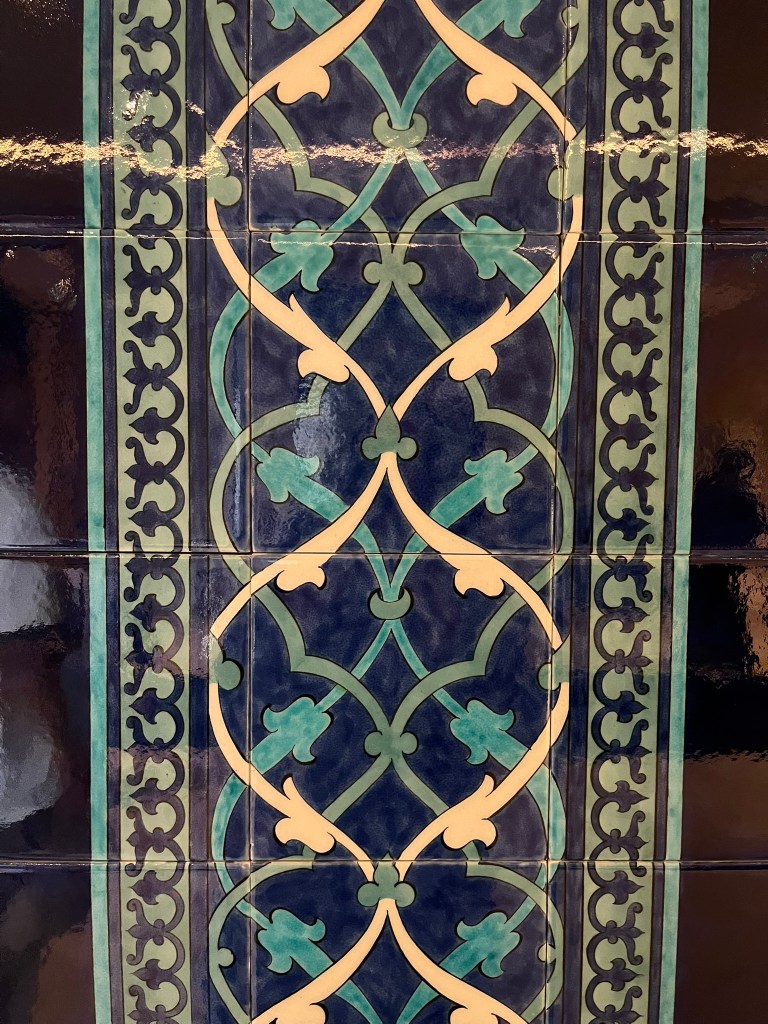
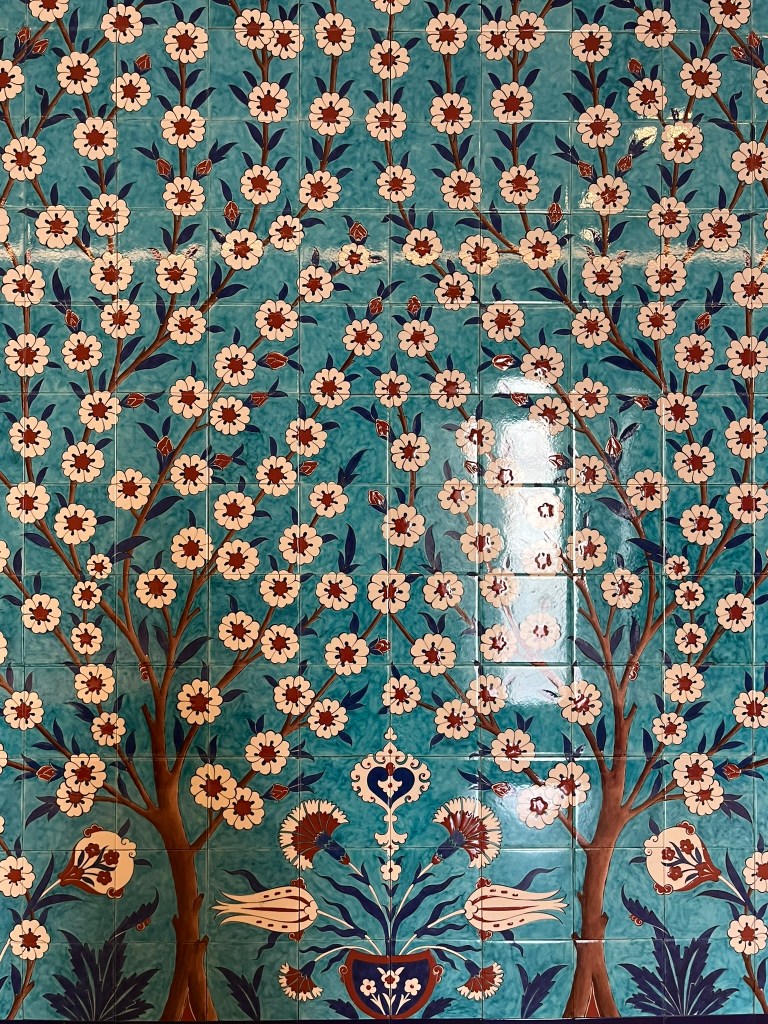
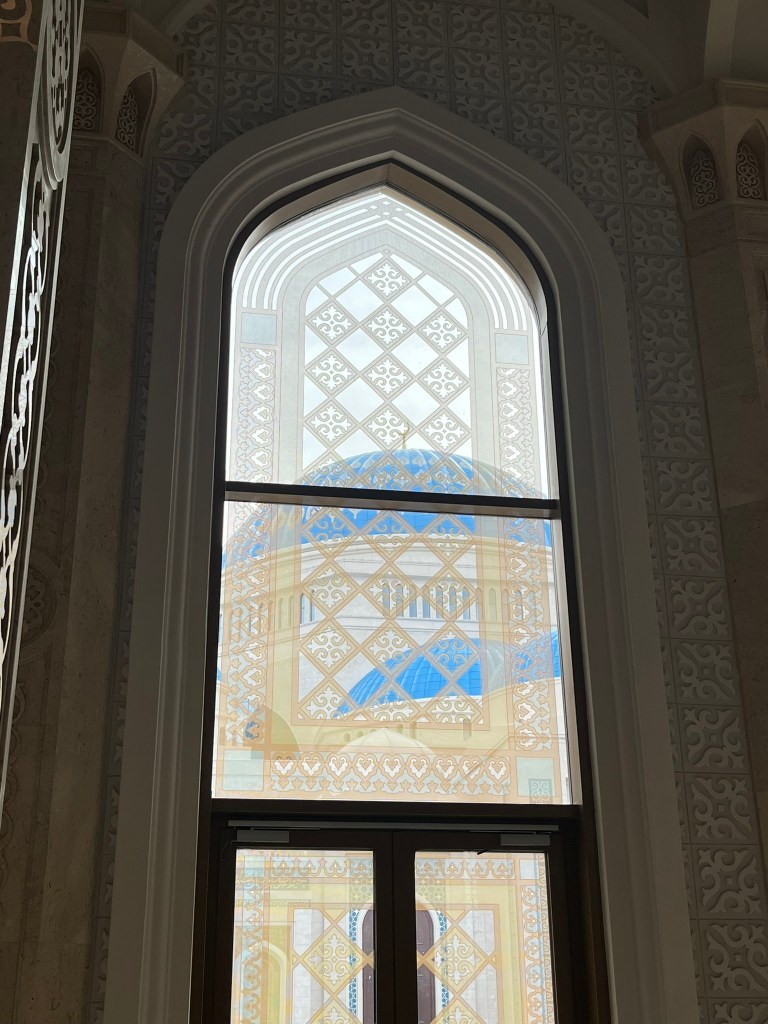
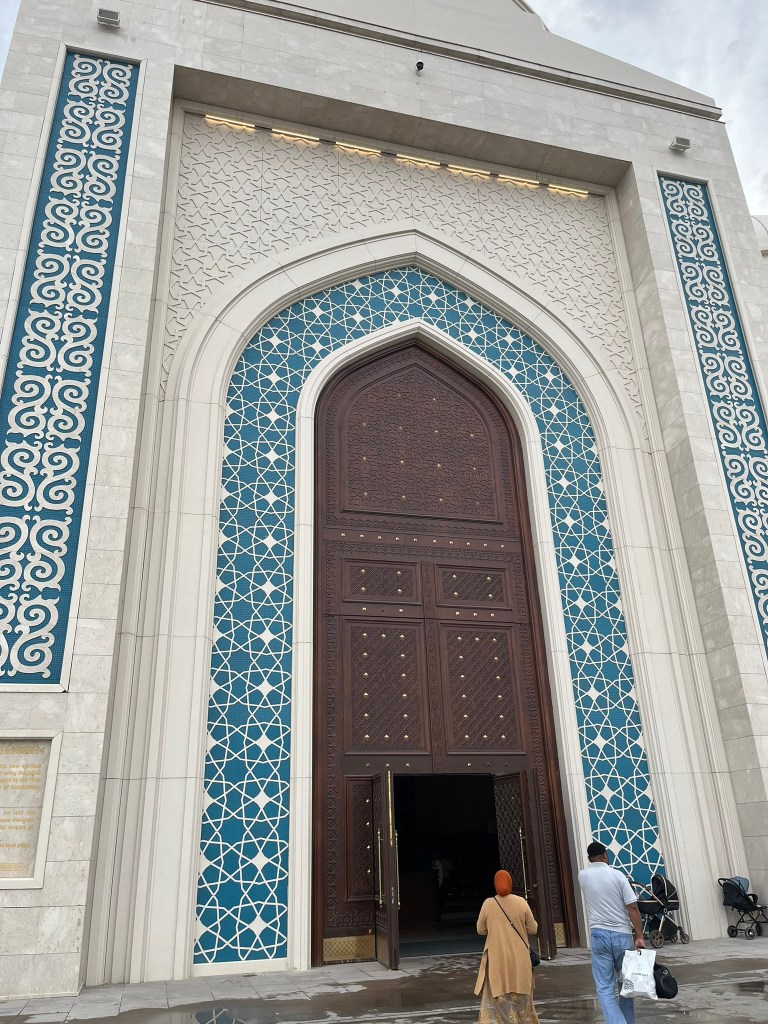
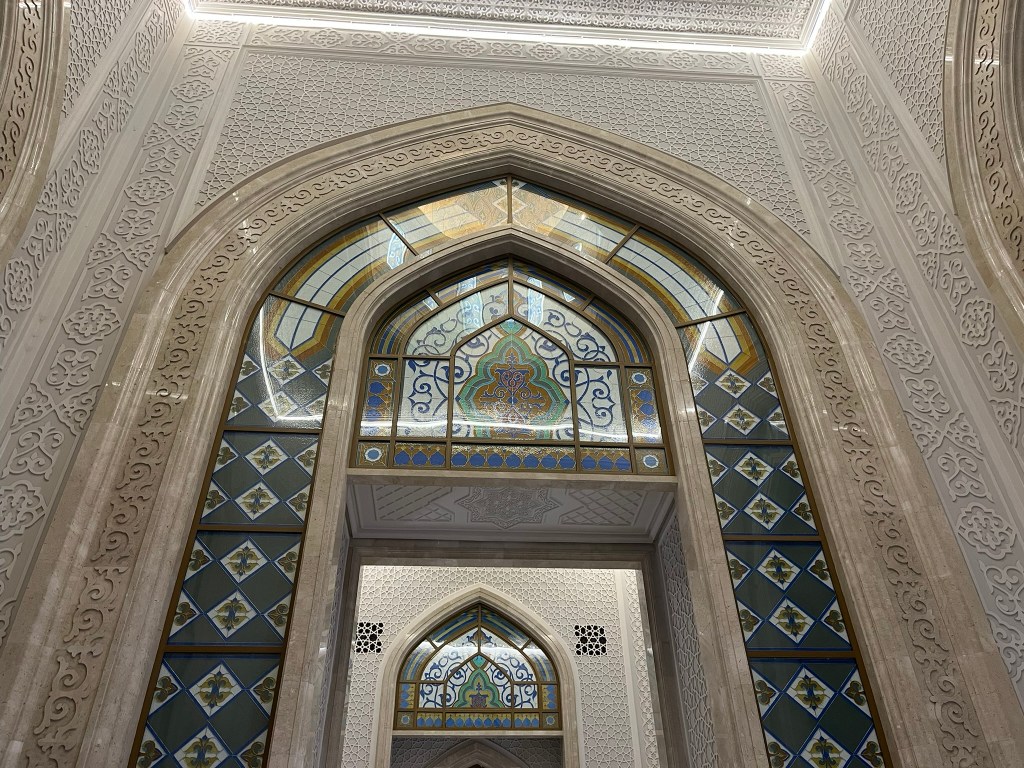
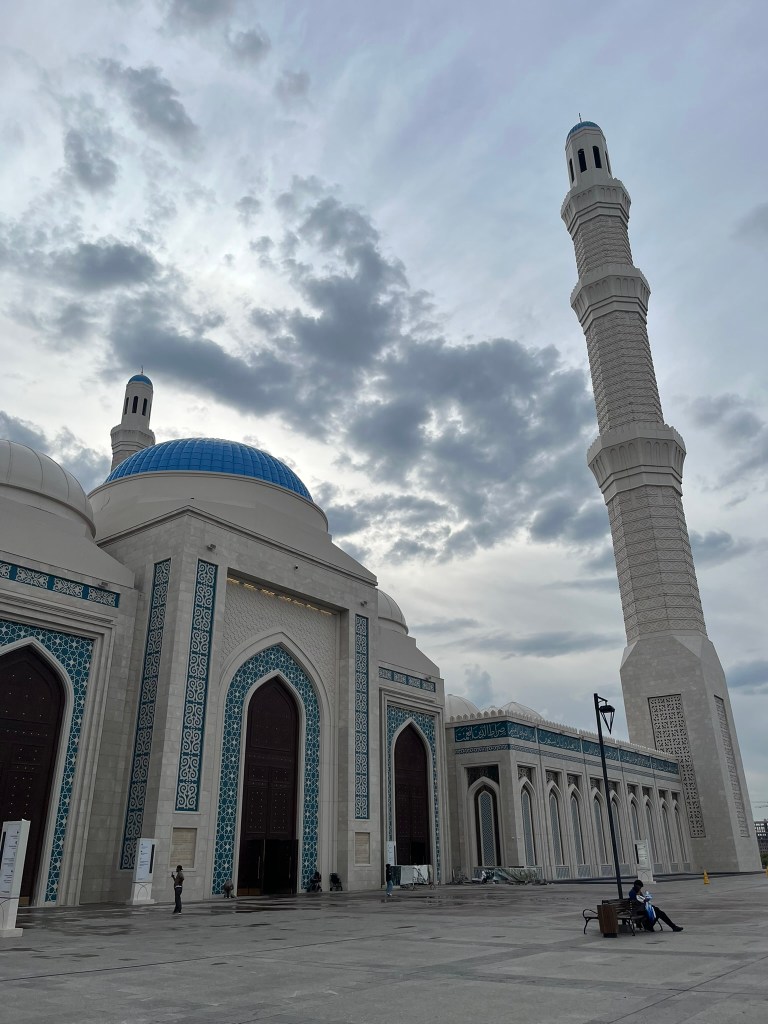
Our final stop today was the Grand Mosque, the largest in Central Asia and only opened in 2022. Modelled on the Sheikh Zayed Grand Mosque in Abu Dhabi, it can hold 30,000 inside alone, and 200,000 in the surrounding courtyard and grounds. The main prayer hall was absolutely enormous with a huge domed ceiling. Uniquely, there were shops and even a cafe to grab coffee and cake inside the main building. I was not expecting that!
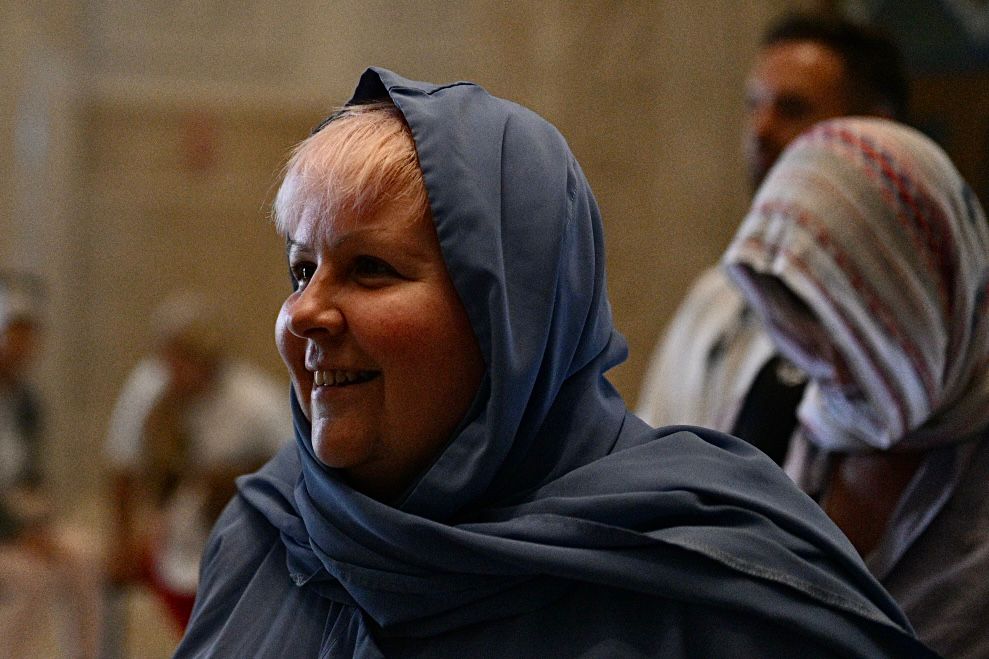

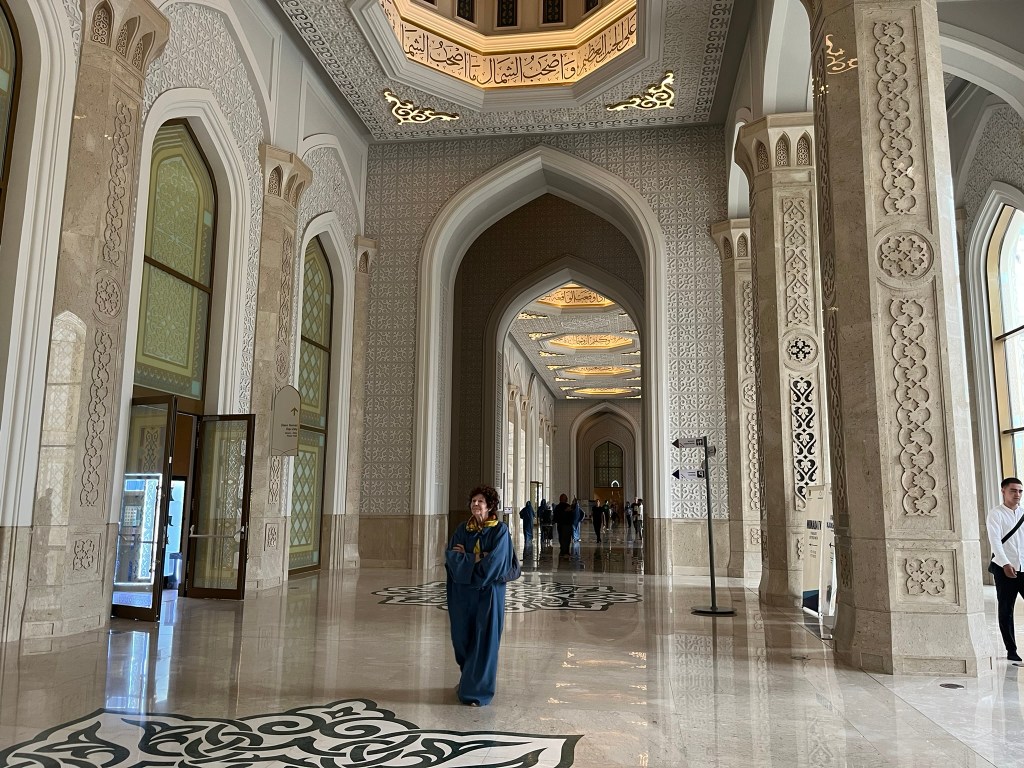

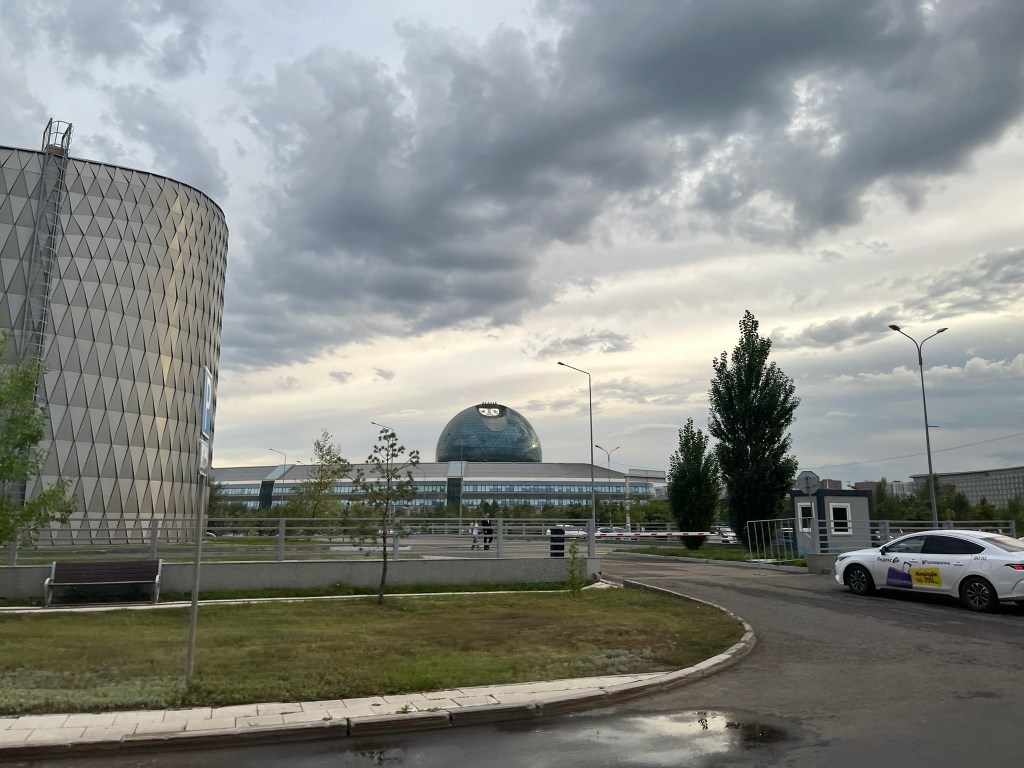
On our way back to the hotel we passed the part of the city which was built for the World Expo in 2017. Our guide described this area as a bit of white elephant. Except for the bowling-ball looking building in the center that still houses a museum, none of the other buildings have been used for anything since the Expo closed.
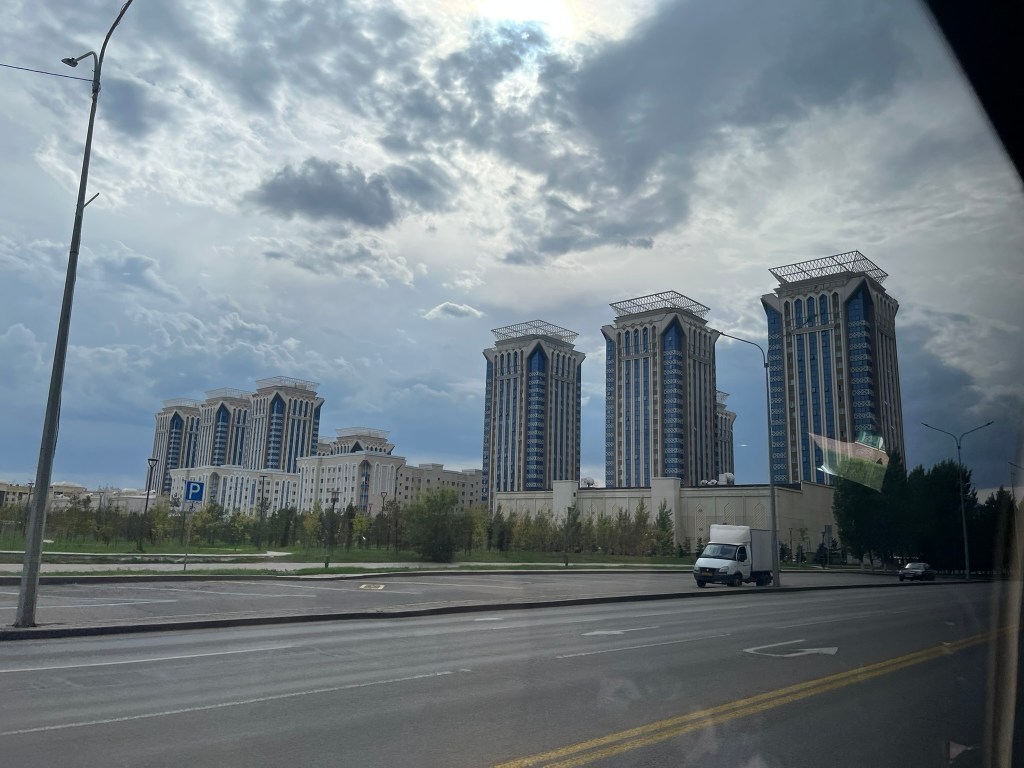
My sense of the city is that it is clean, spacious and quiet. You can tell that it is not an old city. It doesn’t have the character or randomness of one. Everything has been planned carefully. And so it feels a bit sanitised and fake at times. Like I said, Dubai meets Ashgabat. But its certainly not brand new. The buildings in some areas are starting to look tired and aged and will require significant maintenance as they grow older. We saw lots of construction work, including a new monorail, so its obvious they are continuing to build.

I think it’ll be quite a contrast to Almaty, so I am glad we started here and 1 day of exploring is enough to get a feel for the city.
 Colette's Grand Detour
Leave a comment