Throughout my time in Kenya and Tanzania, it was interesting to see and understand the impact of invasive species in the national parks. An invasive species can decimate the population of native species in an area and change the balance of an ecosystem forever. Sometimes their introduction is accidently, other times it is done on purpose (often for economical gain) but has far reaching, unintended consequences.
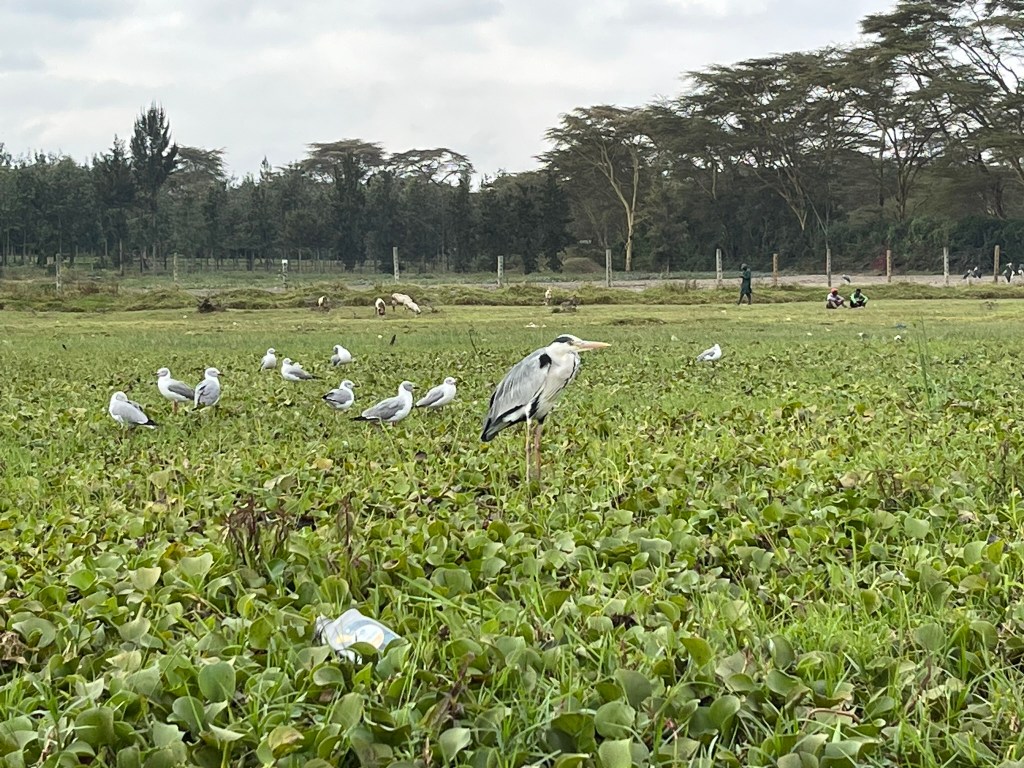
We saw significant amounts of Water Hyacinth in Lake Naivasha in Kenya. It was first brought to Africa in the late 1800s as an ornamental plant for botanical gardens and decorative ponds. It can form dense mats of material blanketing the edges of the lakes. It was first found in the ecosystems in 1986 and creates anoxic (oxygen-depleted) environments under the surface because it blocks out the sun and prevents proper air circulation. It has had a big economic impact on the lake as fish populations have depleted rapidly. Efforts are on-going to physically remove the species, but it unfortunately grows faster than it can be removed.
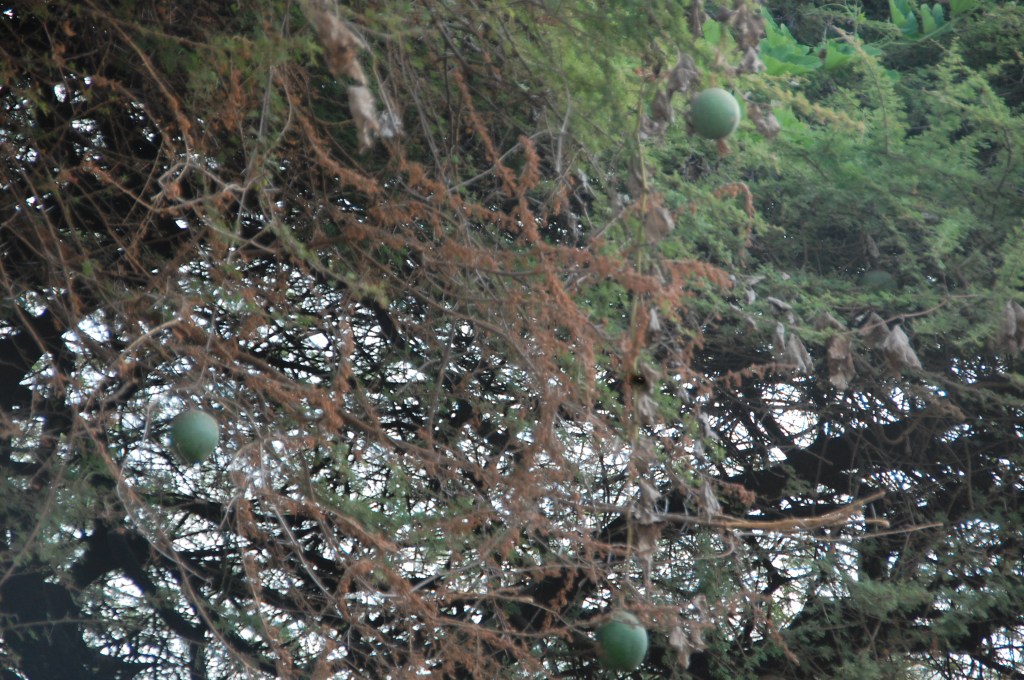
At Lake Manyara in Tanzania we witnessed how widely invasive wild gourds have spread across the park. The gourds have spread from nearby farm land and they are aggressive climbing vines that drape themselves all across the canopies of fig and acacia trees. The heavy fruit looks like tennis balls hanging from the trees. The species is smothering trees and blocking sunlight from reaching the host tree’s leaves. The weight of the gourds are breaking branches and unfortunately are not edible by the local wildlife population. Wildlife management are trying to remove the species but it looks like chemical methods have not worked which means they are going to have to manually remove them from the trees, which will be a time-consuming and costly operation.
Another big problem in East Africa is the Nile Perch. Initially introduced into Lake Victoria in the 50’s to boost commercial fishing yields it has caused immense biodiversity loss in the lake and contributed to the extinction or drastic decline of over 200 endemic species to the lake. The lake’s ecosystem has been completely altered, and huge algae blooms are now common, and increasing, because the algae-eating fish have been lost from the lake. There is concern that the issue could extend to connecting waters. Similarly in Lake Manyara and Lake Naivasha, Common carp have been introduced and are competing with local fish for food. These were not purposely introduced like the Nile Perch in Lake Victoria, but instead escaped into the natural systems from close-by reservoirs and farm ponds.
The final species I want to talk about is Indian House Crows. Originally from the Indian subcontinent and introduced accidently via ships docking at ports along the East African coast in the late 19th century. The crows prey on the native birds, stealing their eggs and chicks. They outcompete other birds for food, are a public nuisance raiding rubbish bins and food stalls, and have the potential to spread pathogens and parasites. Currently they are mostly in urban areas and along the coast but there is a big risk that they will spread to national parks if they are not controlled.
I found it interesting to for the guide to point out the invasive species of each area we were in and the problems they were experience. It highlighted how complex conservation is in the parks and was something I would not have realised without a local pointing out the offending species.
 Colette's Grand Detour
Leave a comment