Day 17 (13th August 2025)
You can’t talk about Zanzibar without including the topic of slavery. Zanzibar, and more specifically Stone Town unfortunately played a big role in the slave trade along the East African Coast.
The height of the slave trade in Zanzibar was the early-mid 19th century. The island became the largest slave market in East Africa after the Omani Sultanate moved his capital from Muscat to Zanzibar in 1840. However, to understand how this happened we need to go a little further back in history.
Local slavery already existed before the Omani’s arrived, but it was small-scale. Zanzibar has been a maritime trade hub since the 8th century with Persian and Arab merchants settling, marrying into local families and forming the beginnings of Swahili culture, a mix of African, Arab and Persian traditions. When the Portuguese arrived in the 15th century they found a thriving series of coastal settlements, and decided they wanted to take control and benefit from the riches and strategic location of the island. One of the assets the Portuguese wanted was slaves to work for them on the island and other territories they had claimed and this started the process of raiding tribes, purchasing them from local rulers, and tapping into pre-existing trade networks there were already in the business of enslaving people. Again this was still on a relatively small scale compared with what was to come.
In the late 1600s, when the Omani Sultanate expelled the Portuguese, Zanzibar became the central slave market for the western Indian Ocean. Captives were brought from the African mainland, as far away as the Congo basin. They were marched in long caravans to the coast, particularly the city of Bagamoyo which sits directly opposite Zanzibar on the mainland. They were then brought by dhow boat across the 36km channel to Zanzibar. They would stay in a holding area for some time, before being brought to the main market, which is now the site of the Anglican Cathedral (built in the 1870’s to mark abolition). People were sold either for domestic service to the wealthy living in Stone Town, to work in the clove plantations and for the export market to the Middle East and Asia. Estimates are that close to 1 million enslaved people passed through Zanzibar in this time. And that for every person who reached Stone Town many more died on the way.
Although treaties were signed between Britain and the Omani sultans in 1822 and 1845 banning the export of slaves, the measures had little effect and illegal trading continued. Finally in 1873 under increasing pressure Sultan Barghash agreed to close Zanzibar’s slave market and prohibit the trade. Domestic slavery on the island continued until it was finally abolished in 1897.
Today there a number of locations you can visit in Stone Town that memorialise those who gave their lives to slavery. The Anglican Cathedral stands on the site of the old slave market, and there is still a circle in the floor of the alter where the whipping post used to stand.

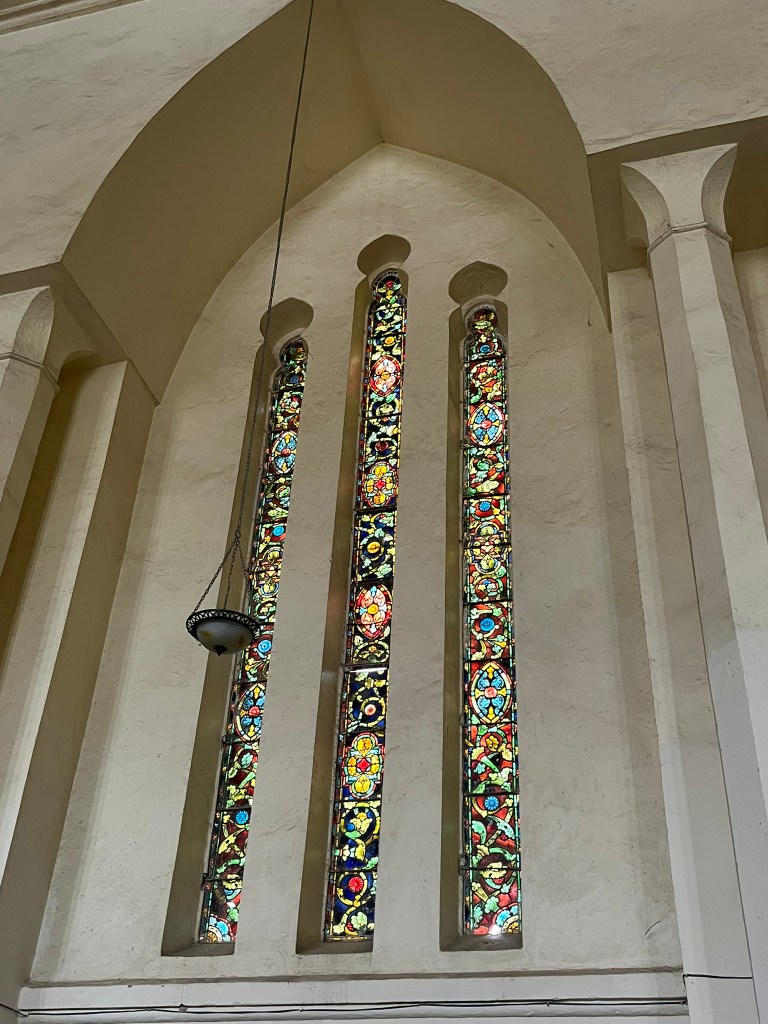
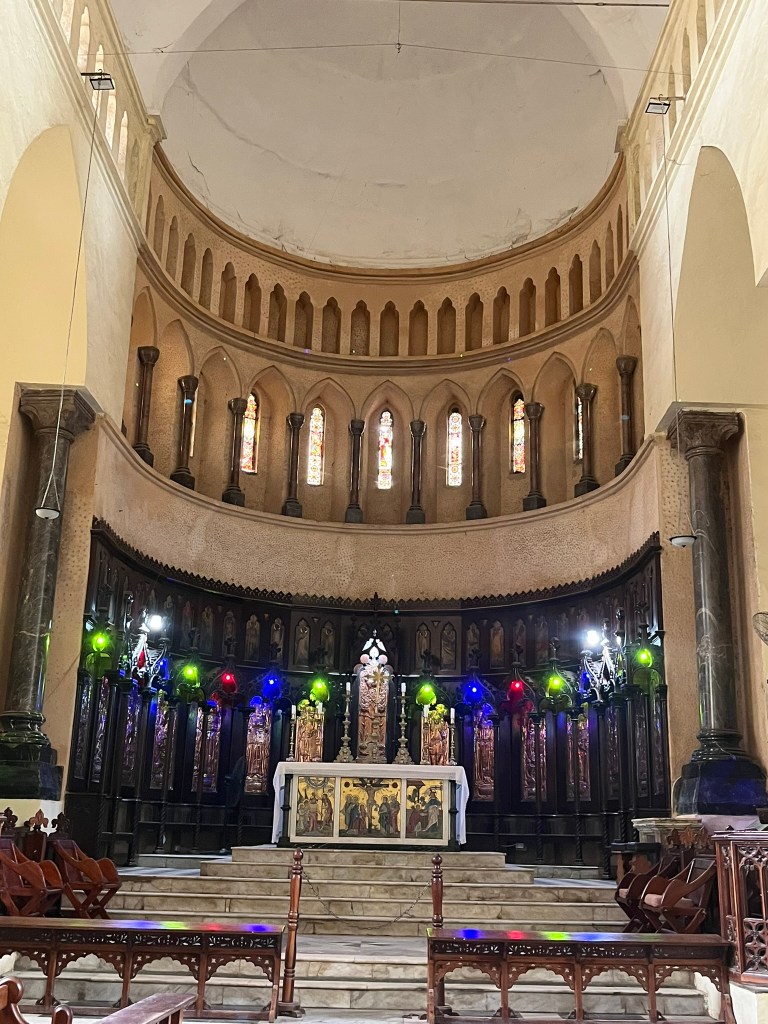
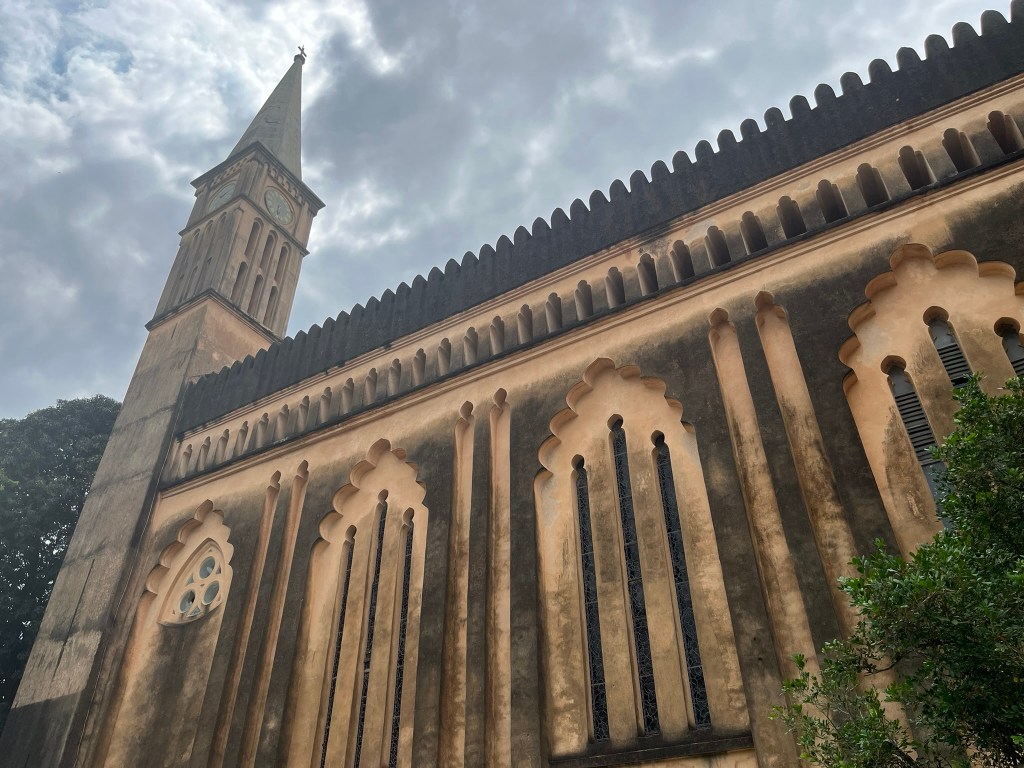
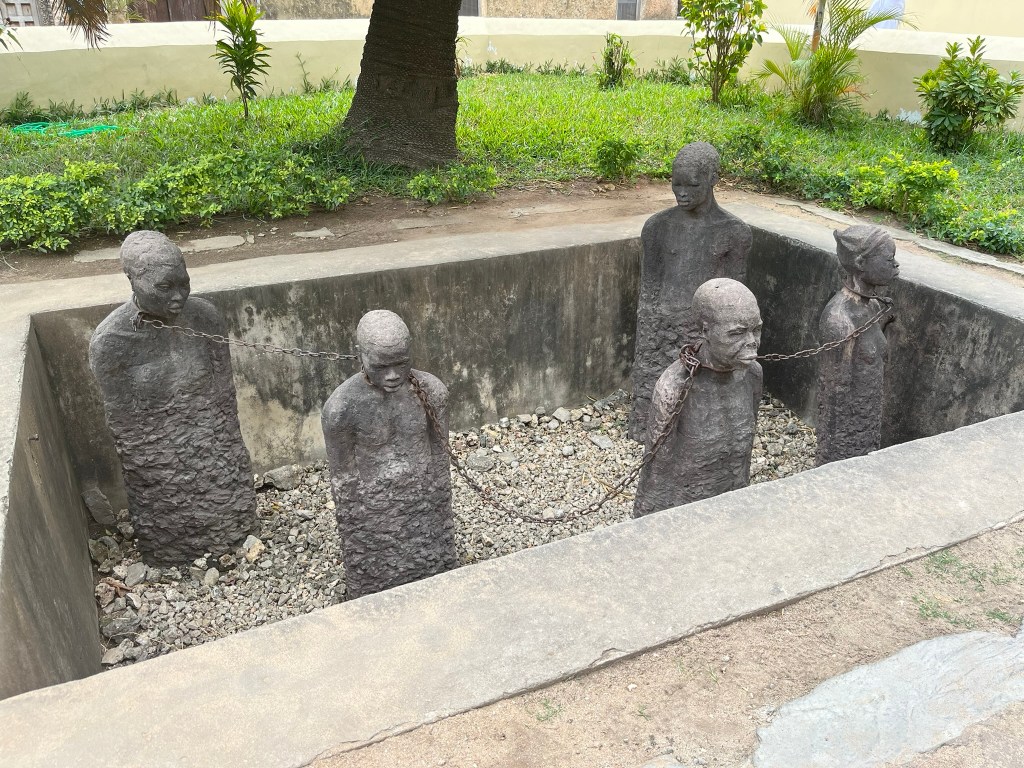
Next to the cathedral there is a haunting memorial sculpture with life-sized stone figures standing in a pit, tied by the original chains used in the market. And opposite there is a old missionary hospital that has been converted into a small museum providing excellent information on the history of the market and the people who passed through it. They entry cost is 5 USD and its well-worth the entry fee. Poignantly there is also now a school on the grounds of the old slave market.
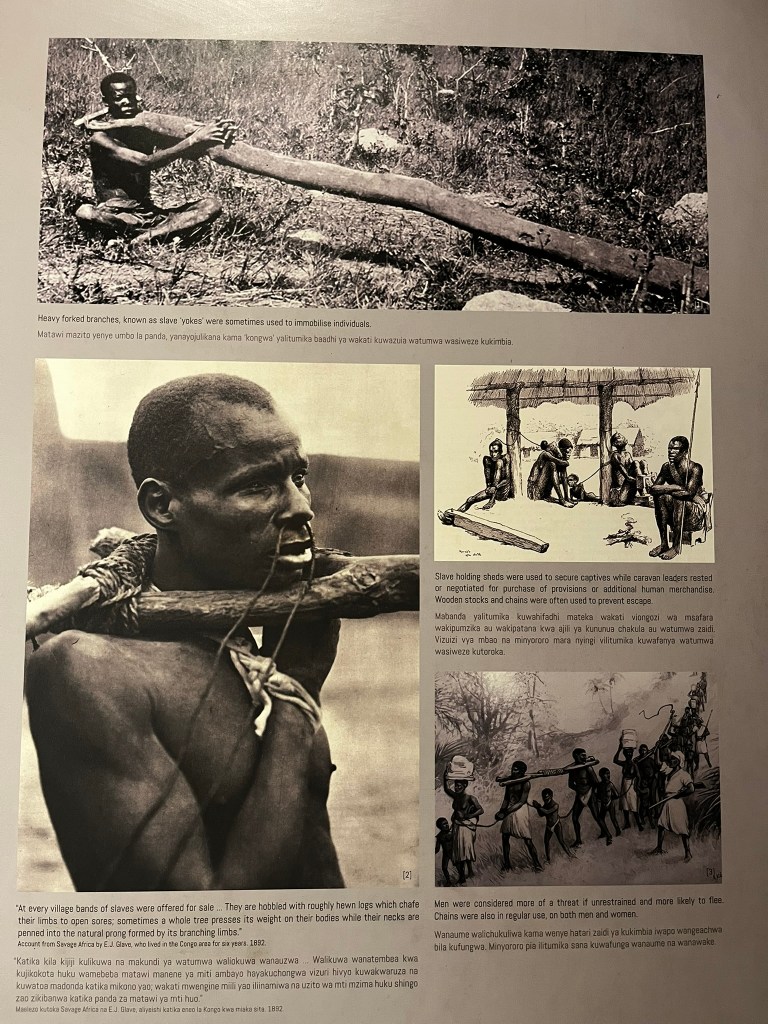
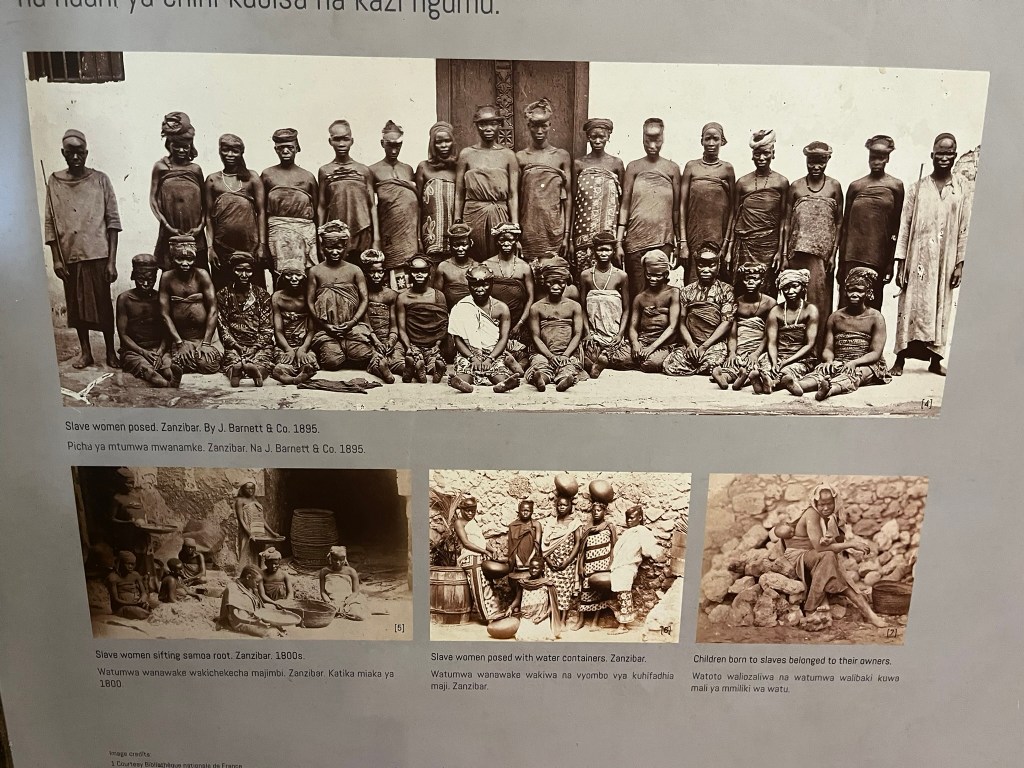
David Livingstone played a role in the ending of slavery in Zanzibar. Not directly, but through the pressure he placed on the British government following his return from African expeditions in the 1850s and 60s where he encountered the horrific suffering within the slave caravans. He publicized what he had seen about the East African slave trade when he was back in Britain and this helped shift public opinion and thus pressure the government to intervene. The Anglican church that sits on the site of the old slave market was funded and built to commemorate Livingstone’s fight against slavery.
Even after abolition, reality didn’t quite match up. Domestic slavery in households still persisted well into the 20th century. And many plantation owners coerced freed slaves to stay on under long and unfair contracts. A black market continued to operate, and records show that thousands of people were still trafficked into the late 19th century.
A visit to the site of the old slave market in Stone Town is a must-do whilst visiting Zanzibar. The history and success of the island is inextricably entwined with its history with slavery.
 Colette's Grand Detour
Leave a comment