Day 17 (13th August 2025)
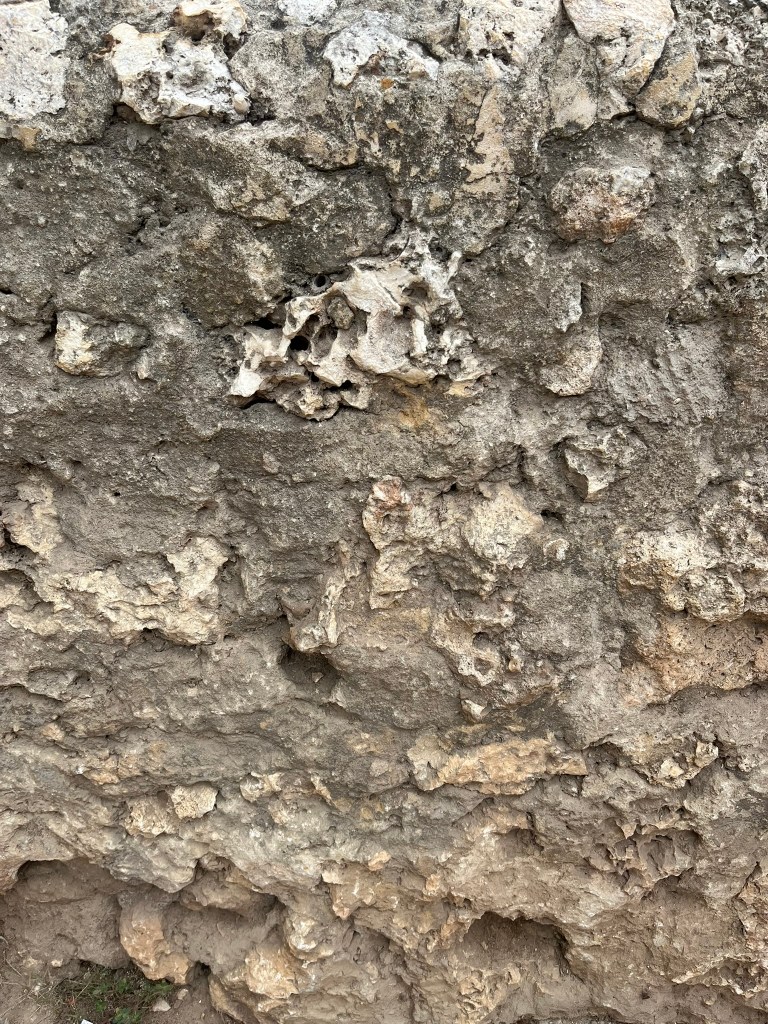
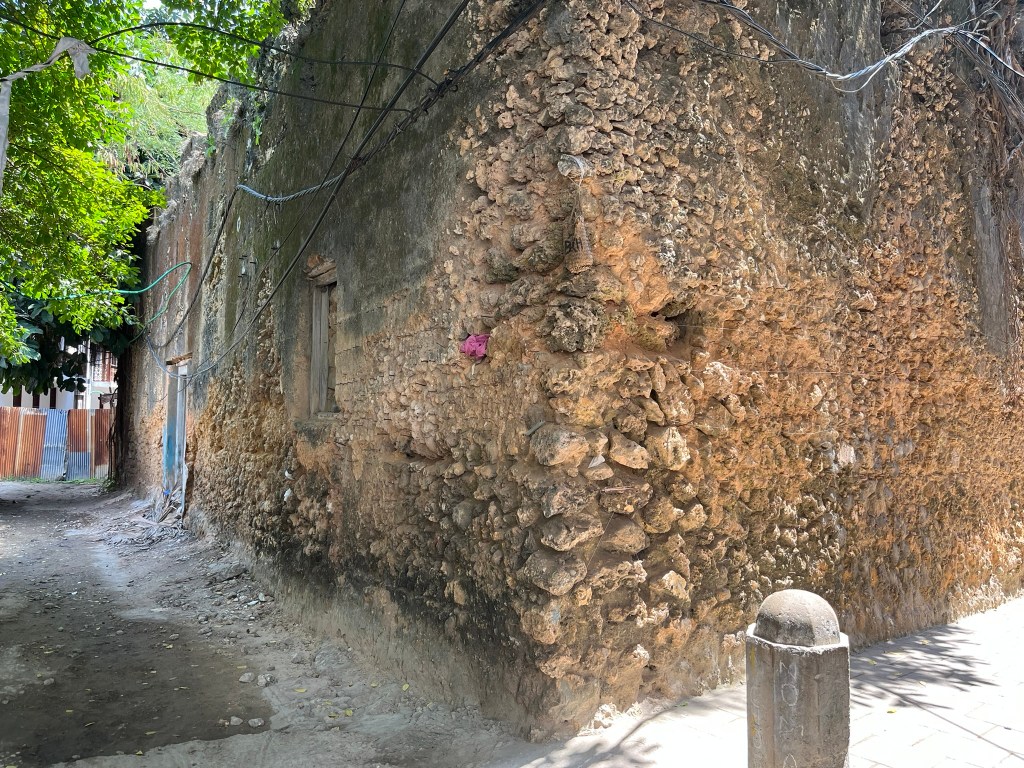
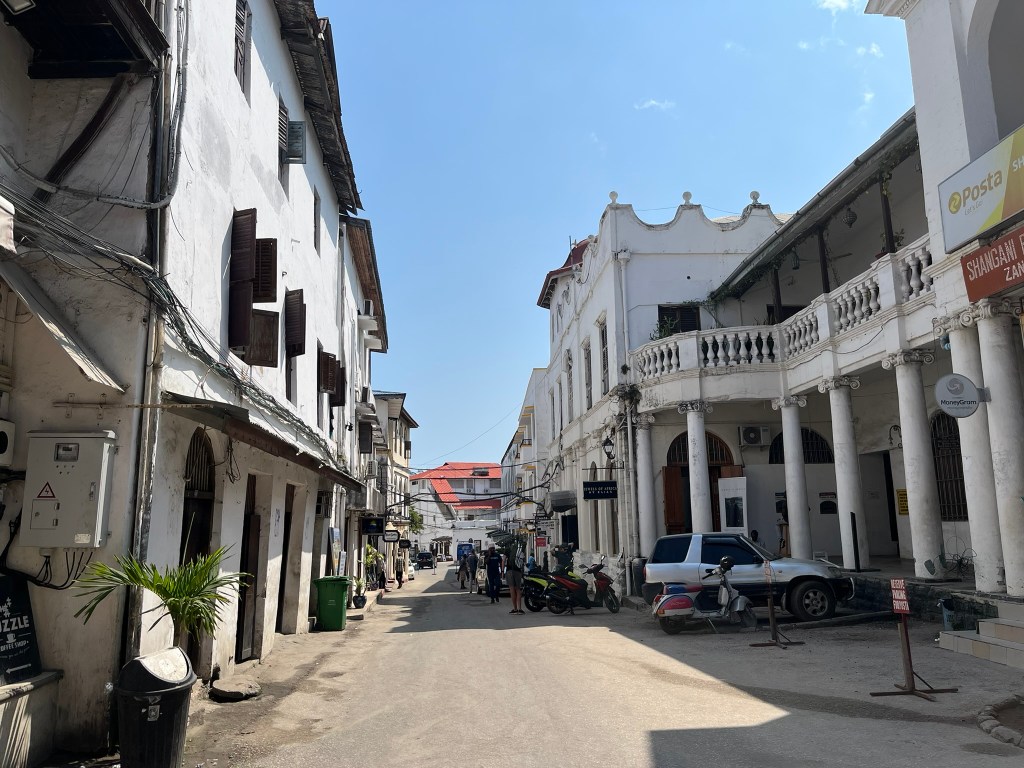
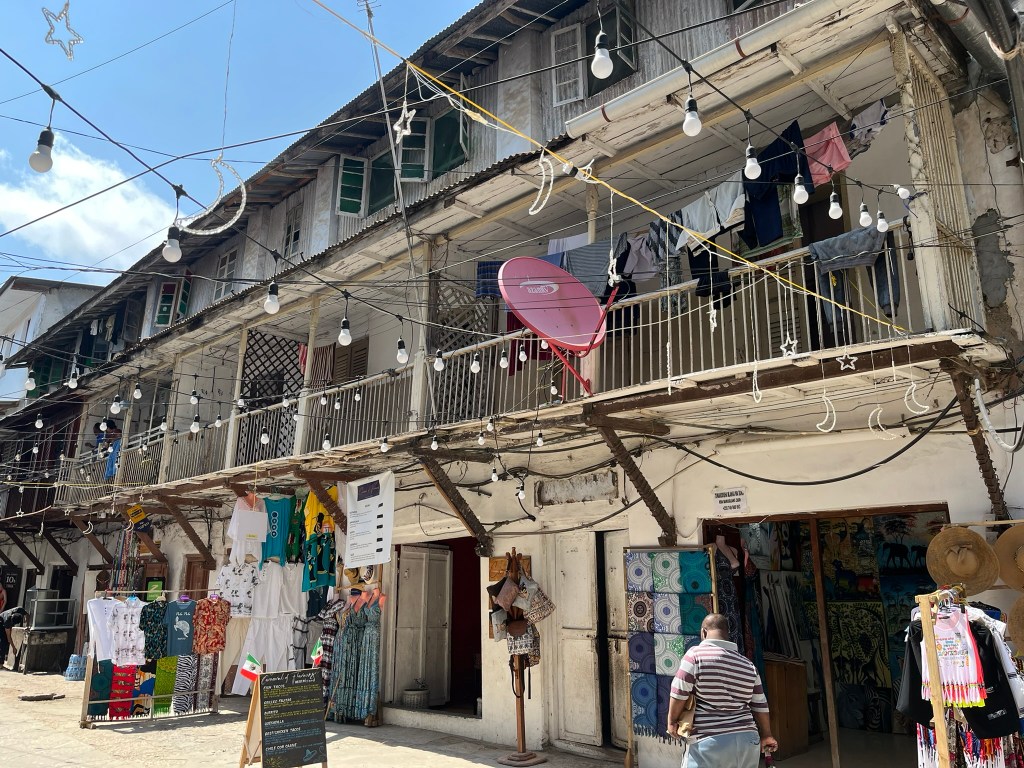
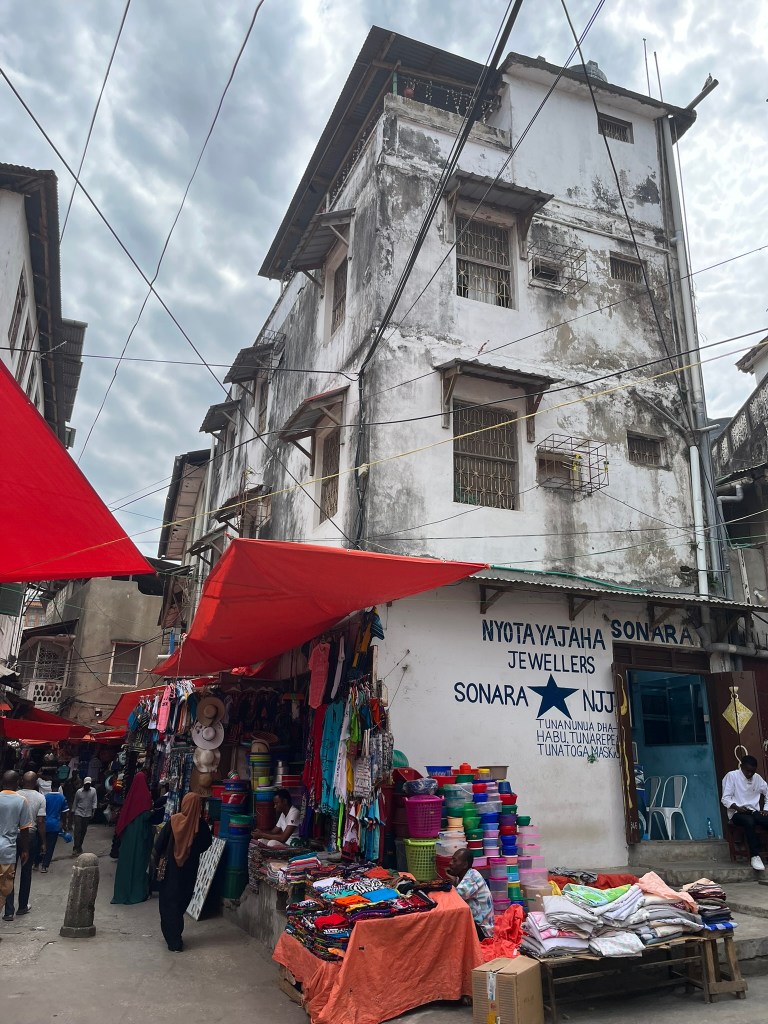
The first thing that strikes you when you start exploring Stone Town is the white-washed walls that you can see in every direction as you wind through the maze of alleys that form the city. Hidden behind this lime plaster and white wash exterior is the coral stone material that gives this city its name.
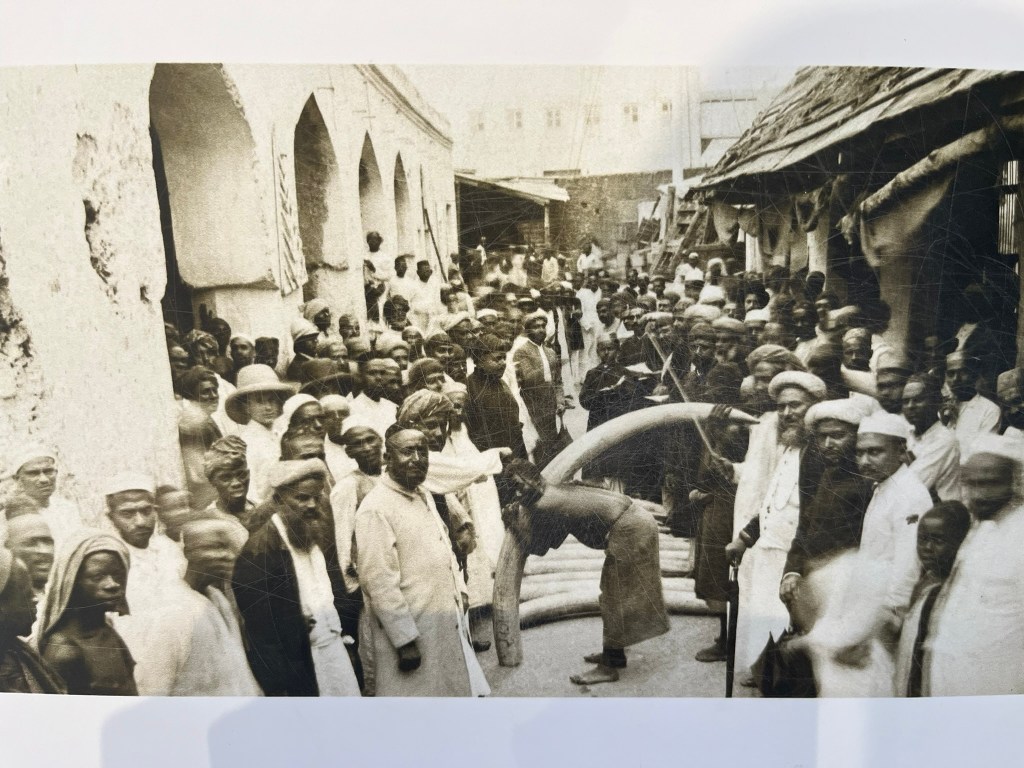
Coral stone is made from dead coral blocks quarried from shallow reefs or dug out from old coral beds along the coast. This type of material has been used to build towns along East Africa’s coastline for centuries, because it is locally abundant and its porous nature insulates against tropical heat. As the island of Zanzibar became rich from its triad of trading ivory, spice and slave;, sultans and local merchants began to build more elaborate buildings and palaces in Stone Town to reflect their wealth and importance.
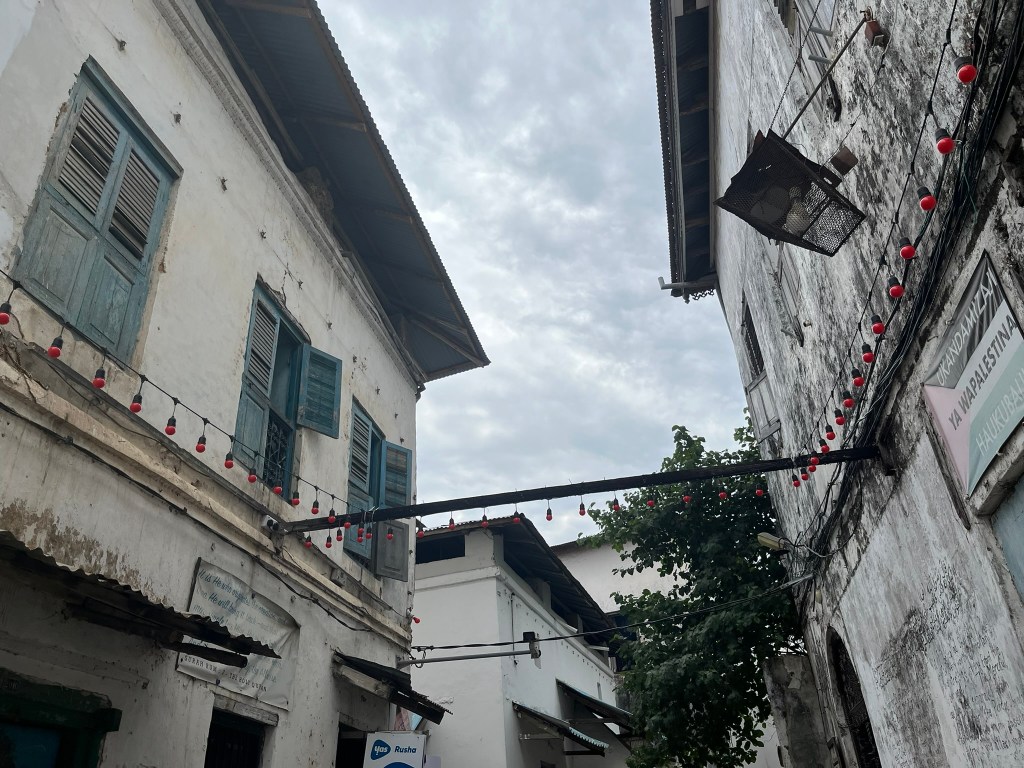
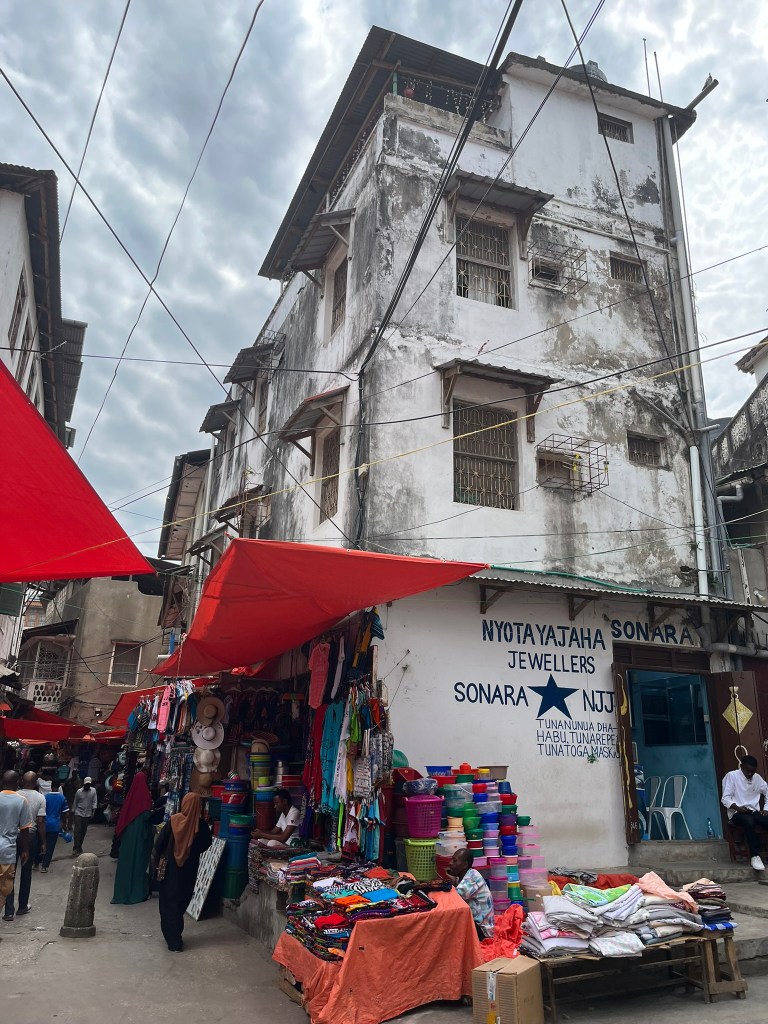
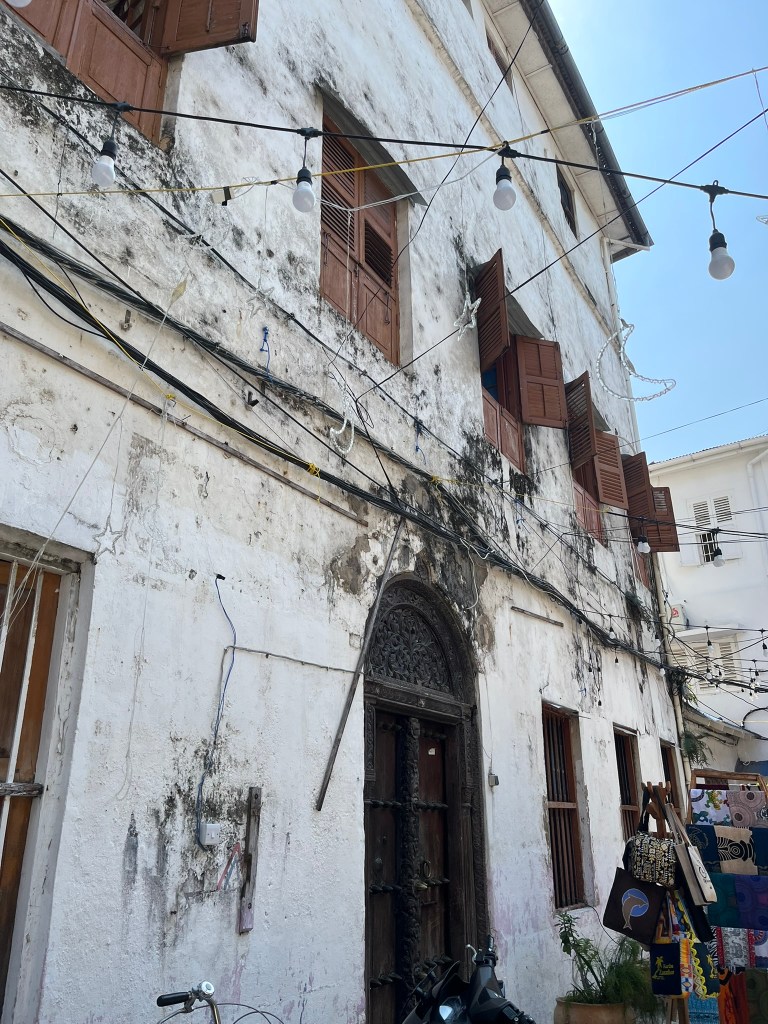
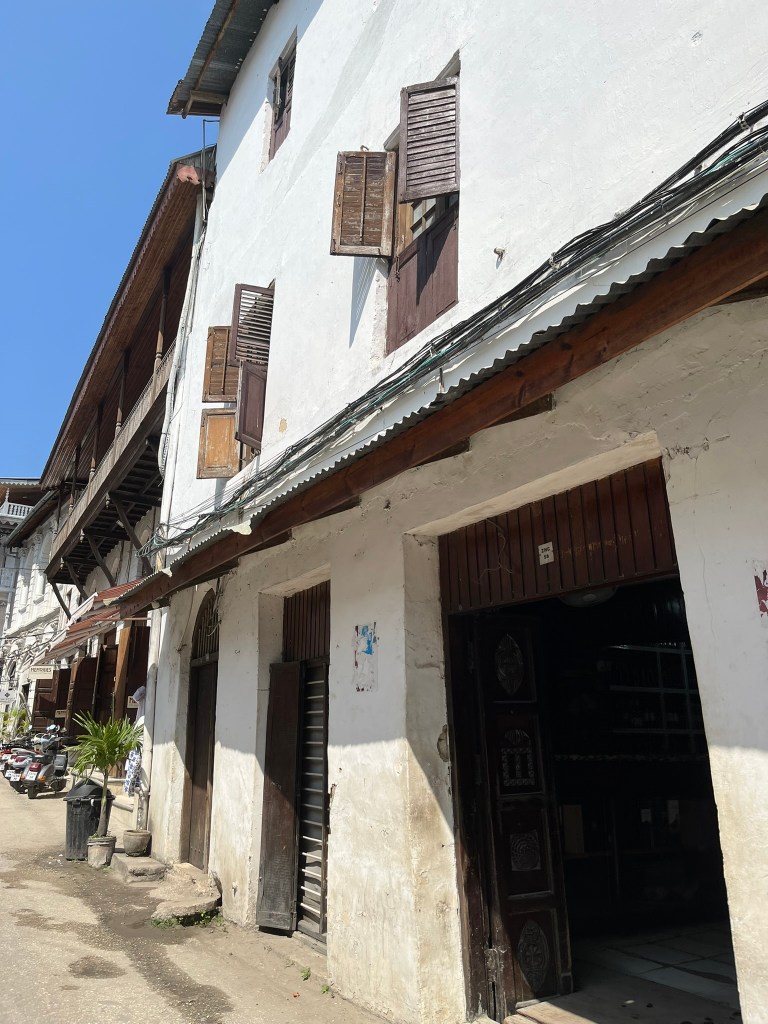
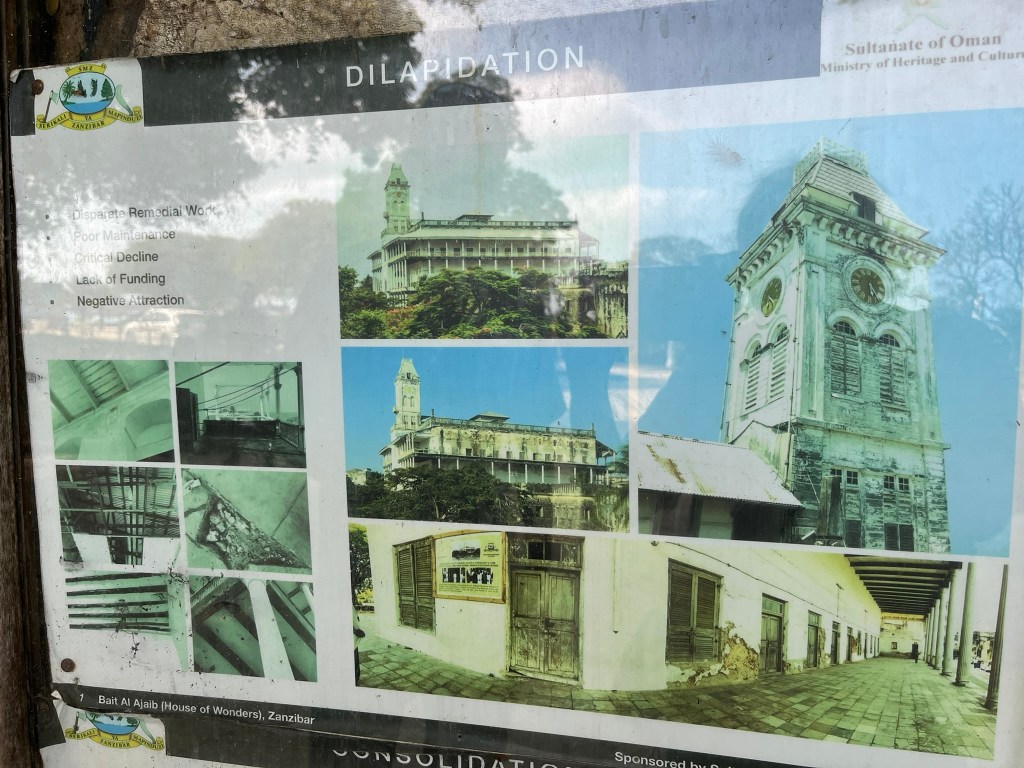
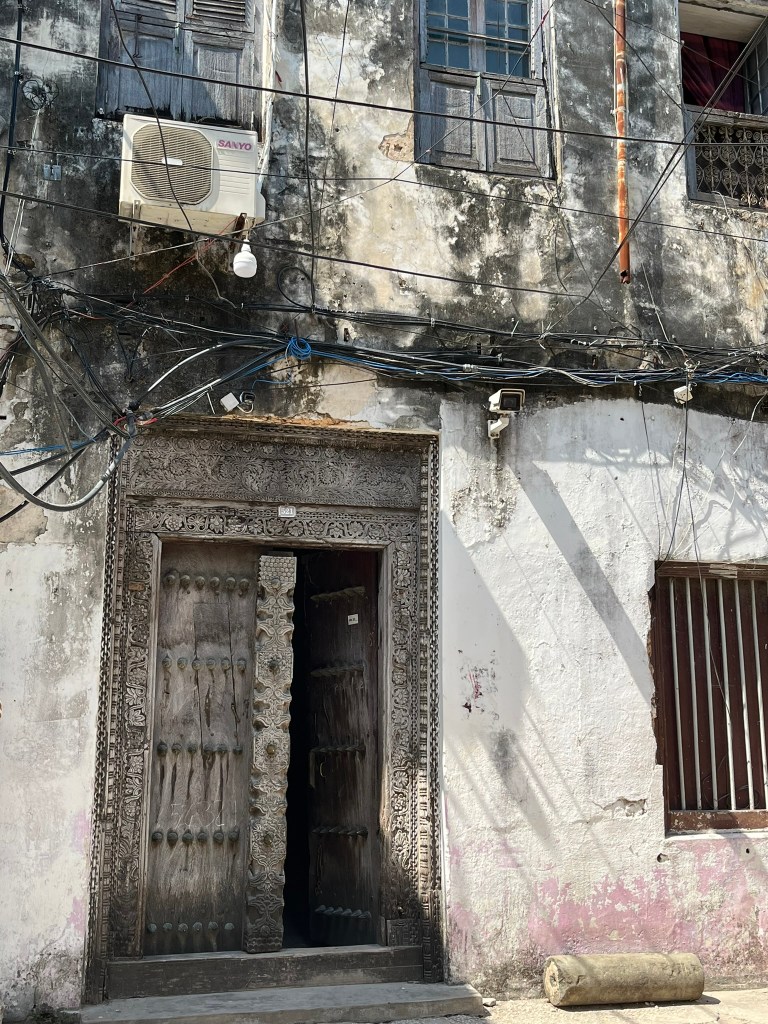
Nowadays, conservation is a major challenge. The coral stone is porous, easily absorbing rain and sea salt. And over time the salt is crystallizing inside the walls causing cracking. Modern cement repairs often make the issue worse. Across my 2 days of exploring the town, I saw many buildings propped up by wooden supports and many desperately in need of repair. I also saw plenty of examples where buildings were being renovated and brought back to life. The entire town is designated as a UNESCO World Heritage site, so restoration projects have to follow certain guidelines on styles and materials used, which I am sure requires a lot more financial investment.
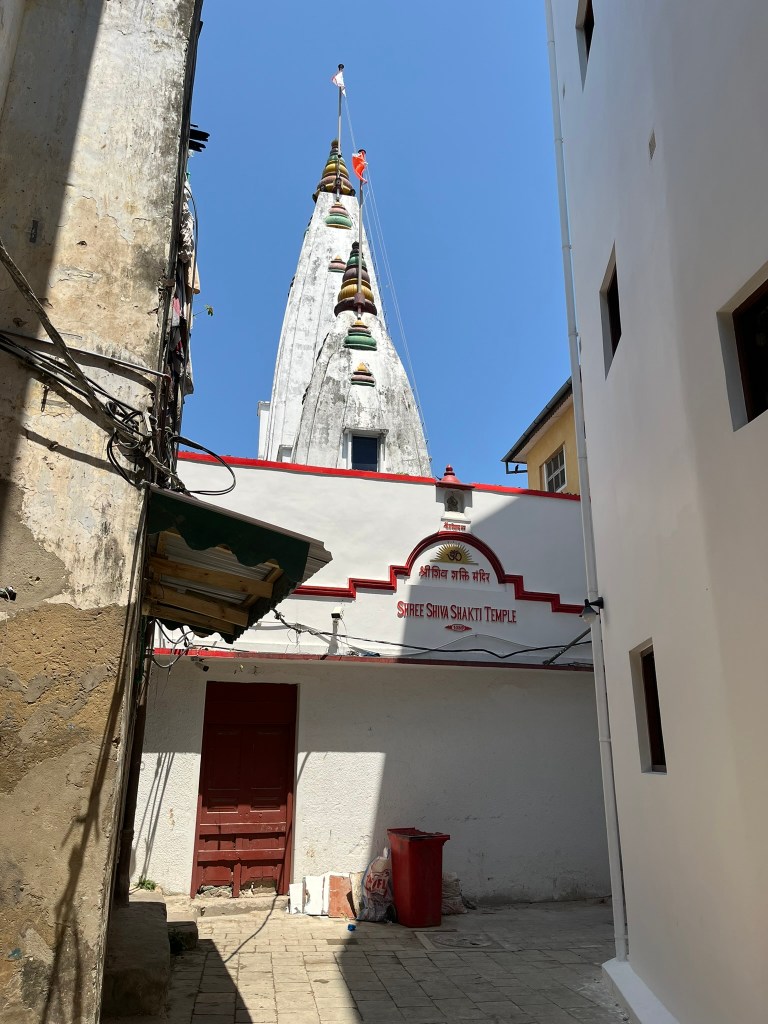
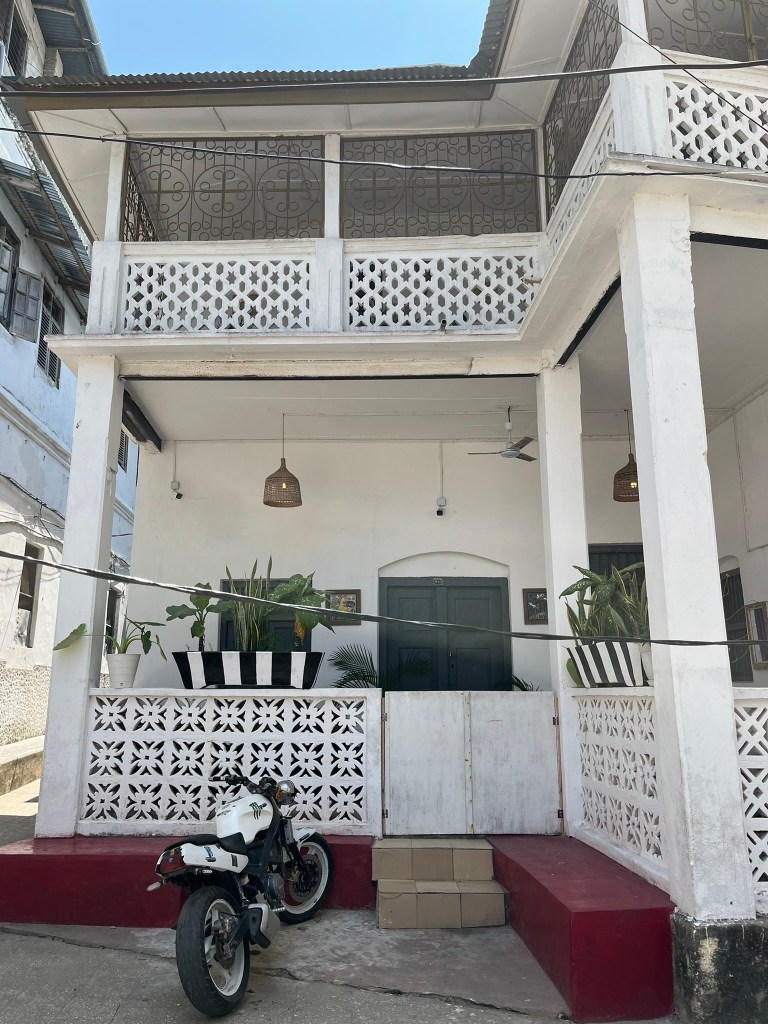
Stone Town is a big mash-up of architectural styles. There are Swahili townhouses, Indian merchant houses, Portuguese forts, Omani palaces, mosques, Anglican churches and Hindu temples. Every facade, door and balcony reflects a spectrum of cultural influences from the many groups that have traded and migrated to this small island over 100’s of years. UNESCO describes it as an outstanding example of fusion between Swahili, Arab, Persian, Indian and European elements.
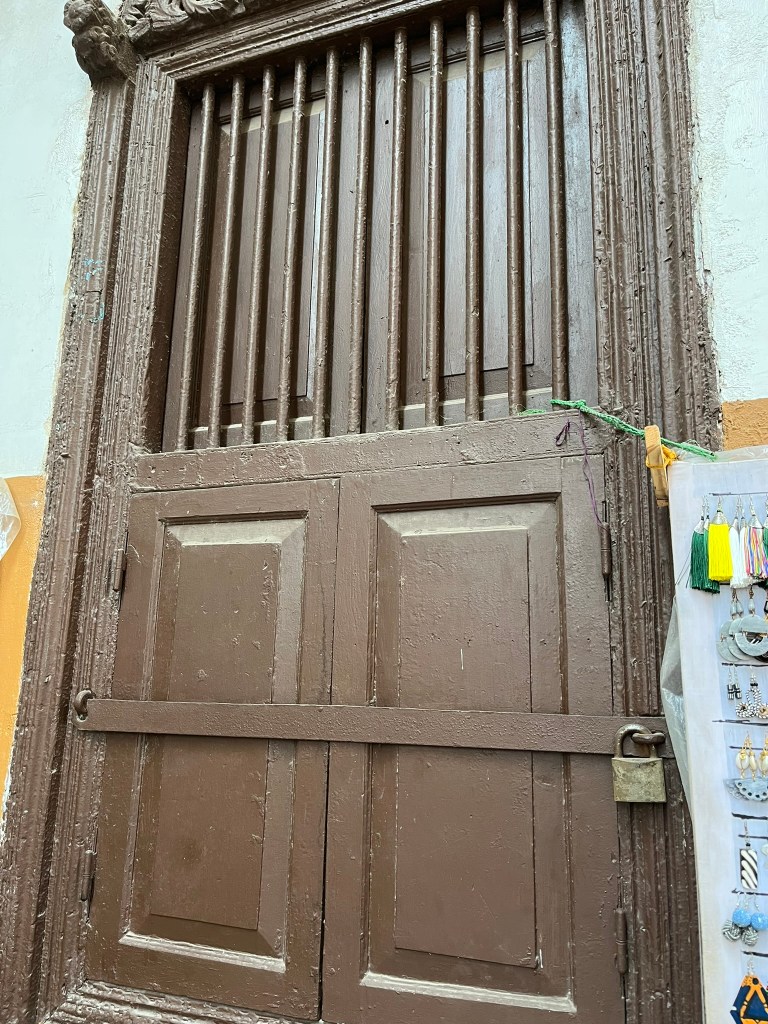
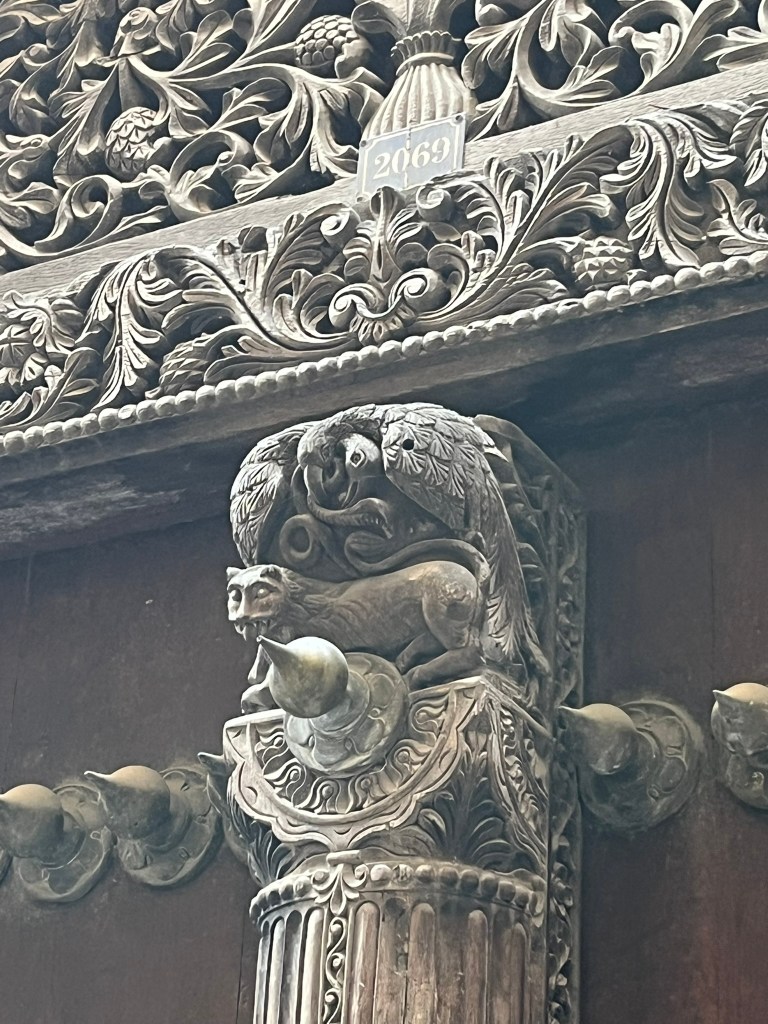
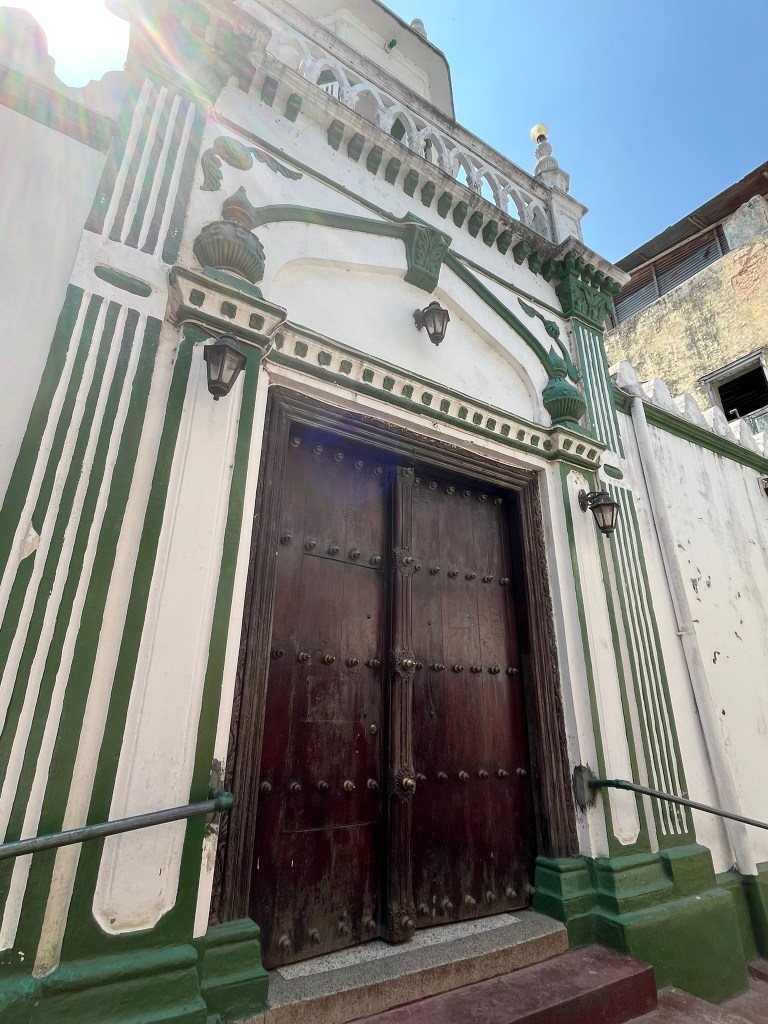
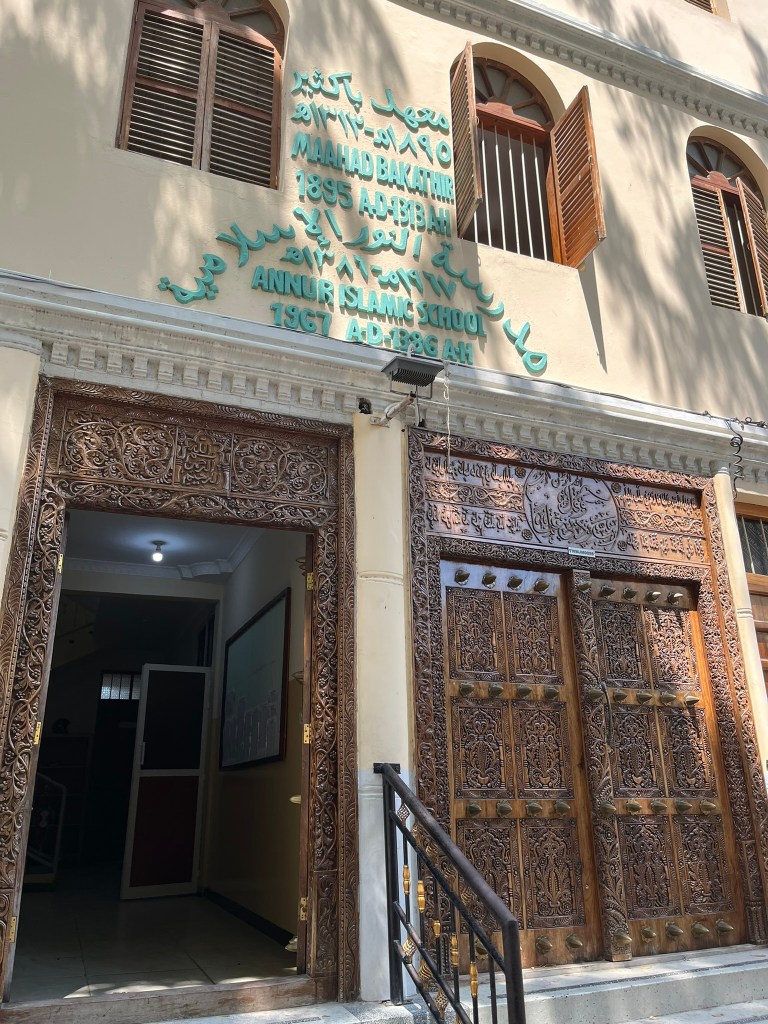
The easiest way to get a sense for this diversity is to look at the doors and windows of each building. The doors of Stone Town are not just entrances, they are artistic statements by the owner of the building and tell you about the history of who lives there. This is where doing a walking tour with a guide is absolutely essential. I would never have appreciated the significance of the doors and windows if I had not had someone taking me around explaining their subtle differences. And it made me appreciate the melting pot of cultures within the city much more. Moreover, I would have gotten completely lost without a guide. The town is a maze and every alley looks very similar to the next.
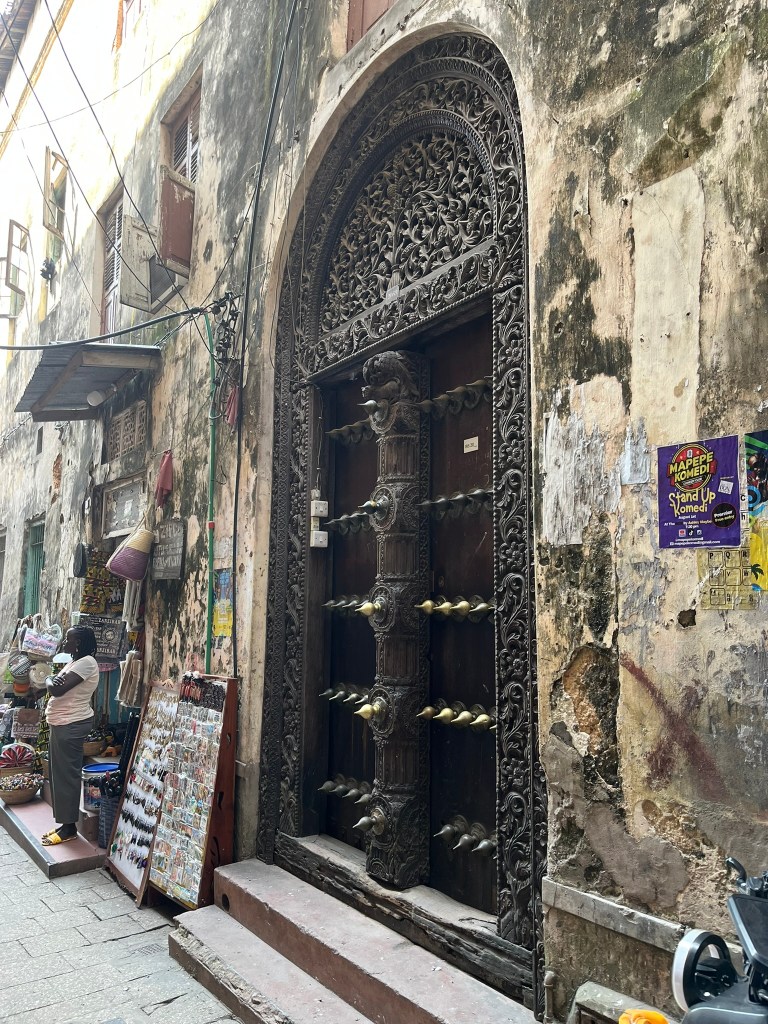
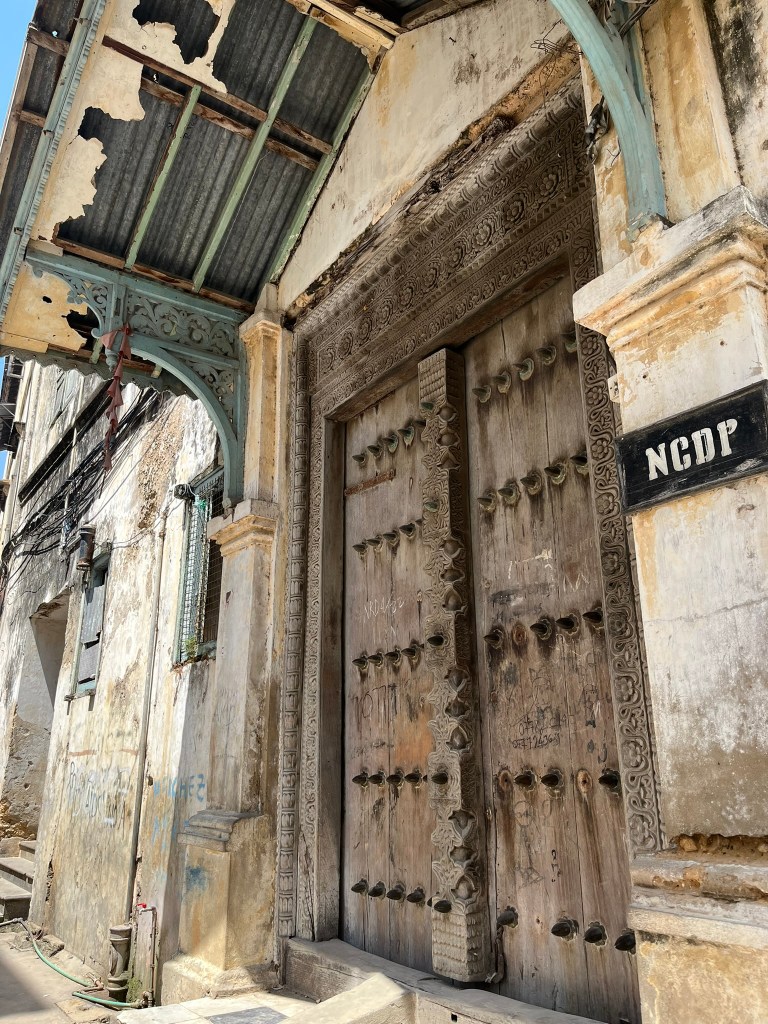
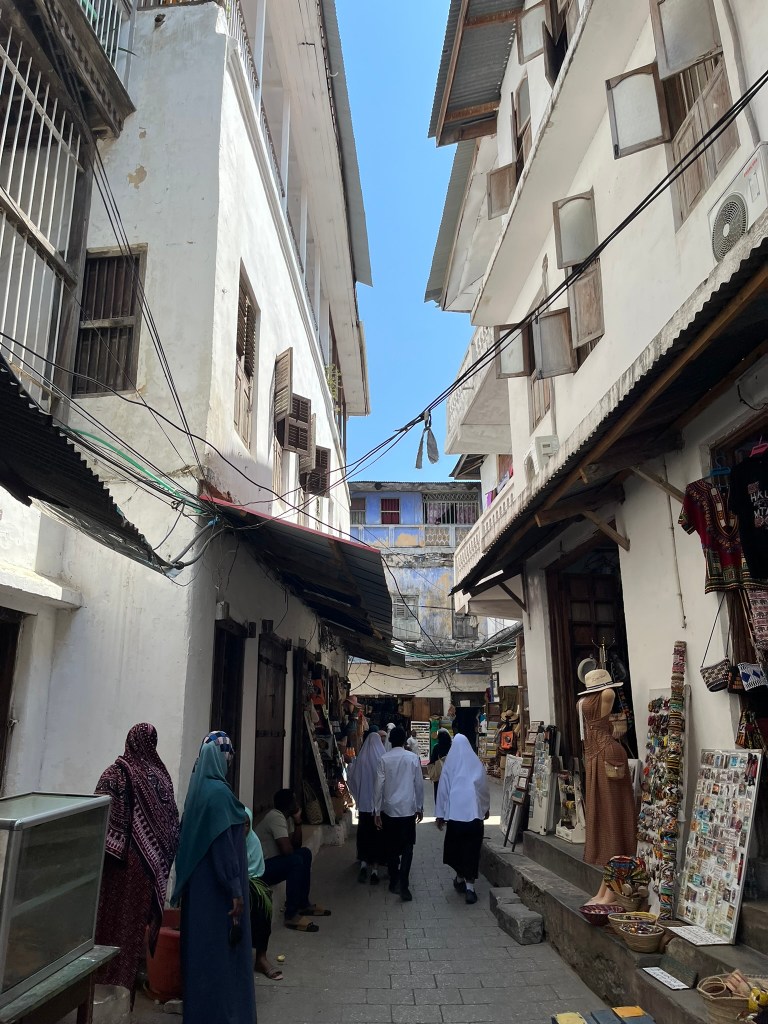
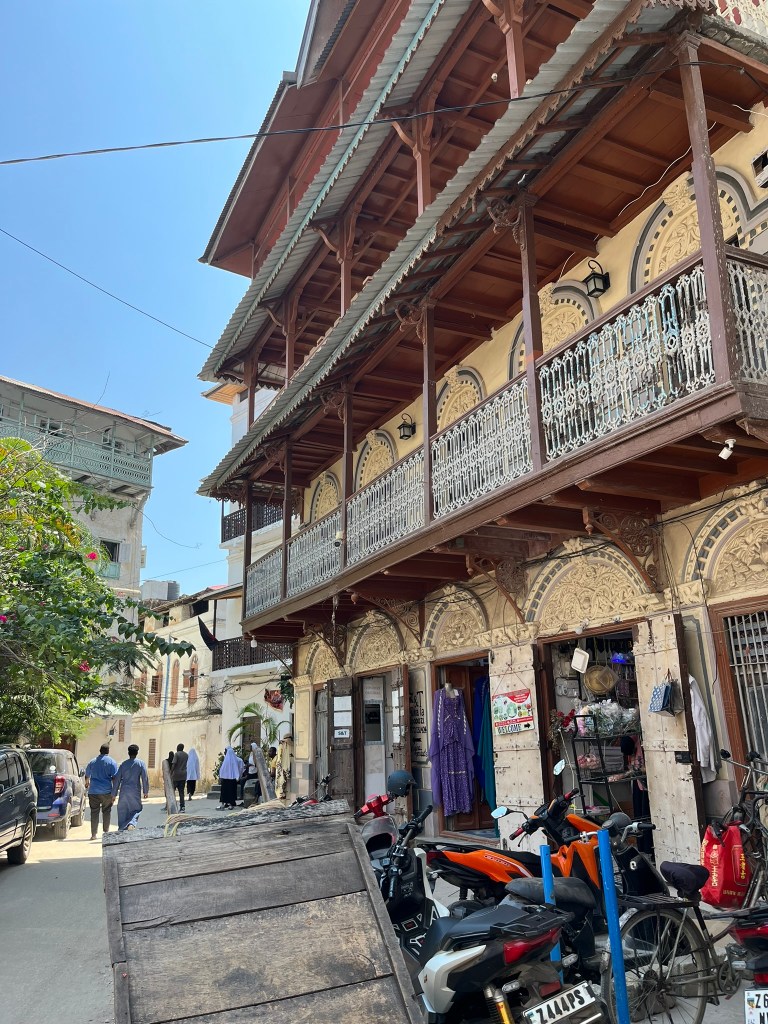
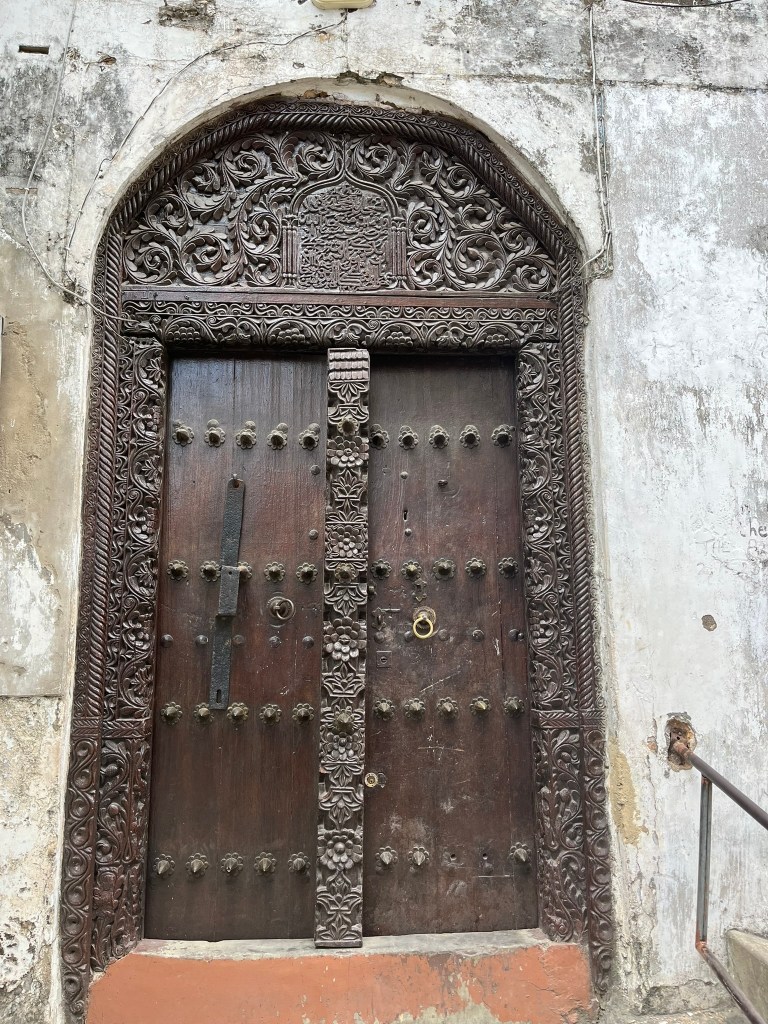
I won’t go into the details of every style of door. But just cover the basics. Rectangular frames with simple geometric designs and a plain lintel were Swahili. Arab and Omani-style were tall and rectangular with rich carved panels and Quranic inscriptions. Indian-Gujarati-style are square, sometimes with arches, and heavy brass studs. The studs come from those used in India meant to protect against war elephants but here in Stone Town are to depict the wealth and power of the individual that owned the property. British style windows would have stained glass. Swahili-style windows on the other hand would have slatted shutters that could be opened and closed. The carvings on each door reflect the profession of the owner.
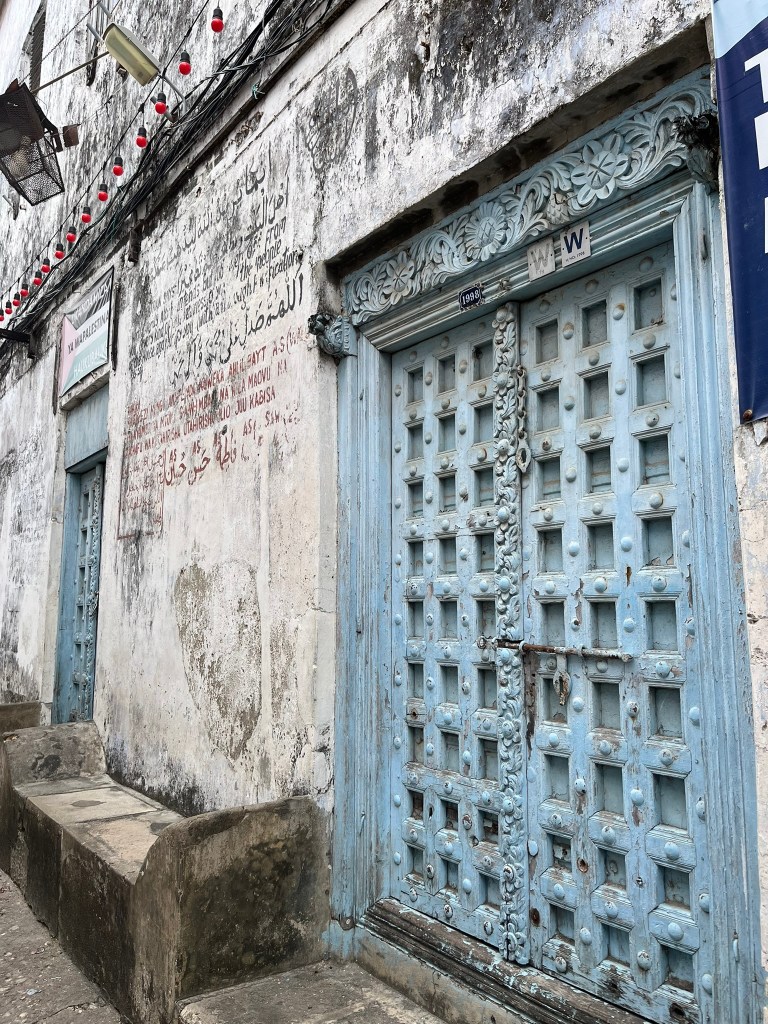
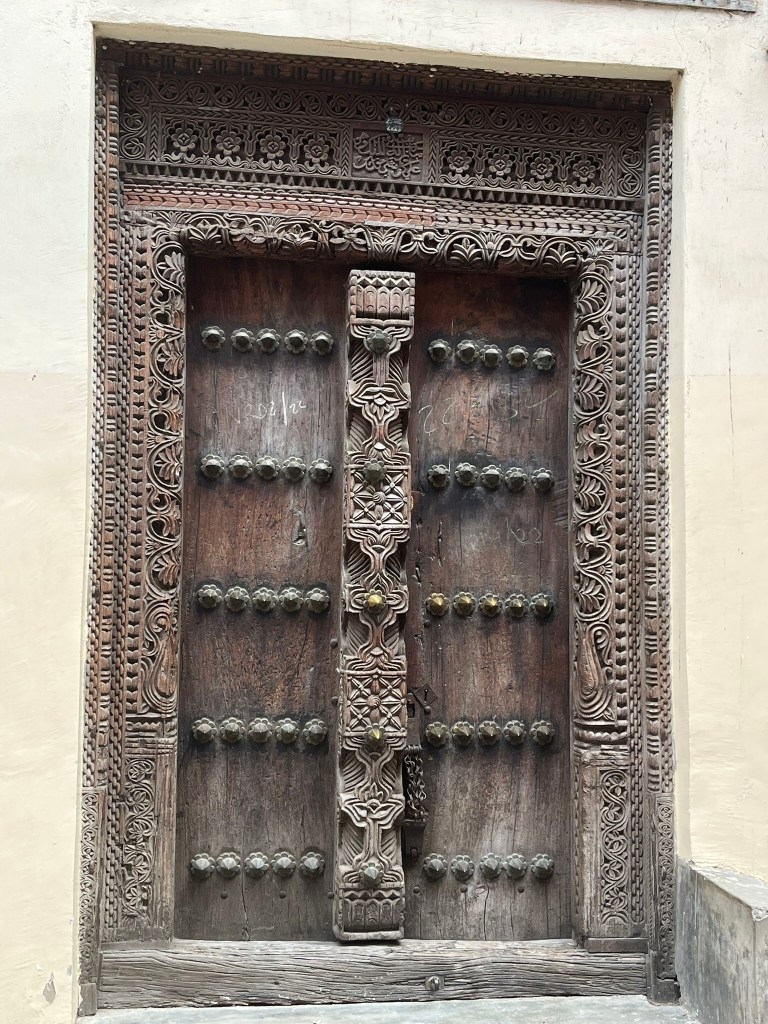
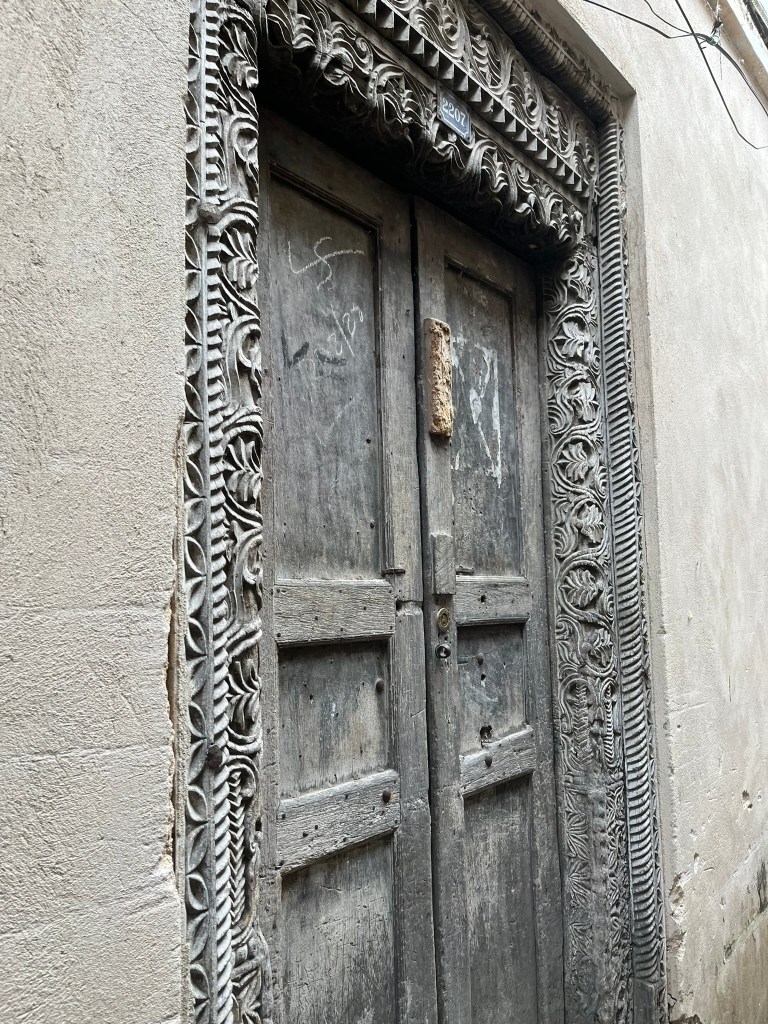
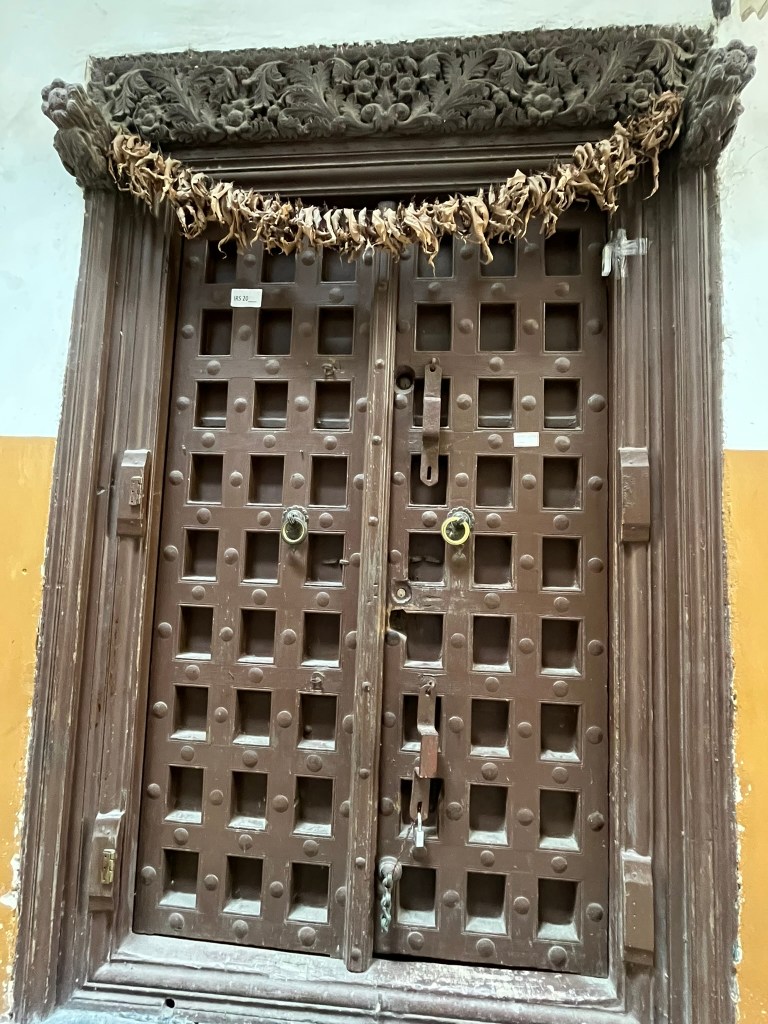
The best thing about Stone Town is that it has not yet been sanitized or ‘Disneyfied’ for the benefit of tourists. Yes, it does have a lot of tourists, and there are hotels and restaurants and gift shops. But it is not excessive and it hasn’t ruined the atmosphere. If you have been to places like Dubrovnik in Croatia you will know what I mean. There are not big cruise ships pulling up into the small port and people swarming the streets of the city. There are still locals selling food to locals, old men hanging out and drinking tea and coffee and a bustling market not targeted at tourists.
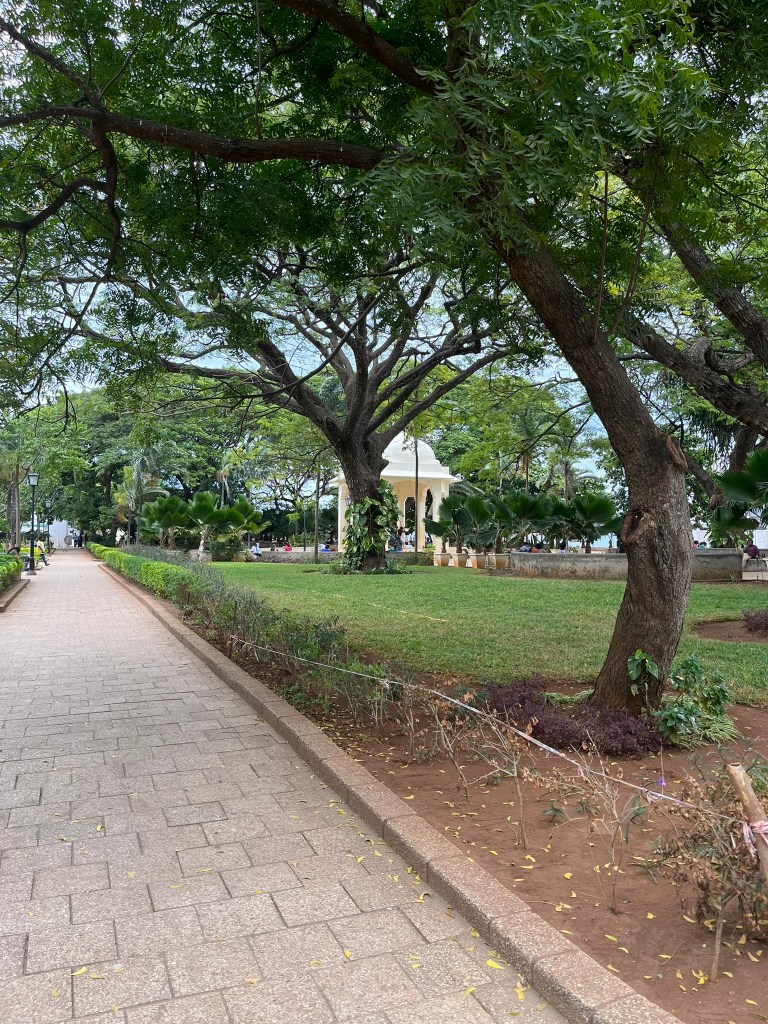
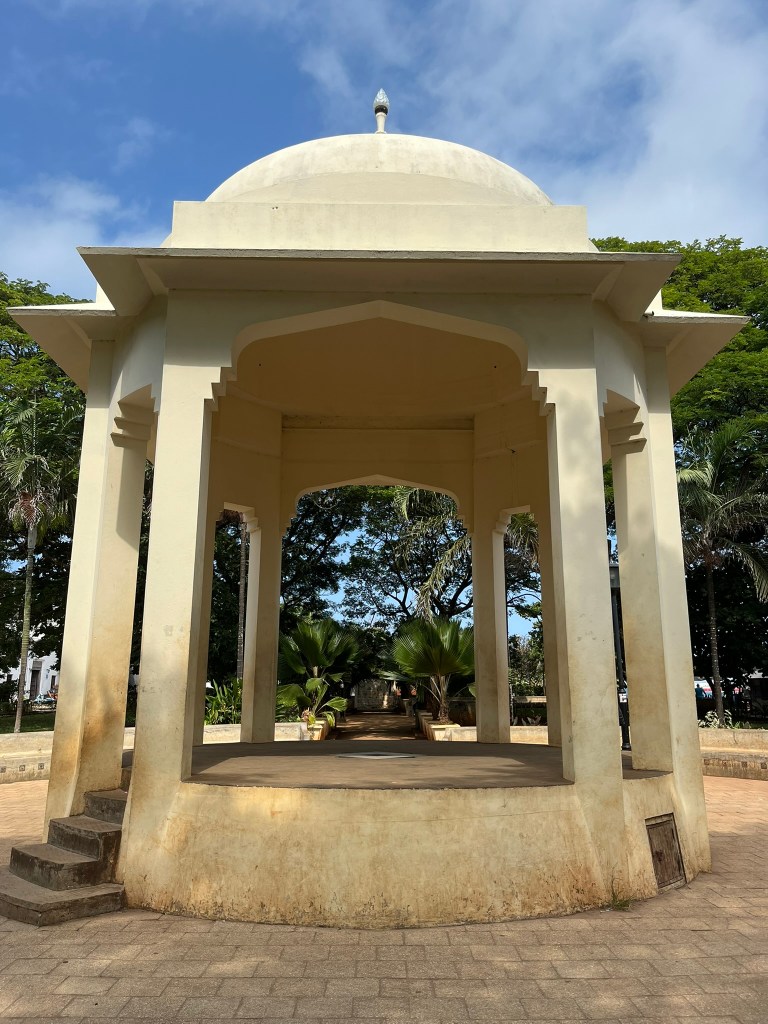
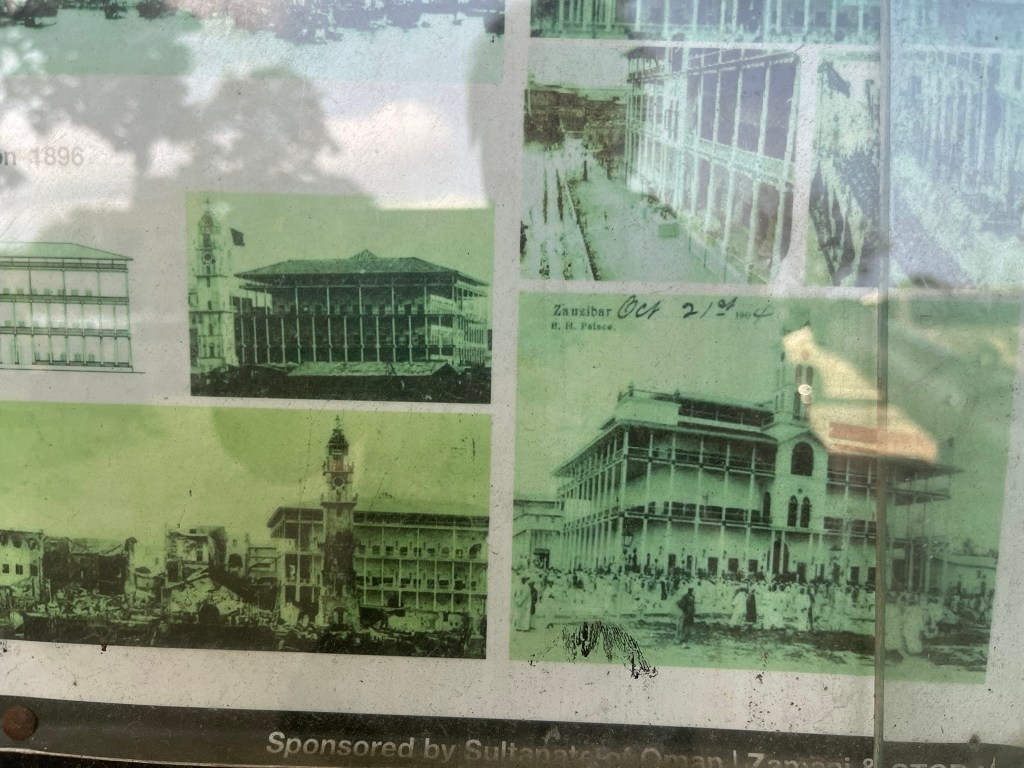
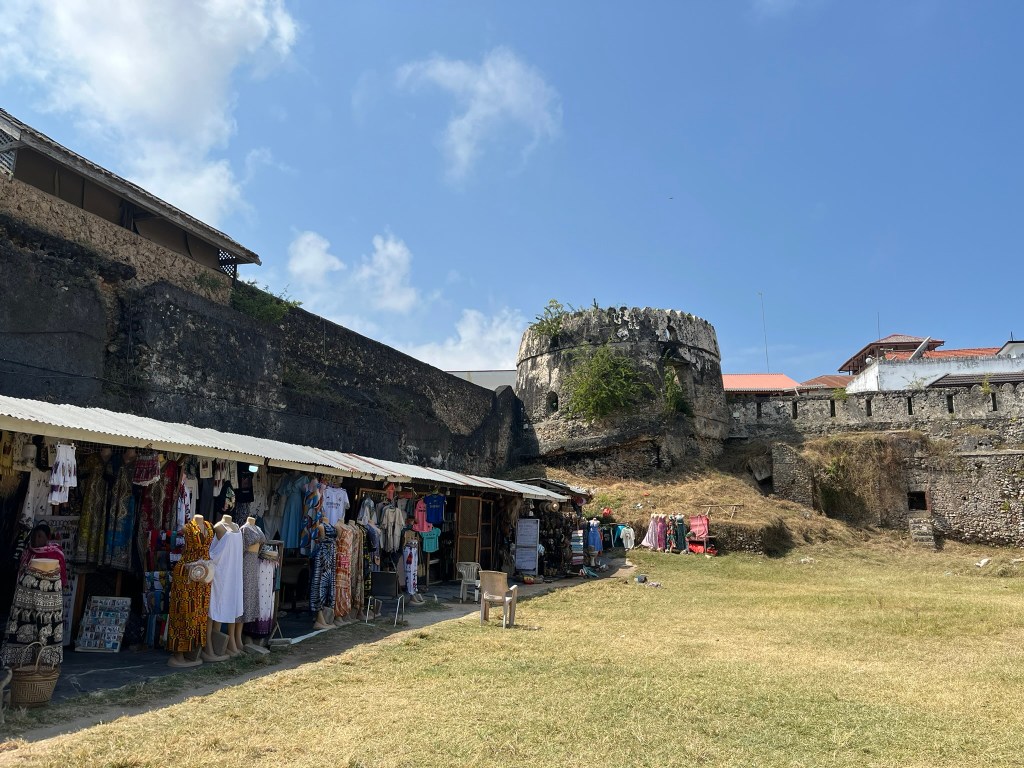
My walking tour on my last day of this trip started at my hotel. Our first stop was Forodhani Gardens, which is right on the seafront in central Stone Town. This is where the original port was based, and for the locals this is the equivalent of their ‘Hyde Park’ and a meeting point within the city. Facing the gardens is the House of Wonders, the palace of Sultan Barghash until 1888 and full of modern technology at the time like electric lighting, running water and an elevator. It was also built with iron and steel beams which was a very new technology for the time. Making it something mysterious and exciting for Zanzibari people back then. It is currently under major renovation so we could not go inside or really even see the outside as it is heavily covered in scaffolding.
To its left is the Old Fort, originally built by the Portuguese and then expanded by the Omani’s. This is the oldest structure in Stone Town, and nowadays periodically hosts music festivals.
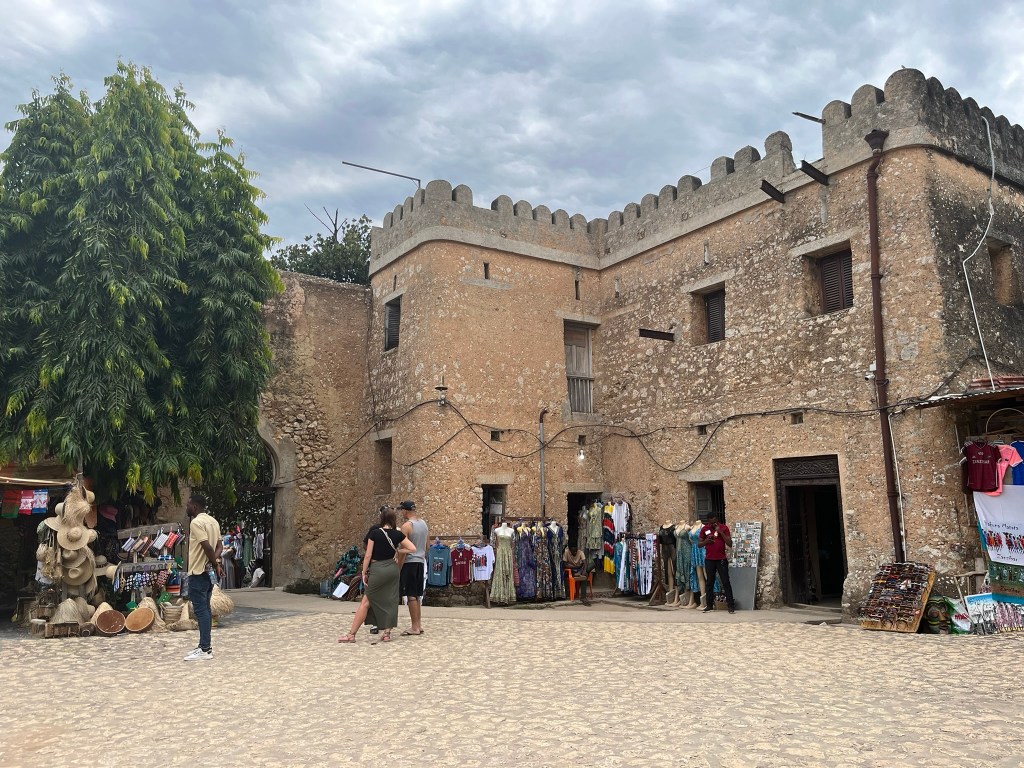
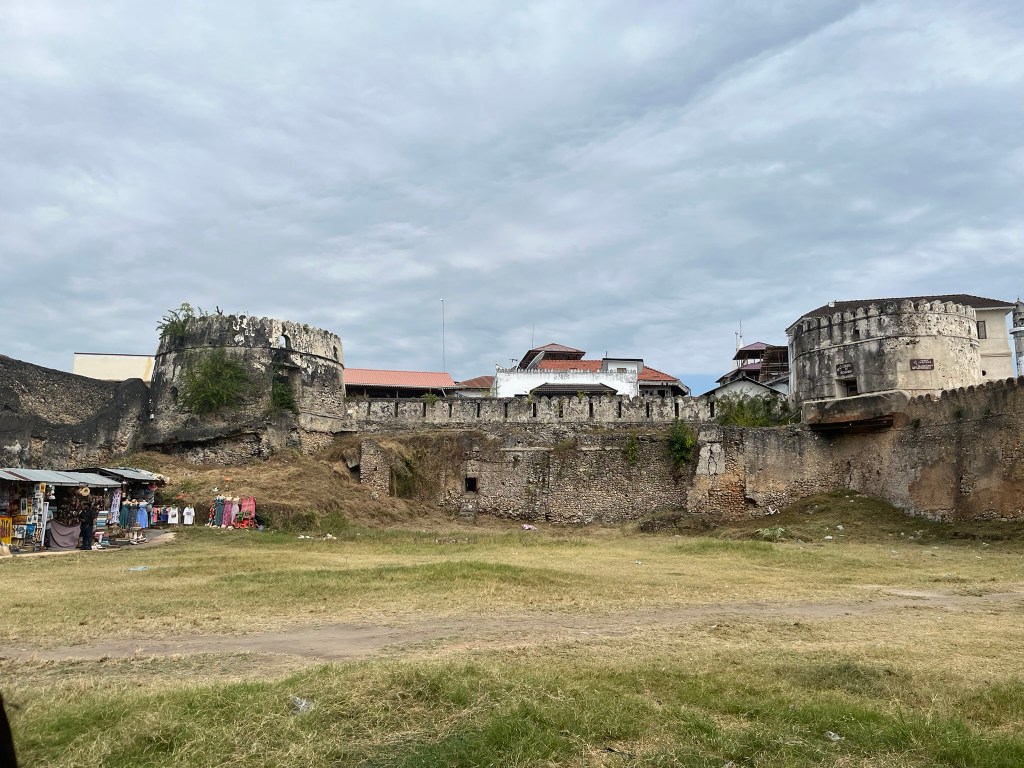
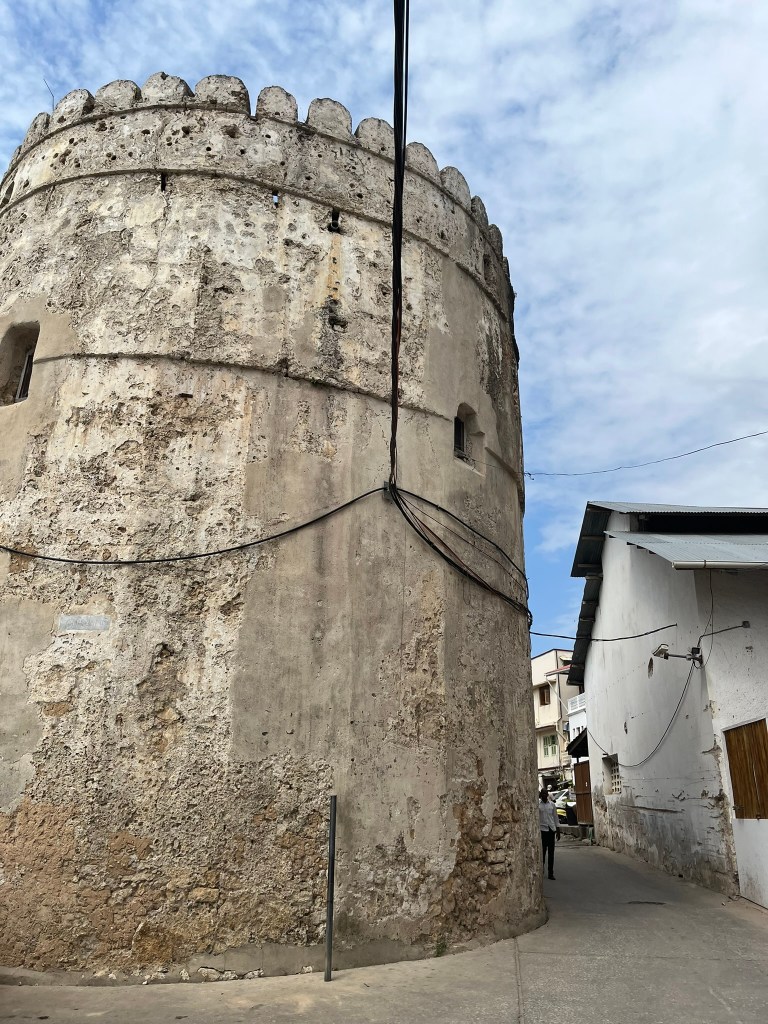
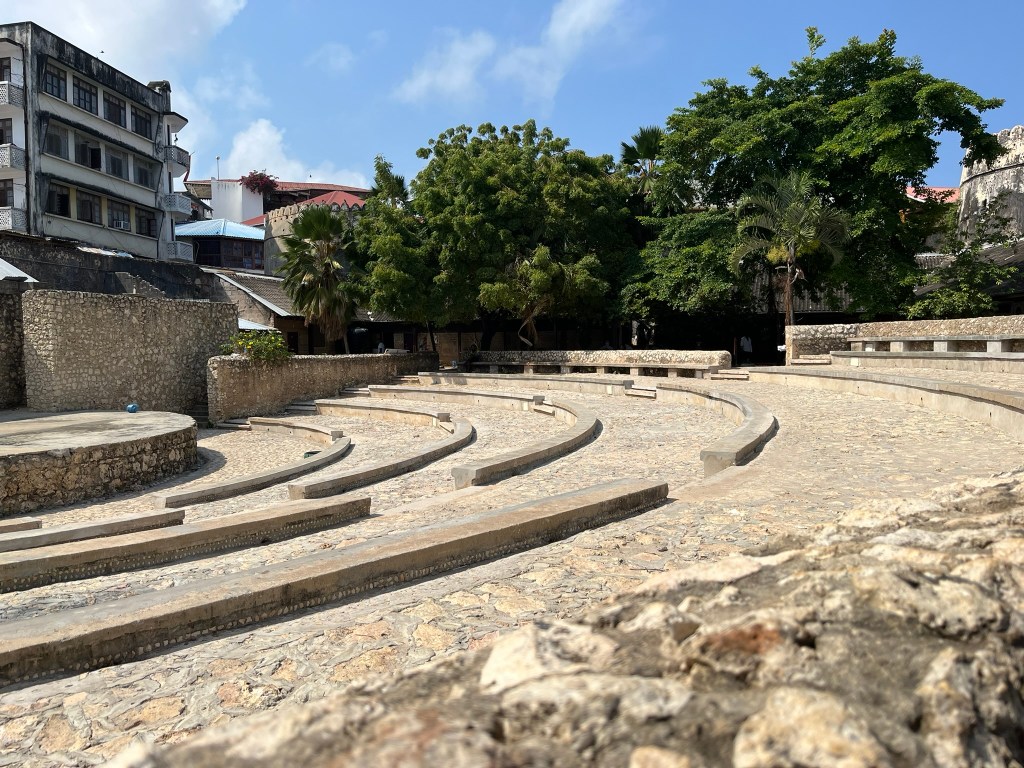
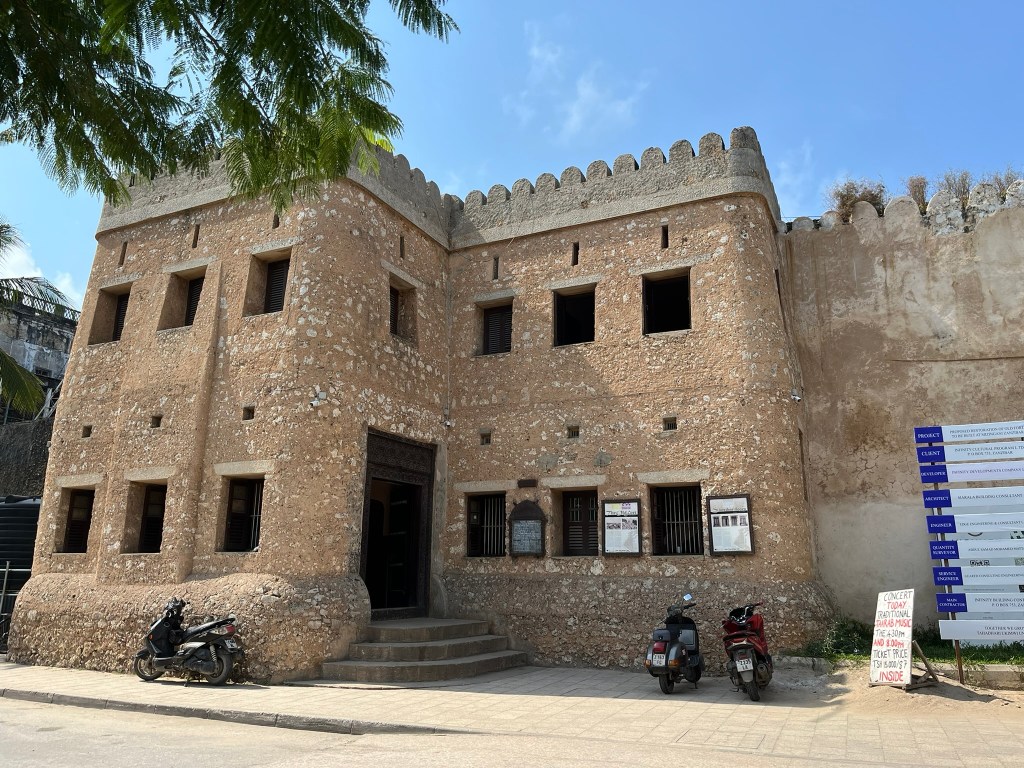
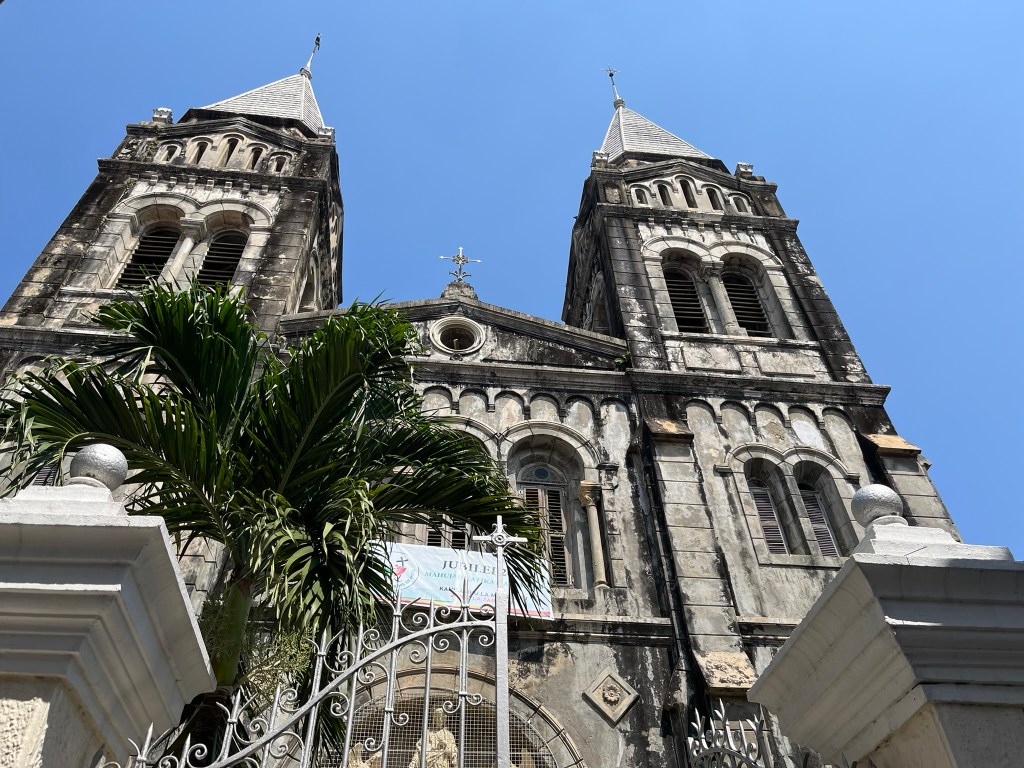
We then headed to Shangani neighborhood at the western tip of Stone Town. In the 18th and 19th century this was the base for wealthy Arab and Indian merchants with grand coral stone mansions, carved doors and spacious courtyards. It then became the choice location for the British and other European consulates, schools and residences in the late 19th and 20th century. Its greatest claim to fame is that this is where Freddie Mercury was born and spent the first few years of his childhood. There is also a spectacular twin spired gothic-style church built by French missionaries in the late 19th century.

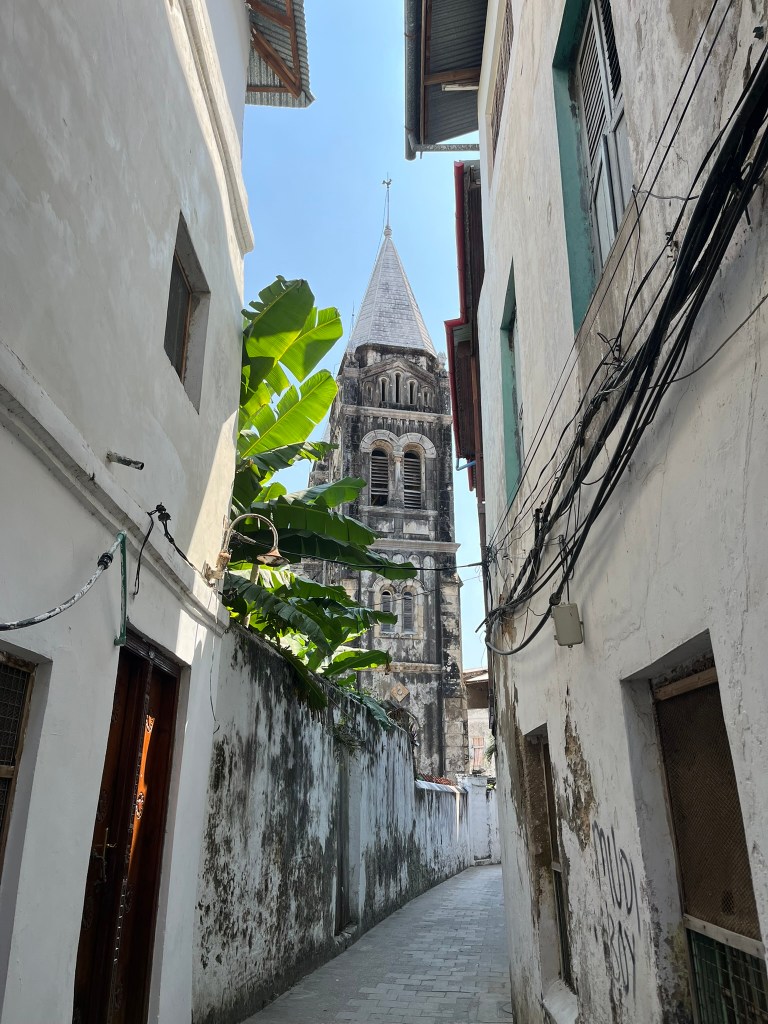
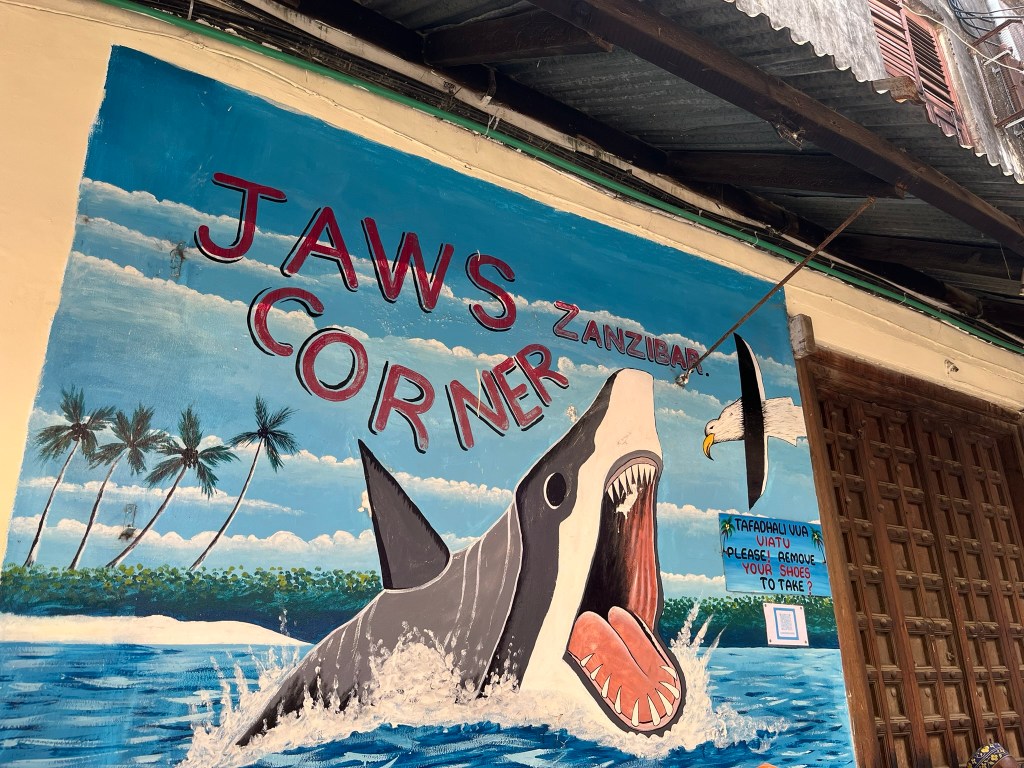
On our way to Darajani Market we stopped at Jaws Corner, in the heart of the Kiponda neighborhood. This is a small meeting point for locals to have a traditional spiced coffee, play dominoes, gossip and debate and catch up on local news via a blackboard, shaded by trees and surrounding by looming coral stone houses. It was one of the first places to have a TV in the town, so locals flocked here to watch movies each evening. And this is where the bizarre name of this spot came from. Apparently the choice of movie one night was Jaws and it terrified the locals! This is a place for locals and not staged for tourists.
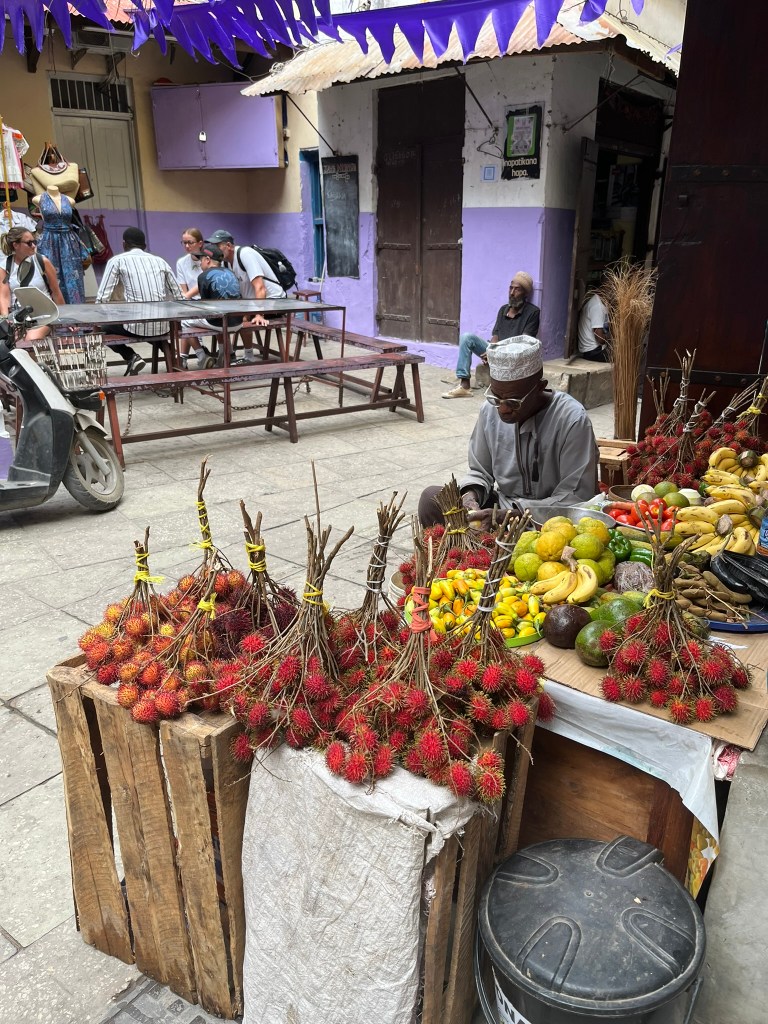
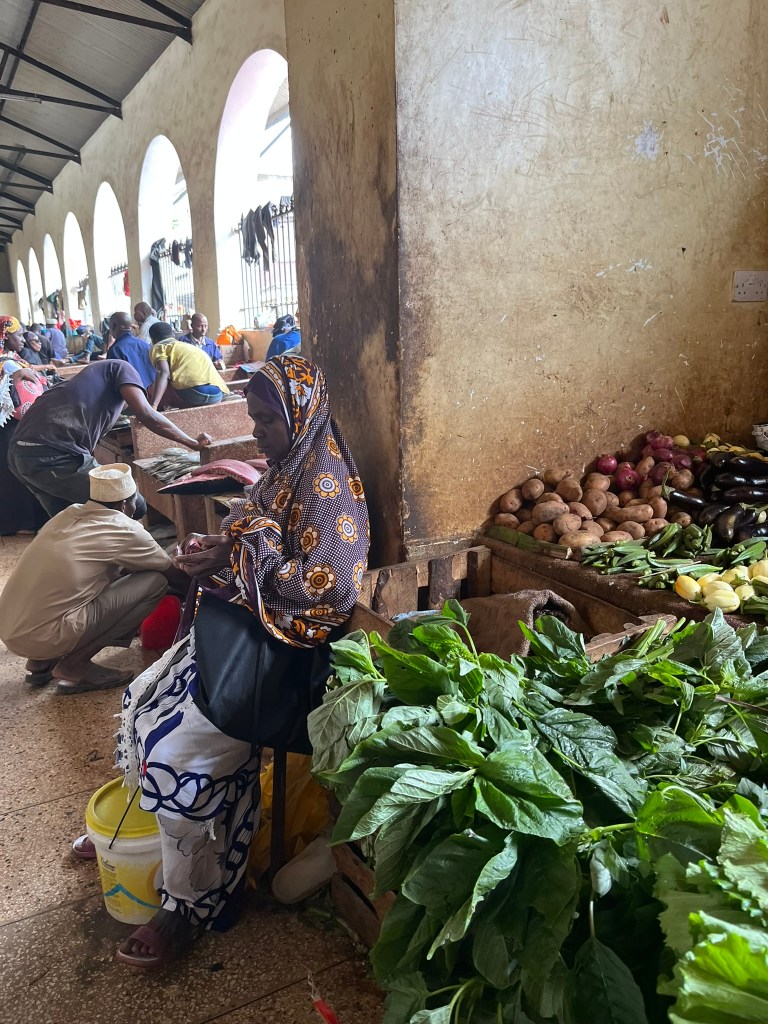
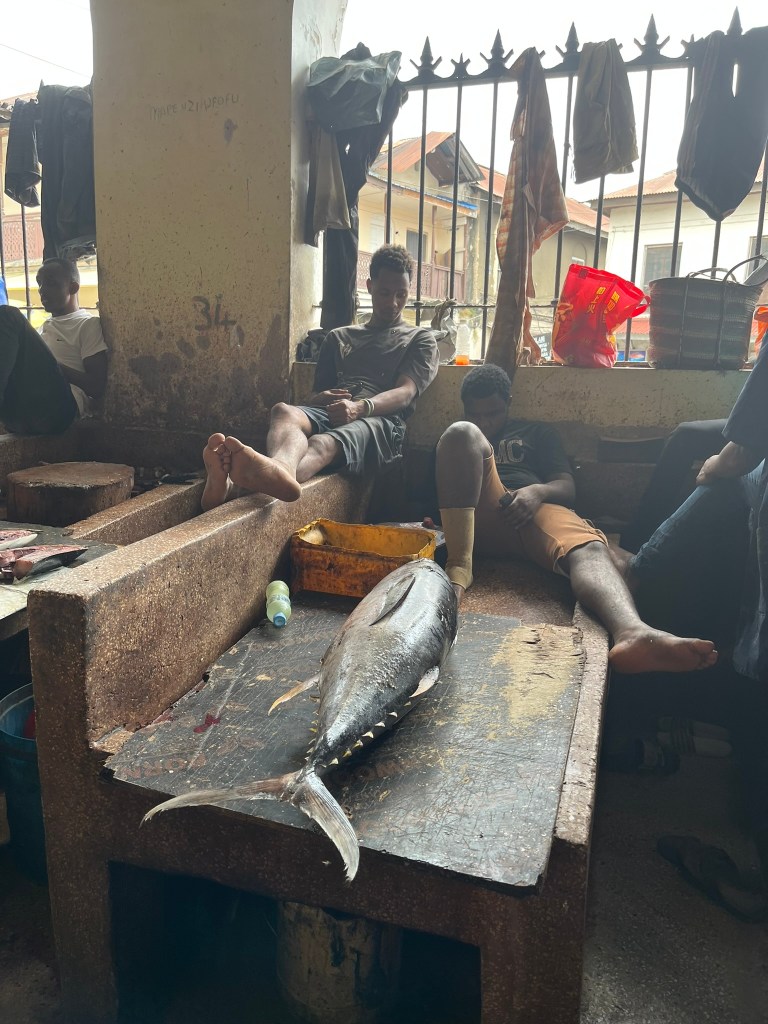
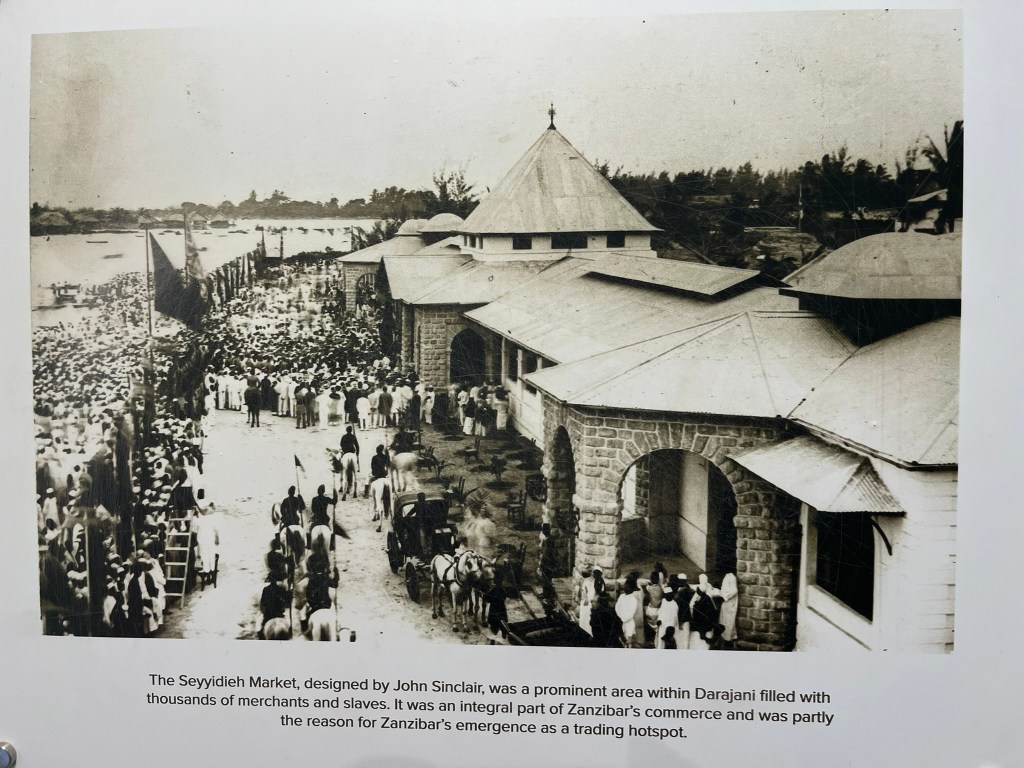
Darajani market, built in 1904 by the British sits at the transition between Stone Town and Ng’ambo (‘the new town’). The road that divides the 2 parts of this city used to be home to a mangrove swamp and tidal inlet but this was drained and filled in to allow the city to expand in the late 19th century. The market is huge, busy and still very much used by locals. We wandered through the fish market and fruit and vegetables stalls.
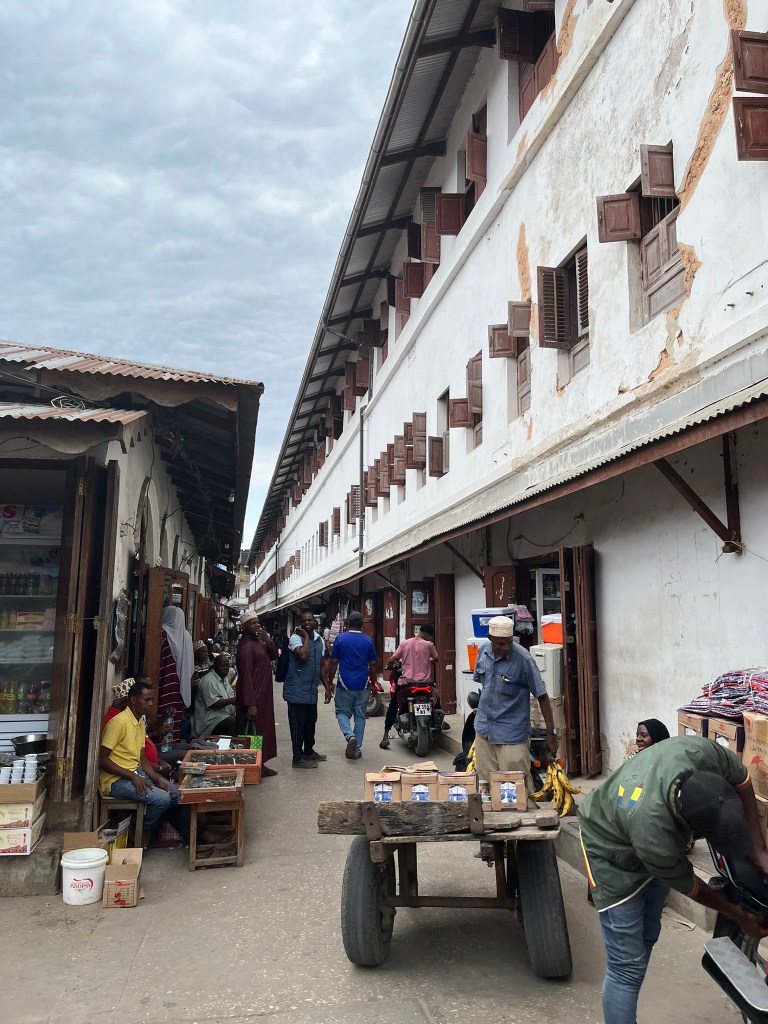
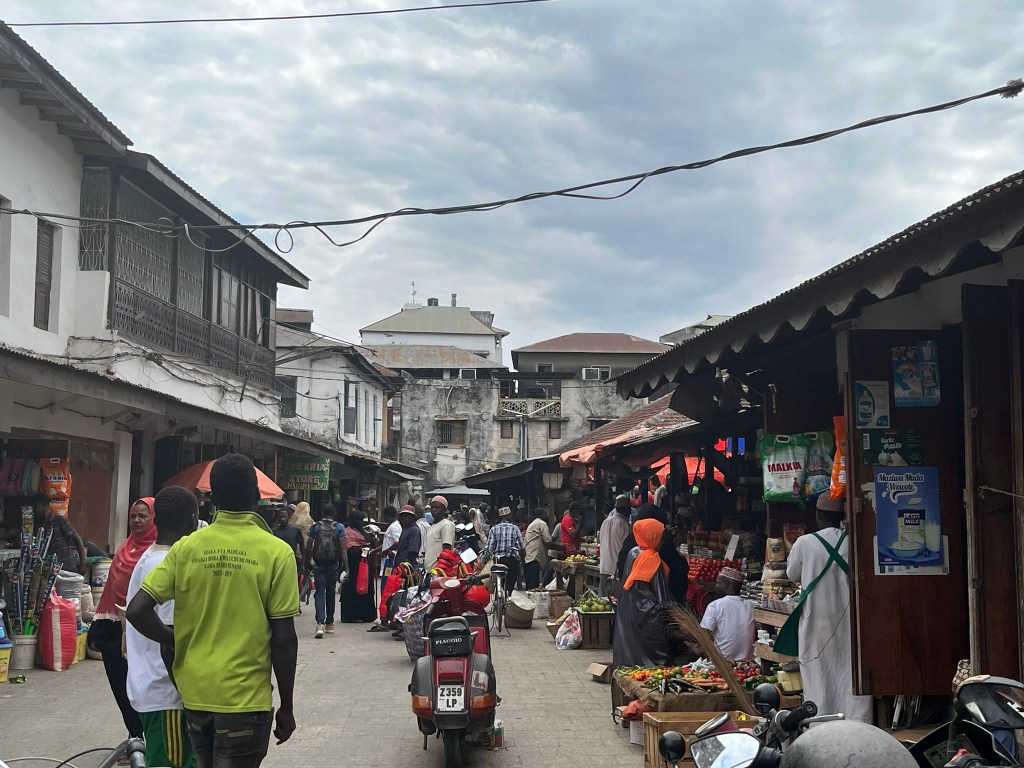
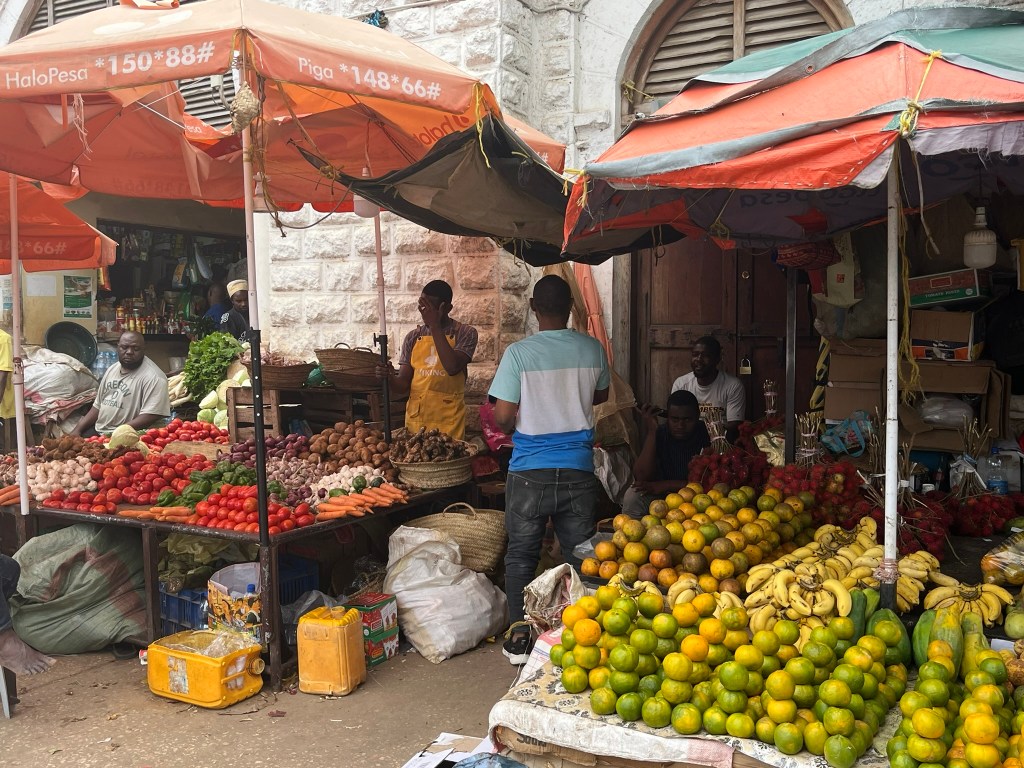
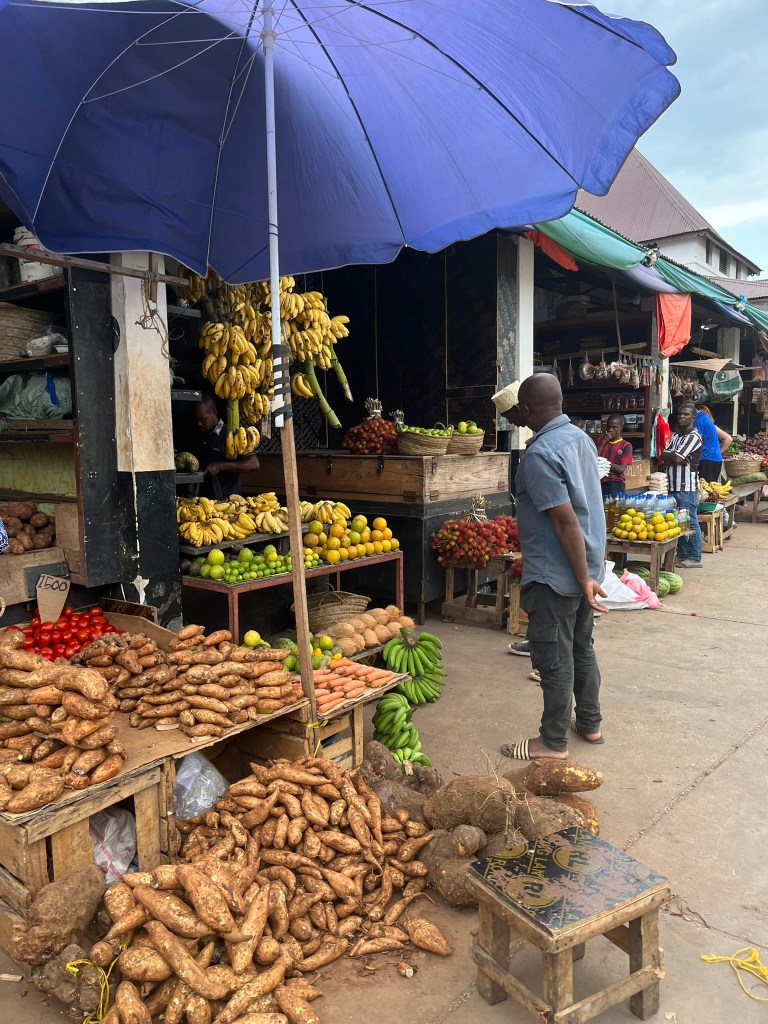
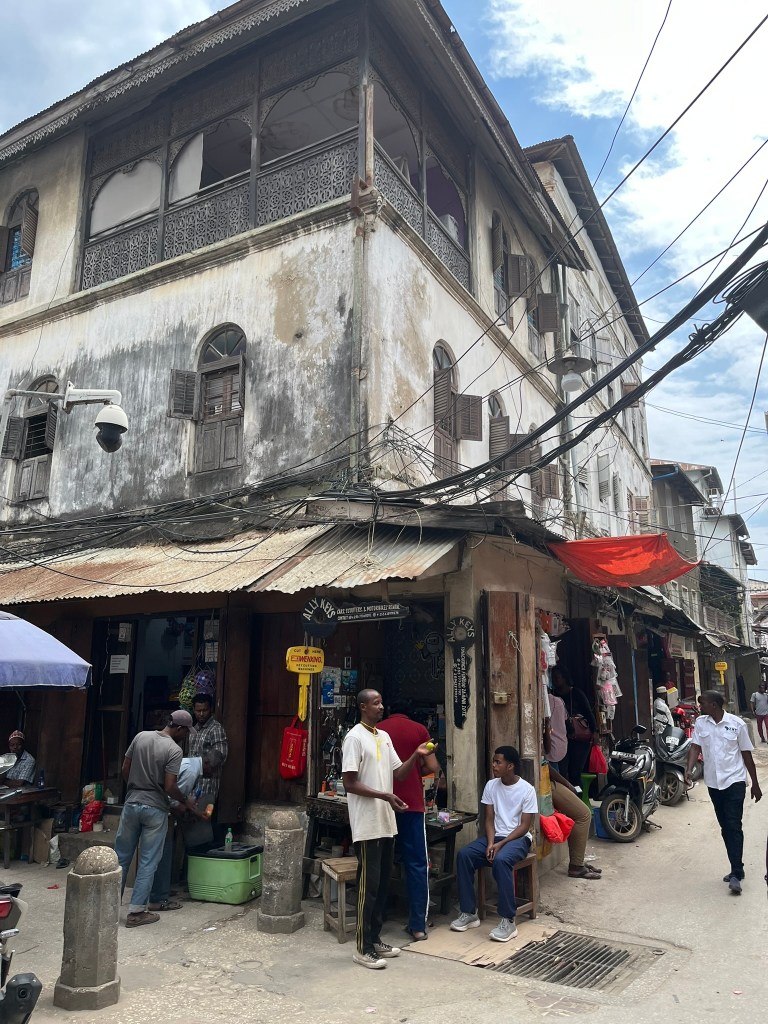



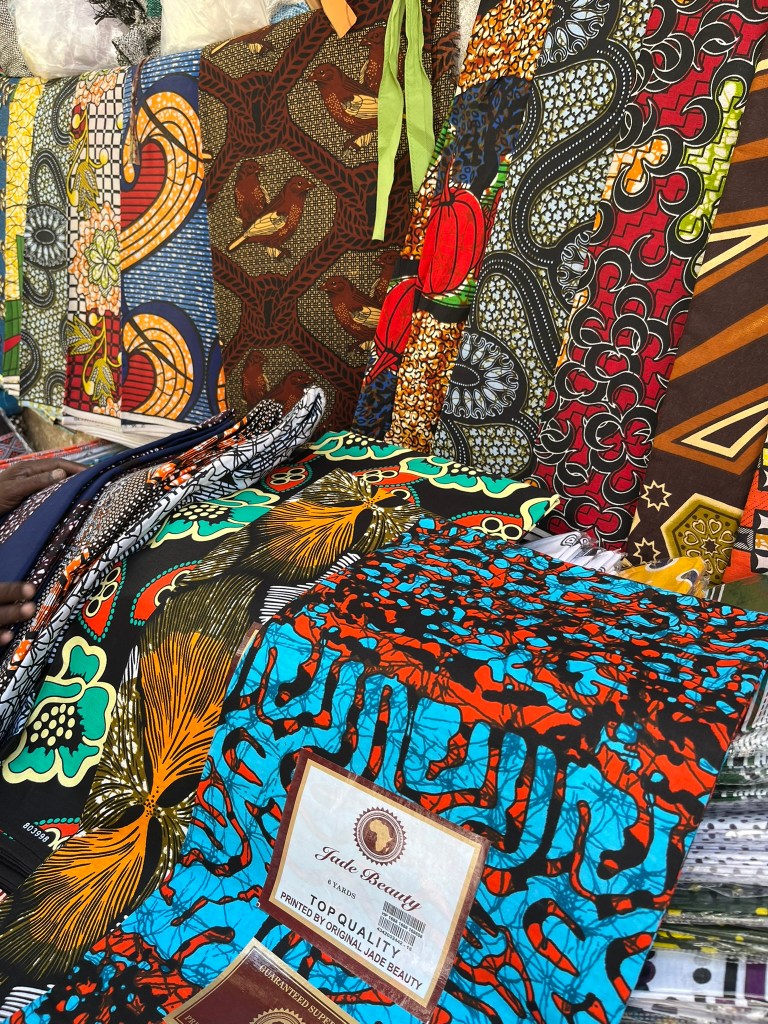
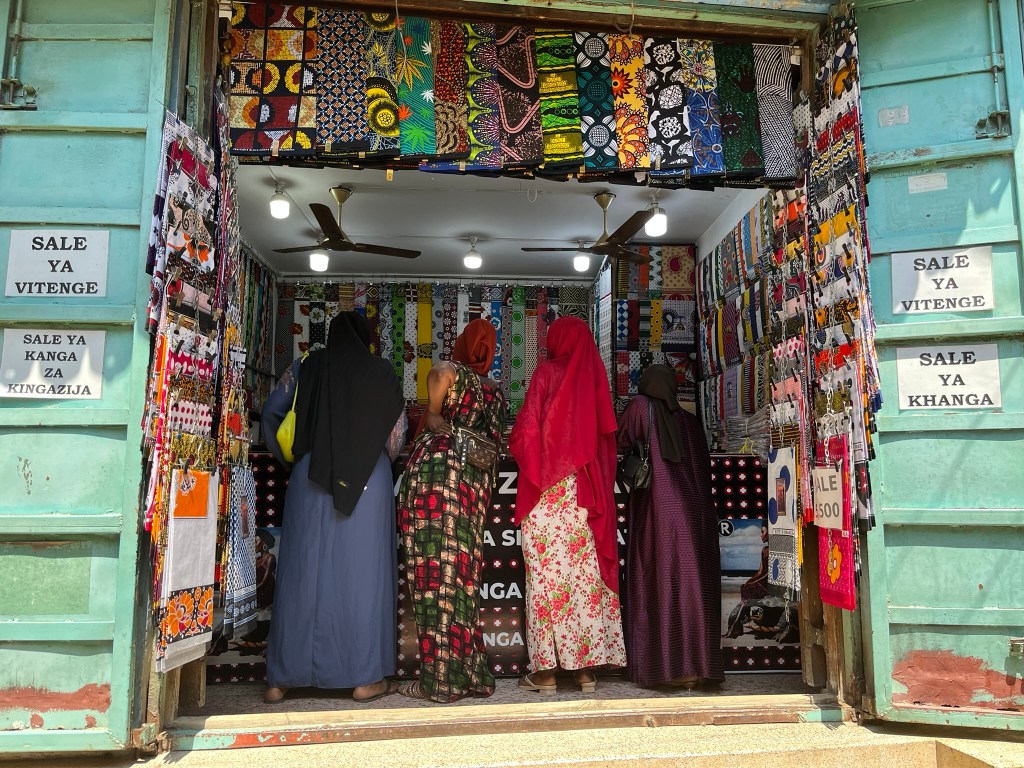
We eventually ended up on Khanga street where the iconic and brightly pattered cotton cloth that is worn by women on the island can be purchased. What was most interesting is that the khanga you choose to wear on a particular day is not just a fashion choice. Local women use their choice of patterns and colors to send subtle messages to their neighbors, husbands, rivals or community.
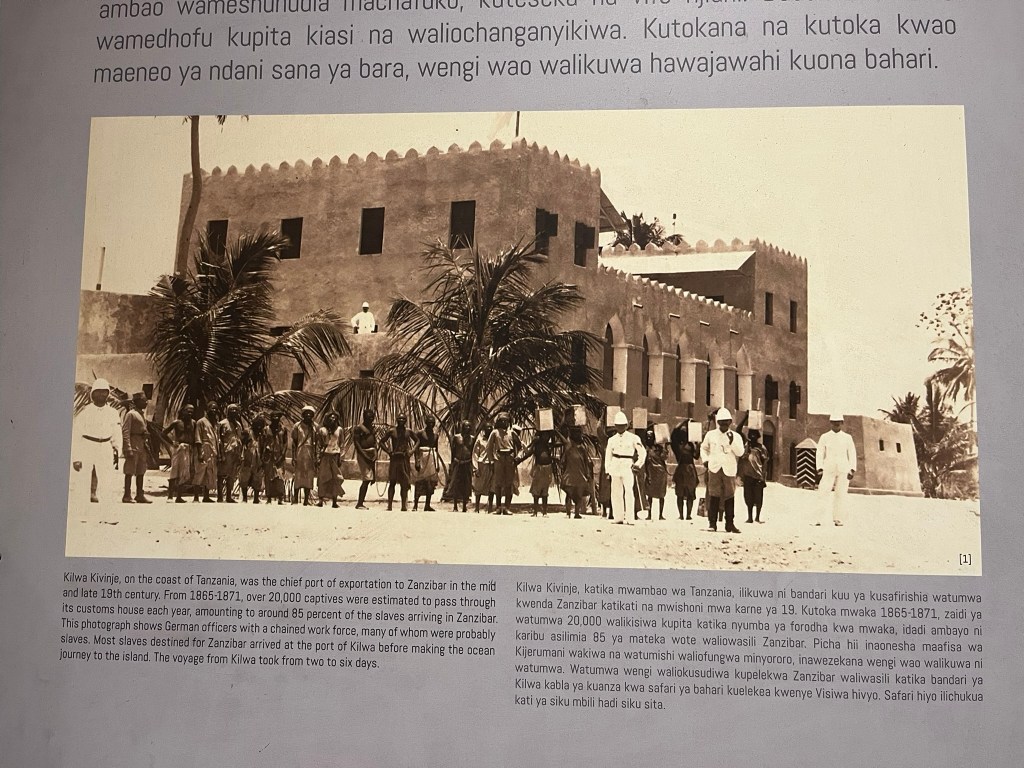
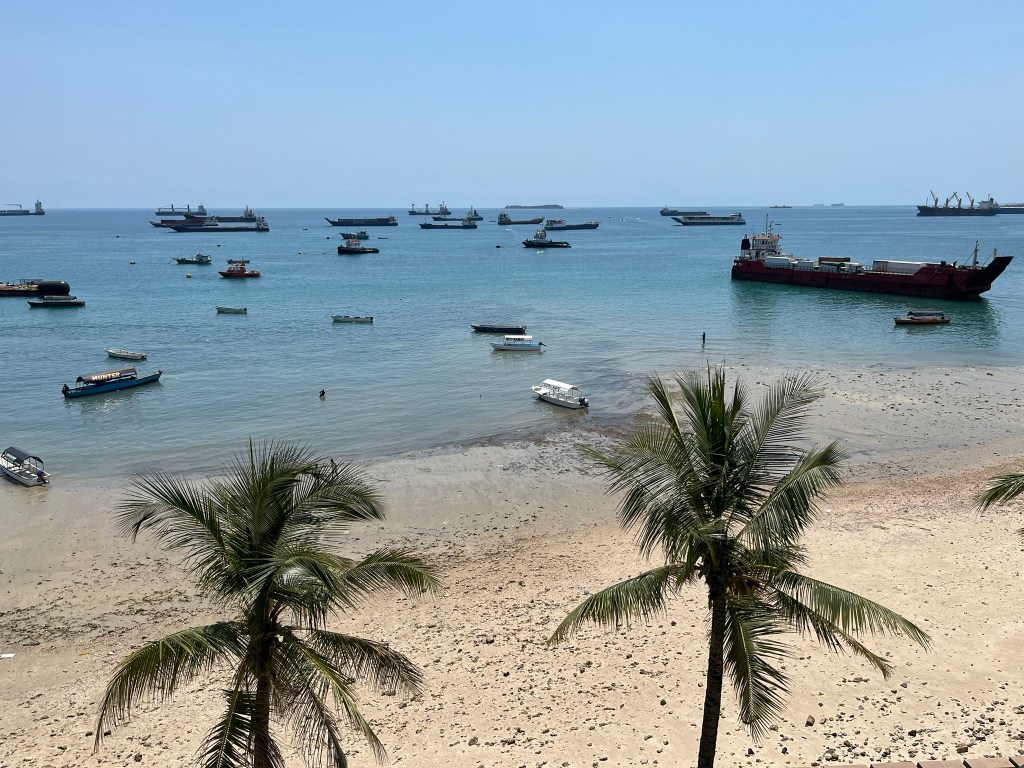
From here we slowly made our way back to the seafront to a our final stop on the roof of the original Customs House of the island. I was really glad I booked a second walking tour of the city on my last day as the first walking tour had been a little rushed and with only a little bit of information. Having a private guide, I could really take my time and I could ask as many questions as I wanted to. I haven’t spoken about one of the town’s most poignant spots yet – the old slave market and the Anglican church, which I will give its own blog post.


 Colette's Grand Detour
Leave a comment