Day 11 (7th August 2025)
The route to the Serengeti requires a bit of grit and determination. Once you have exited the rim of Ngorongoro crater you weave your way down the steep hillsides to the flat plains below of the Ngorongoro Conservation area. This is a mixed land use area with the Maasai living side by side with the wildlife. Across the horizon you can see traditional boma villages dotted around with their distinct round houses with thatched roofing. The shape of the roof provides cooler air in the hottest months of the year.
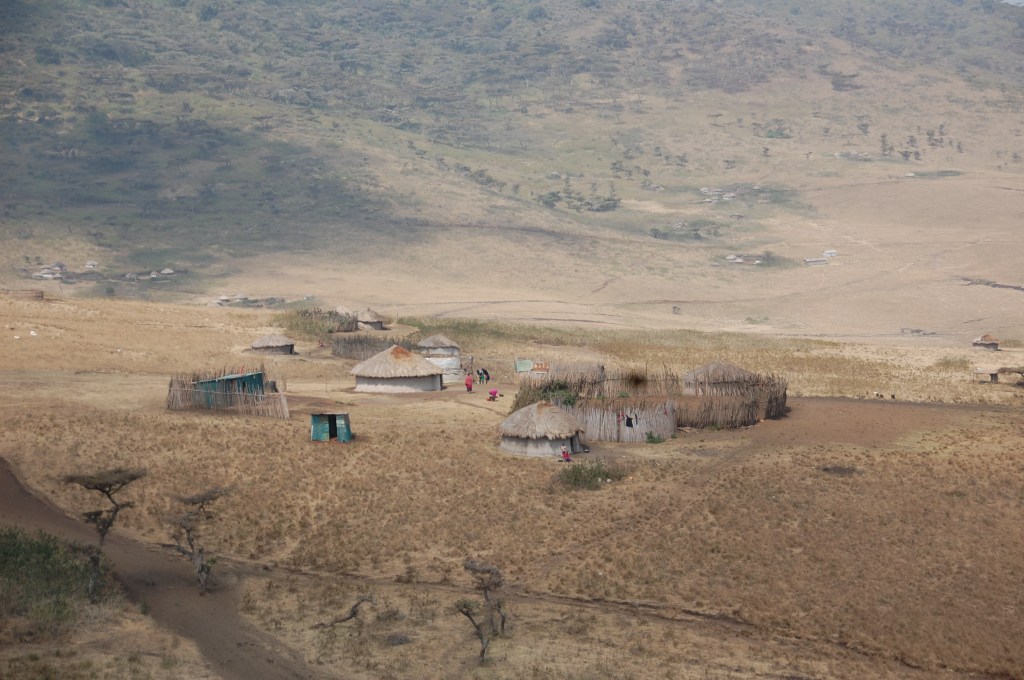
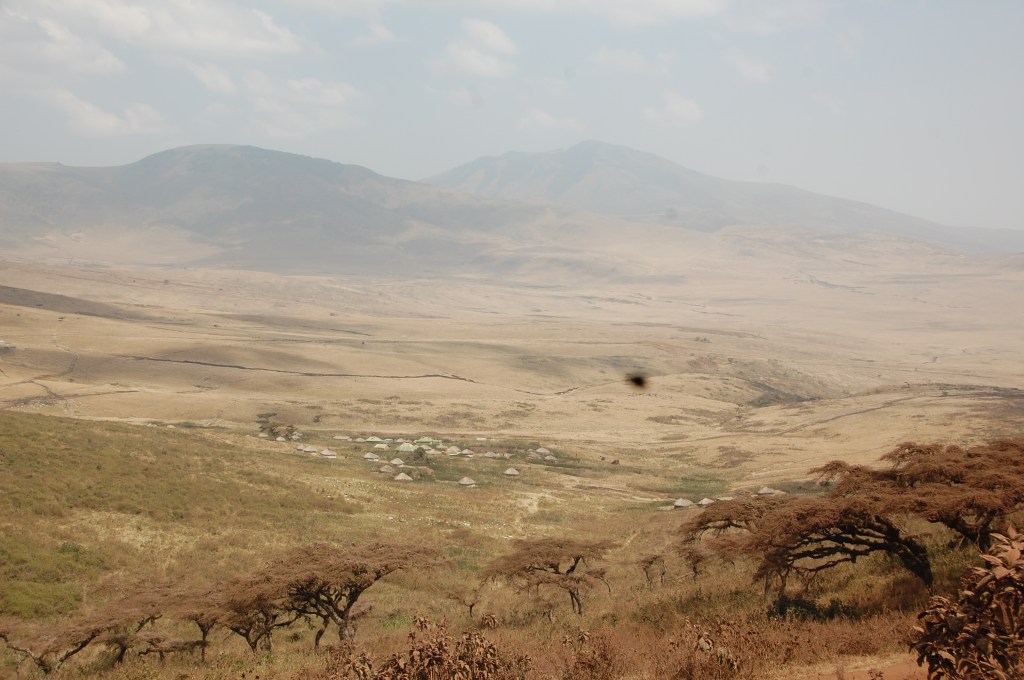
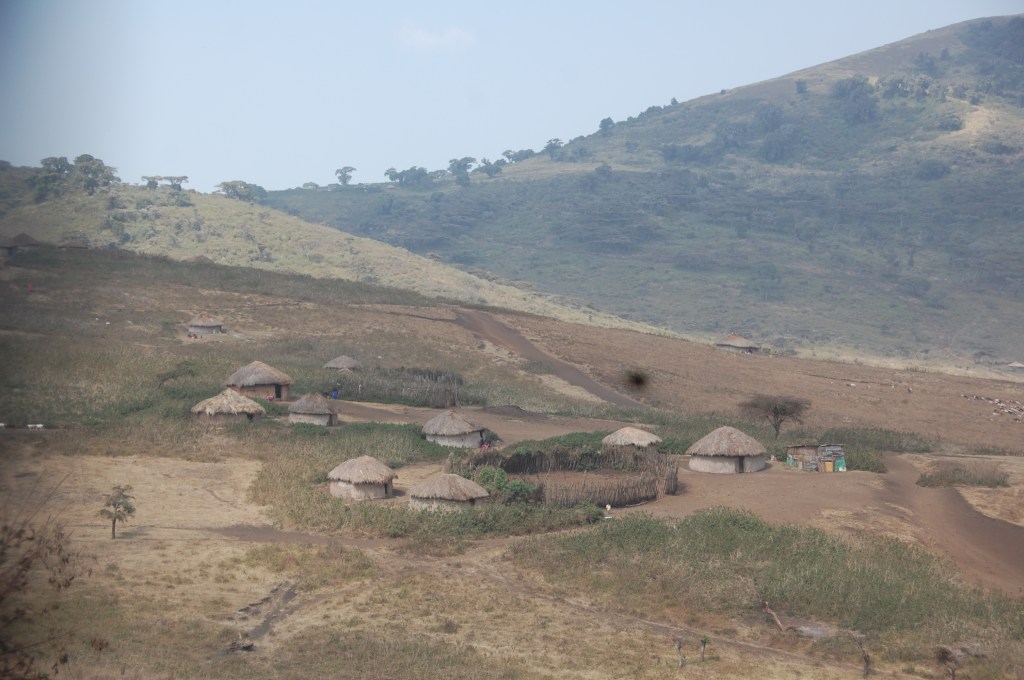
You will see huge herds of Maasai cattle being shepherded to fresh grass everywhere in the conservation area except for in the crater itself, where it is not allowed. The Maasai wear traditional red cloth wraps as a way to stand out and scare off any predatory wildlife that might be lurking. And those herding the cattle are typically young boys and girls under 12 years old, with young warriors of 18-24 years old joining them to provide protection from the wildlife.
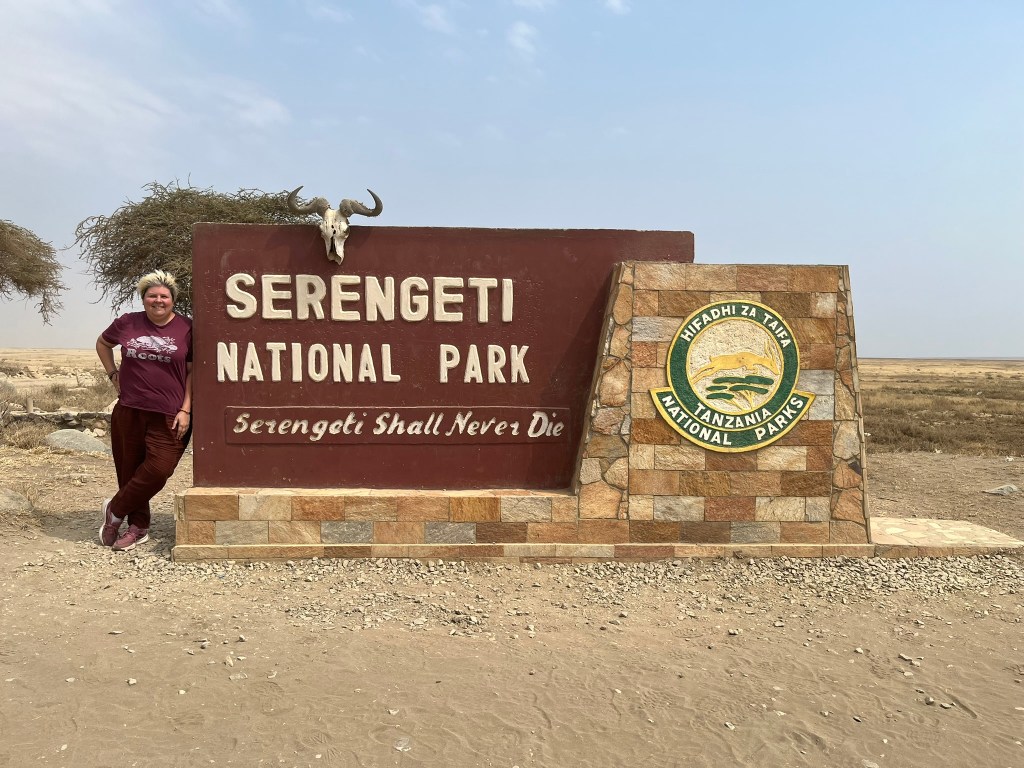
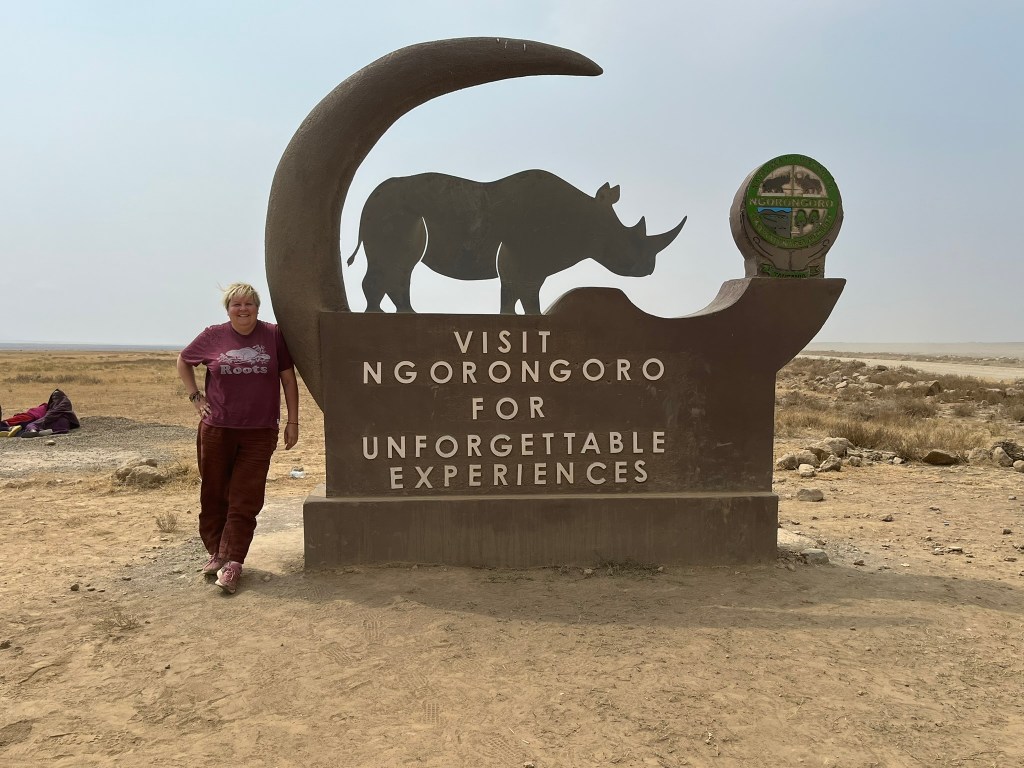
Once you are down on the flat area you need about an hour to get the gate that divide’s Ngorongoro Conservation area and the Serengeti. There are some nice signs welcoming you to the parks so it’s worth a quick stop to take photos. Thirty minutes later you will arrive at the main gate for the Serengeti National Park where you meet up with convoys of other land cruisers entering and exiting the park. You need 20-30 minutes here for the driver to do the paper work for permission to enter the park so it makes a good toilet and coffee stop. During peak season there will be 100’s of vehicles parked up waiting to enter. But don’t worry, once you are in the park, everyone disperses pretty quickly.
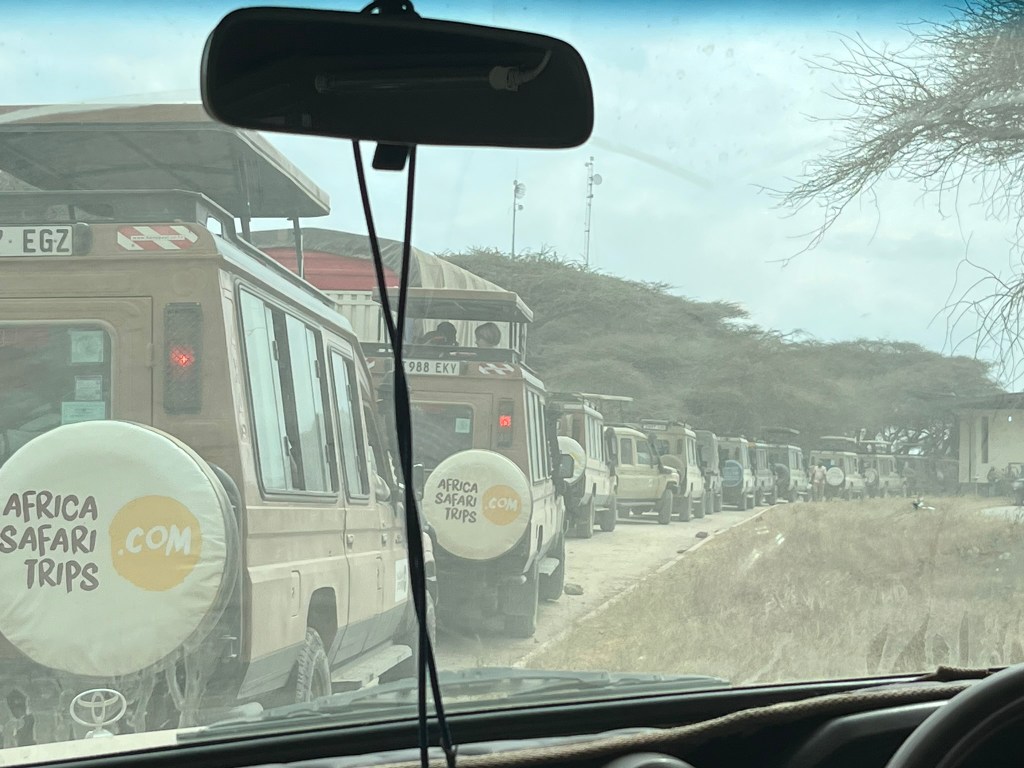
The road itself between the rim of the crater and the park entrance is extremely bumpy and dusty. You need to be prepared to have an ‘African massage’ for a couple of hours and sometimes in total whiteout conditions as dust is whipped up from the land cruisers and trucks speeding along in both directions. The landscape is stunning though. As you move away from the ancient volcanoes the savannah opens up as far as the eye can see. Even in the areas that the Maasai take their herds there are still giraffe ambling along to find fresh acacia to munch on and antelopes in abundance.
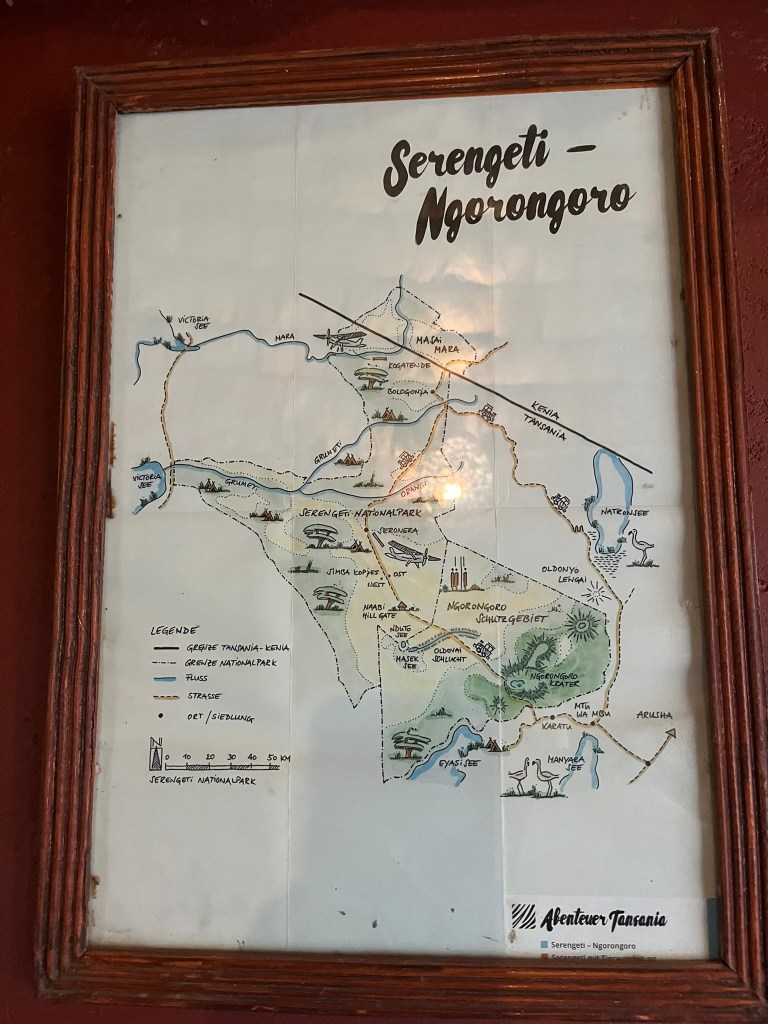
The Serengeti National Park is actually much much bigger than the Maasai Mara (the Kenya part of this ecosystem). In fact it is more than 10 times bigger. So we wouldn’t be exploring the entire park in the time we had here, instead focusing on the Central part of the park. Each part of the park is varied in its habitats and we learnt that the great migration isn’t simply the movement of the animals in search of fresh grass from the Serengeti to the Maasai Mara over a few months in the Summer, but rather a year round cycle where animals like the wildebeest, zebra and antelopes move to different parts of the Serengeti. They give birth to their young in the south where there is vast open short grassland in the early months of the year, then move to the East, then up to the North of the park, finally crossing over the Mara River to the Maasai for a few short weeks and then the cycle repeats with the animals eventually heading back South.
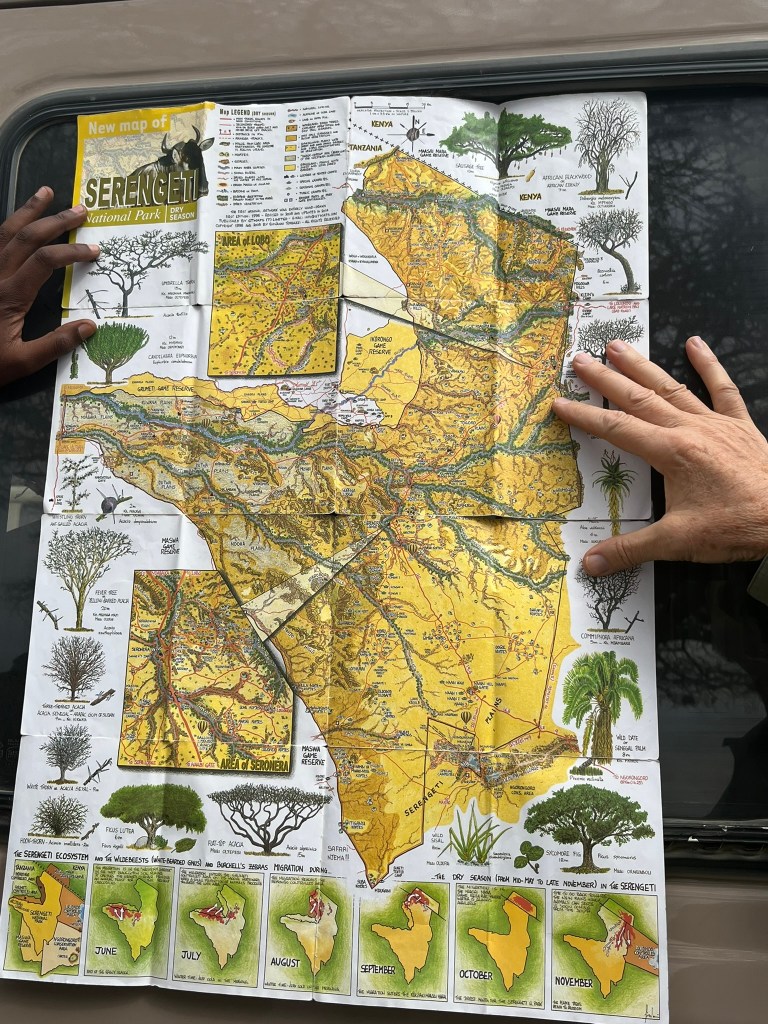
I hadn’t appreciated that it was a year-round cycle that followed the climate and weather patterns. This means that the Serengeti is good for game drives all year around really, with different parts of the park having more abundance of the big herds of zebra and wildebeest at different times of year. Interestingly our guide said the migration patterns had changed significantly over the last few years, with larger herds of animals being recorded, the animals are starting their journey North much earlier in the season as they are eating up the grasslands quicker than they previously did.
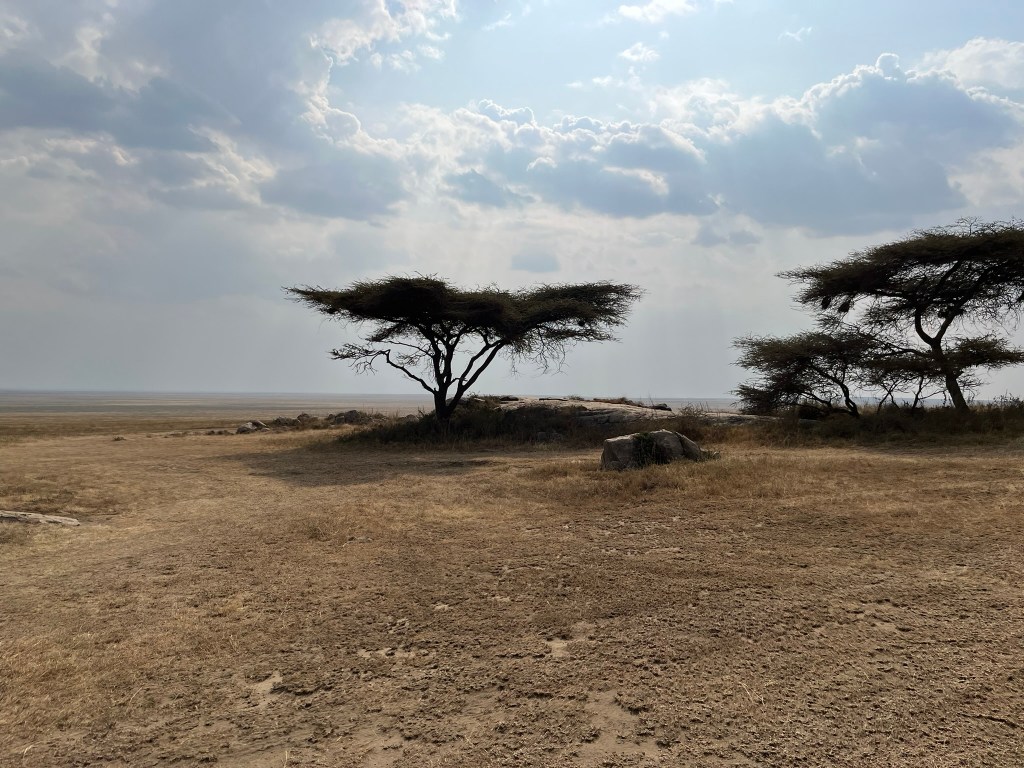
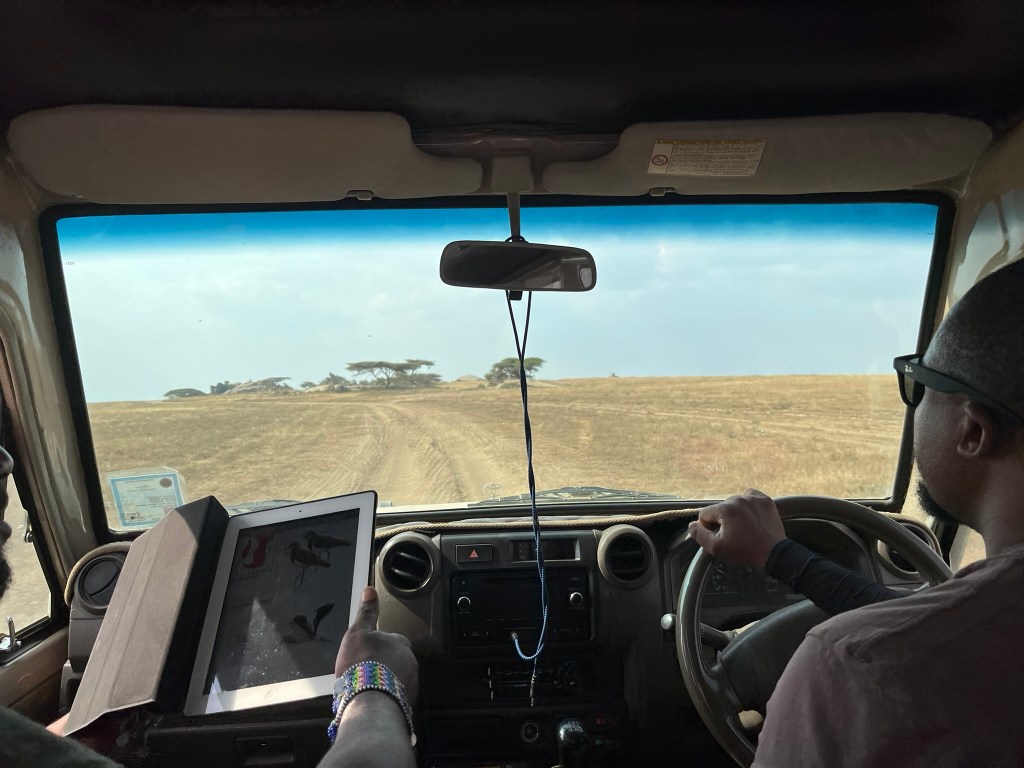
We immediately started our first game drive as soon as we entered the Serengeti National Park, veering off the main dusty road to start our search for wildlife. But I will save that for my next blog…
 Colette's Grand Detour
Leave a comment