Day 5 (1st August 2025)
New day, new adventure! We have now moved to a camp on the edge of beautiful Lake Naivasha. This rift valley lake is fresh water and an open basin, so it has both inflow and outflow of water. Similar to the other rift valley lakes it has a huge range of bird species to see, as well as hippos.

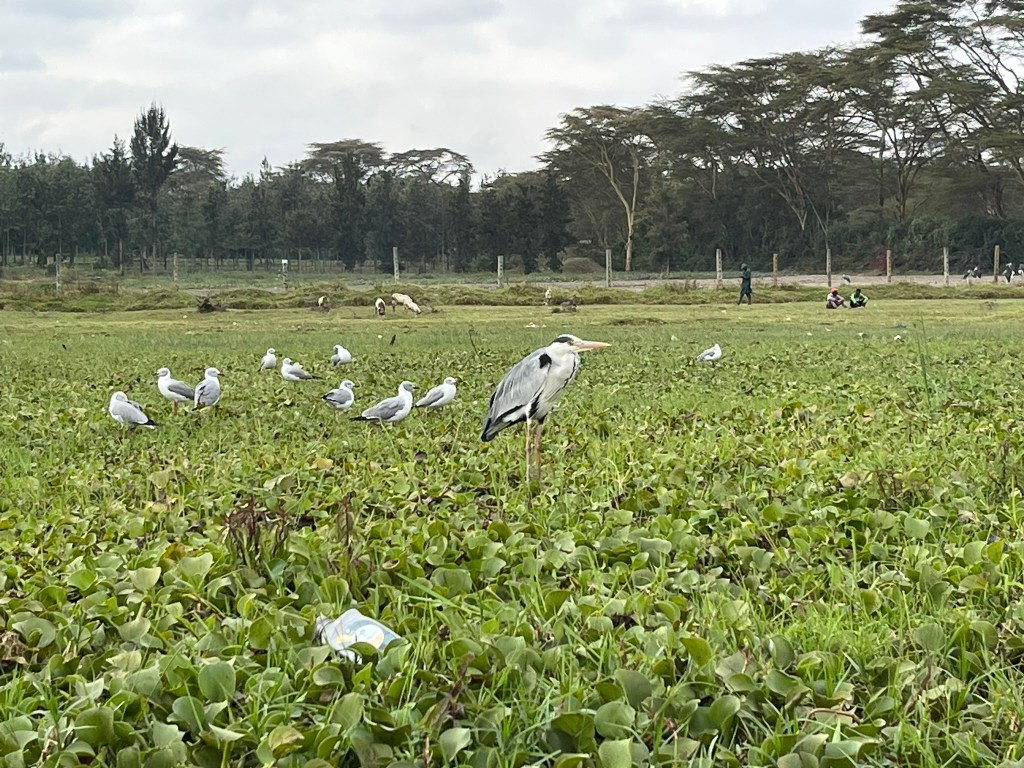

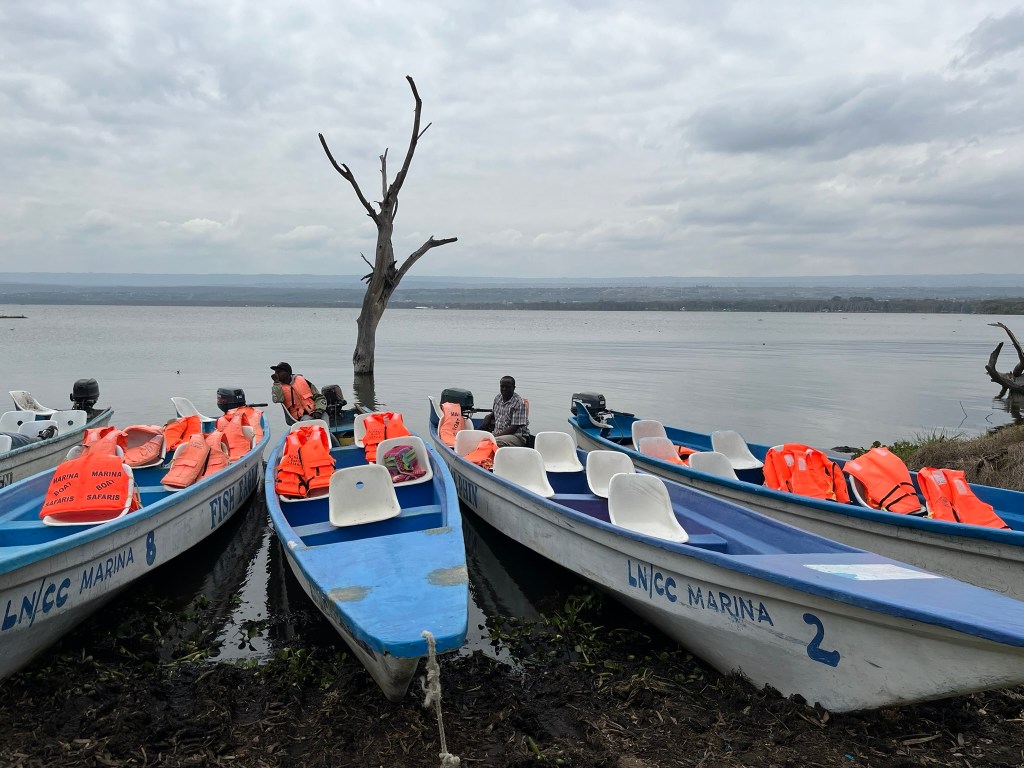
We took a boat safari along the edges of the lake where our guide was able to point out a lot of new birds we had not previously seen such as the Pied Kingfisher, Giant Kingfisher, Hammer Cop, Red-billed Oxpecker, African Spoonbill and African Paradise Flycatcher. As well, as probably 30 other species. We were at times genuinely surrounded by so many birds it was hard to know where to look. The easiest bird to spot is the Africa Fish Eagle, sitting at the very top of the flooded trees surveying its potential dinner options. Our guide threw a fish into the water to see if we could entice one to dive for its dinner, but a Giant Kingfisher swooped in first and flew off into the distance.
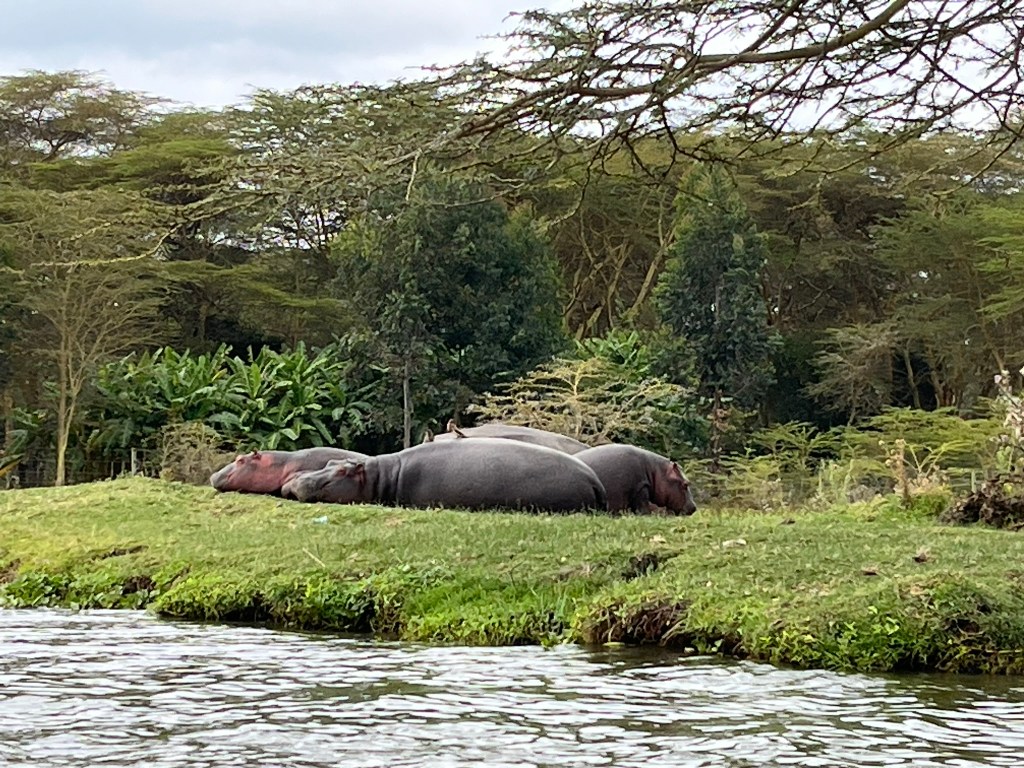
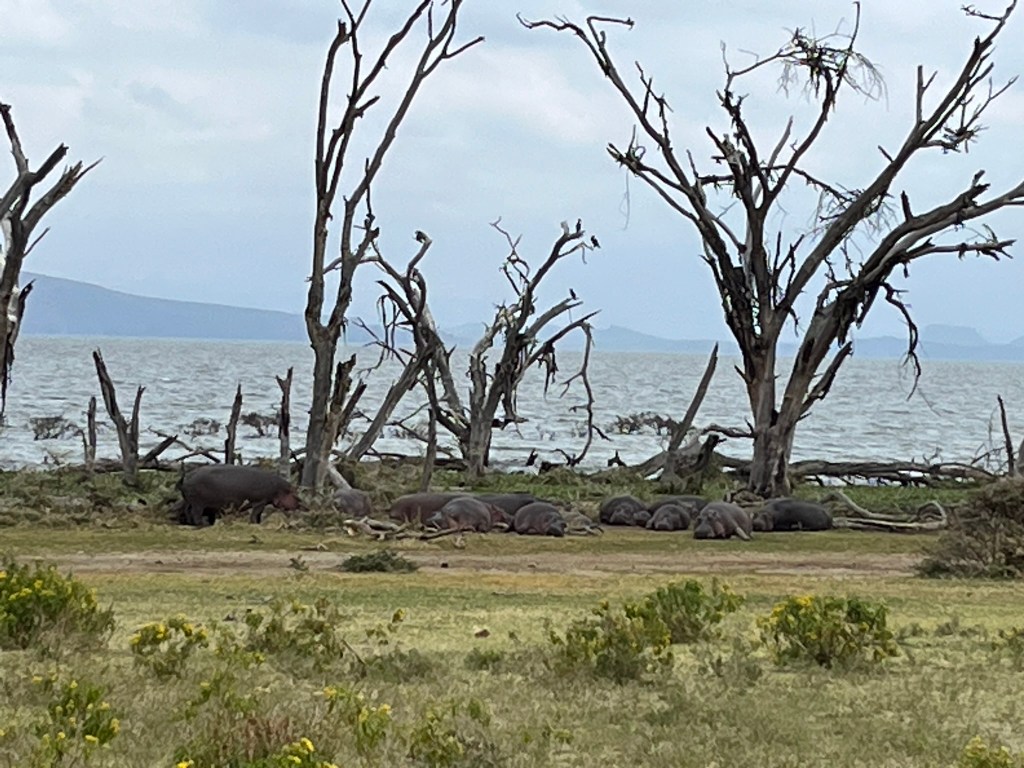
As we slowly edged along the lake we saw a bloat (yes, that’s the collective noun) of hippos on a small island, 2 adults surrounding 2 babies. It was quite chilly and overcast, perhaps suggesting why the hippos were out of the water. Typically they spend a good portion of their day in submerged shallow water to keep cool as well as protect themselves from the sun. And only come out to graze and feed on land at night. This is because although their skin is extremely thick and tough (~6cm) it dries out and cracks easily in the sun, making them easy targets for infections. They also don’t have any sweat glands so its easy for them to overheat. Instead they secrete something referred to as ‘blood sweat’ which provides them natural sunscreen protection and has antibacterial properties. When I looked up what other species are closely related to hippos it was interesting to find out that they are closer relatives to whales and dolphins than to any land mammal!
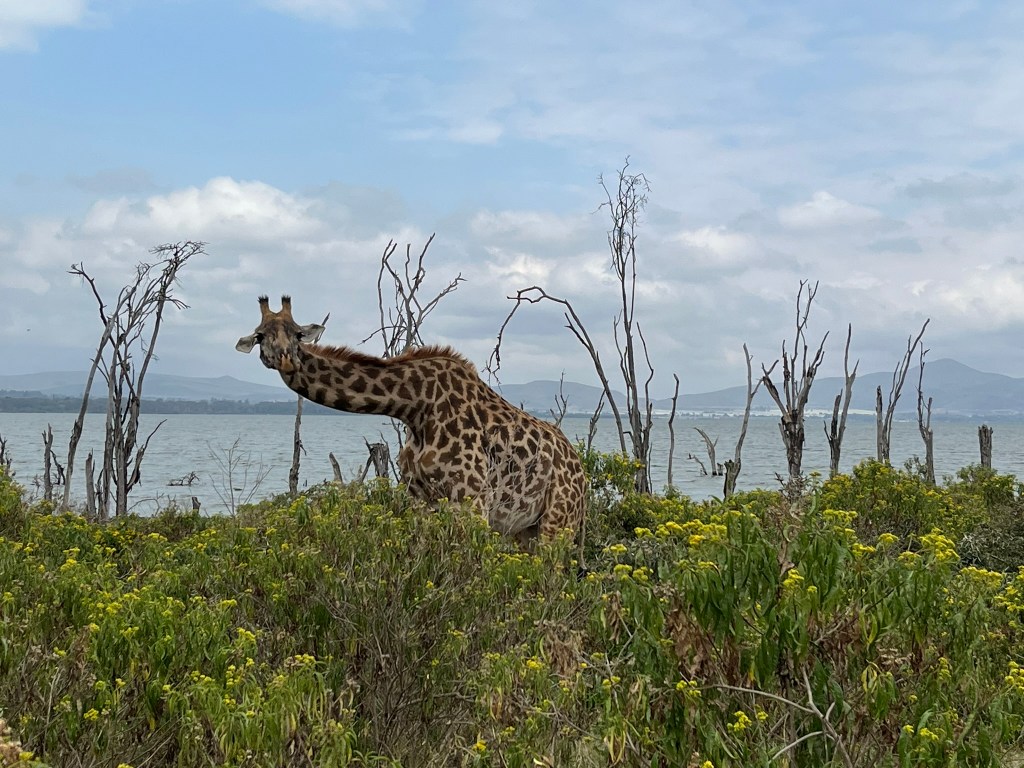
Our boat landed on a private conservancy called Crescent Island where we were able to do a short walking safari. Even before we had gotten out of our boat we had spotted a young giraffe snacking on the acacia trees near the waters edge, and we had to get out of his way as he decided to amble past the boat landing and up past the small guest reception. Giraffes can kill a lion with the strength of their kicks, so it is not advised to stand too close in case they feel threatened.
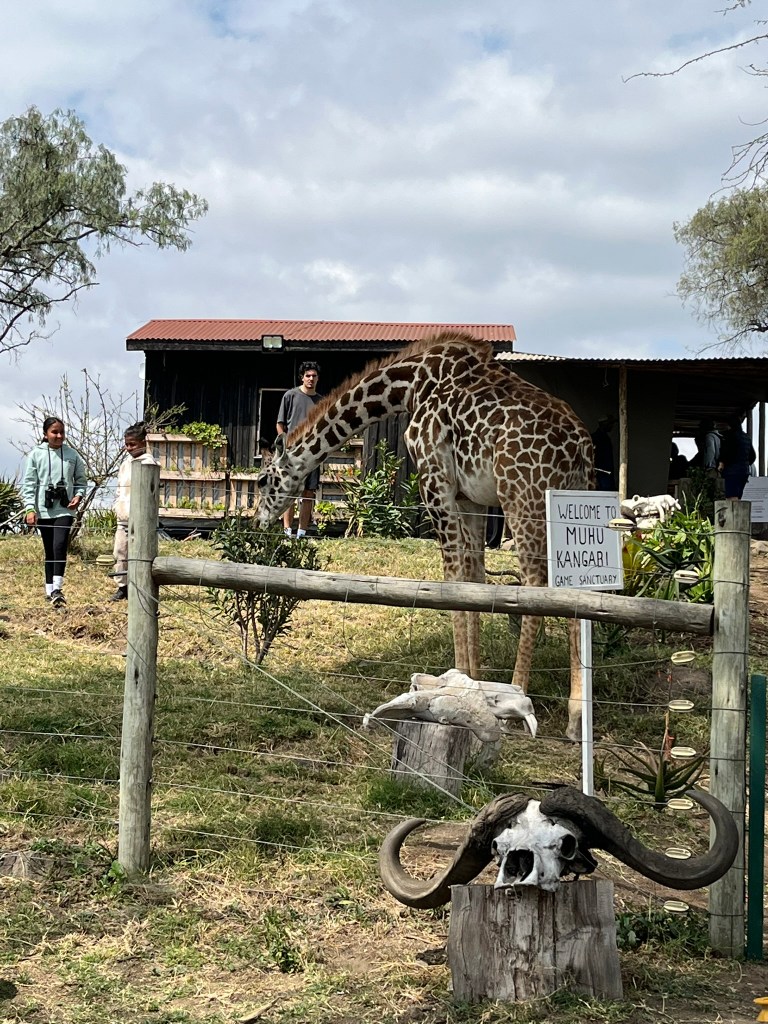
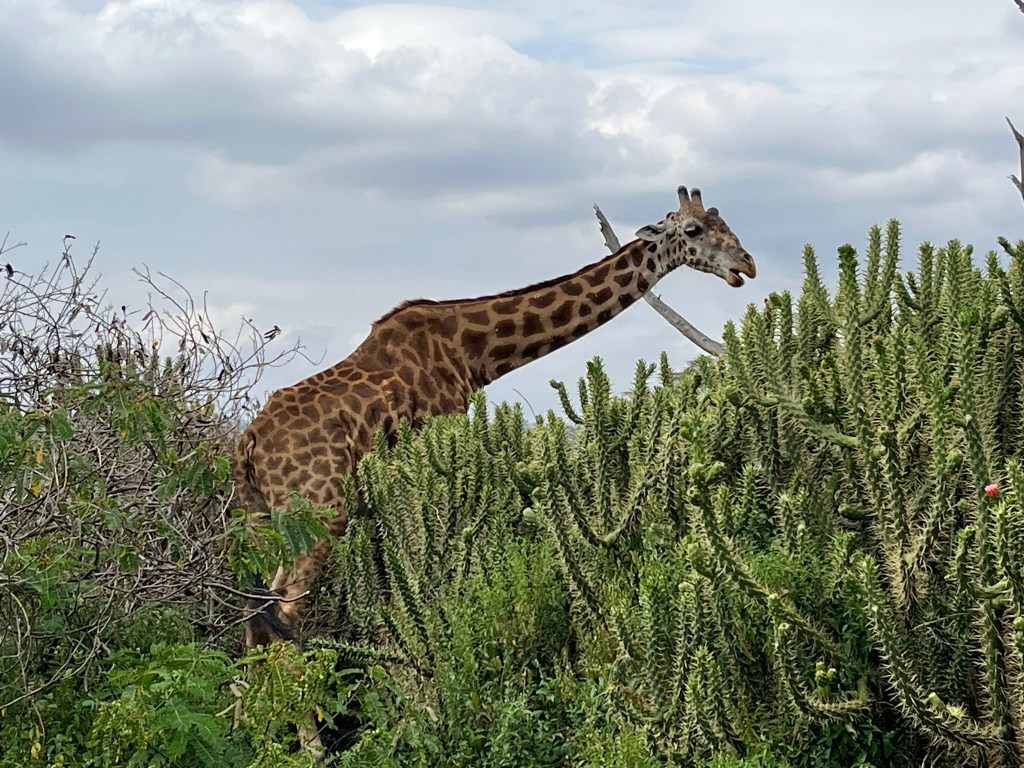
It was incredible to freely walk among the animals (at a safe distance). We saw 3 more giraffes happily eating away and not bothered by our presence, a herd of waterbuck sitting under a tree and a hippo bobbing around amongst the invasive water hyacinth that surrounds the island with a Red-billed Oxpecker happily perched on top of it. Our guide emphasized we needed to give the hippo a wide berth, as whilst they are herbivores, if they feel threatened they can run up to 30km/hr and will kill. Near the water there were a lot of chest-height bushes and shrubs so we were advised to move up to the main path where it would be easier to spot if we were about to accidently disturb an animal.
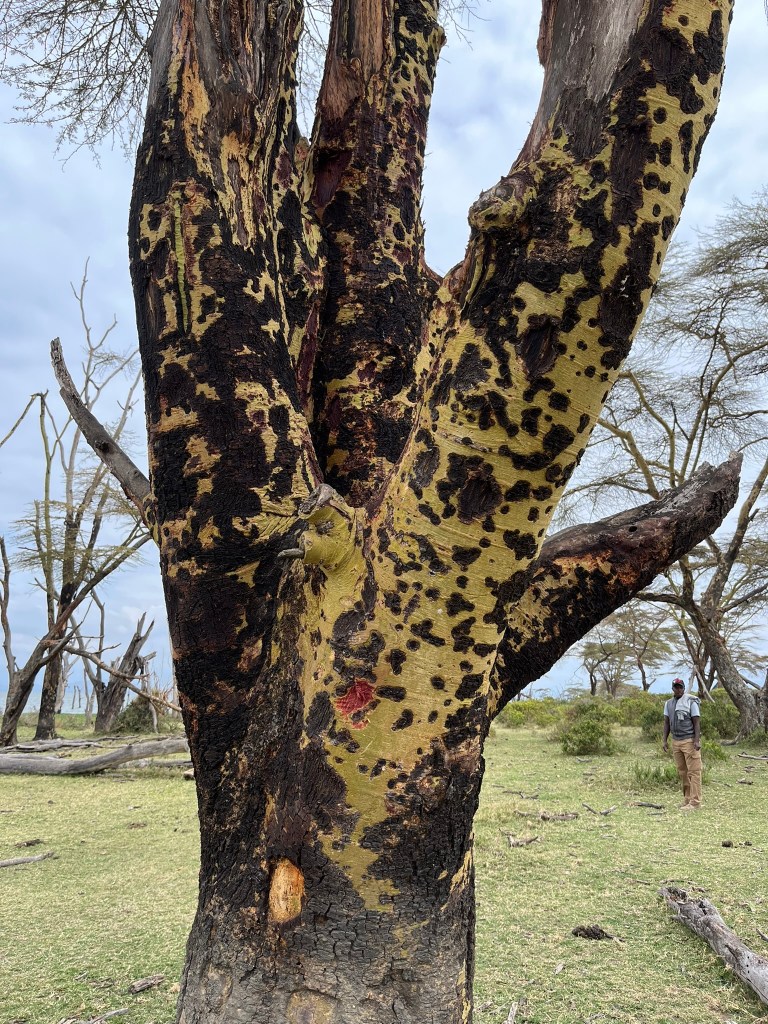
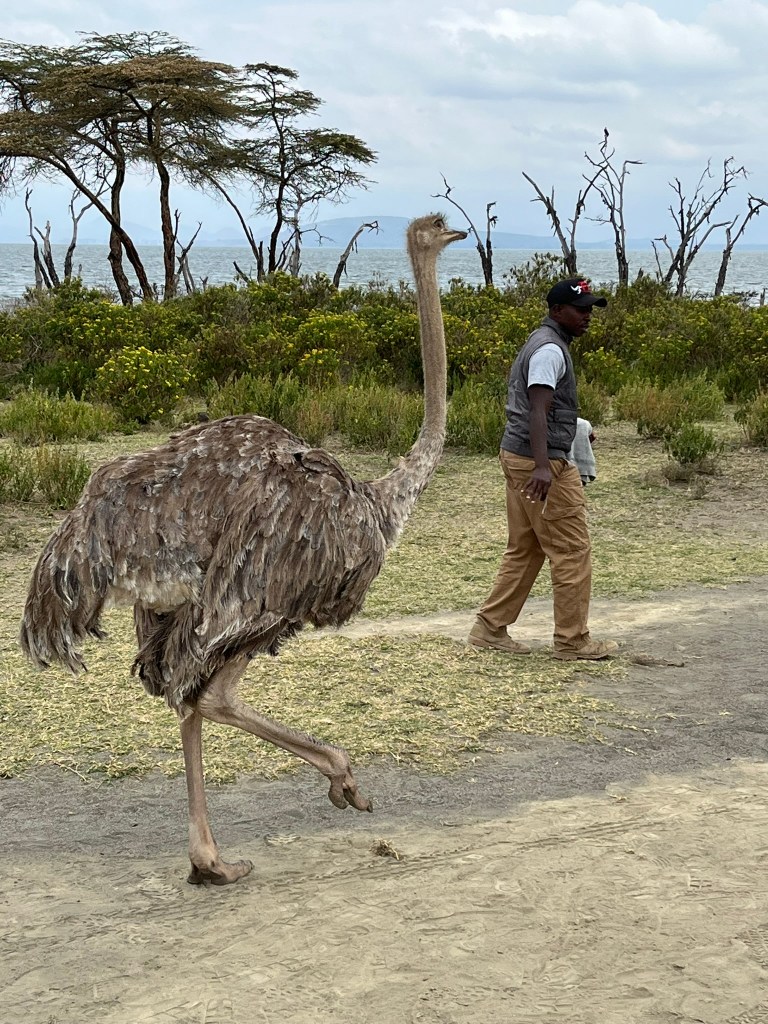
We made friends with an ostrich who decided to join our group and follow us for about 50m up the island’s old runway, which has a claim to fame as having been used for some of the scenes in the film Out of Africa. Eventually we arrived at a spot with another bloat of hippos, a dazzle of zebra and 2 water buffalo who had swum over from the mainland. With the presence of the water buffalo, who are the most dangerous animal in Africa and kill the most people out of all the animals, we had to shift to the top of the hill in the center of the island and give the buffalo a wide berth. As they walked amongst the zebra, they occasionally stopped and looked up directly at the various walking groups moving to safer ground, so they were definitely aware of our presence.
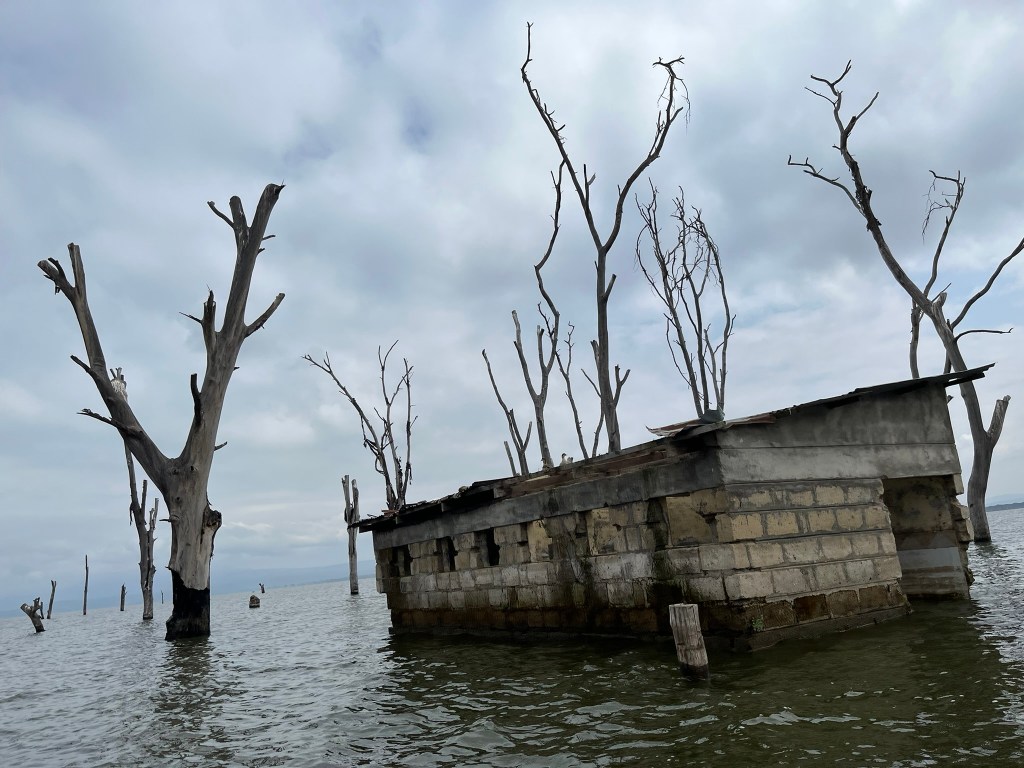
This lake like the others along the rift valley is also experiencing catastrophic changes to its environment. Like Lake Nakuru it has grown significantly in recent years, flooding the camps and infrastructure that previously sat at the edge of the lake and forcing camps to move back to higher ground. As our boat returned to the mainland we could see the remains of old permanent camps, and abandoned buildings.
This afternoon we had a conservation talk by someone from the Wildlife Research and Training Institute. I’m going to write a separate blog on this topic but it was interesting to be observing the environmental challenges that Kenya faces firsthand and have an expert talk to us on the topic.
 Colette's Grand Detour
Leave a comment