Day4 (31st July 2025)
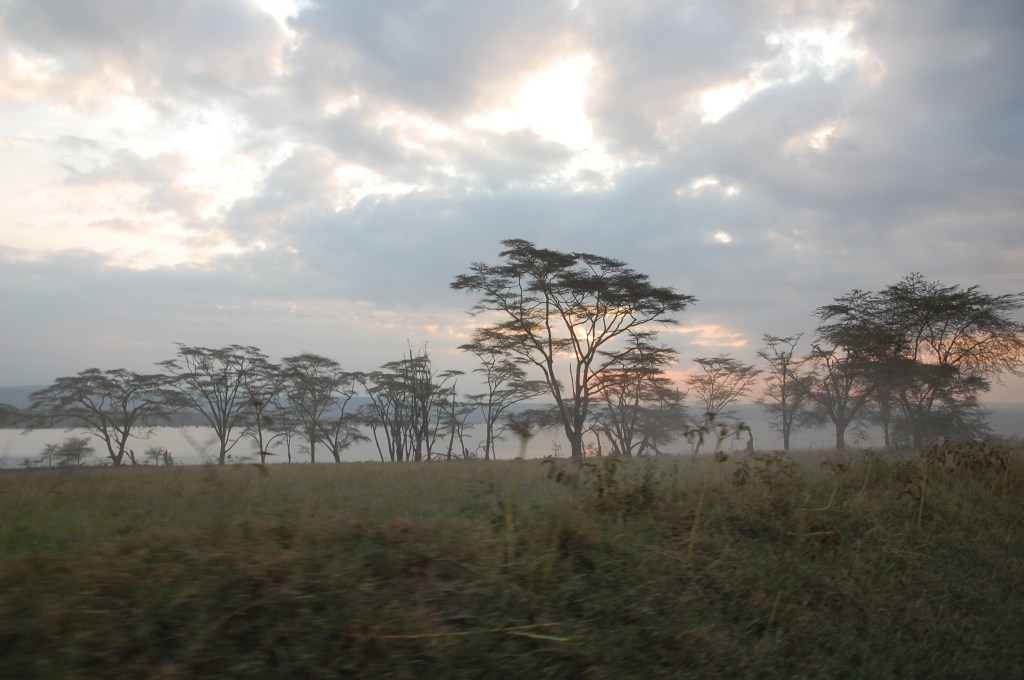
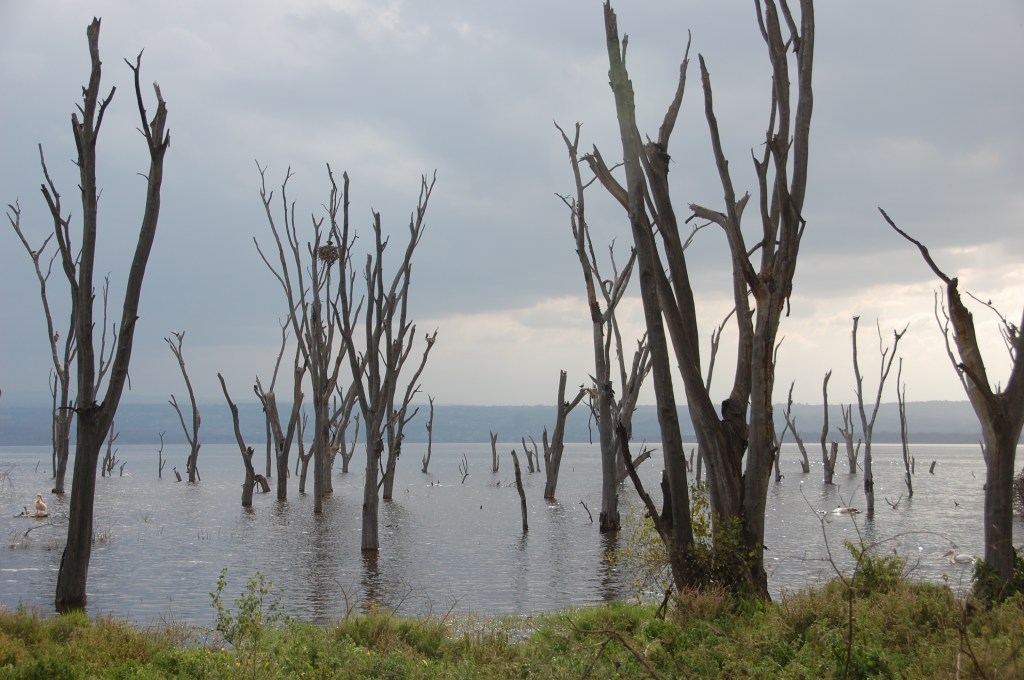
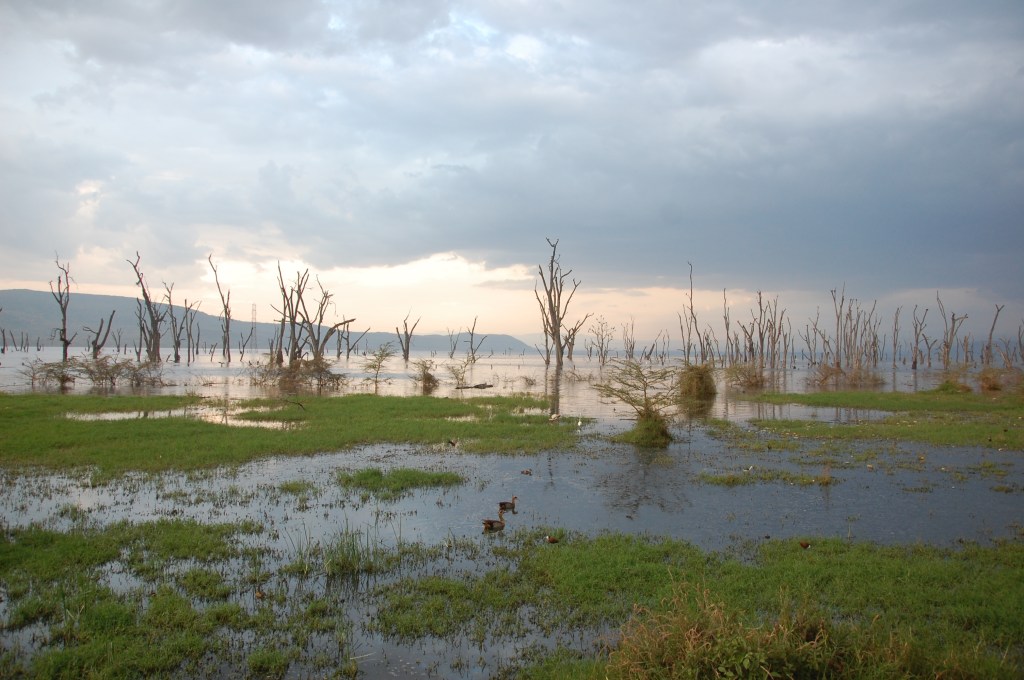
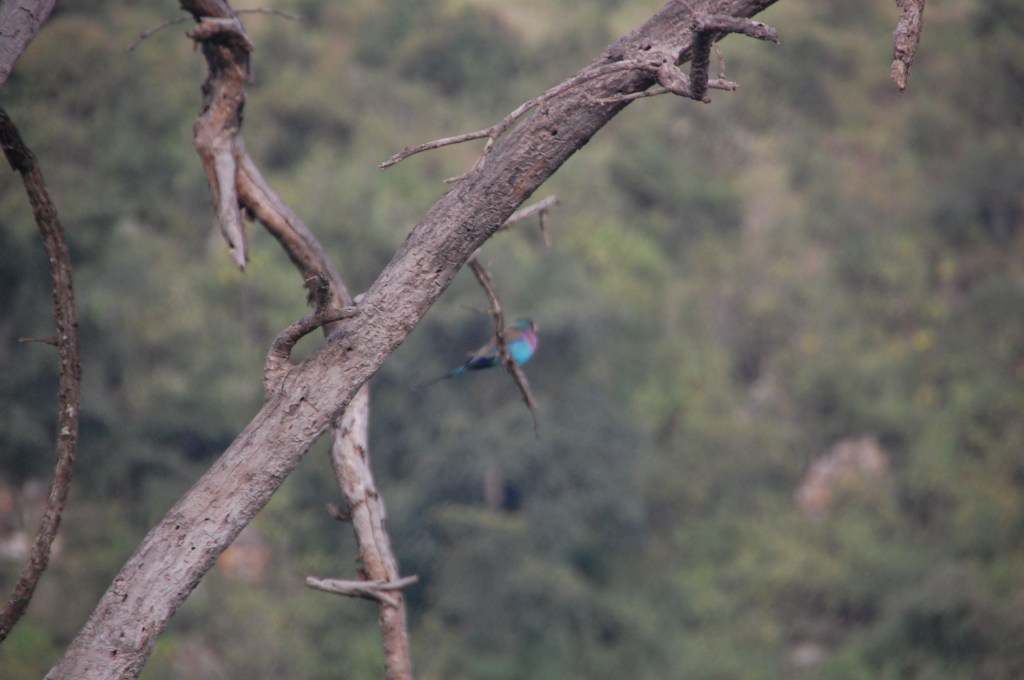
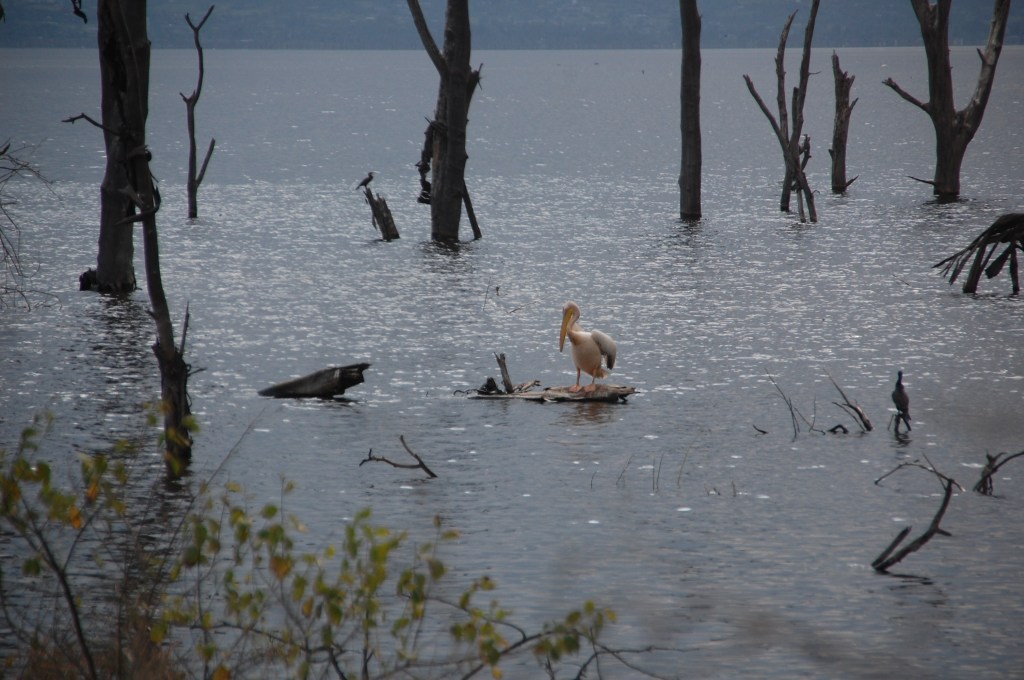
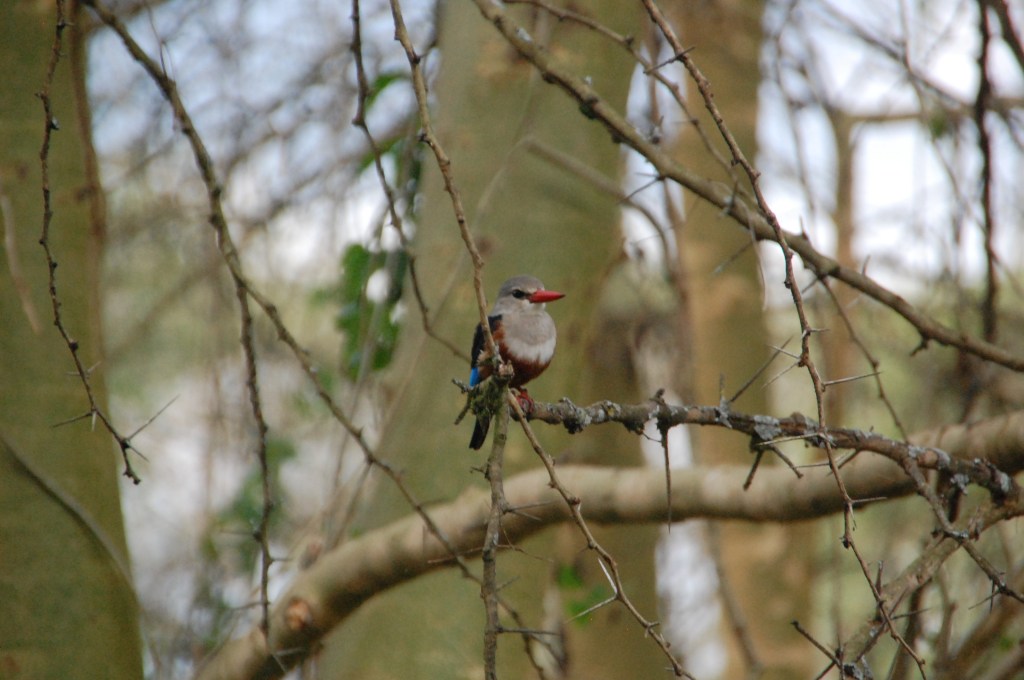
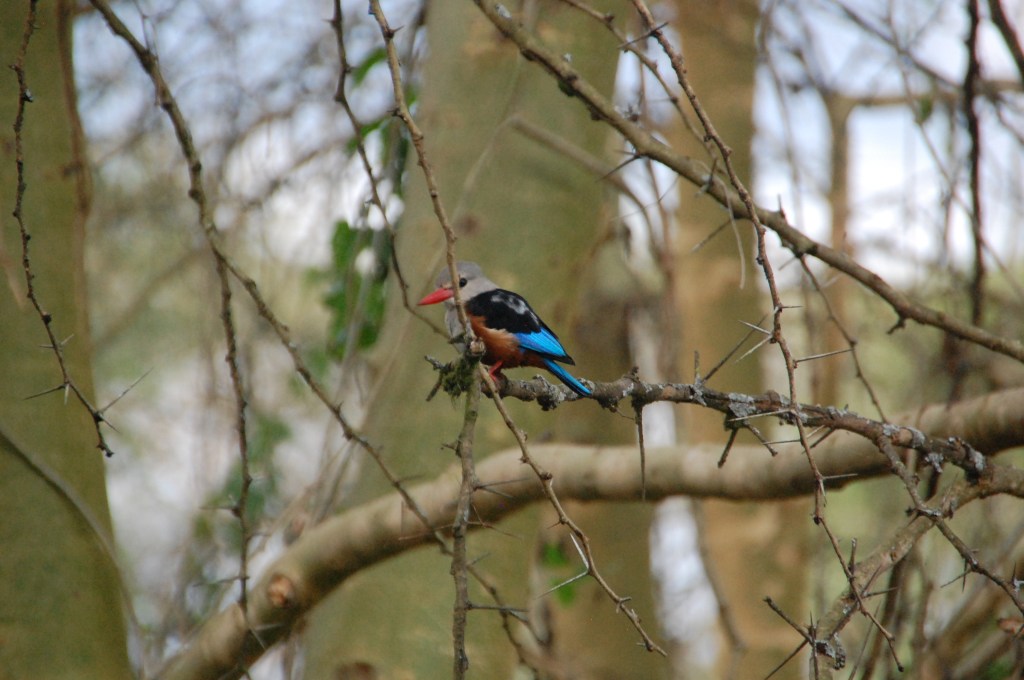
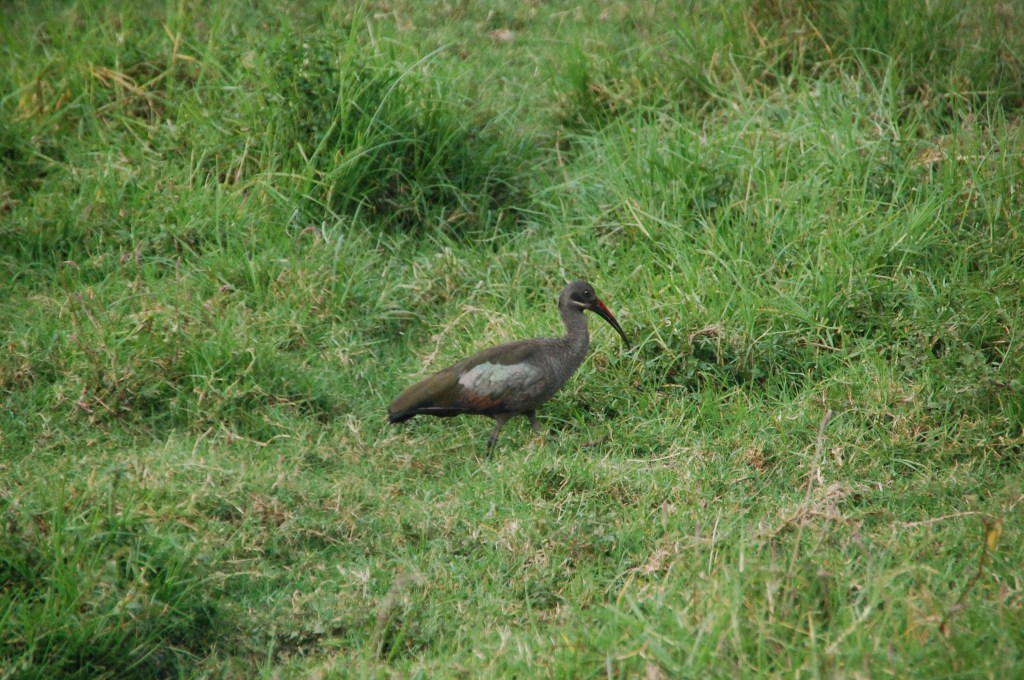
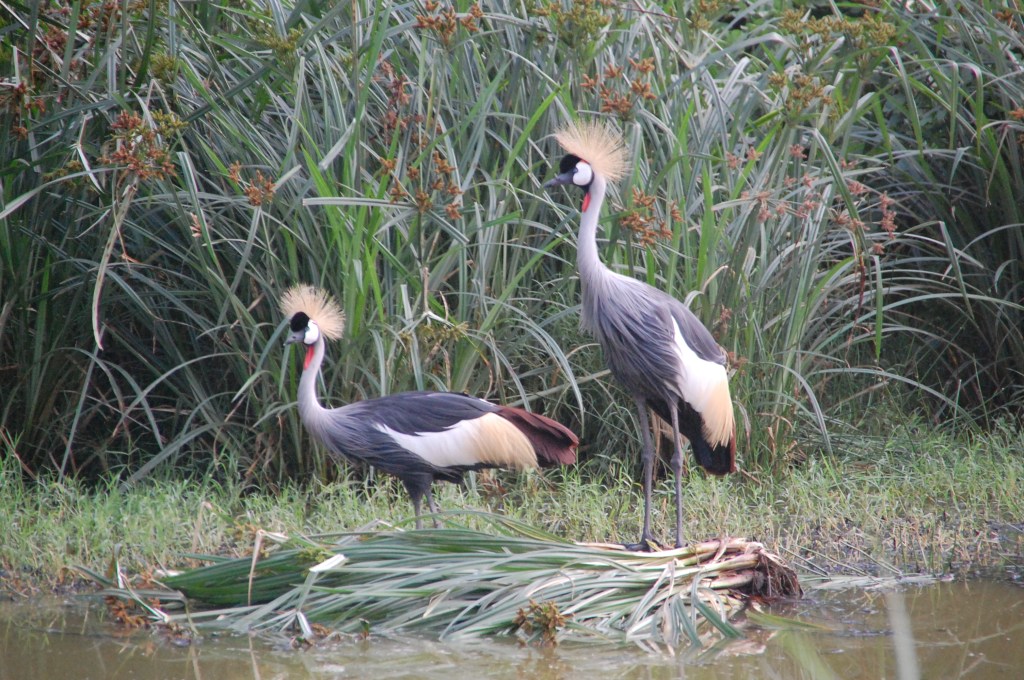
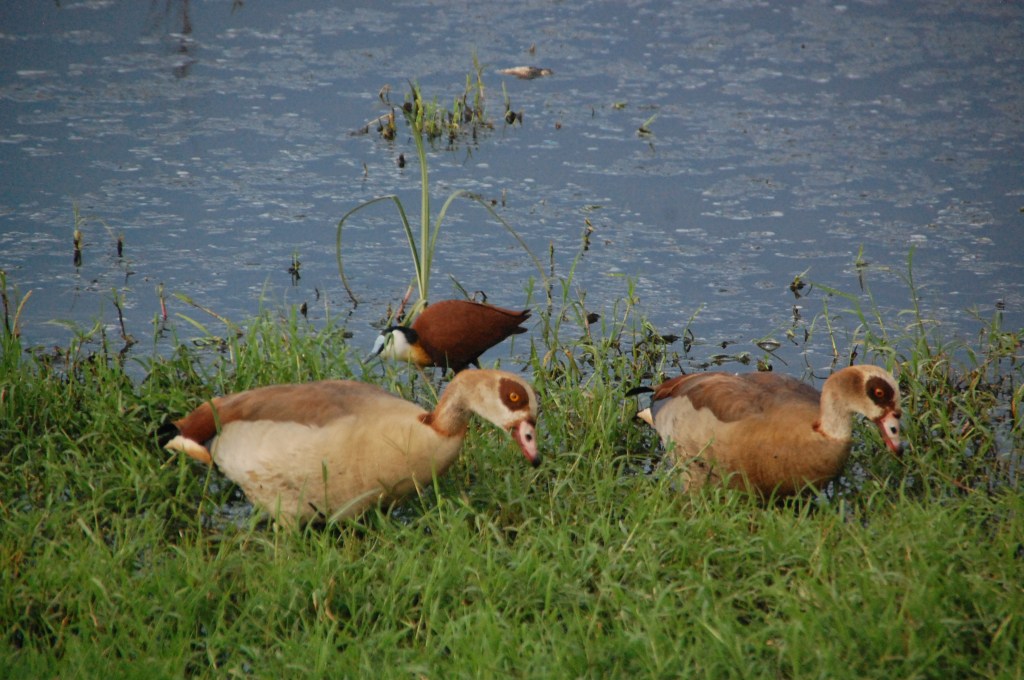
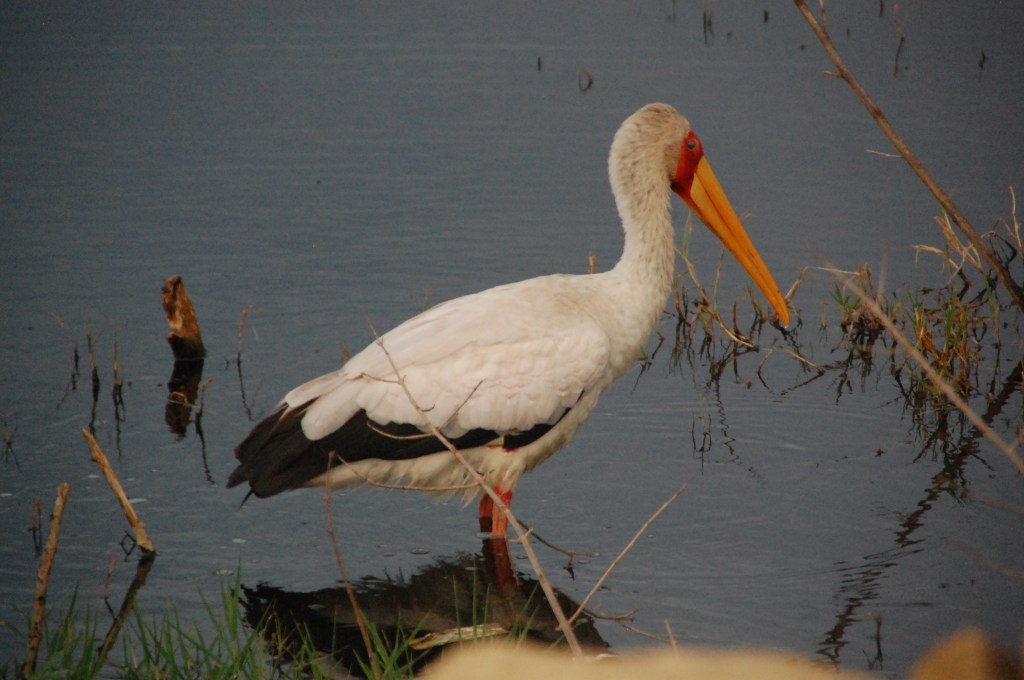
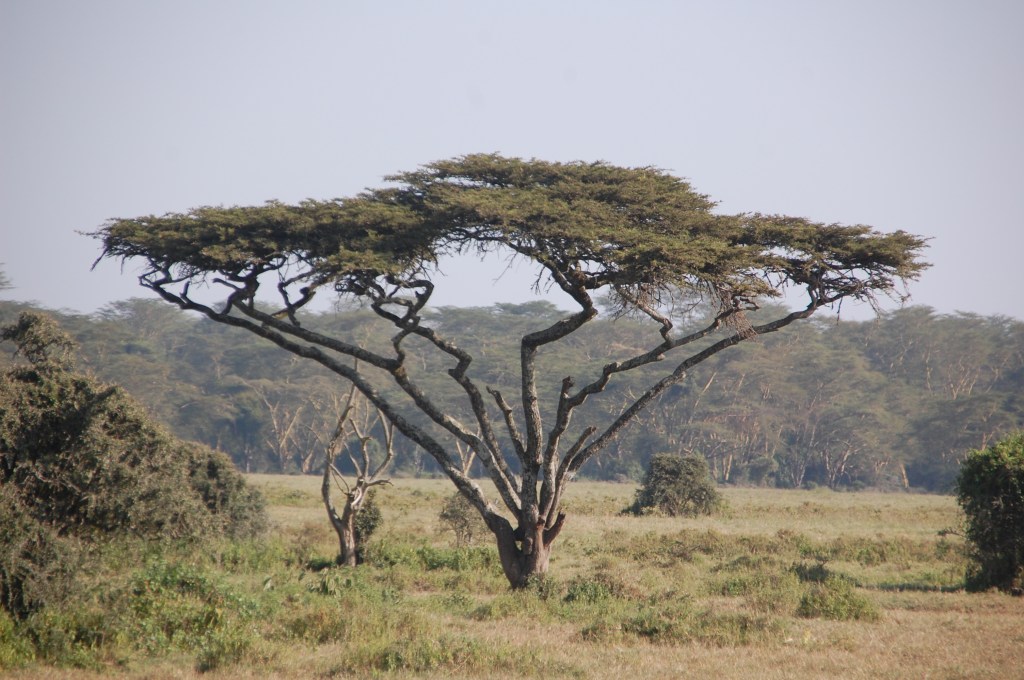
We had a brilliant day exploring Lake Nakuru National Park with game drives in both the morning and afternoon. Over our 2 days in the park we have seen a huge variety of wildlife. The number of birds in the park, attracted by the lake and its swampy edges is incredible. Sometimes you could find easily 10+ species sitting on the branches of a single tree. The land that has been flooded as the lake grows in size has expanded the birds habitat and the dead and dying acacia trees in the flooded areas provide excellent perches for the abundant bird life.
My favorite birds that I have see so far are the Lilac-breasted Roller (the national bird of Kenya), the Grey-headed Kingfisher and the Grey-crowned Crane (the national bird of Uganda). But its hard to pick just three as we have seen soooo many species, some of which I have managed to grab a good photo and some which I haven’t.

Mid-way through this morning’s game drive we came across a water buffalo carcass just off the side of the track in the brush. We quickly parked up, knowing that this was likely a fresh kill from the night before by a pride of lions and that they wouldn’t be far away. We knew it was fresh because the vultures and hyenas had not yet arrived on the scene to devour the parts of the animal the lions are not interested in. We knew we might have to wait a little while for the lions to emerge from wherever it was they were hiding, but were happy to watch and wait. And to our surprise within a couple of minutes of parking a lioness emerged from a shady set of bushes and continued to eat the buffalo. We could also see that there was at least 1 male and 1 female lion back in the bushes who occasionally stood up and moved around but didn’t come out into the open. They must have eaten a lot of the animal last night and this morning as we could see main body of the carcass had been hollowed out already.
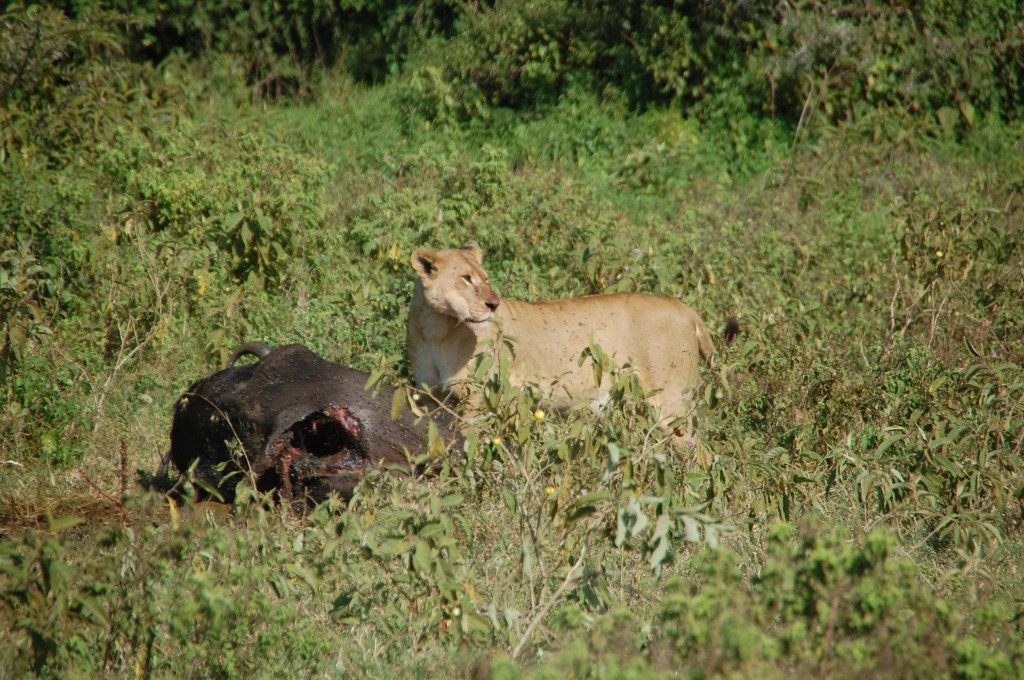
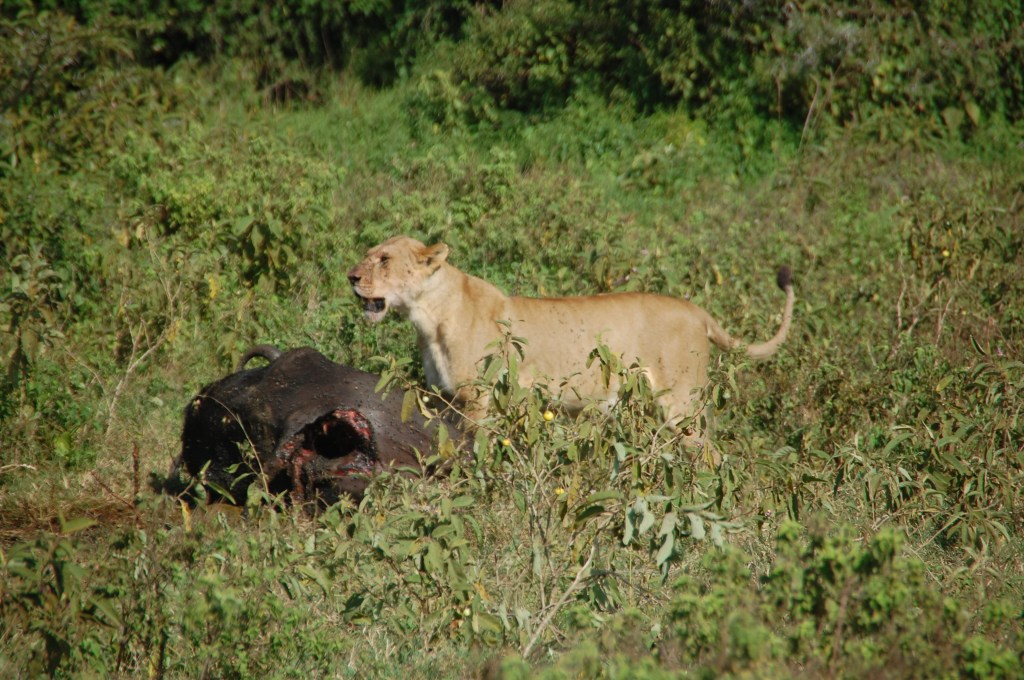
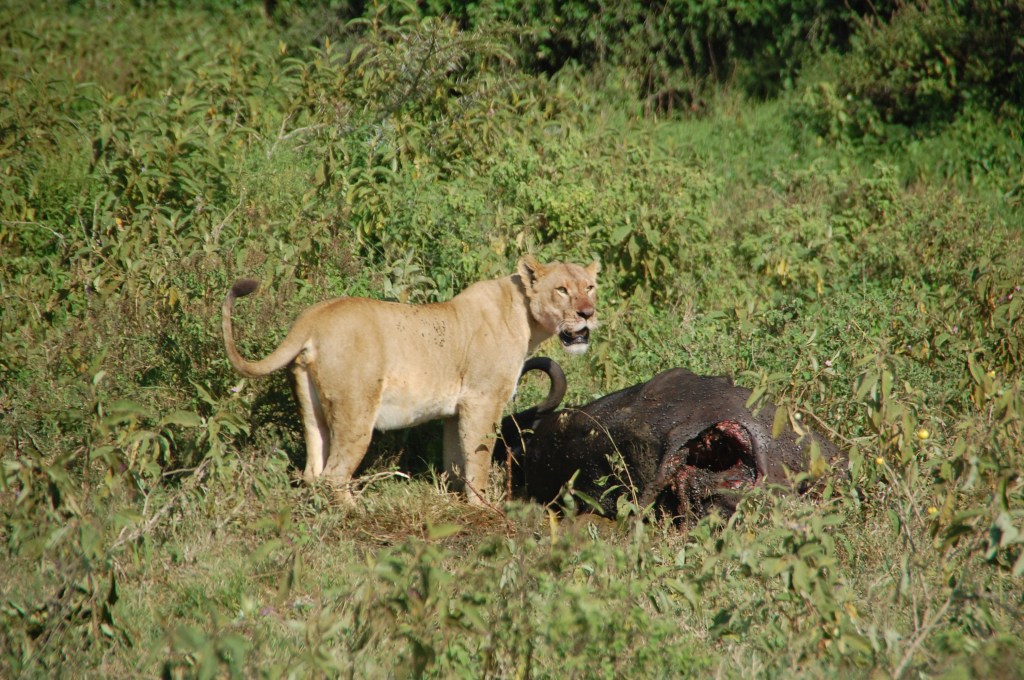
After eating, the female lioness tried her best to drag the carcass closer to the shady area, likely to try and protect it from the vultures which we could see circling up above. Unfortunately the carcass was just too heavy for her to drag alone and her family from in the bushes never came out to help. So she spent some time covering up the smell of the carcass that had been created by dragging it a few meters by digging around in the dirt to cover up any fresh blood. This would deter the vultures for at least a little while longer. And she went to lie back down.
We waited for about 30 minutes longer to see if there would be any more action and by this time lots more land cruisers had arrived, likely hearing over the radio that a kill site had been located. But eventually we decided to go explore more of the park as it was likely the lions would now rest until the afternoon. We were so so lucky we arrived at the perfect moment to see the lion emerge from its den to snack.
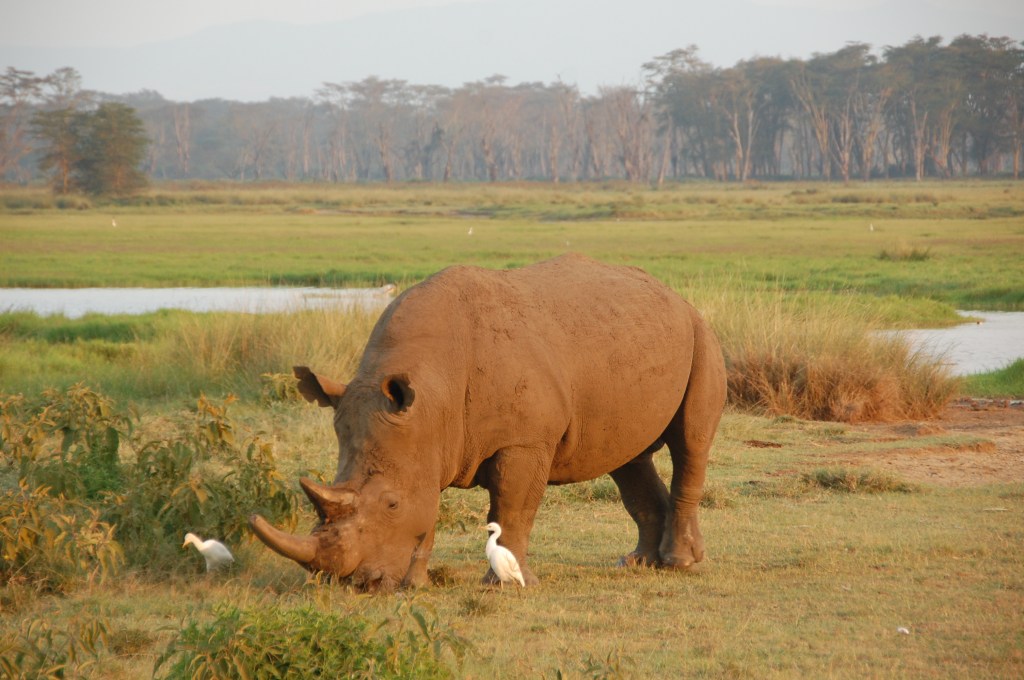
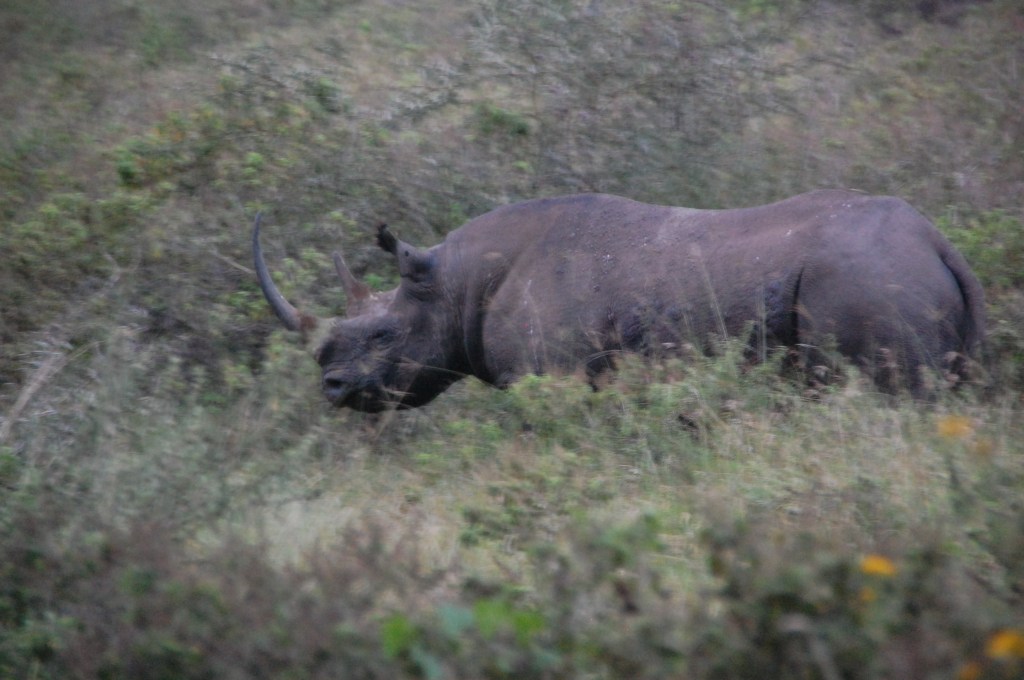
We were also extremely lucky to see both the white and black rhino whilst exploring the park. The Eastern black rhino is really hard to spot – there are far less of them (its critically endangered) and its really shy and good at hiding in the brush. We spent about 10 minutes watching the black rhino which we spotted late this afternoon as we were driving back to the lodge. There are only about 30 of them in this particular park and 1000 in total across the country. A group of rhinos is called a crash. I’m not sure who came up with the collective nouns for animals, but they were definitely having a laugh with some of them.
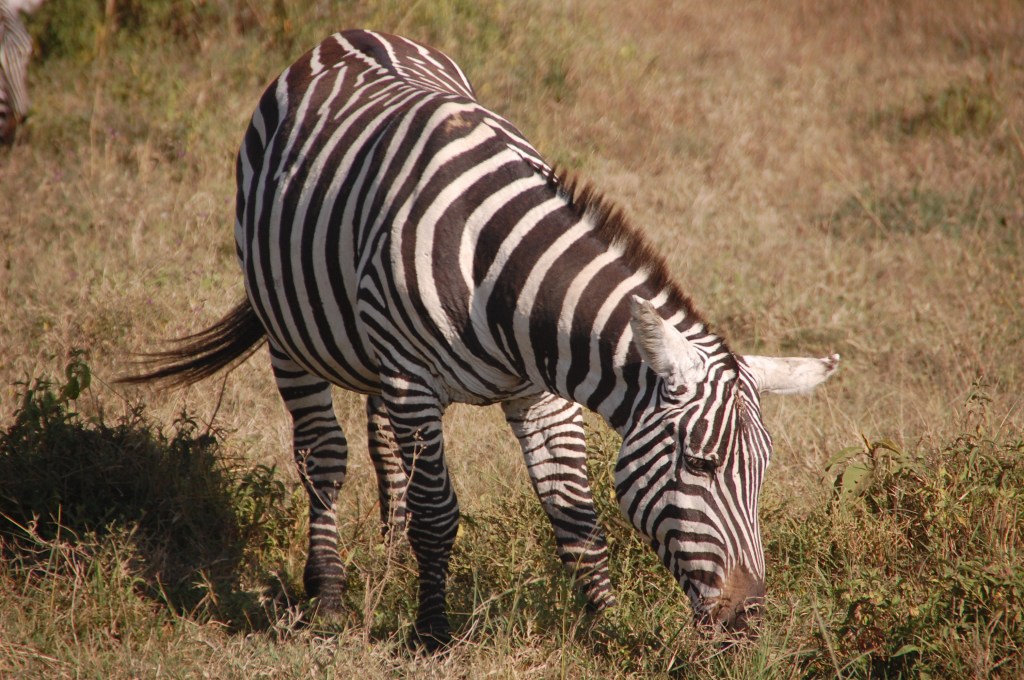
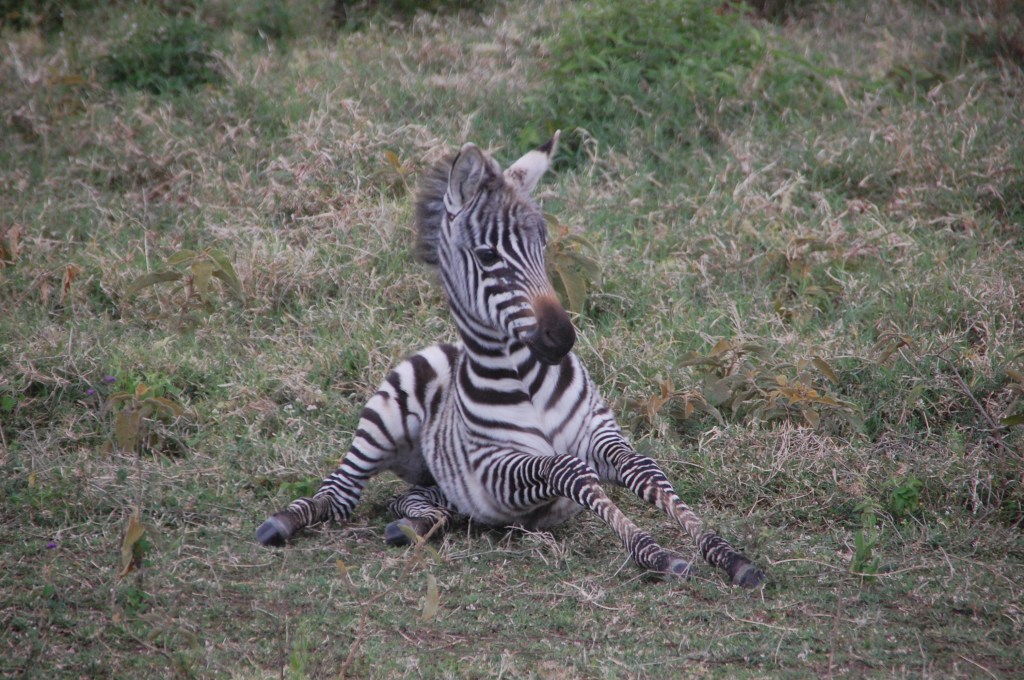
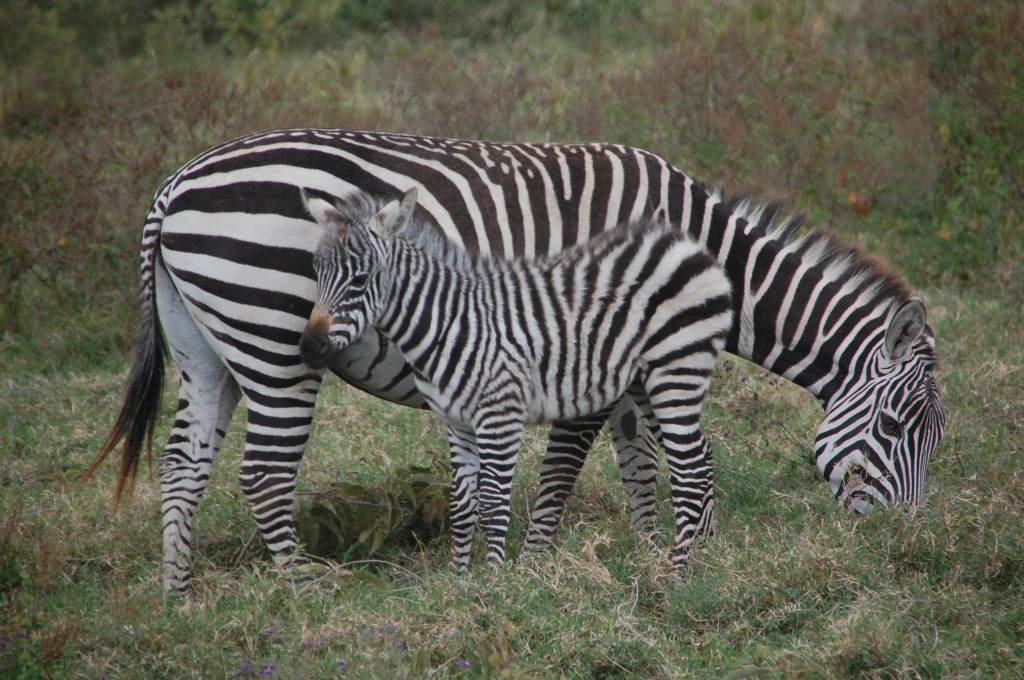
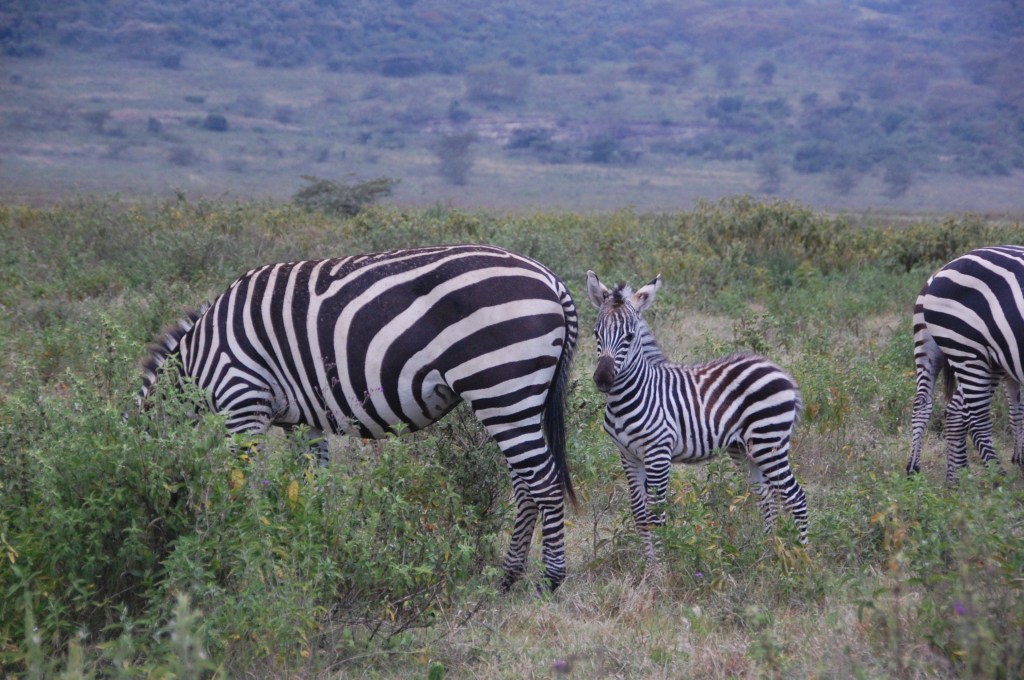
A group of zebras is a dazzle! And we saw lots of them today intermingling with impala, gazelles, buffalo and giraffes. As well as the many bird species who hang around and often sit on the backs of these animals hitching a ride whilst also taking the opportunity to eat any bugs and ticks that land on the animals backs. It’s great when you see 4 or 5 species all together peacefully grazing and unbothered by each other. And today we saw quite a few baby zebras, some of which must have only been a few weeks old!

All around it was a great day! The black rhino was particularly special as it’s unlikely we will spot another one on our trip.

 Colette's Grand Detour
Leave a comment