Day 2 (29th July 2025)
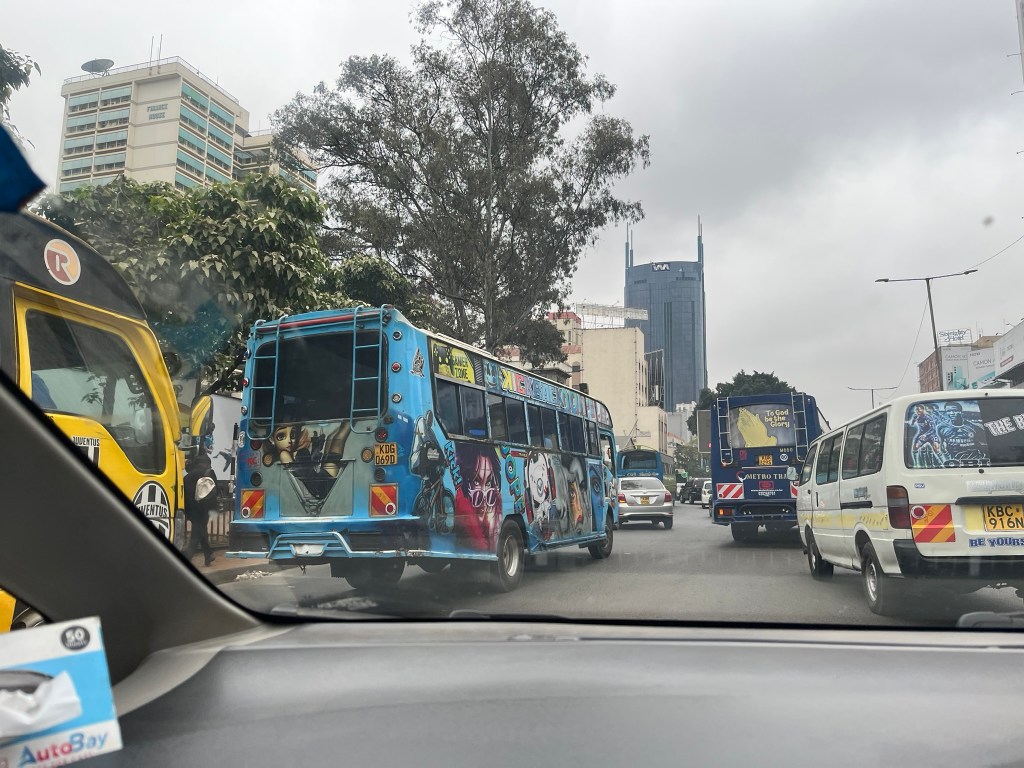
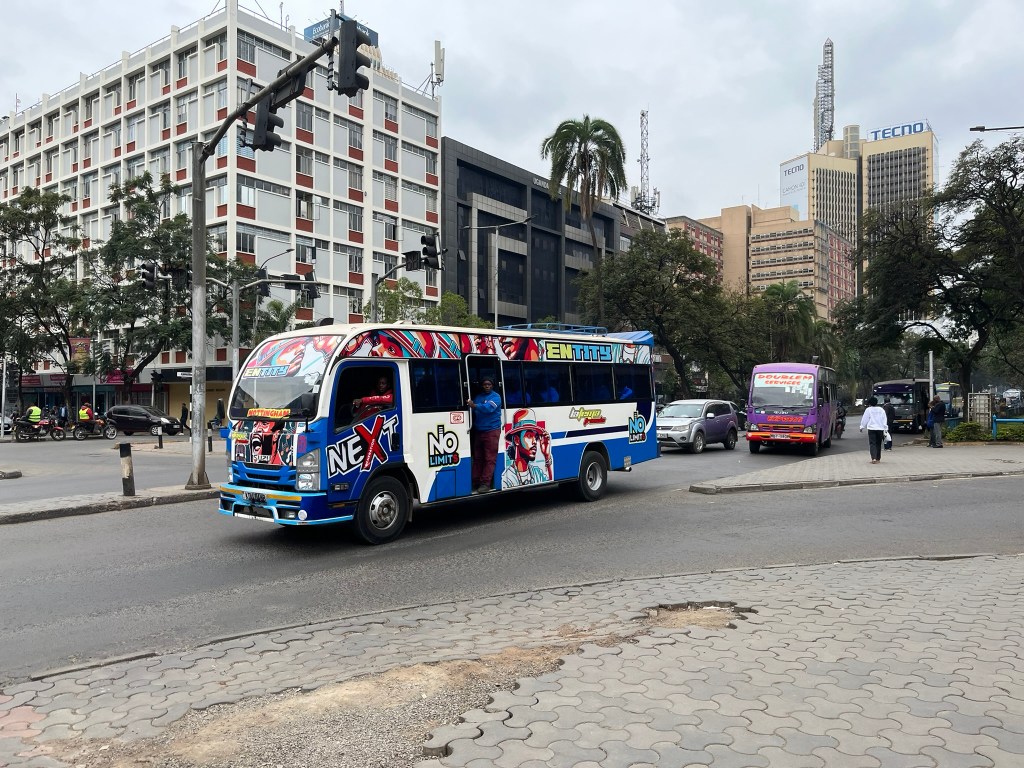
As we weaved in and out of morning traffic on our way to central Nairobi from where we would start our walking tour of the city I enquired about the brightly painted buses that I had seen on yesterday’s trip and could see now full of folks on their way to work. These buses are known as matatu and are the primary mode of transport around Nairobi. But they are like no other public transport I have ever encountered! The best matatu’s are vibrantly decorated on the outside – with all sorts of themes from football teams to Jesus Christ! And unexpectedly on the inside they are a ‘party on wheel’s’ with loud music being pumped out from huge speakers and big screens showing music videos. Apparently locals have their favorite party buses and will happily wait a little longer at a designated pick up point for their preferred choice of ‘party’ each day. Imagine this in the morning on the way to work! This is an informal transport system, but Google reliably tells me that about 70% of the cities population rely on the buses to get around and it is the first and only informal transport system in the world to have had its routes mapped and be available via Google Maps!
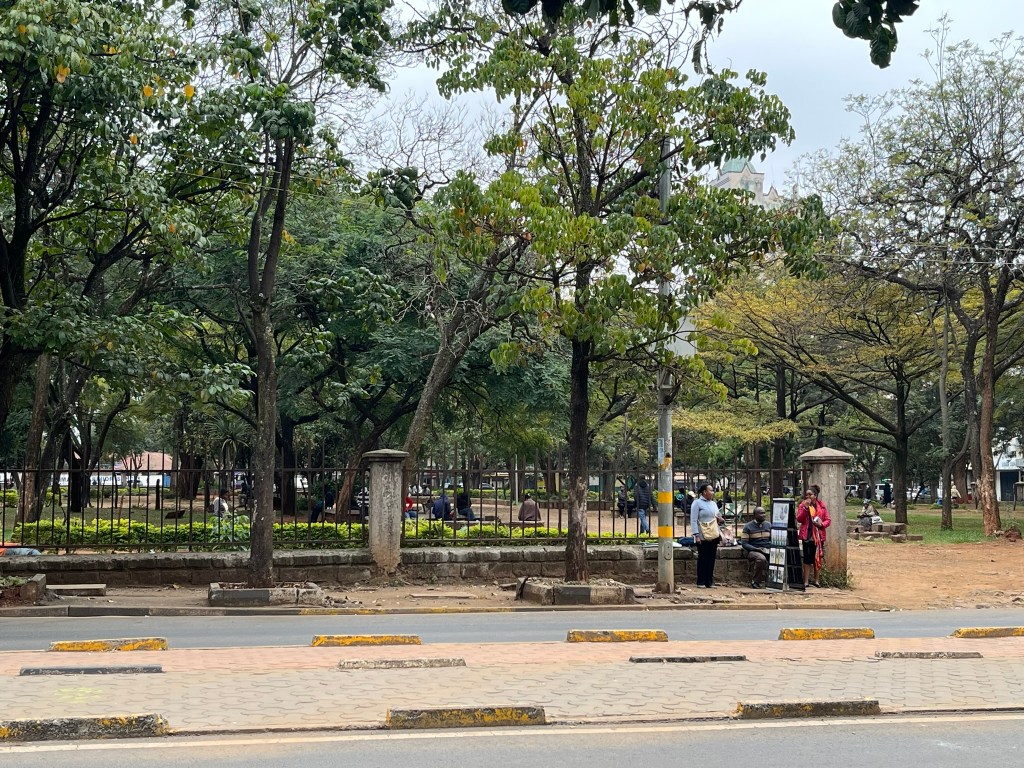
Our first stop on the walking tour was Jeevanjee Gardens, situated in the Central Business District. On the side of the park we were standing was uptown and at the other end of the garden was downtown, which our guide said was extremely busy and not as safe for tourists in terms of pickpockets and the like, and we wouldn’t visit today. Jeevanjee gardens was built by a Karachi-born merchant and one of the early Indian settlers in Kenya. He is the person the British turned to when they started to build the Uganda railway to bring in skilled Indian laborers to participate in its construction. And later he built the park as a gift to the city of Nairobi.
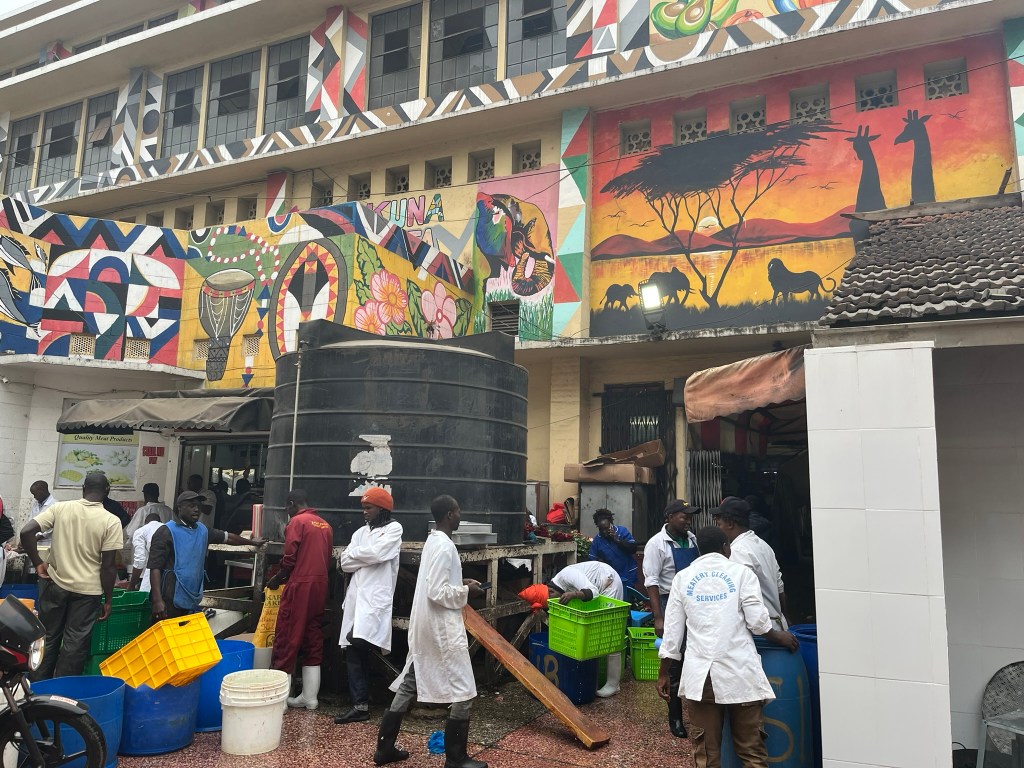
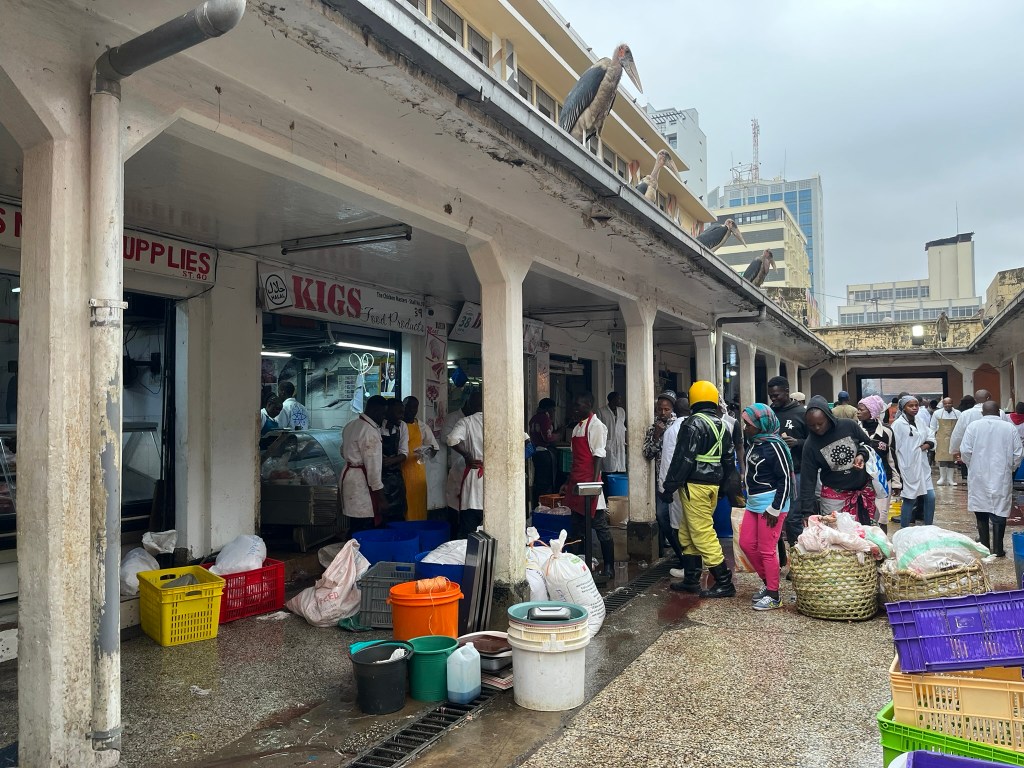
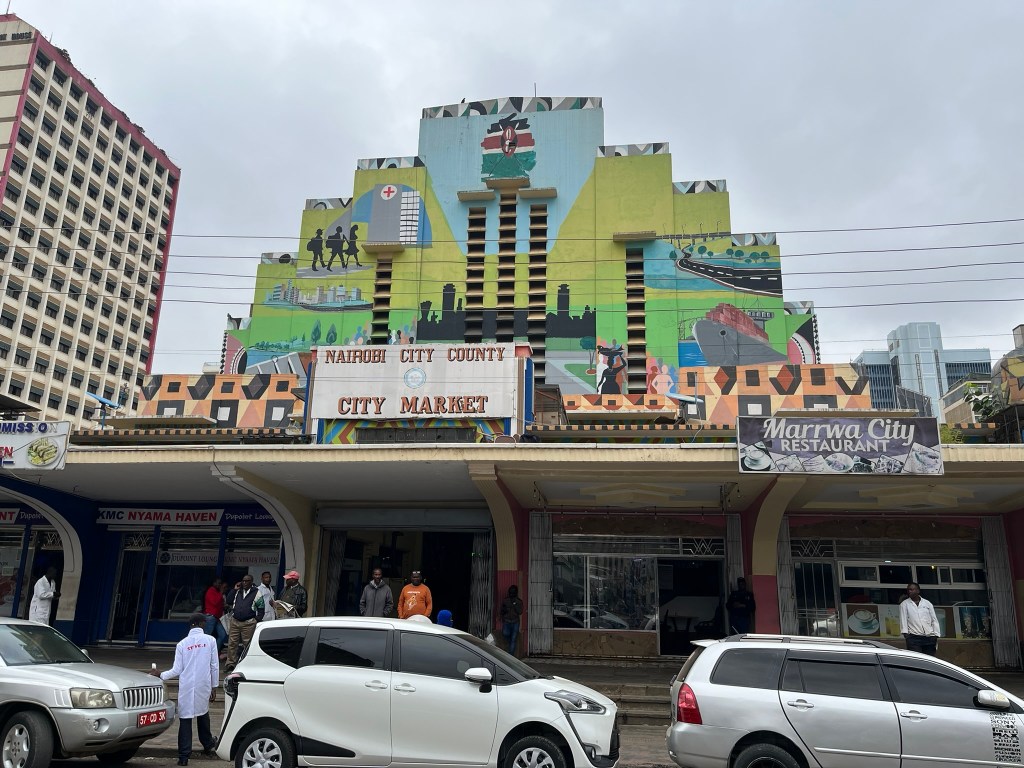
He also built the city market across the street from the Gardens. Apparently it was torn down at some stage by the British who didn’t like how powerful and popular Indian merchants were becoming in Kenya. But it has since been rebuilt and acts as a great window into the daily life of local trades people. Before we entered, our guide had said to try and spot the Maribou storks, which totally confused me and I assumed I must have misunderstood what he had said. The entrance to the meat market opens up to a court yard with sellers on each side preparing meat for sale. And as I looked across the court yard I realised that above us something was watching the whole scene unfold. Maribou storks sat on the edge of the roof peering down in the hope of stealing something to eat. These birds are huuuuuge and incredible ugly (they are part of the ‘ugly five’ on a safari) and look incredibly menacing. I’ve never seen anything like it!

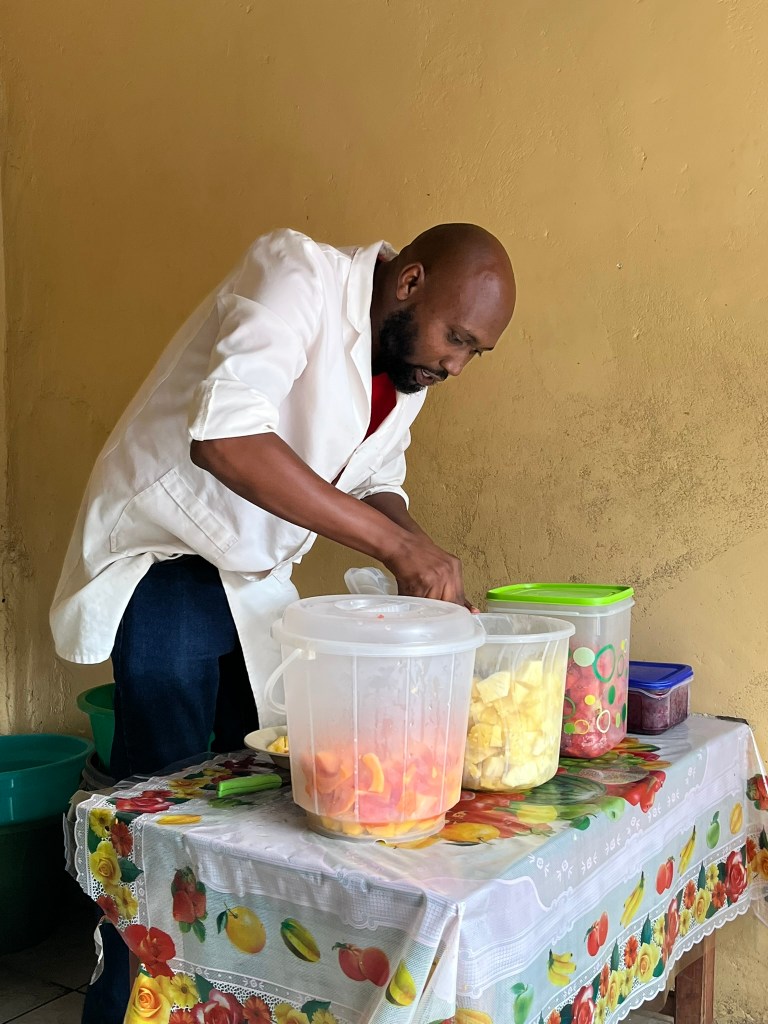
We passed through the ‘restaurant’ section where bbq’s were grilling big sticks of meat, legs of roast chicken and chapatis preparing for the lunch rush. It looked and smelled delicious. And we stopped for a short while to have a local fruit salad which interestingly came with grated beetroot on top! Our guide talked to us about local life whilst we ate, explaining that tea is absolutely critical to have at breakfast and that it is made in a more India fashion putting all the ingredients together into a pot and then boiling. And that beef is cheaper than chicken here, which feels unintuitive considering how much more it costs to raise a cow! But I googled later on and its apparently for a couple of pretty sensible reasons. Firstly chicken feed is expensive whereas cows can just graze on grass, much more care is needed to raise chickens and keep them healthy and finally chicken has a much shorter lifespan than beef so things like refrigeration etc. need to be a lot stricter.

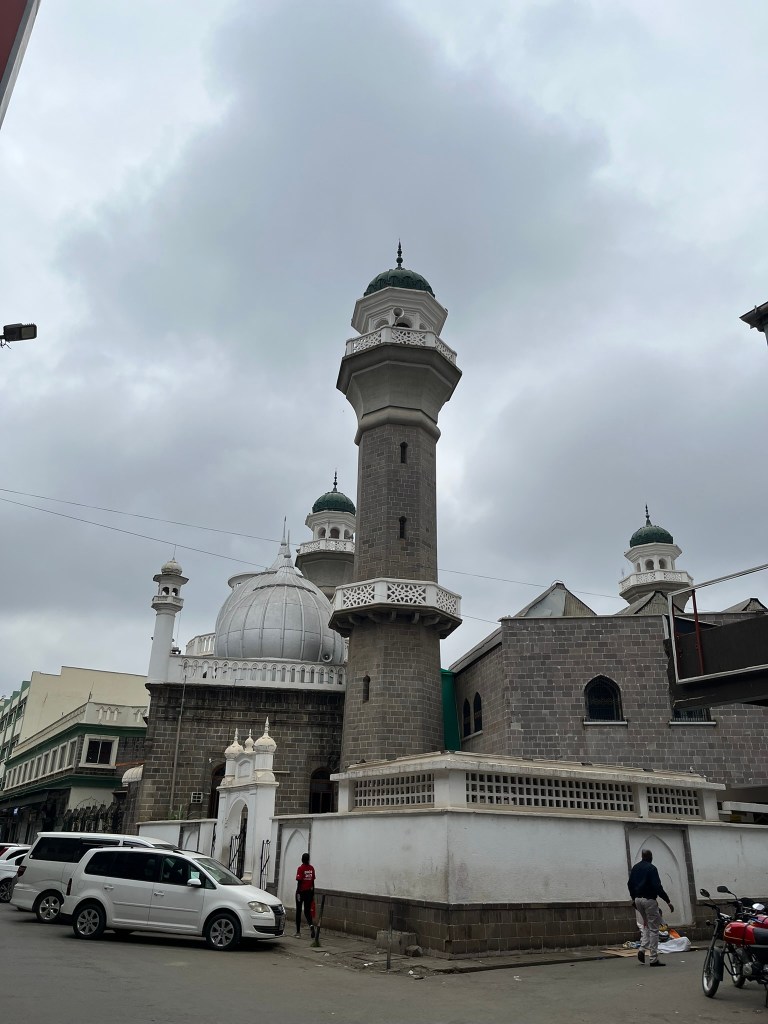
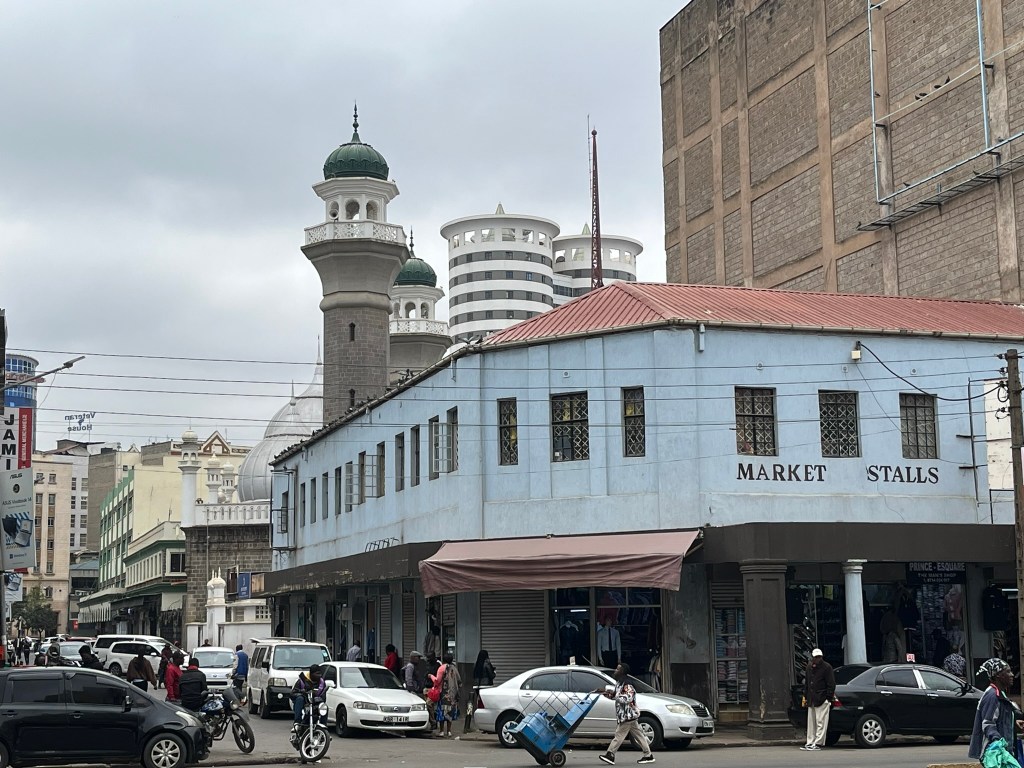
We finished in the flower section of the market. Along with tea and coffee, Kenya actually exports a huge amount of flowers all over the world. Next up we visited the city’s main mosque which has been built and rebuilt over the years, but only holds about 4000 people so is quite small when compared to some of the great mosques of the world. Around 10% of Kenyans identify as Muslim, with the religion arriving via the coastal regions when trade with Oman was strong as well as when the India migrant workers arrived in the early 20th century.
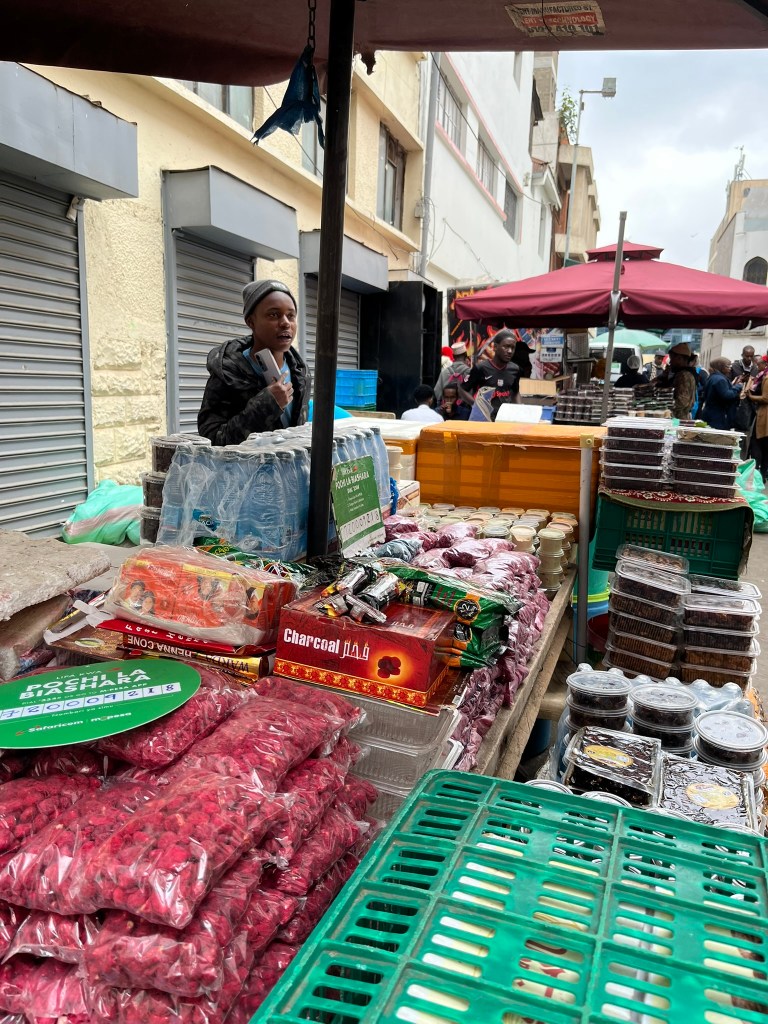
We tried some Mabuyu sweets at a street vendor as we wandered past the mosque. These are baobab tree seeds that have been boiled, then coated in sugar and spices and very brightly coloured. They were actually super nice! What impressed me most was the payment system that is available across Kenya called ‘M-Pesa’. A bit like WeChat in China, it allows even the smallest street vendor to be paid electronically. Although here it works a bit different and there is no app, rather you text an amount to a phone number to exchange money. Which is actually brilliant as it means you do not need to be online to pay. The guide said it was invented by a Kenyan and has been extremely successful for the whole country.
We then meandered through the city streets and the guide pointed out various important buildings; the McMillan Library (built to commemorate the great explorer William McMillan), various old buildings that were originally banks from the early 20th century and a memorial to those that fought in WW1 and WW2. The most interesting place was an old hotel called The Stanley. This was apparently where all the most important people stayed when they came to Kenya, whether they were explorers or dignitaries. It was opened in 1902 and was Nairobi’s first luxury hotel. But more importantly it was the place to be, to make connections and find out what was going on outside of Nairobi. An acacia tree sits in the middle of the open-air restaurant at the centre of the hotel and was used as an informal message board where travelers would pin notes to connect with friends and family as they passed through. The original Kenyan Facebook!
Lots of famous folks have stayed in the hotel (and it is named after Henry Stanley who famously went in search of Dr. Livingstone when he briefly went missing) including Winston Churchill, Ernest Hemingway and Theodore Roosevelt. But its biggest claim to fame is this is where Princess Elizabeth briefly stayed before flying home to assume the throne following her father’s death. We didn’t go inside but I’m hoping to visit and eat at the restaurant when we return to Nairobi in a week.
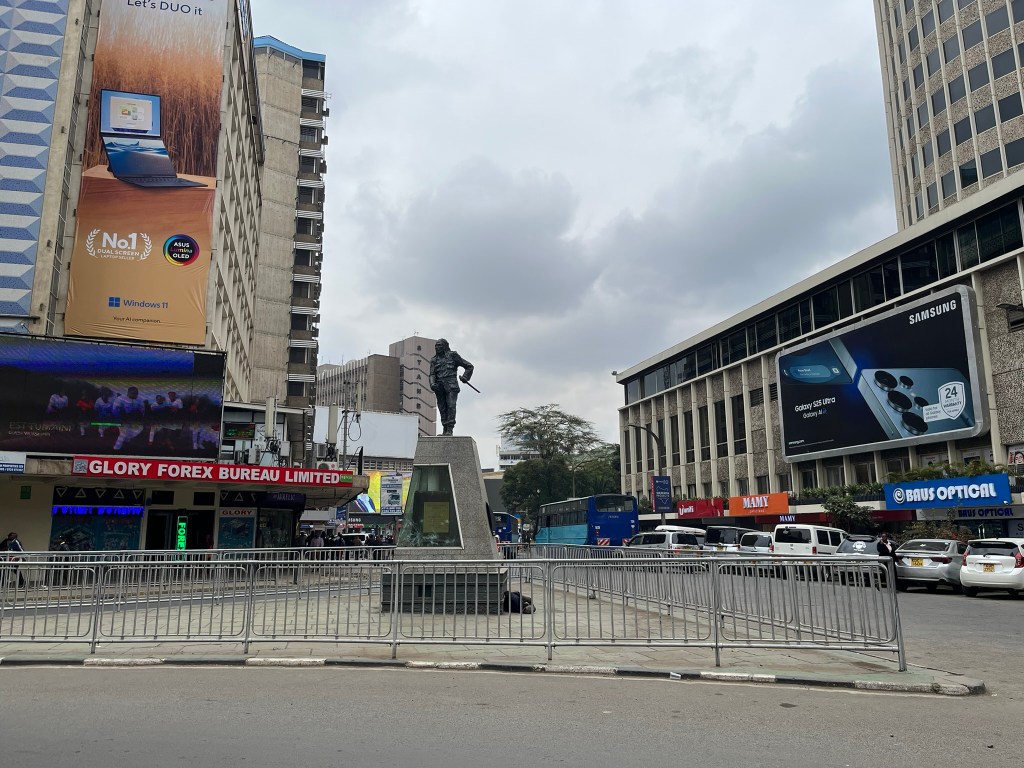
Next up was a monument to Dedan Kimathi – a key military leader in the Mau Mau resistance against British colonial rule in the 1950’s. Although the resistance was not successful, it changed Kenya’s path and accelerated political reform. The guide said usually the statue was holding a rifle but it seemed to have disappeared since the the protests last month. This gave me an excellent opportunity to learn from a local what the protests were about. Our guide explained that they had been happening since last year and were related to unhappiness with the current government who have been raising taxes and not solving serious unemployment issues for the younger generations whilst the individuals of the government flaunt enormous wealth, buying helicopters and wearing expensive designer clothing. The groups supporting the protests have been very organised, with protests happening each Tuesday and Thursday over a long period of time, bringing the city frequently to a standstill.

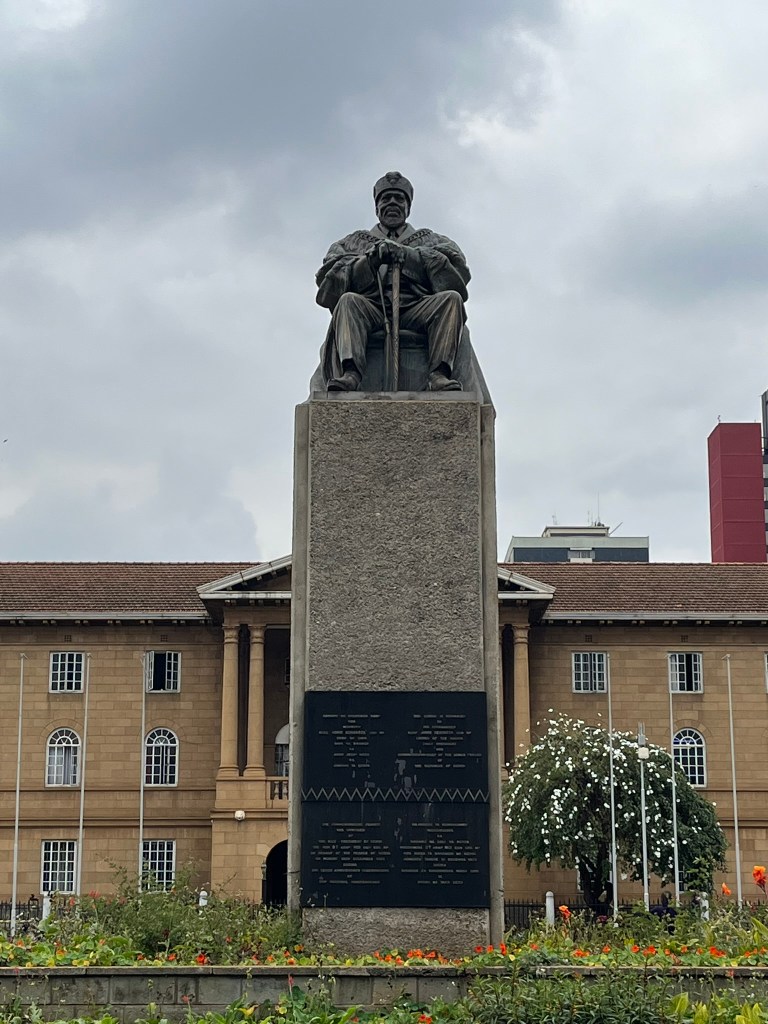
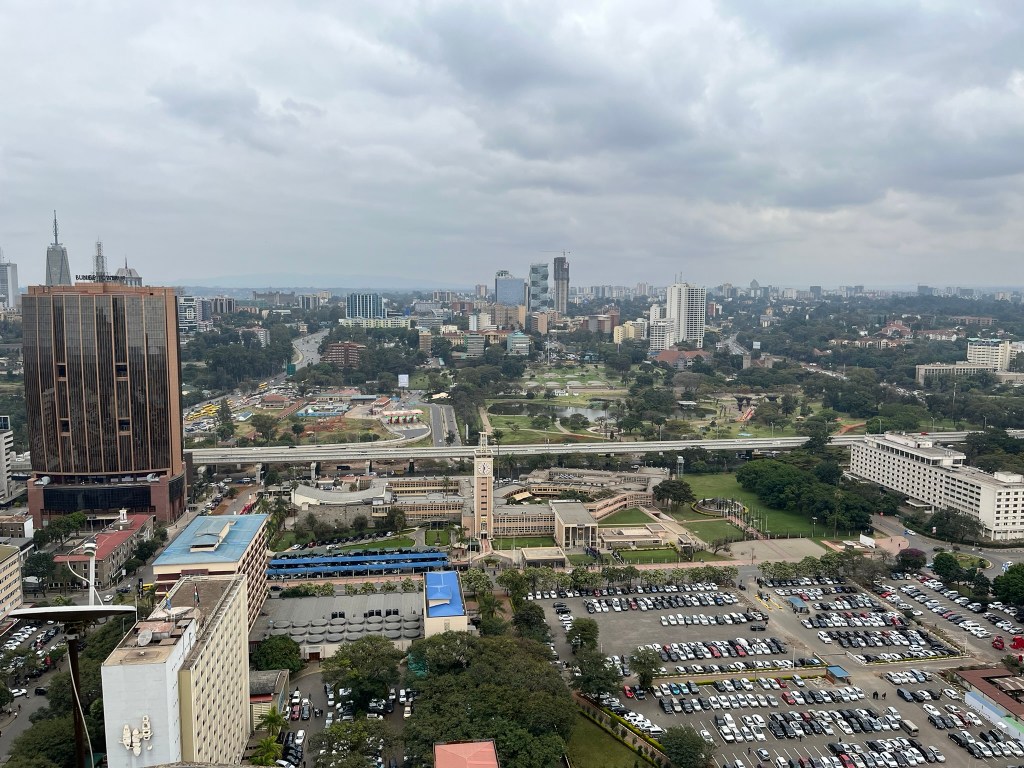
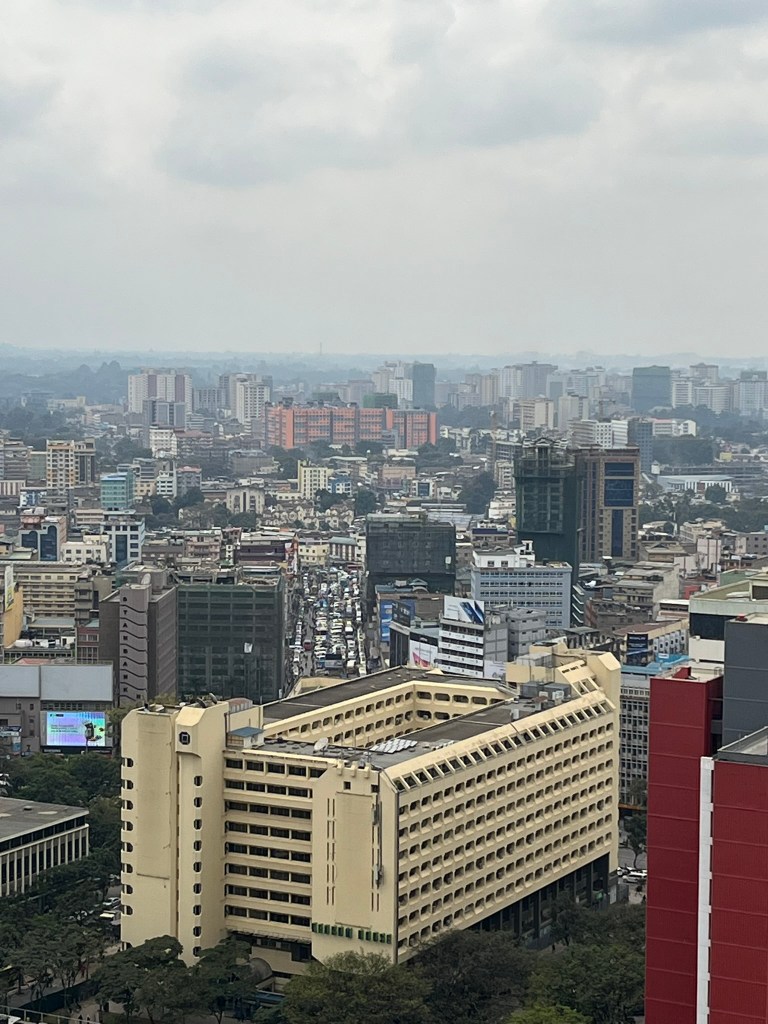
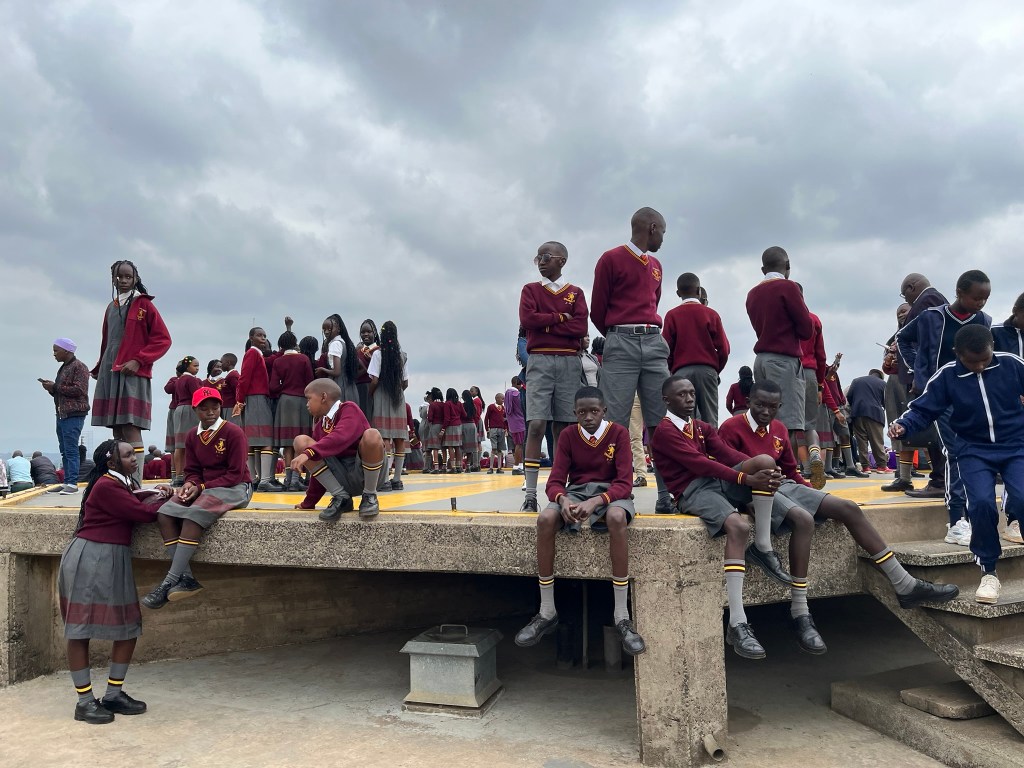
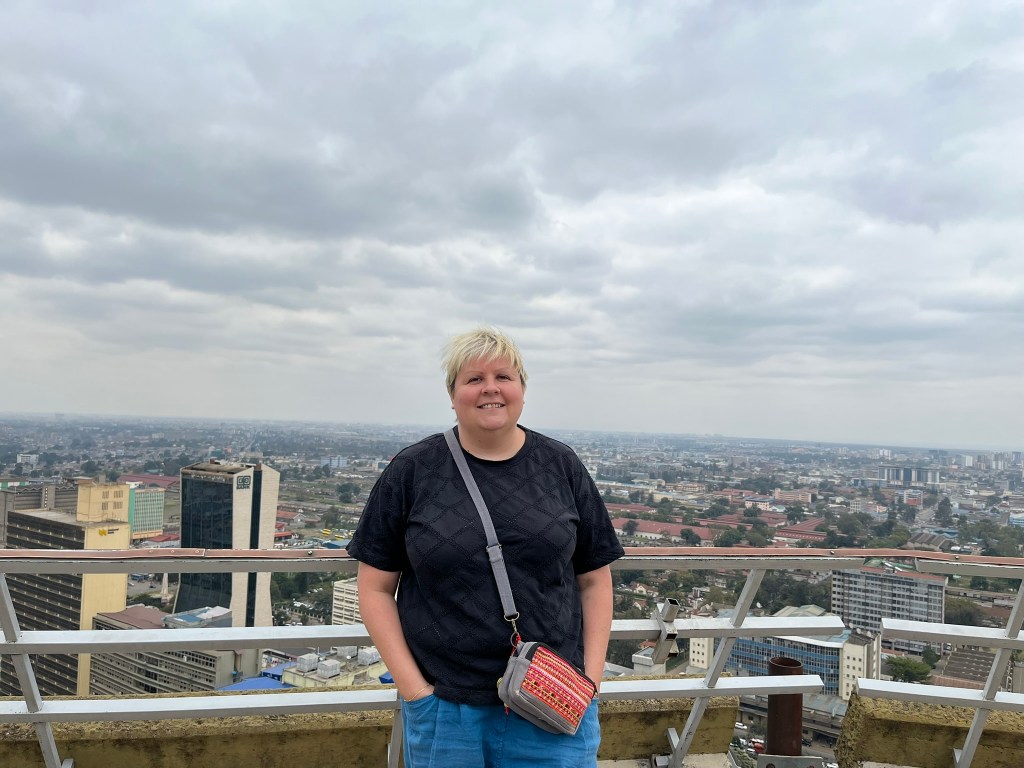
After passing the Supreme Court and the City Council buildings we arrived at our last stop – KICC (Kenya International Convention Centre). It was near the end of school term, so we joined a huge number of school children visiting from outside of Nairobi to travel up to the top of the tower and have a great view of the city. From here we could see the parliament and senate buildings, the old US embassy which was bombed in 1998 and subsequently moved into the suburbs, and downtown with its grid-lock traffic (even so high up you could see how busy with people it was). Nairobi is quite a compact city and the tall buildings very quickly taper off, with huge swathes of forest and grass land stretching beyond the city limits. Just like every city there were more desirable and less desirable areas to live in. Typically a month’s rent in the good part of town (near my hotel) would be roughly $500 USD which is a huge amount for a regular Kenyan. The preference now is to move further out into the suburbs where rent is cheaper and you get the benefit of being closer to nature.
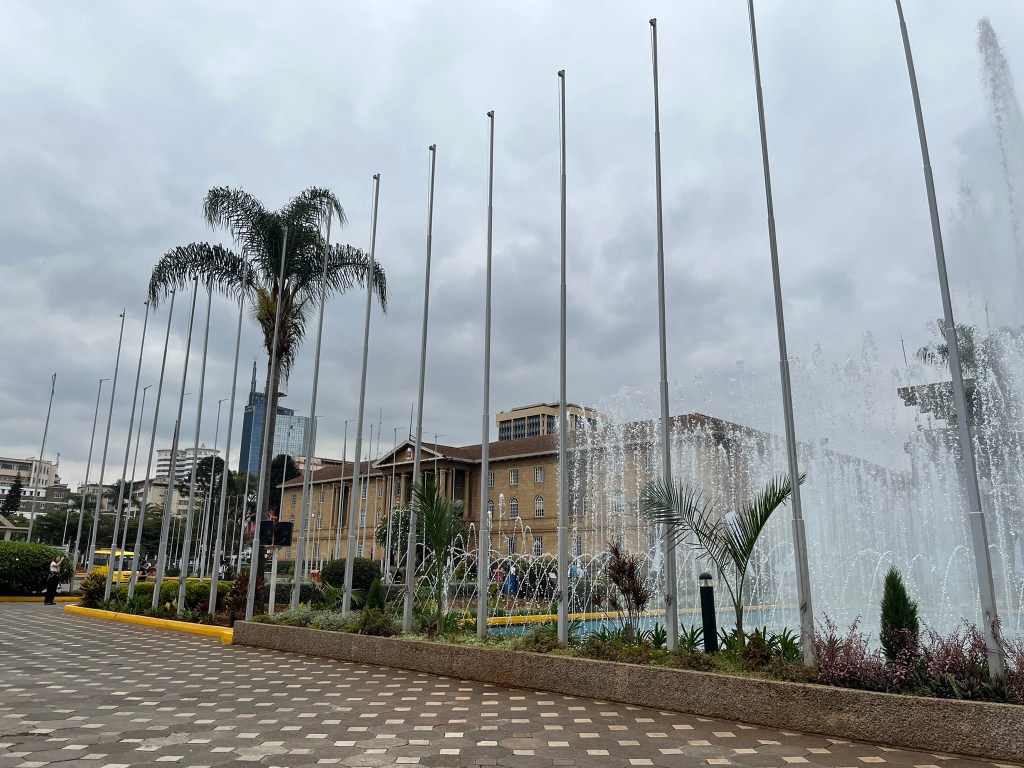
This was a really great walking tour of the city. Although Nairobi does not have traditionally ‘big sights’ to see, the guide did a wonderful job of painting a picture of how Nairobi developed from that small railway depot in 1899 to what it is today and I felt like I got a great sense for life in the city. I think most folks use Nairobi to fly in and out for safari trips and perhaps don’t explore the city much, but I would recommend at least dedicating half a day to having a guide take you around.

 Colette's Grand Detour
Leave a comment