Day 1 (28th June 2025)
I did a bit of research into the history of Nairobi and I was surprised to find out that actually the city didn’t really exist at all until 1899 when the Uganda railway was constructed by the British who were looking to connect the coast and inland area which had an abundance of natural resources to plunder.
And so a small railway depot was built where modern day Nairobi is now located. From there it grew into what is now a city of ~5 million people, the capital of Kenya and economic heart of East Africa. The name ‘Nairobi’ comes from the Maasai phrase ‘Enkare Nairobi’ which means ‘cool water’ and refers to the Nairobi river running through the middle of the city.
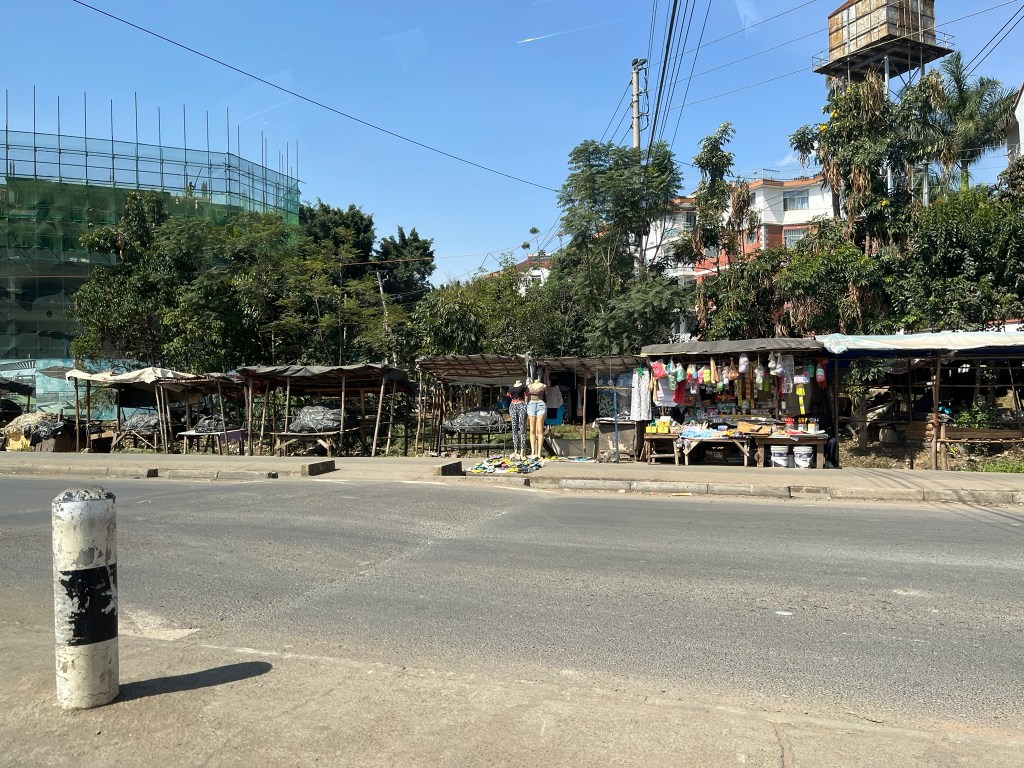
My first impressions of Nairobi as we set off on our day trip to visit 3 key sites in the city (the Karen Blixen museum, the Sheldrick Elephant Orphanage and the Giraffe Conservation Center) were that it seemed very pleasant. Traffic was flowing and there was a vibe of calm chaos. Motorbikes were weaving in an out of traffic and folks were off to work on buses each individually painted to what I assume was the bus drivers individual preference. But there wasn’t as much honking as you would expect and everything felt relaxed. The most interesting part of the drive (and I’m annoyed I didn’t take a photo!) was along one part of the highway where it felt like an open-air shopping center. Initially I saw folks selling plants and plant pots and other garden paraphernalia. And I thought – that makes sense – your heading home and you pick up some plants. But then the range of retail expanded rapidly. There were metal work sellers with 10-foot high metal giraffes for sale. Entire playground swing sets. And then what I thought was best of all – entire living room set ups! Under thin tarpaulins there were hundreds of 3-piece sofa sets for sale.
We quickly moved into a much quieter and greener area which I believe was called Karen. And I assume is named after the famous Karen Blixen whose home/museum we were about to visit. The area must been pretty affluent as when you peaked over the manicured hedges you could see large properties with big balconies and lots of land.
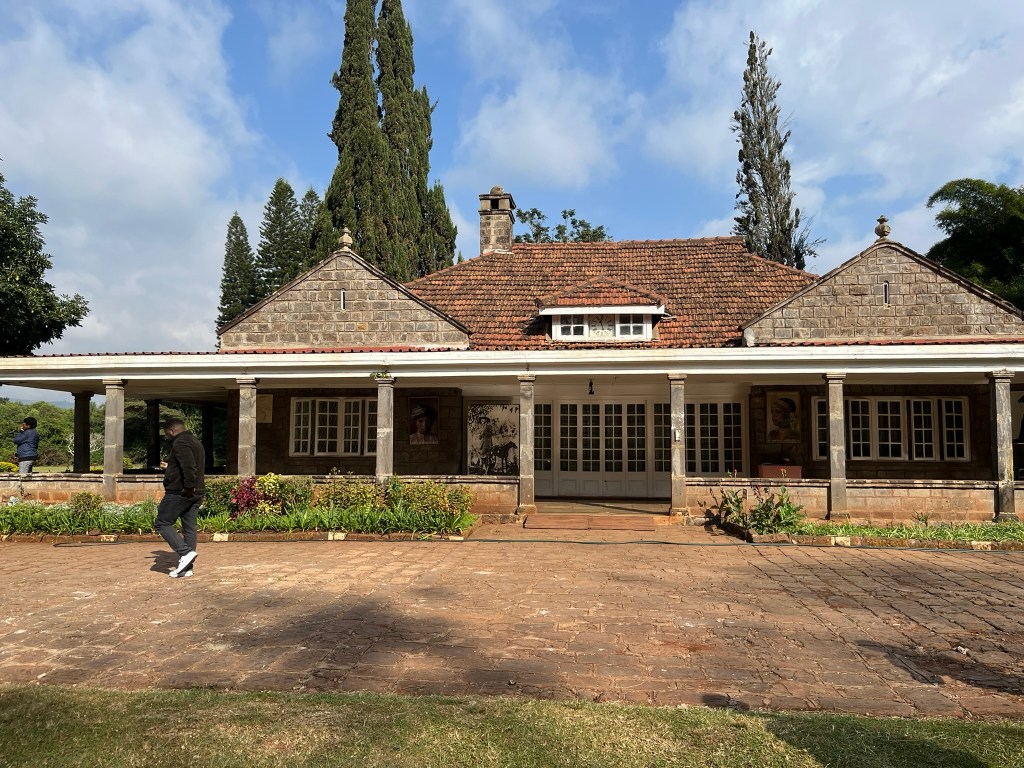
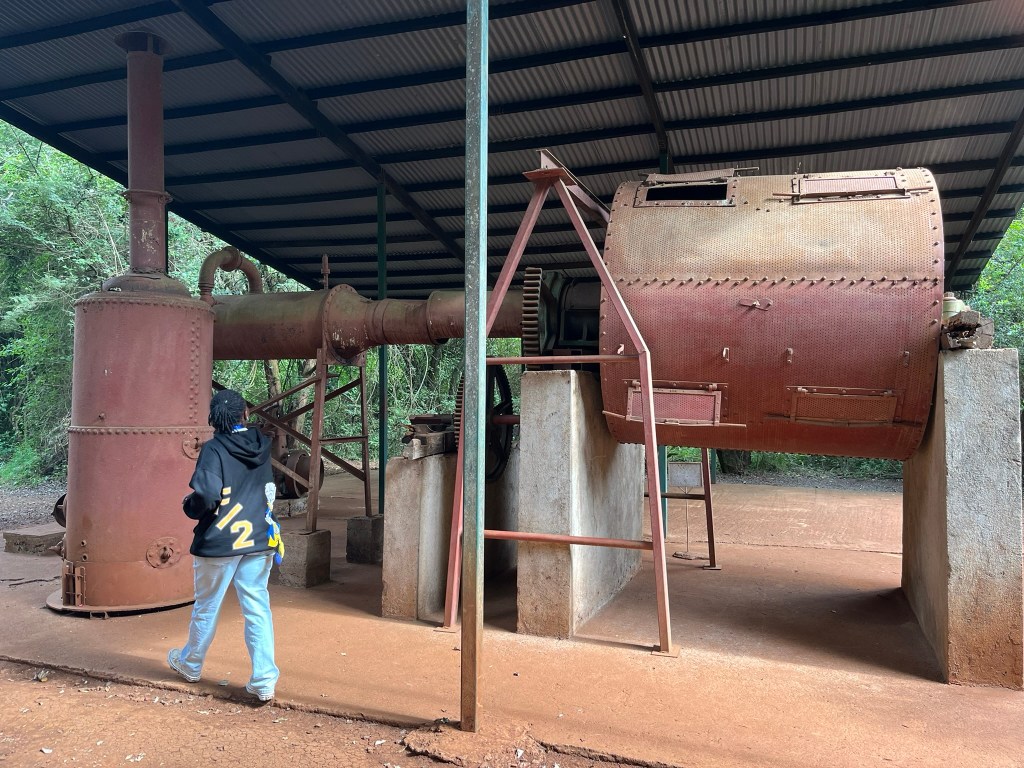
The Karen Blixen museum is her original home in Kenya where she lived from 1914 to 1931. And it was used to film some of the film adaption of her most famous book – Out of Africa. You couldn’t take photos inside the house which was a shame as it was really well restored. The walls were dark panels of wood and the furniture the same. Some of the animal skin rugs on the floor still had the head of the animal attached! And even more shockingly one of the nightstands in the bedroom was the entire foot of an elephant! Behind the house, they still had the old coffee plantation machinery that had been used 100 years ago to grow coffee that was then processed, sent to Mombasa and then onwards to the coffee cups of England.
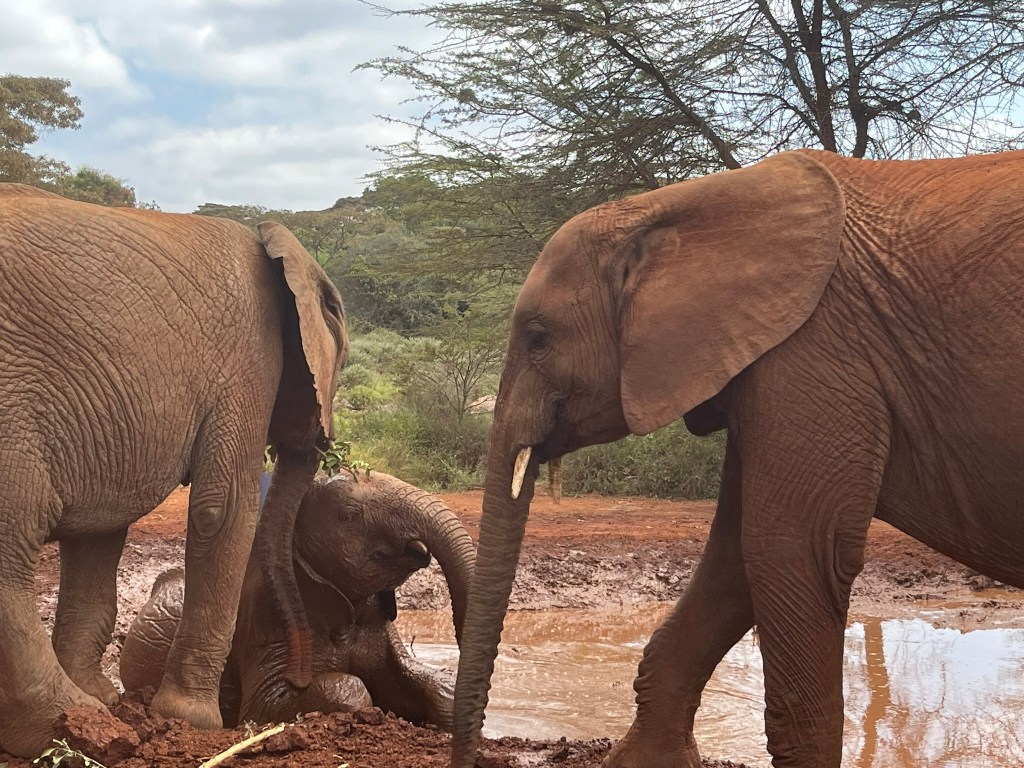
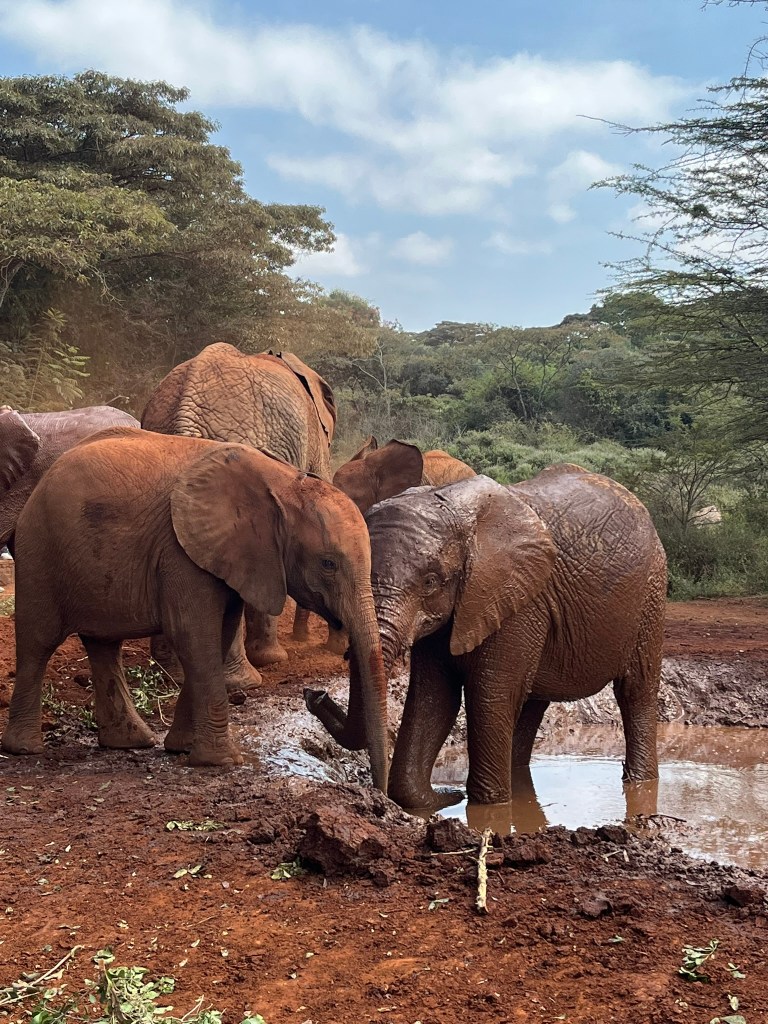
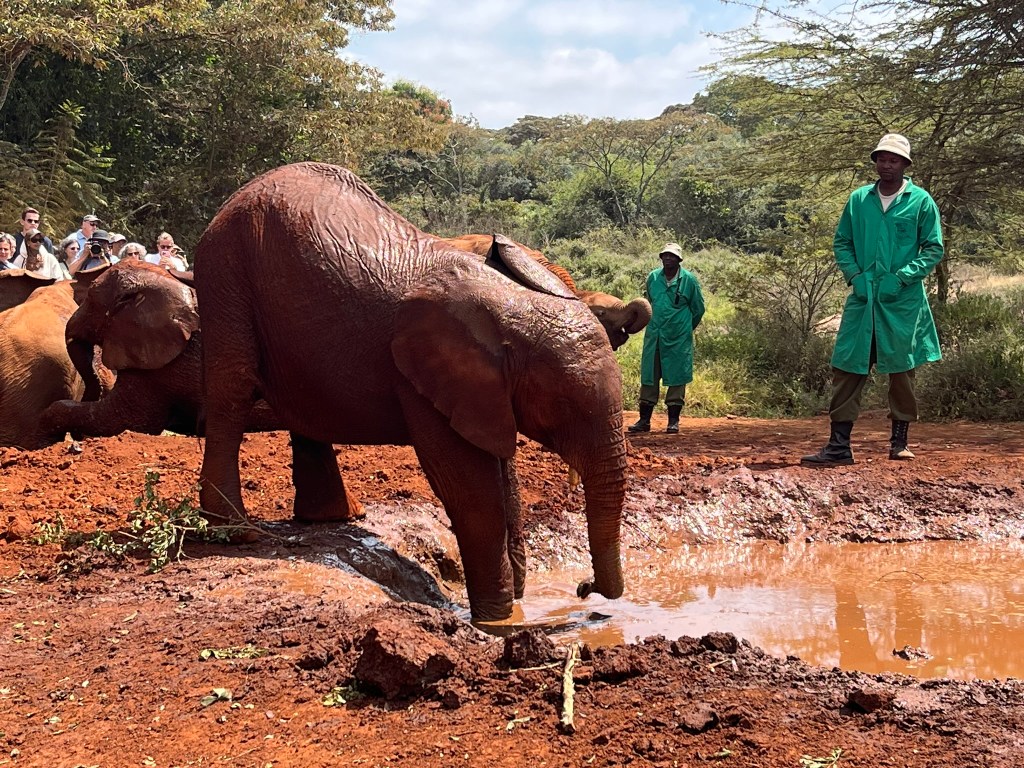
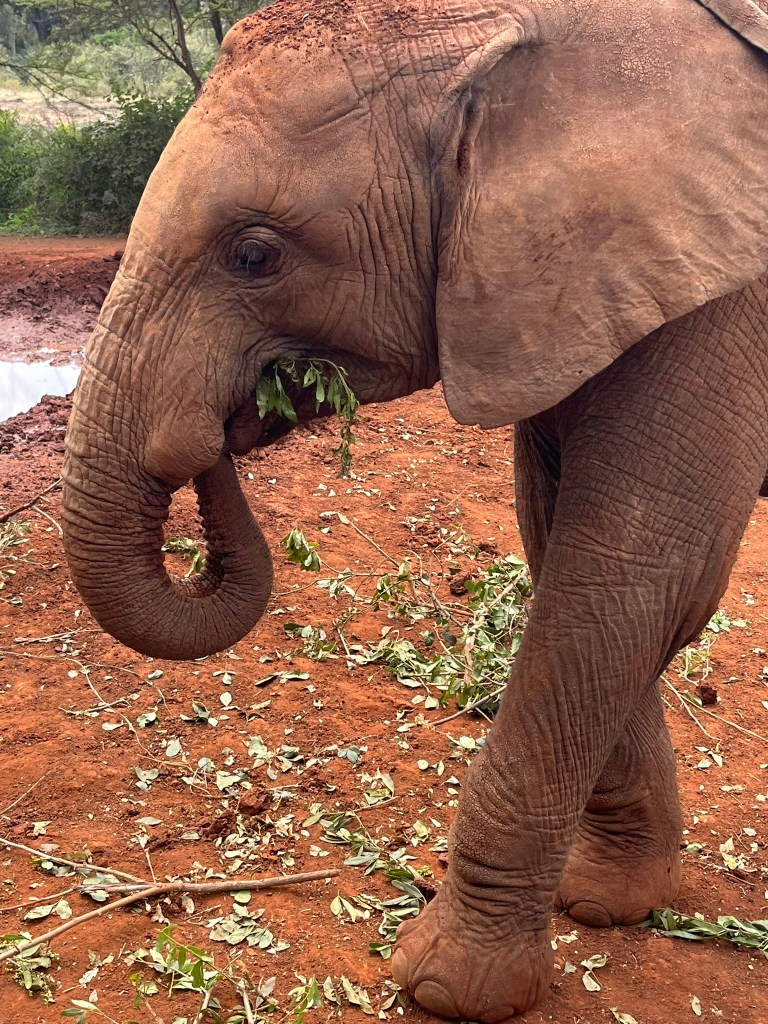
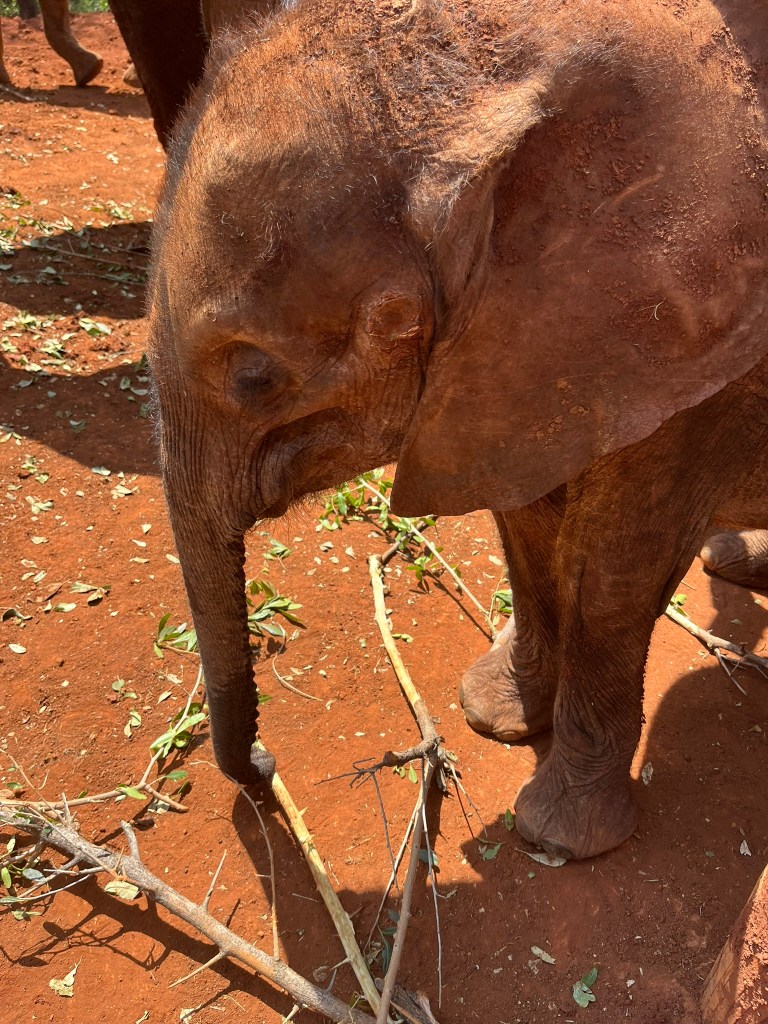
We then headed a short way to the Sheldrick Elephant Orphanage which operates within the Nairobi Wildlife Park and sits on the edge of Nairobi. The orphanage is only open to tourists from 11am to 12pm each day which I thought was great and showed that it was a place of serious conservation effort and not just a tourist circus. There were about 15 baby elephants ranging from ~3 months to 2-3 years old out to play today for the benefit of tourists. Whilst the elephants roamed a small area encircled by ropes, a ranger talked about the program, how the elephants came to be at the orphanage and the process of caring for them and eventually releasing them back into the wild to reintegrate with an existing herd. During the day the elephants are free to roam the park. A carer stays with them and then at night they return to the orphanage to sleep in safety. Each elephant has their own place to sleep but for the youngest elephants, a carer stays with them through the night and they are provided blankets to keep them warm, as in the wild they would benefit from the warmth of being surrounded by the herd. Elephants are really beautiful animals and it was brilliant to get so close to them. You can see from their eyes just how intelligent they are. And you could tell from how relaxed they were around people that they are treated really well at the orphanage. The best part was when the 3-month old did a final walk around the edge of the play area so that everyone could get a close look!
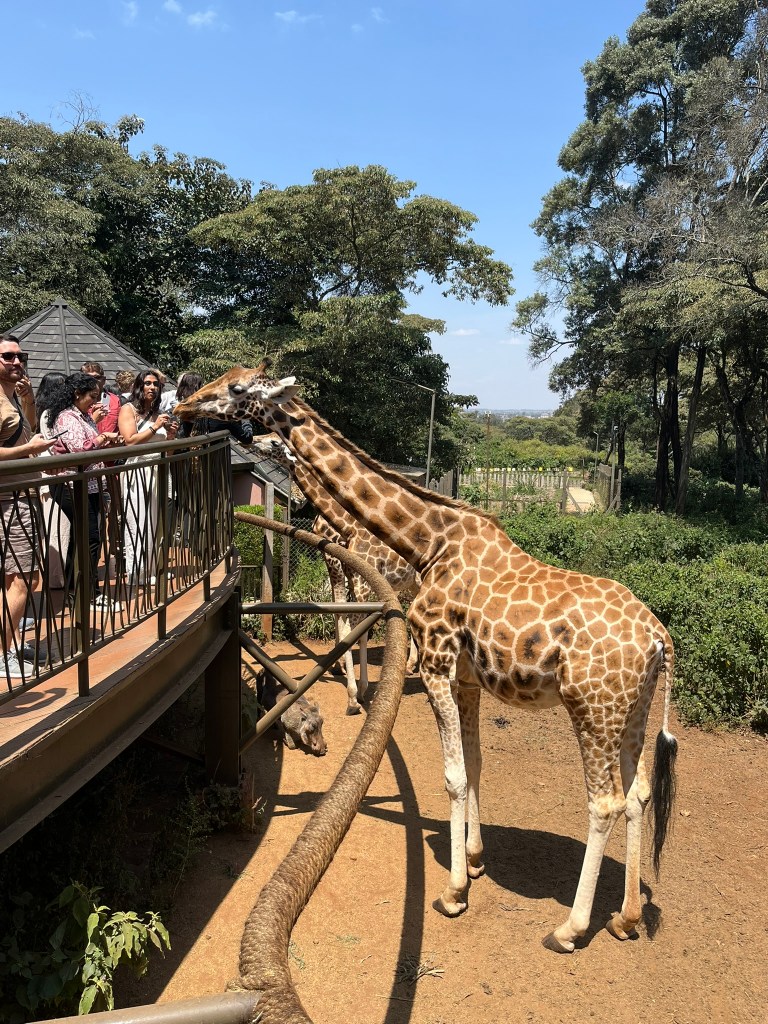
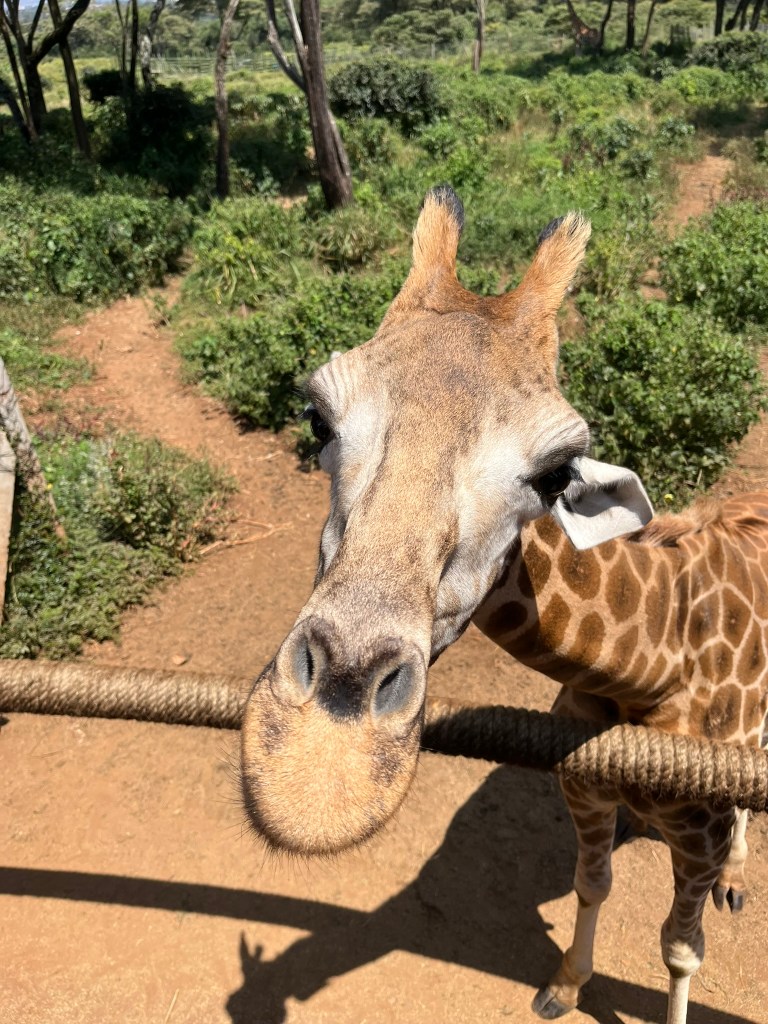
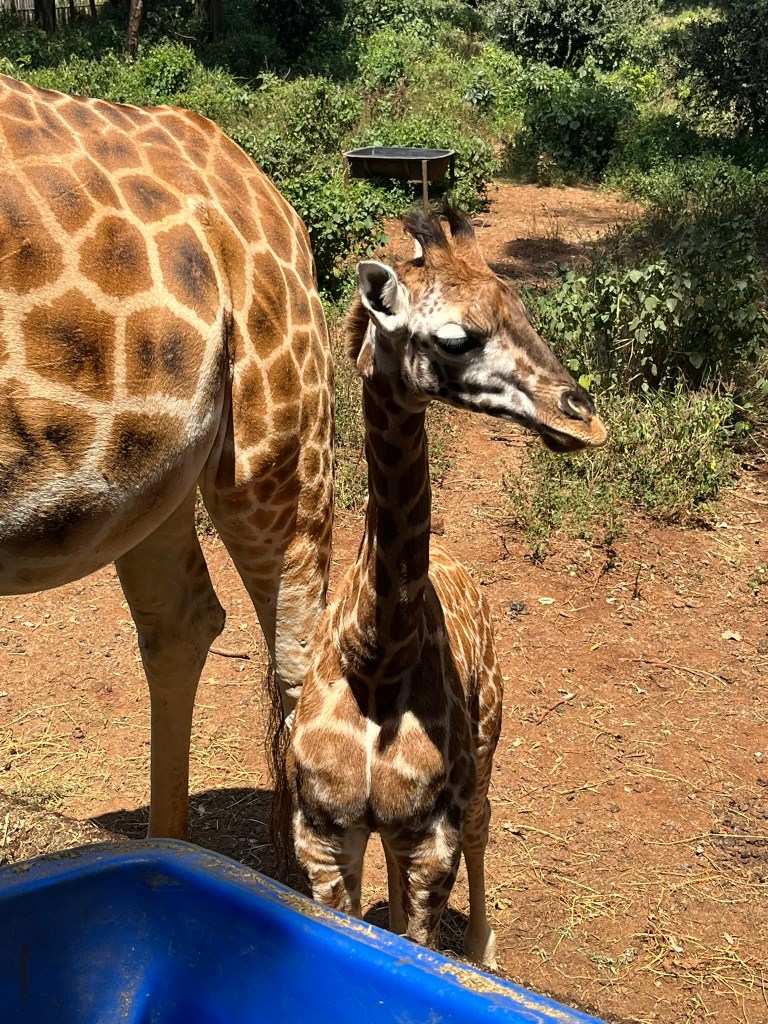
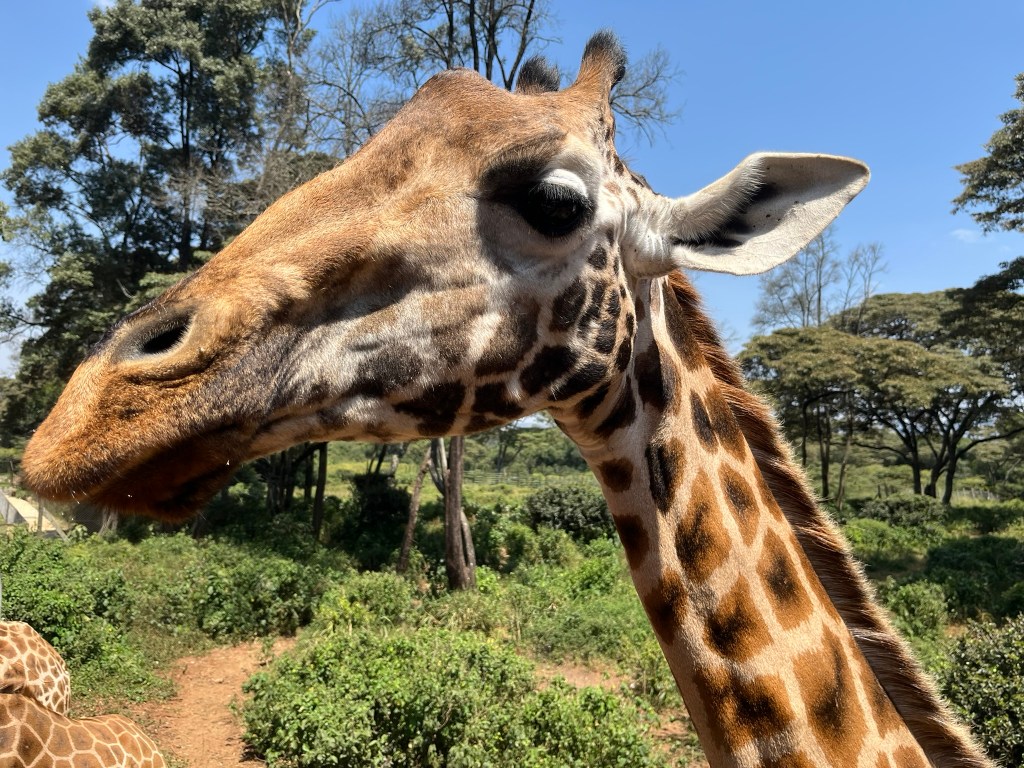
Next up was the Giraffe Conservation Centre. I hadn’t done much research so I didn’t realise that this place was next door and connected to Giraffe Manor! Which is a fabulous looking (but insanely expensive) hotel you can stay at and have breakfast with the endangered Rothschild giraffes sticking their head through the large windows and joining you! Fortunately this much much cheaper experience of visiting the same giraffes at the centre across the street is probably just as good. You got a little cup of grass pellets and then walked up to a raised platform where the beautiful Rothschild giraffes could pick and choose who they came up to be fed. It was incredible to be so close to the giraffes and really take your time to study their facial features and incredibly patterned coats. And their tongues are a really pale blue color which I was not expecting!

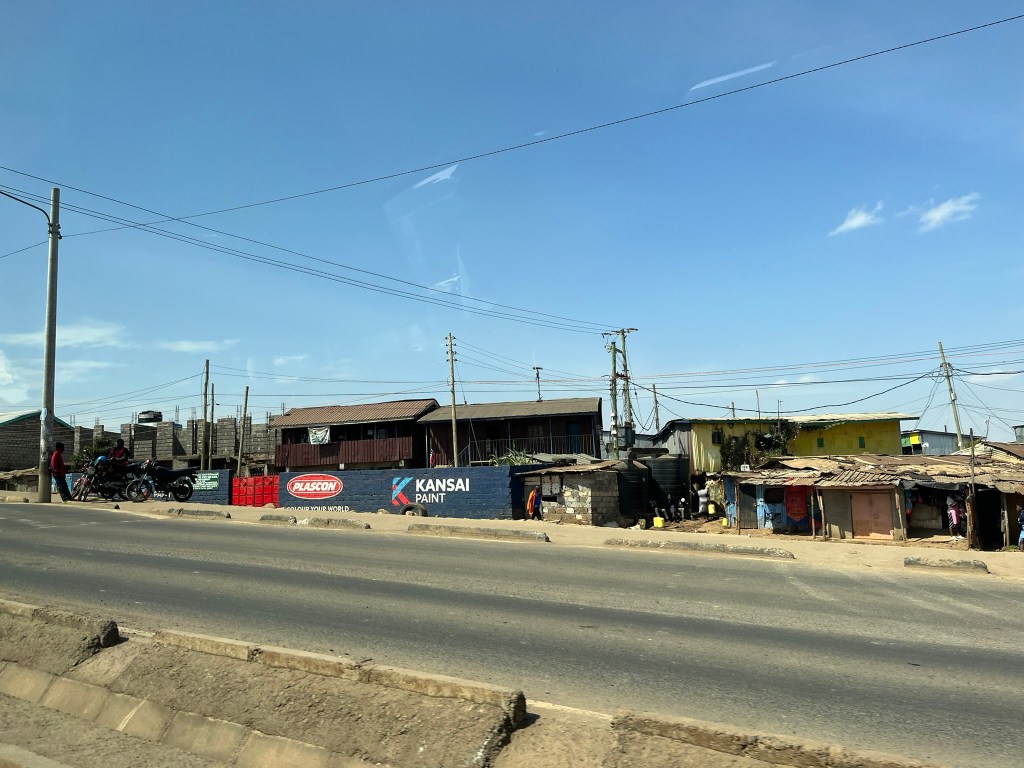
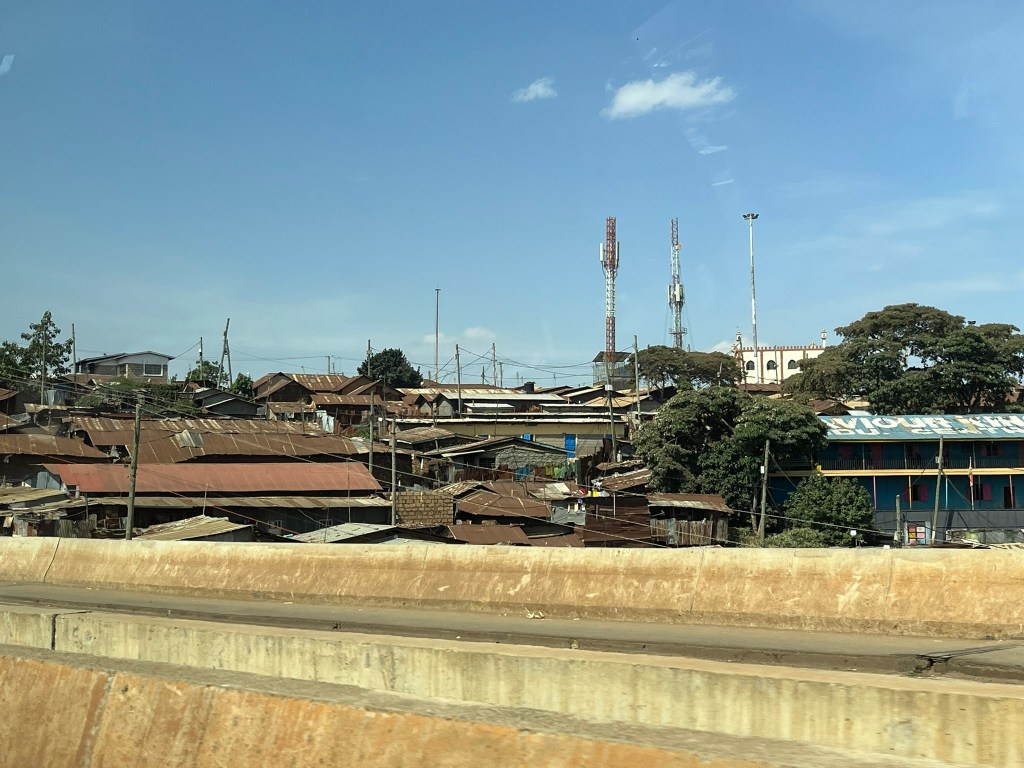
On the drive back to the hotel we left the well-groomed suburbs of Karen and heading back into the city crossing through what is said to be the largest slum in Africa – Kibera. A patchwork sea of rusting corrugated iron roofs. A maze of hundreds of narrow alleys only a local resident could navigate. But at least from what I could see as we passed by, a lot of life and energy. All down the side of the highway were shacks set up as restaurants, barbers, fruit stands and every other kind of necessity for daily living. I’m glad we saw that part of Nairobi as I don’t expect my city tour tomorrow will visit this area and I think its important to see the difficult parts of a city landscape. You can’t pretend its not there and it’s better to see it with your own eyes and better understand it, than have a fake image of what a slum looks like in your mind.
So that was it for Day 1. Although going to conservation centre’s is a bit different and more contrived than a safari I’m really glad I went. You get to be much much closer to the animals and for a longer period of time so you can just watch and enjoy!
 Colette's Grand Detour
Leave a comment